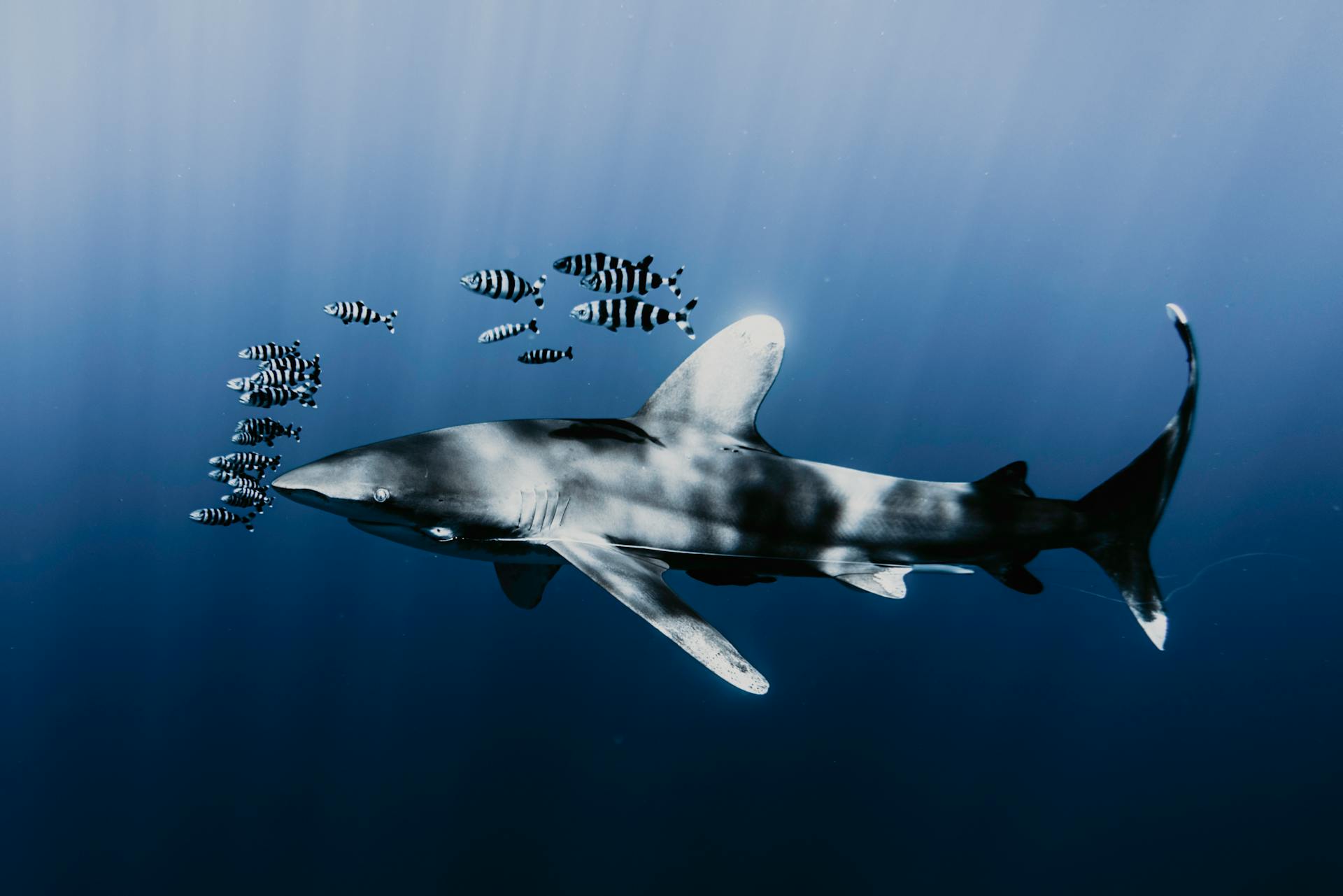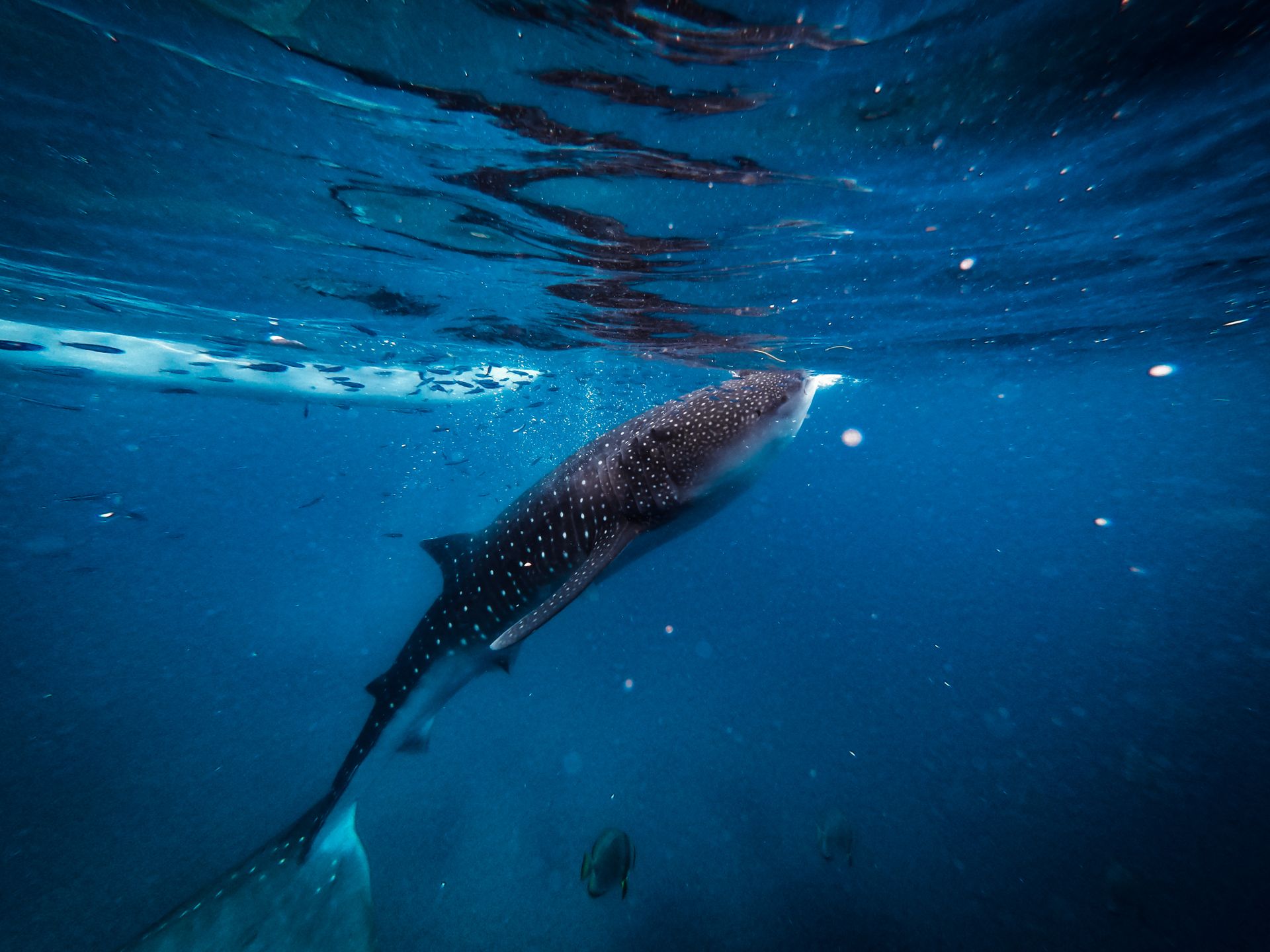
The Pacific Spiny Dogfish Shark is a fascinating creature that's been around for millions of years, with fossil records dating back to the Eocene epoch.
These sharks have a distinctive appearance, with a spiny first dorsal fin and a second dorsal fin that's much smaller.
They can be found in the coastal waters of the Pacific Ocean, from Japan to California, typically between 100 and 400 meters deep.
Their diet consists mainly of small fish, squid, and crustaceans.
Habitat and Distribution
Pacific spiny dogfish sharks can be found in a wide range of habitats, from shallow bays to deep waters. They are common in inland seas like San Francisco Bay and Puget Sound, and in shallow bays from Alaska to central California.
These sharks live in waters as deep as 4,050 feet, but most are found in waters less than 1,150 feet deep. They tend to move shallower during the day and deeper at night.
If this caught your attention, see: Extinct Sharks Found Alive
Males are generally found in shallower water than females, except for pregnant females that enter shallow bays to pup. Immature juveniles live in the water column near the surface, while older sharks settle to the bottom.
Spiny dogfish often travel in large schools, largely to protect themselves from predators, and avidly feed during their journeys. These schools can include hundreds, if not thousands, of dogfish and tend to divide up according to size and gender.
Here are some key facts about the distribution of Pacific spiny dogfish sharks:
- Found from the Bering sea to Baja California.
- Most common along the west coast of the U.S. and British Columbia.
- Pacific spiny dogfish sharks are more common off the U.S. West Coast and British Columbia than in the Gulf of Alaska or the Bering Sea and Aleutian Islands region.
They can travel long distances, with one tagged shark being recovered off the northeast coast of Japan years after being tagged in Queen Charlotte Sound (off British Columbia).
Biology and Life History
Pacific spiny dogfish sharks can live up to 80 years or more, which is a remarkable lifespan for a shark of their size. This is likely due to their slow growth rate, with adults typically reaching lengths of 2.5 to 3.5 feet.
Females take longer to mature, reaching sexual maturity at around 36 years, while males reach maturity at 19 years old. They reproduce through internal fertilization, and females carry their offspring for 18-24 months before giving birth to up to 22 pups in shallow bays in the fall.
Here's a breakdown of the reproductive cycle:
- Females: 36 years old, 18-24 months gestation, up to 22 pups per reproductive cycle
- Males: 19 years old
Spiny dogfish sharks are opportunistic feeders, eating whatever prey is available, and they travel in schools with other dogfish, often segregated by size and gender.
For your interest: What Does the Spiny Dogfish Shark Eat
Taxonomic Description
The Spiny Dogfish has a unique appearance, with a thin, tapered snout and a gray upper body featuring a line of white spots along its length. This distinctive pattern is complemented by a white lower body.
One of the most notable features of this species is its venomous spines, which are located in front of each dorsal fin. These spines serve as a defense mechanism to deter predators.
The Spiny Dogfish typically averages 0.76 to 1.07 m (2.5 to 3.5 feet) in length, although it can reach up to 1.2 m (4 feet) in some cases. The weight of this species is also relatively consistent, with adults weighing around 11 kg (22 lbs).
Interestingly, males are generally smaller than females, which can grow to larger sizes.
For another approach, see: Spiny Shark Dogfish
Life History
Spiny dogfish can live a remarkably long time, sometimes more than 80 years. This long lifespan is likely due to their slow growth rate, which can take up to 35 years for females to mature.
Females take a long time to reach maturity, typically around 36 years old, while males reach maturity at a younger age, around 19 years old. This significant age gap between males and females is not uncommon in the animal kingdom.
Spiny dogfish are internally fertilized, and females carry their young for a remarkable 18-24 months before giving birth to up to 22 pups in shallow bays during the fall. This unique reproductive strategy is likely an adaptation to their environment.
Here's a breakdown of the reproductive cycle of spiny dogfish:
Spiny dogfish are social animals and travel in schools with other dogfish. Interestingly, these schools tend to be segregated by size and gender, with males typically found in shallower waters than females.
Sharks and
Sharks and rays are fascinating creatures, and understanding their biology and life history is essential for appreciating these amazing animals.
Shark and Ray Identification Guide is a valuable resource for learning about the different species of sharks and rays. This guide helps you identify the various species and learn about their unique characteristics.
Sharks are incredibly diverse, with over 500 species identified worldwide. From the smallest dwarf lanternshark to the massive whale shark, each species has its own distinct features.
One of the most interesting things about sharks is their ability to thrive in a wide range of environments. Whether it's in the shallow waters of the coral reef or the deep sea, sharks have adapted to survive in almost any situation.
Shark and Ray Identification Guide lists many species of sharks, but did you know that some sharks can live for up to 70 years in the wild? That's a long time for an animal to be thriving in the ocean!
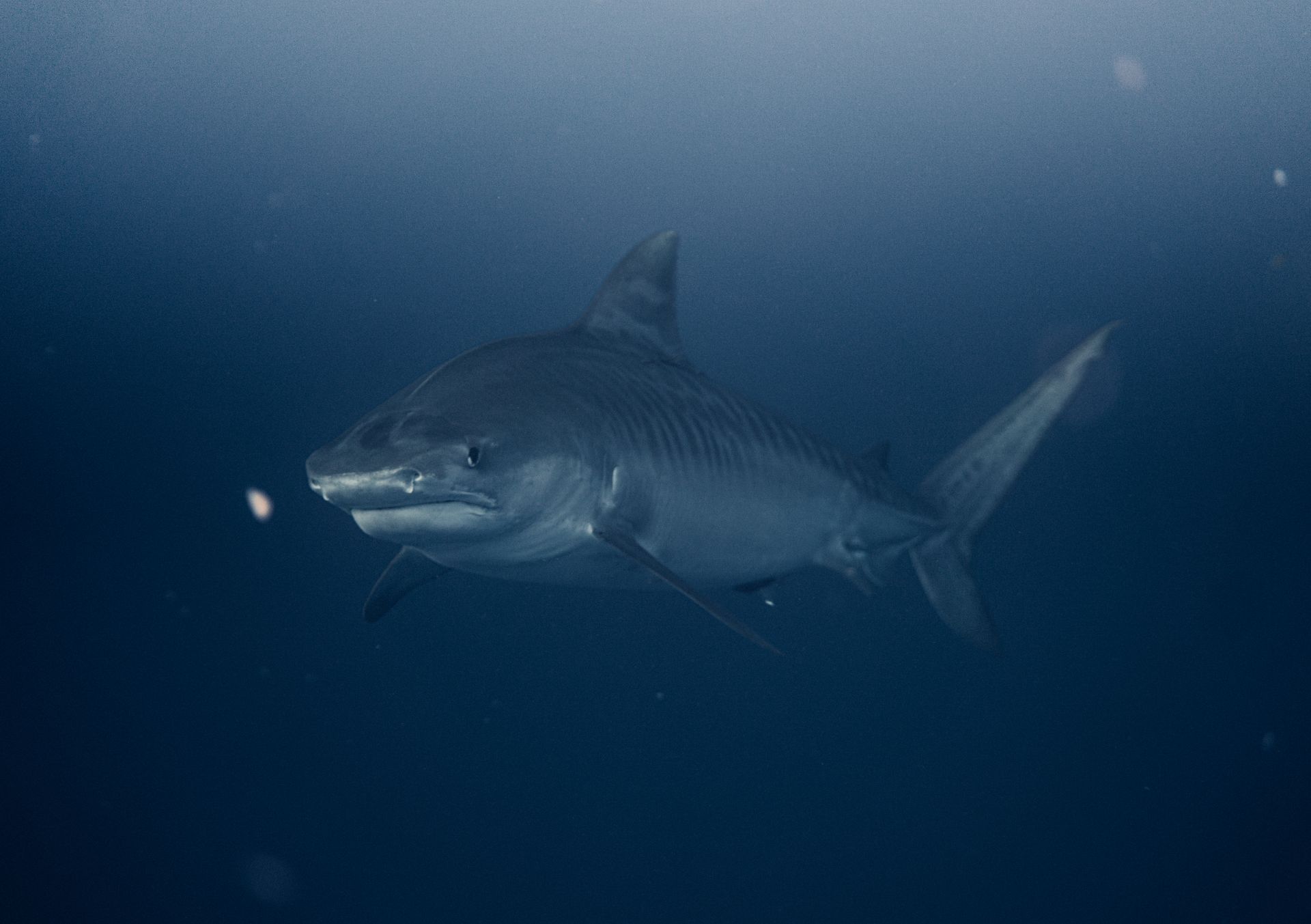
Here are some of the most well-known species of sharks:
Shark and ray enthusiasts can also learn about the threats facing these animals through resources like SharkAndRays.com. This website provides valuable information on shark conservation and the importance of protecting these incredible creatures.
Conservation and Management
Pacific spiny dogfish sharks are managed by NOAA Fisheries and the Pacific Fishery Management Council on the West Coast. They also work with the North Pacific Fishery Management Council to manage the species as part of the Gulf of Alaska Shark Complex and the Bering Sea/Aleutian Islands Shark Complex.
The Pacific spiny dogfish is divided into three stocks: the Pacific coast stock, and two stocks contained in the Bering Sea/Aleutian Islands Shark Complex and the Gulf of Alaska Shark Complex. These stocks are monitored through regular assessments to ensure the health of the population.
The species is vulnerable to over-exploitation due to its late age at maturity and low reproductive capacity, making conservation efforts crucial.
Conservation Status
The North Pacific spiny dogfish is listed as Least Concern, but its population status varies across different regions. The species is vulnerable to over-exploitation due to its late age at maturity and low reproductive capacity.
There are three stocks of Pacific spiny dogfish: the Pacific coast, the Bering Sea/Aleutian Islands Shark Complex, and the Gulf of Alaska Shark Complex. Each stock has a different management plan in place.
The Northeast Pacific offshore stock is not considered to be overfished, and may be increasing. However, the Puget Sound inshore stock has been significantly depleted, but there is no longer intensive fishing in that area.
The North Pacific spiny dogfish is found on both sides of the North Pacific Ocean, from Baja, Mexico, to Alaska, and from Eastern Russia to Taiwan, including the Japanese archipelago.
Here's a breakdown of the different regions and their current population status:
Fishery management for the North Pacific spiny dogfish is a collaborative effort between NOAA Fisheries and the Pacific Fishery Management Council, as well as the North Pacific Fishery Management Council.
Bycatch
Bycatch is a significant concern for many fish species, but fortunately, spiny dogfish are not directly targeted in waters off the Pacific Coast and Alaska.
This means that there are no bycatch impacts from a directed fishery, giving us one less thing to worry about when it comes to their conservation.
The lack of bycatch is likely due to the fact that fishermen generally do not target spiny dogfish in these waters.
Overall, this is a positive development for the conservation of spiny dogfish, allowing us to focus on other management strategies.
Research and Science
The Pacific spiny dogfish shark is an incredible creature, capable of traversing vast distances with ease. One tagged dogfish was recovered off the coast of Japan, having made an 8,047 km (5,000 miles) journey from Washington state.
Their impressive endurance is a testament to their adaptability and resilience. This remarkable feat showcases their ability to thrive in diverse marine environments.
Their remarkable journey is a reminder of the importance of understanding and protecting these amazing animals and their habitats.
Research in Alaska
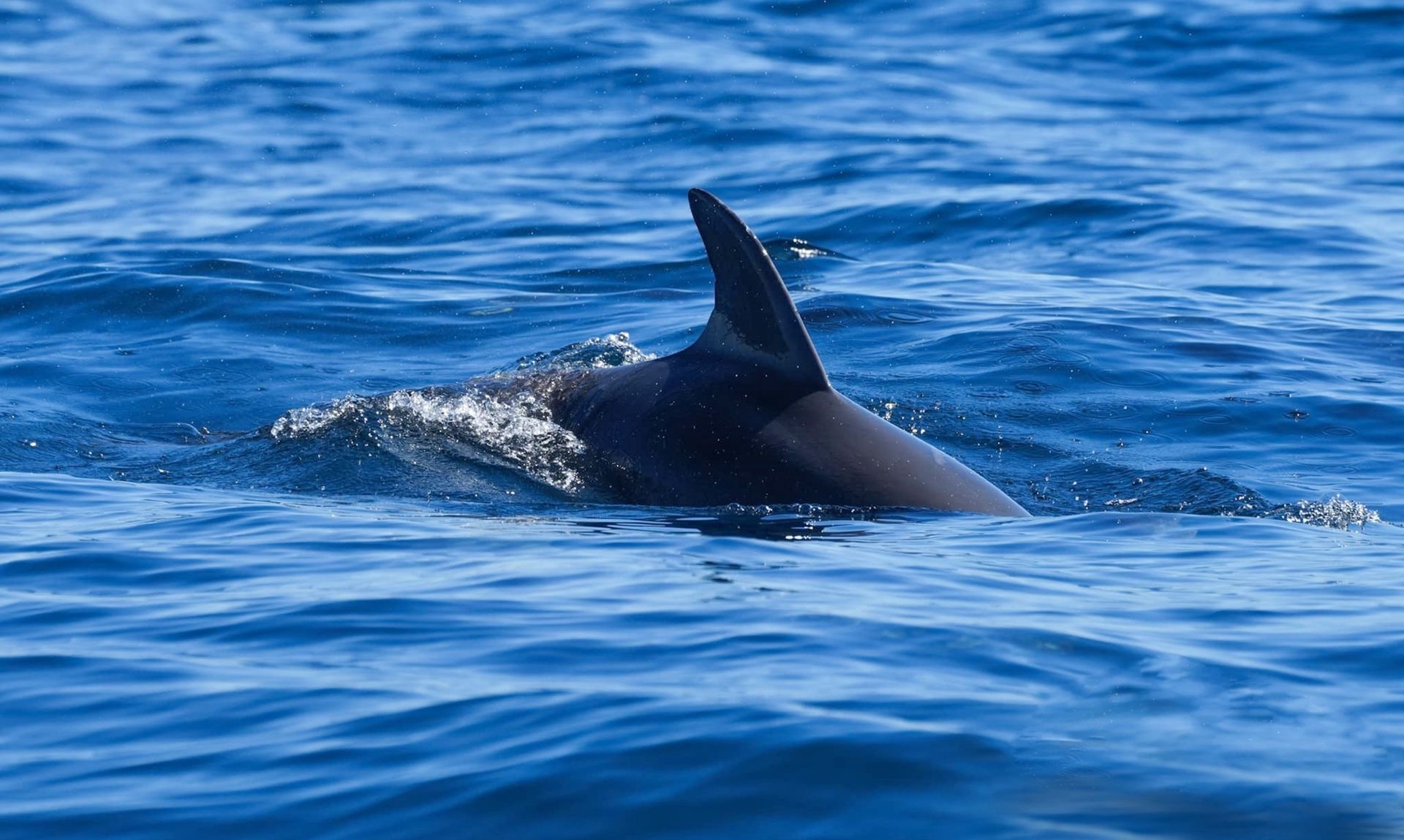
Research in Alaska is a fascinating field that often surprises people with its unique discoveries.
The state is home to three shark species: Pacific sleeper shark, spiny dogfish, and salmon shark.
These shark species can be found in Alaskan waters, including the Pacific sleeper shark, which is known for its slow movements, and the spiny dogfish, which has a distinctive spiny skin.
Many other species of sharks can also be found in Alaskan waters.
The Science
The spiny dogfish, a species of shark, is found in Alaskan waters.
This fish can travel long distances. One dogfish was tagged in Washington state and was recovered off the coast of Japan years later, having made an 8,047 km (5,000 miles) journey!
The spiny dogfish belongs to the class Chondrichthyes, which is a group of cartilaginous fish.
According to scientific classification, the spiny dogfish is part of the order Squaliformes and the family Squalidae.
Frequently Asked Questions
Are spiny dogfish sharks aggressive?
Yes, spiny dogfish are known to be aggressive and have a reputation for pursuing their prey relentlessly. They are also social hunters that feed in large groups, making them a formidable force in the ocean.
Featured Images: pexels.com