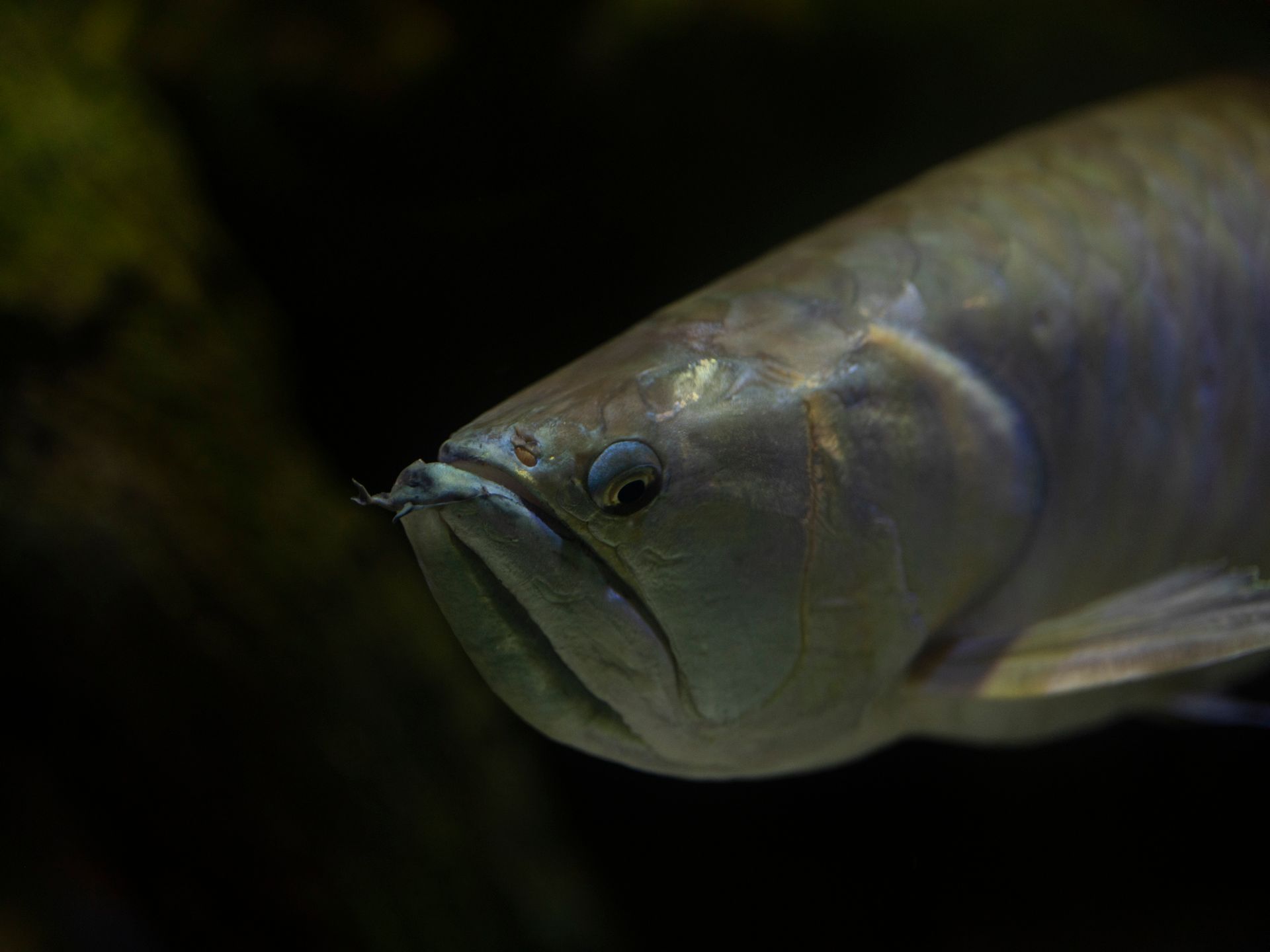
The Silver Arowana, scientifically known as Osteoglossum bicirrhosum, is a stunning freshwater fish native to the Amazon and Orinoco river basins.
It can grow up to 36 inches in length, making it a majestic addition to any aquarium.
Native to the Amazon and Orinoco river basins, the Silver Arowana requires a large tank with plenty of space to swim.
They are carnivores and thrive on a diet rich in meaty foods, such as brine shrimp and bloodworms.
General Information
Silver Arowanas are classed as prehistoric fish, having evolved only slightly compared to other species of fish on this planet.
They have a nasty bite, so it's essential to keep your fingers at a safe distance from their mouth. Their tongue is covered in small teeth, which can cause harm if you're not careful.
As adults, Silver Arowanas can grow up to 4 feet in length, requiring a very large aquarium to accommodate their size.
General Information
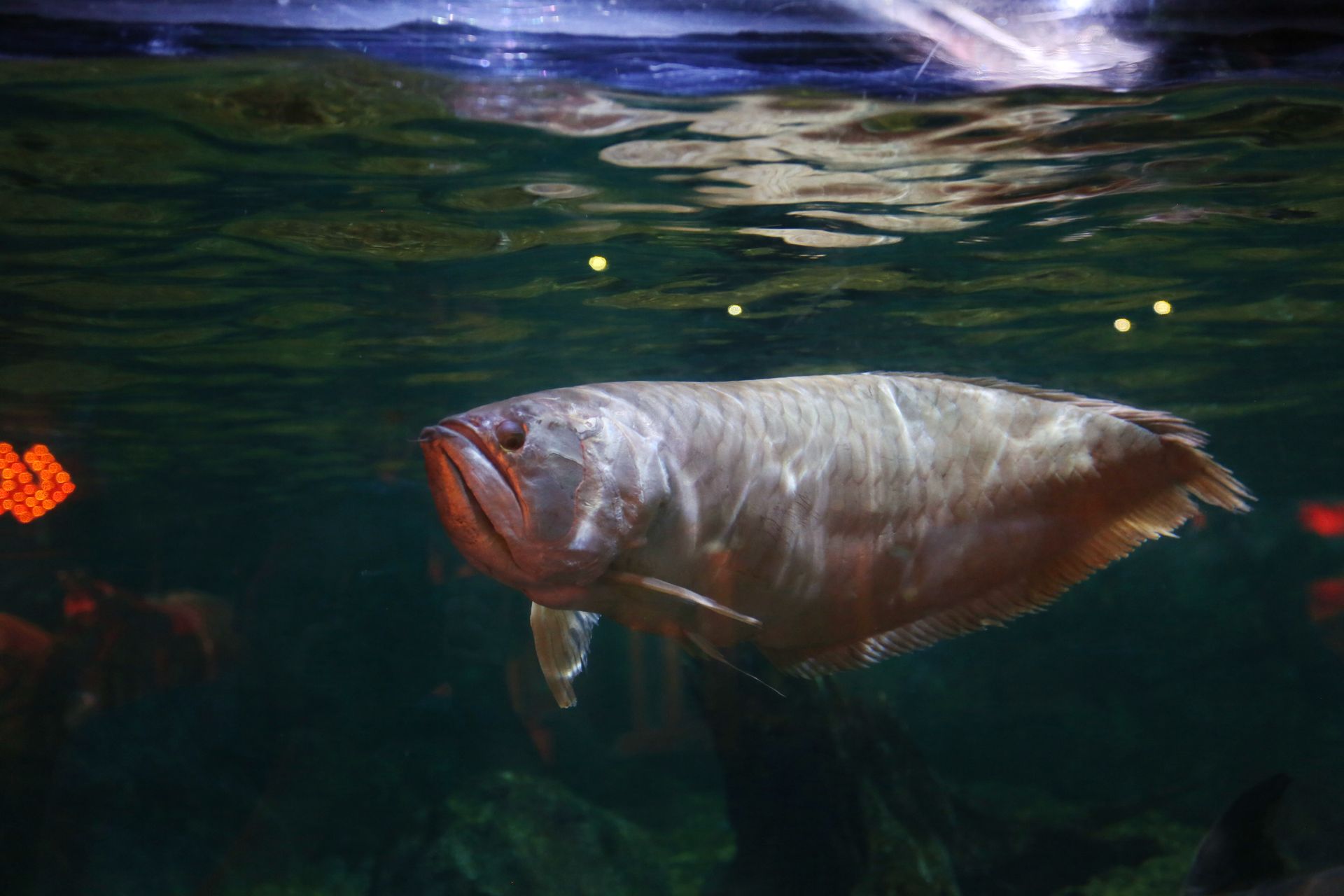
The Silver Arowana is a prehistoric fish that has evolved very little compared to other species, so it's essential to treat them with respect and keep your fingers away from their mouth.
These fish have a nasty bite, and their tongue is covered in small teeth, so be careful not to get too close. They can grow up to 4 feet in length, which is quite impressive.
To give them enough space to swim, you'll need an aquarium that's at least three times their body length, which means an adult Silver Arowana requires a tank that's 12 feet long.
They're also excellent jumpers, so you'll need a tight-fitting lid to prevent them from leaping out of the tank.
Diet
This species is a generalised predator with a varied diet that includes other fishes, terrestrial insects, aquatic invertebrates, and plant material like fallen nuts and fruits.
Smaller specimens can thrive on bloodworm, small earthworms, chopped prawn, and similar foods.
Adults will accept a wider range of foods, including strips of fish flesh, whole prawns/shrimp, mussels, live river shrimp, and larger earthworms.
Floating dried products can also be used in limited quantities.
It's essential to avoid feeding mammalian or avian meat, such as beef heart or chicken, as the lipids in these foods can cause excess fat deposits and even organ degeneration.
Physical and Behavioral Characteristics
The Silver Arowana, also known as Osteoglossum bicirrhosum, is a truly unique and fascinating creature. Its long, sinuous body and upward-facing mouth make it perfectly adapted for lunging at prey from the water surface.
This fish can grow to nearly three feet in length, making it a species suitable only for those interested in keeping a truly enormous aquarium, something in the 300-500 gallon range.
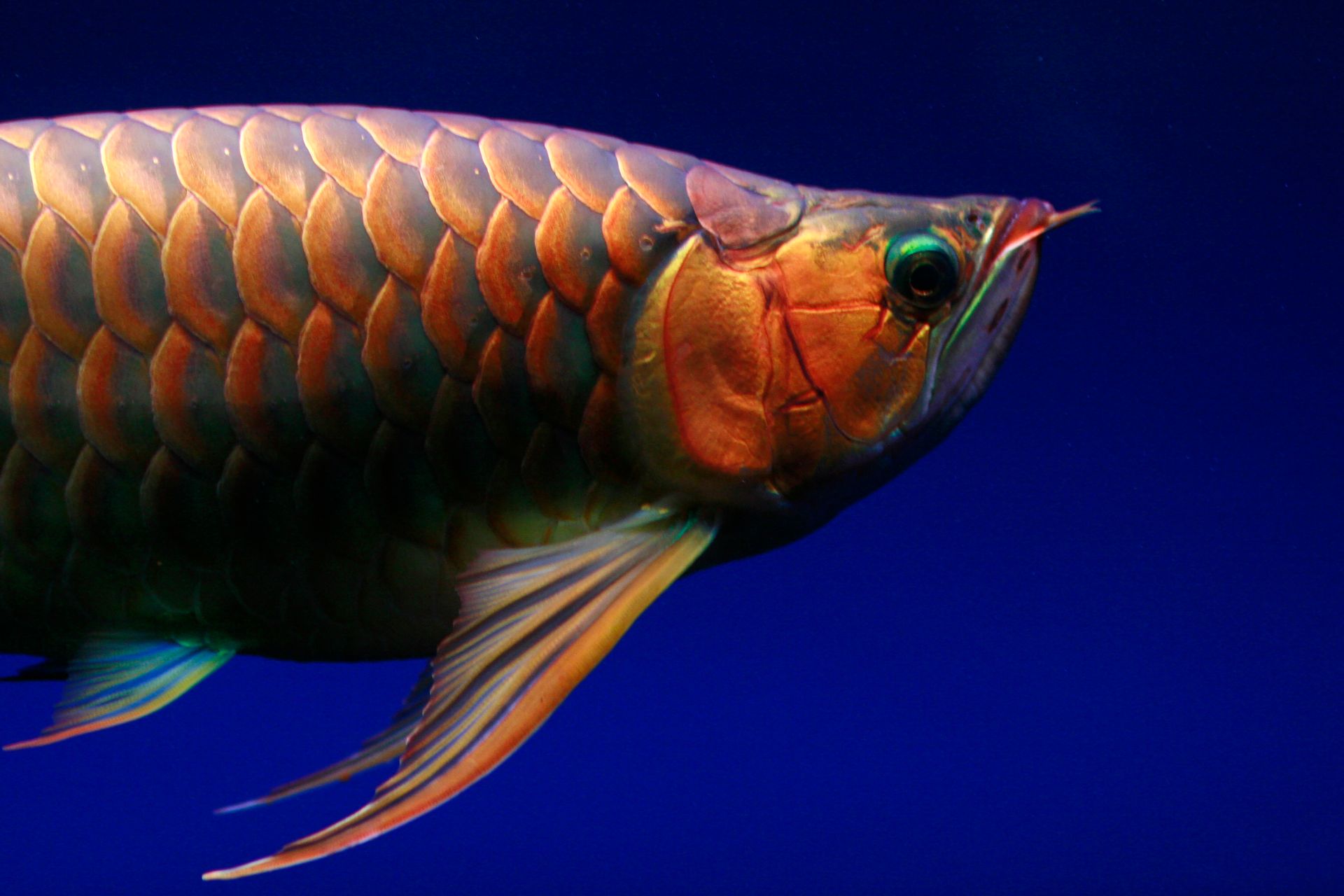
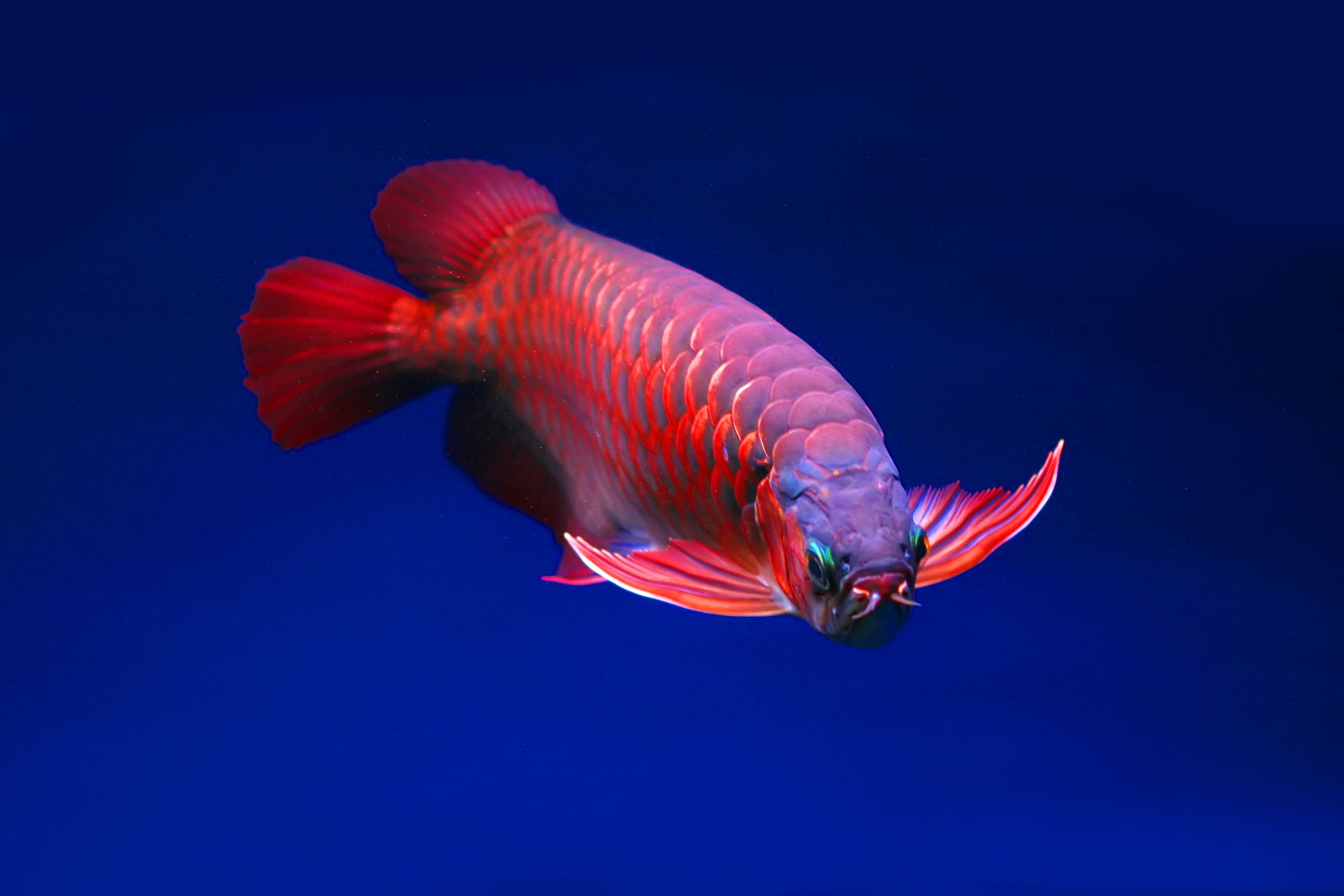
Arowanas have relatively large scales, a long body, and a tapered tail, with the dorsal and anal fins extending all the way to the small caudal fin, with which they are nearly fused.
They can reach a maximum total length of 0.9 m (3.0 ft), but some individuals have been reported to grow up to 1.2 m (3.9 ft) in length.
Arowanas are often called 'dragon fish' by aquarists because their shiny, armor-like scales and double barbels are reminiscent of descriptions of dragons in East Asian folklore.
Here are some key physical characteristics of the Silver Arowana:
- Maximum total length: 0.9 m (3.0 ft)
- Some individuals can grow up to 1.2 m (3.9 ft) in length
- Relatively large scales
- Long body
- Tapered tail
- Dorsal and anal fins extending to the small caudal fin
Arowanas are generally peaceful fish that will mostly ignore their tankmates, provided they aren't able to fit in the arowana's capacious mouth.
Range and Habitat
The silver arowana is native to the Amazon, Essequibo, and Oyapock basins.
It's a South American species that calls these regions home. The Rio Negro basin is actually one place where the silver arowana is absent, except for the Branco River, which is inhabited by both silver and black arowanas.
The silver arowana is quite adaptable and can be found in both black- and whitewater habitats. It even thrives in flooded forests.
During the dry season, these fish tend to stick to slower-moving waters like tributaries, backwaters, and lagoons.
Worth a look: Black and Silver Schnauzer
Reproduction and Breeding
This species is often bred commercially in outdoor facilities, where the males take on a unique parental role.
The male will hold the eggs and later fry in their mouth for a total of around two months, making them a paternal mouthbrooder.
Typical brood size is 12-30 eggs, and females are capable of producing 50-250 eggs per reproductive season.
The fry are quite large at hatching, measuring around 50-75 mm, and initially have a large external yolk sac.
They are often available in the ornamental trade at this young age, and the parents will incubate the eggs and hold the fry in their mouths until they reach a size and independence where the parents can release them into a safe environment.
Conservation and Etymology
The osteoglossum bicirrhosum silver arowana has an interesting etymology. Its scientific name, osteoglossum bicirrhosum, breaks down into two parts: osteoglossum and bicirrhosum.
Osteoglossum comes from the Greek osteon, meaning 'bone', and glossa, meaning 'tongue'. This refers to the unique feature of the arowana's mouth, which is lined with small, bony projections.
The bicirrhosum part of the name comes from the Latin bi, meaning 'two', and cirrhosum, meaning 'tendrilled', in reference to the arowana's two long barbels.
Conservation Status
The silver arowana population is threatened due to overfishing. In 2005, a dispute arose between Brazilian and Colombian authorities over the shared use of the population.
The silver arowana is caught in Colombia for sale as an aquarium fish, while in Brazil, they are caught for food. This has led to a sharp drop in the population.
In response, Brazilian authorities prohibited fishing of the silver arowana between September 1 and November 15. Similarly, Colombian authorities prohibited capturing them between November 1 and March 15.
The silver arowana is often kept as a pet by experienced aquarists, as it is considered an accessible substitute for the Asian arowana, which is difficult and expensive to obtain legally.
Etymology
The name of the Osteoglossum fish is a fascinating combination of Greek and Latin roots. Osteoglossum comes from the Greek osteon, meaning 'bone', and glossa, meaning 'tongue'.
This fish's scientific name is a dead giveaway to its unique features. The bicirrhosum part of its name comes from the Latin bi, meaning 'two', and cirrhosum, meaning 'tendrilled', which refers to its barbels.
The use of Greek and Latin roots in scientific names is a convention that helps us understand the characteristics of a species. It's like a secret code that only makes sense to those who know the language.
The names of species often give us clues about their physical characteristics or habits. In the case of the Osteoglossum, its name tells us about its bone-like scales and tongue-like shape.
Discover more: Silver Dog Names
Frequently Asked Questions
What kills arowana?
Rotting gills can be fatal to Arowana, causing respiratory problems that often lead to death. Proper gill care is crucial to prevent this life-threatening issue.
Featured Images: pexels.com