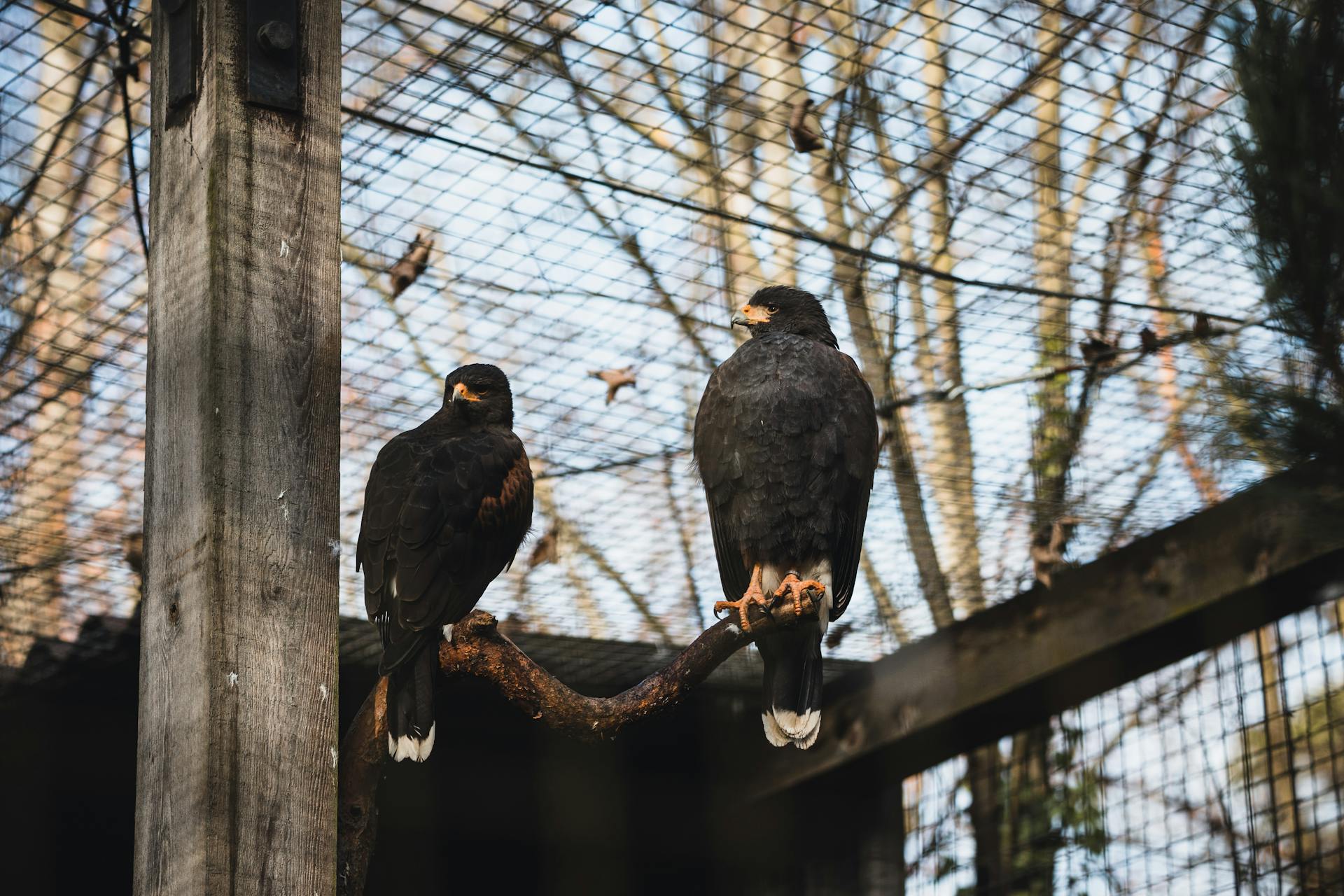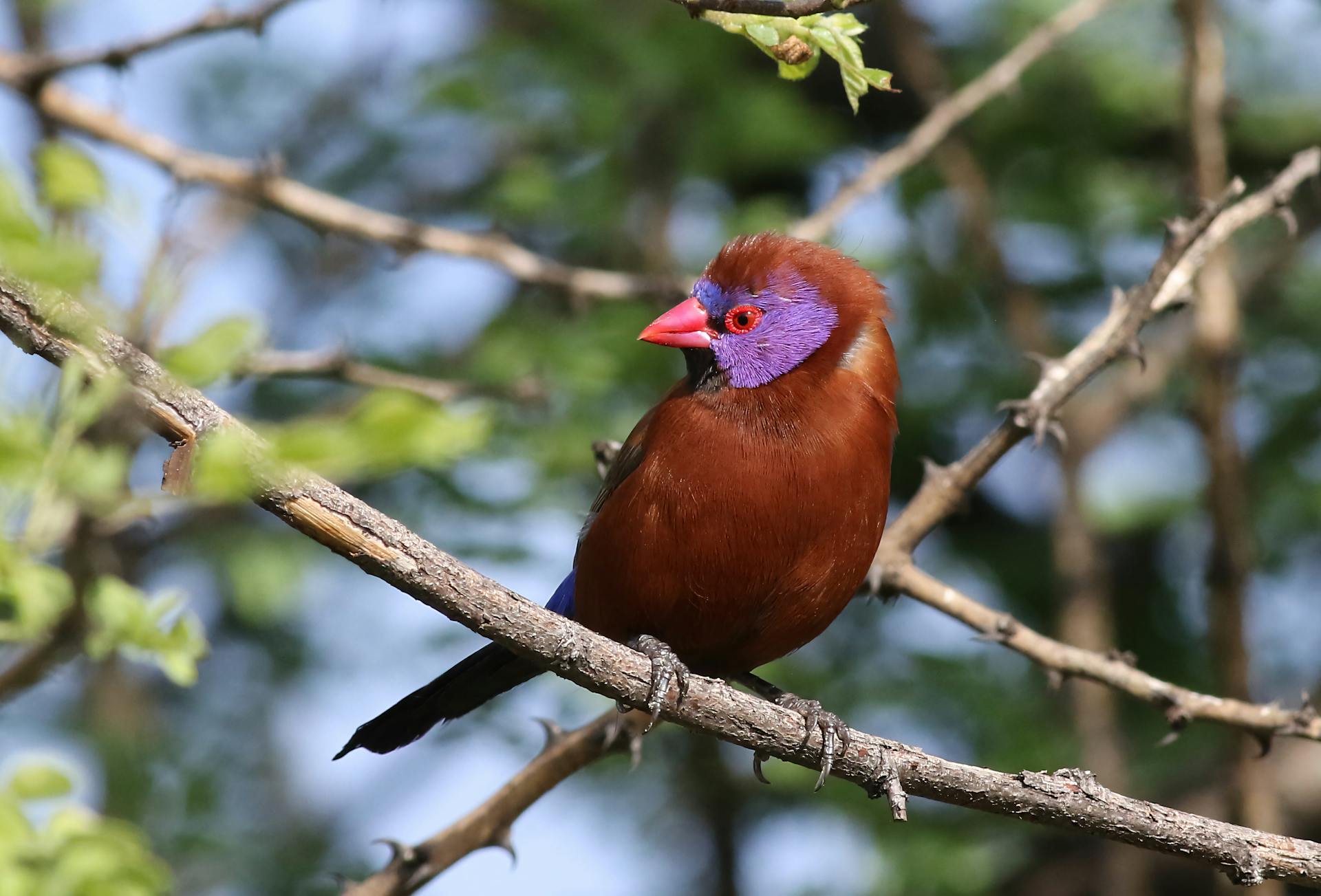
Bird enthusiasts rejoice! With the rise of online bird identification tools and resources, it's easier than ever to identify the birds you spot in the wild. Many of these tools rely on detailed field guides, such as the eBird app, which boasts an impressive 10 million user-generated checklists and 400 million observations.
The Merlin Bird ID app, developed by the Cornell Lab of Ornithology, uses a combination of machine learning and expert input to help users identify birds in just a few seconds. This app is particularly useful for beginners, as it asks a series of questions to narrow down the identification process.
Whether you're a seasoned birder or just starting out, online bird identification tools can be a game-changer for your hobby. By leveraging the power of technology and community-driven data, these resources make it possible to identify birds with greater accuracy and efficiency.
Online Bird Identification Tools
Online bird identification tools have come a long way, making it easier than ever to identify the birds you see.
The Audubon Bird Guide app is a great place to start, with over 800 species of North American birds, more than 3,000 photos, and over eight hours of audio clips of songs and calls.
This app is free and easy to use for all experience levels, and it's available in 12 languages for 7 continents. You can even use it to identify birds from a photo.
The Audubon Bird Guide app also allows you to keep track of all the birds you see and your life list, and see where the birds are with nearby birding hotspots and real-time sightings from eBird.
Another great option is eNature.com, which has a field guide that allows you to limit your search by zip code or region. You can even use their advanced search to select birds by type, color, size, habitat, and region.
eNature.com also has recordings of bird calls to go along with their photos and information.
If you're looking for a more advanced tool, you can try the Audubon Bird Guide's API or Zapier access, which allows you to classify different bird species in photographs or automatically identify and monitor bird species in field studies.
Consider reading: Ohio Bird Identification Pictures
Getting Help with Bird Identification
If you're struggling to identify birds, don't worry, there are tools available to help you improve your skills. You can use the bird identification tools provided to get started.
Whether you're a seasoned birder or just starting out, there's a tool for you. The bird identification tools can be accessed through an API or Zapier, making it easy to integrate into your workflow.
For those who need to identify birds at scale, there are several applications of the bird classifier. These include wildlife photography, where the tool can be used to classify bird species in photographs, and ornithological research, where it can be used to automatically identify and monitor bird species in field studies.
The bird classifier can also be used in ecotourism, where it can enhance the visitor experience in nature reserves and parks by providing instant bird species identification through an app. Additionally, it can be used in environmental monitoring to monitor bird populations and migration patterns for environmental impact assessments and conservation efforts.
Recommended read: Bird Identification by Photo
Some of the specific applications of the bird classifier include:
- Wildlife Photography: Classify different bird species in photographs to assist photographers in cataloging and organizing their wildlife portfolios.
- Ornithological Research: Enable researchers to automatically identify and monitor bird species in field studies, streamlining data collection for avian studies.
- Ecotourism: Enhance visitor experience in nature reserves and parks by providing instant bird species identification through an app.
- Environmental Monitoring: Monitor bird populations and migration patterns for environmental impact assessments and conservation efforts.
- Education: Support educational programs in schools and nature centers by providing a tool for students to learn and identify various bird species.
- Retail: Help bird watching equipment retailers, like binoculars and cameras, to offer personalized product recommendations based on commonly spotted birds.
- Content Creation: Assist nature bloggers, vloggers, and social media influencers in accurately identifying and tagging bird species in their content.
No PhD required to use the bird classifier, making it accessible to anyone who needs to identify birds at scale.
How it Works
Online bird identification works by using a combination of visual characteristics, such as beak shape and plumage color, to narrow down the possibilities.
These characteristics are often captured in high-quality images or videos, which are then analyzed by AI algorithms that have been trained on vast databases of bird species.
The algorithms use machine learning techniques to identify patterns and similarities between the characteristics of different bird species, allowing them to make accurate identifications.
How the Classifier Works
Our classifier is powered by a pretrained image model that uses the 525 Bird Species dataset. This extensive dataset gives the model a solid foundation to work from.
The model has 291 labels, which means it can identify 291 different bird species, including the Raven and the American Robin. These labels are the key to the model's accuracy.
When you upload an image, the model will predict what bird it is. It's as simple as that. The model's confidence score will also be displayed, showing just how sure it is about its prediction.
All About

The technology behind this system is quite fascinating. It uses a combination of artificial intelligence and machine learning algorithms to analyze data and make predictions.
At its core, this system relies on a complex network of interconnected nodes that process and transmit information.
These nodes are designed to work together in harmony, leveraging each other's strengths to achieve a common goal.
The system's ability to learn from data is a key feature, allowing it to improve its performance over time.
One way it does this is by adjusting the weights of the nodes to better match the patterns in the data.
This process is called backpropagation, and it's a crucial step in the machine learning process.
The system's accuracy is also influenced by the quality of the data it's trained on.
High-quality data with minimal errors is essential for the system to learn effectively.
In practice, this means that the data should be accurate, complete, and relevant to the task at hand.
By using high-quality data, the system can make more accurate predictions and better serve its users.
Key Features and Resources
The Audubon Bird Guide is a fantastic tool for online bird identification. It features over 3,000 photos to help you identify birds.
With its comprehensive field guide, you can narrow down a list of possible matches for your location and date in real time. This is especially helpful when you're trying to identify a bird you just saw.
The guide also includes over eight hours of audio clips of songs and calls, which is a great way to learn bird vocalizations. I've found this feature to be particularly useful when trying to identify birds by their sounds.
You can keep a record of every bird you encounter with the Sightings feature. This will even keep an updated life list for you.
The Audubon Bird Guide also allows you to see nearby birding hotspots and real-time sightings from eBird. This is a great way to discover new birding locations and connect with other birders.
Worth a look: Audubon Bird Call Identification
Frequently Asked Questions
Can Google Lens identify birds?
Yes, Google Lens can identify birds, analyzing photos to provide results most of the time. To learn more about using Google Lens for bird identification, check out our detailed guide.
Featured Images: pexels.com