The Norwegian Elkhound is an ancient dog breed that originated in Norway over 6,000 years ago. They were originally bred to hunt small and large game, and their strong instincts and athleticism still make them excellent hunting companions today.
Their thick double coat, which sheds heavily, requires regular brushing and grooming to prevent matting and tangling. They also need to be bathed regularly to keep their coat clean and healthy.
Norwegian Elkhounds are a medium-sized breed, with males weighing between 55-70 pounds and standing 19-20 inches tall at the shoulder. They are a sturdy and athletic breed, with a wedge-shaped head and erect ears.
They are generally a healthy breed, but can be prone to hip dysplasia and eye problems if not properly cared for.
Physical Characteristics
The Norwegian Elkhound is a medium-sized dog with a sturdy build, weighing between 44-51 pounds and standing about 19.5-20.5 inches tall.
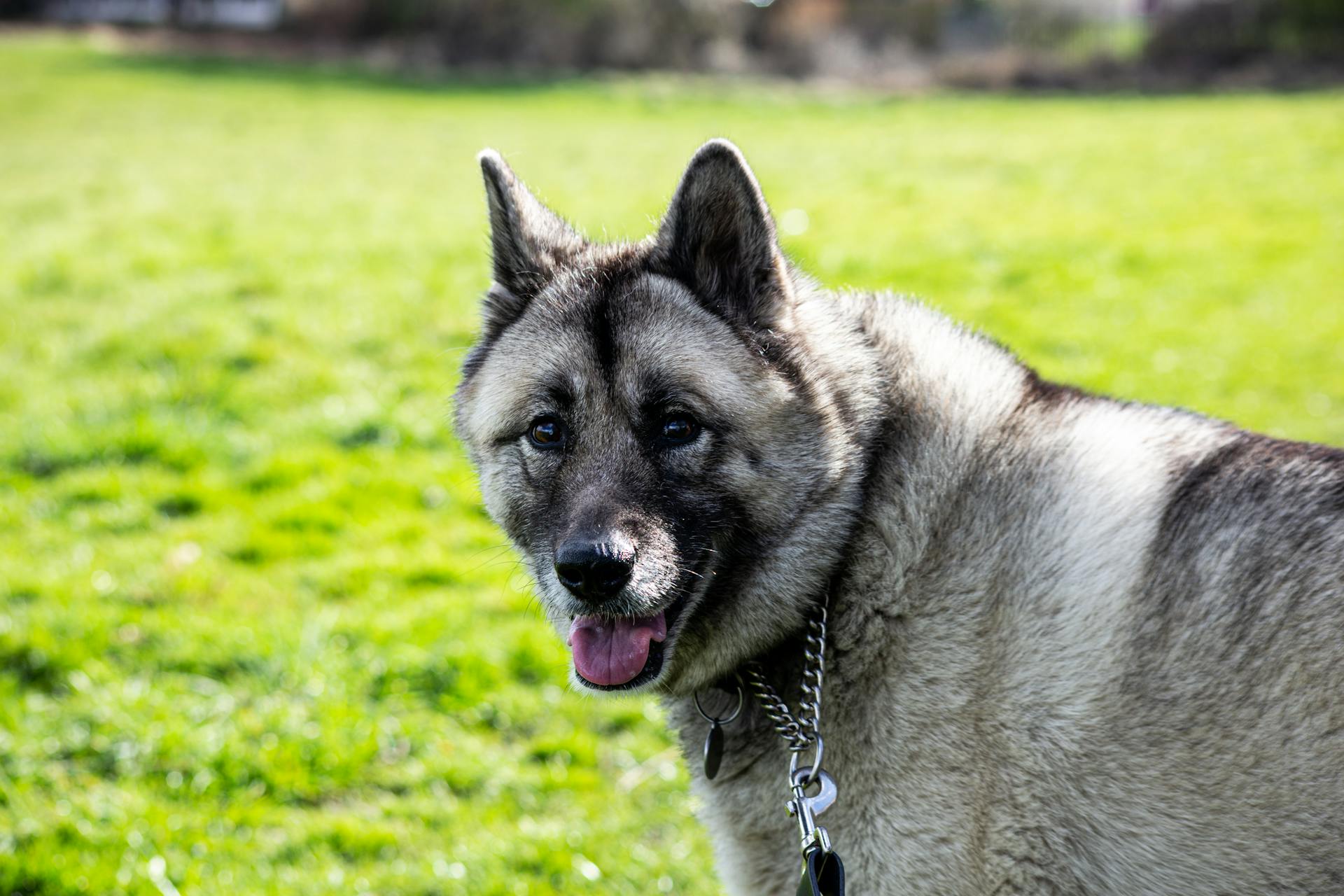
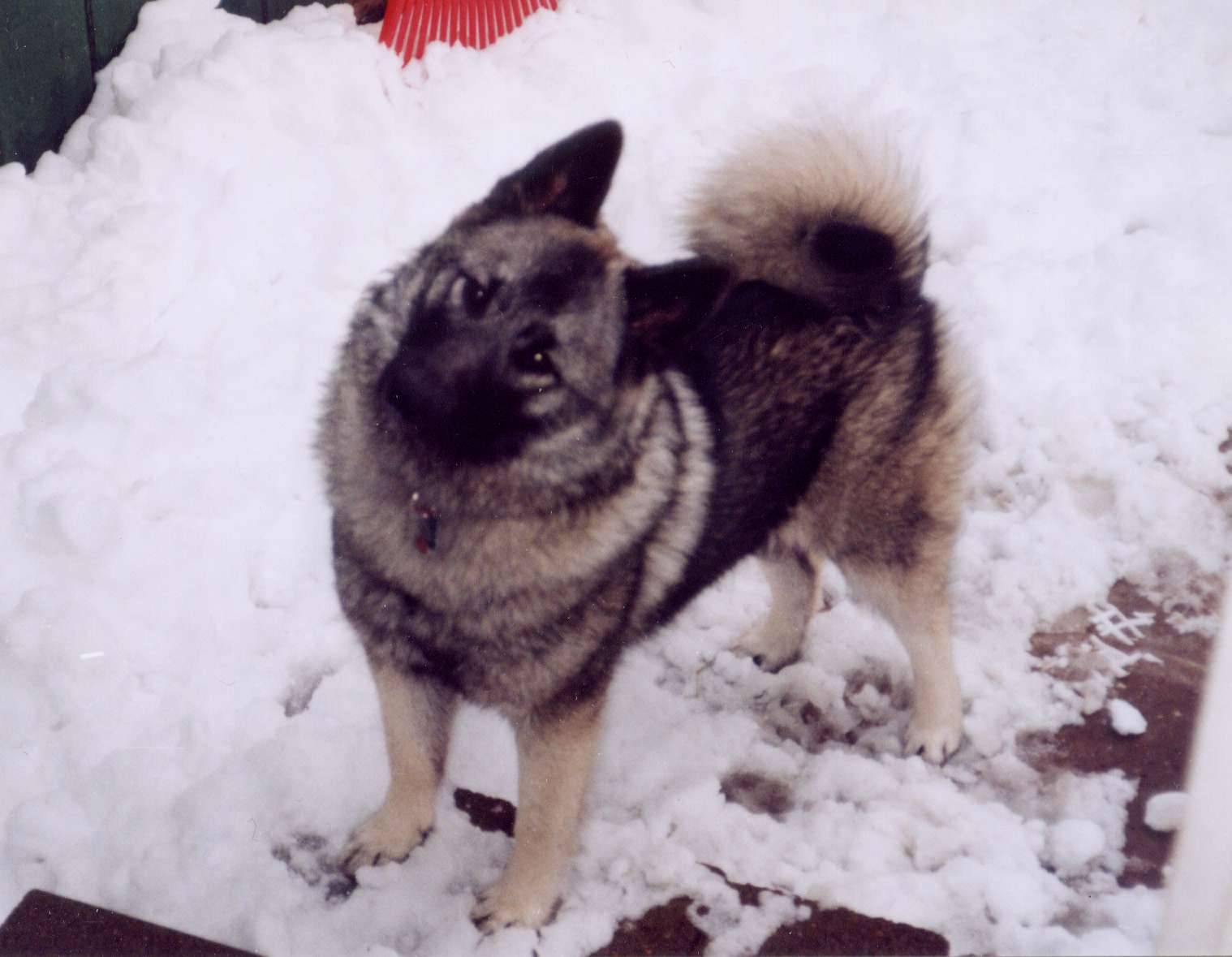
Their coat is quite unique, consisting of a coarse, straight outer layer and a soft undercoat. They come in a variety of colors, including black and white, often noted as grey or silver.
Their head is broad and wedge-shaped, with a defined stop and a scissors bite. Their dark brown eyes are full of a keen, friendly expression.
One of the most distinctive features of the Norwegian Elkhound is their coat coloration. They have a dense, smooth coat that ranges in color from black at the muzzle, ears, and tail tip to silvery grey on their legs, tail, and underbody.
Here are some key physical characteristics of the Norwegian Elkhound:
- Height: 19.5-20.5 inches (50-52 cm)
- Weight: 44-51 pounds (20-23 kg)
- Coat: Coarse, straight with soft undercoat
- Color: Black and white, often noted as grey or silver
- Ears: Pointed, erect
- Tail: Rolled tightly over back
Their tails are curled tightly over their backs, and their ears are pointed and erect, although they may relax when the dog is calm.
Behavior and Temperament
Norwegian Elkhounds are bred for hunting large game, such as wolf, bear, and moose.
They have a sharp, loud bark that makes them suitable as watchdogs.
These dogs are loyal to their "pack" and make excellent family dogs given proper attention.
They're bold, playful, independent, alert, extremely intelligent, and, at times, a bit boisterous.
Norwegian Elkhounds rank 36th in Stanley Coren's The Intelligence of Dogs, being of above average working/obedience intelligence.
They may take time to warm up to strangers, but they will generally come around.
Their loyalty is to their pet parent first and foremost.
Elkhounds can cohabitate with other dogs, although it's best to introduce them to other dogs when they're young.
They tend to be quite vocal and won't hesitate to sound the bark alarm if they want to tell you something Very Important.
Early socialization is crucial for a well-rounded dog, and enrolling them in a puppy kindergarten class is a great start.
Inviting visitors over regularly and taking them to busy parks and stores will also help them polish their social skills.
An Elkhound is excellent with children and will play with and protect them.
However, without careful obedience training, they may take over the role of pack leader and become dominant.
You should always teach children how to approach and touch dogs, and always supervise any interactions between dogs and young children.
The Norwegian Elkhound generally gets along with other pets, including cats, but remember his prey drive and willingness to hunt big game.
Consider reading: Will Shiba Inu Hit $1
General Information
The Norwegian Elkhound is a remarkable breed with a rich history and unique characteristics. They originated in Norway, with a lineage dating back to ancient times, around 5000 B.C.E.
These dogs are known for their wolf-like appearance, with a curled tail, erect ears, and a dense, silver-gray coat. They excel as hunters, originally bred for tracking and holding large game like moose and elk.
Norwegian Elkhounds are well-suited for cold climates due to their thick double coat and rugged build. They have a distinctive bark that they use to alert their owners to potential threats.
To give you a better idea of their size, here are the typical measurements for Norwegian Elkhounds:
They are a relatively long-lived breed, with an average lifespan of 12-15 years.
Health and Care
The Norwegian Elkhound is a generally healthy breed, but like all breeds, they're prone to certain health conditions. Expect to see health clearances from reputable organizations such as the Orthopedic Foundation for Animals (OFA) for hip dysplasia, elbow dysplasia, hypothyroidism, and von Willebrand's disease.
On a similar theme: Hip Dysplasia Bernese Mountain Dog
Elkhounds can be affected by Fanconi Syndrome, a serious inherited disease that affects the kidneys and tubules, leading to improper levels of essential substances. If caught early, affected dogs can do well with proper management, including medication, diet changes, and plenty of fresh water.
Their life expectancy is 12 to 15 years, but they can be susceptible to hip dysplasia, a condition where the hip joint isn't formed properly, causing pain. If your Elkhound is showing signs of hip dysplasia, such as lameness or "bunny hopping", consult with your veterinarian for treatment options.
Here are some key health issues to be aware of in Norwegian Elkhounds:
- Fanconi Syndrome: excessive urination and thirst, weight loss, muscle wasting, lethargy, loss of appetite, and vomiting
- Hip Dysplasia: lameness in the back legs, decreased activity, and "bunny hopping"
- Progressive Retinal Atrophy (PRA): gradual deterioration of the retina, leading to night-blindness and potentially complete vision loss
- Sebaceous Cysts: follicular cysts that form under the dog's skin, which can range in size and may burst open
Proper care and attention can help prevent or manage these health issues, so make sure to keep up with regular veterinary check-ups and provide your Elkhound with a healthy diet, plenty of exercise, and plenty of love.
Health
Norwegian Elkhounds are generally a healthy breed, but like all breeds, they can be prone to certain health issues. One serious inherited disease that affects the kidneys and tubules is Fanconi Syndrome, which can lead to improper levels of essential substances in the body.
Symptoms of Fanconi Syndrome usually begin between the ages of one to seven years and can include excessive urination and thirst. If caught early, affected dogs can do well with medication, diet changes, and a constant supply of fresh water.
Hip dysplasia is another condition that can affect Elkhounds, causing the hip joint to rub and cause pain. Symptoms include lameness in the back legs, decreased activity, and "bunny hopping." Treatment options include physical therapy, joint supplements, medications, and potentially surgery.
Several genetic eye conditions can also occur in the breed, including progressive retinal atrophy (PRA), glaucoma, and cataracts. If your pup has any issues with their eyes, such as redness, cloudiness, squinting, bulging, running into things, or pain, please see your veterinarian right away.
Renal (kidney) disease is another potential issue in Norwegian Elkhounds, including Fanconi syndrome. Symptoms can include excessive urination and thirst, as well as weight loss. There's no cure for kidney disease, but treatment options include a prescription diet, medications, and ensuring your dog always has access to plenty of fresh water.
Some common eye diseases in Elkhounds include:
- Progressive Retinal Atrophy (PRA): This is a family of eye diseases that involves the gradual deterioration of the retina, leading to night-blindness and eventually complete loss of sight.
- Glaucoma: This is a condition that can cause increased pressure in the eye, leading to pain, redness, and vision loss.
- Cataracts: This is a clouding of the lens in the eye, which can cause vision loss and blindness.
Sebaceous cysts are also a potential issue in Elkhounds, which are follicular cysts that can form under the skin and range in size from small to as large as a walnut. They can occasionally burst open, expelling a thick, white cheesy mass, and surgical removal is usually the treatment.
Caring for a Dog
Daily exercise is crucial for a Norwegian Elkhound, requiring at least 30 minutes twice a day to maintain a healthy weight.
Their high energy levels can lead to obesity if they're not properly exercised and fed. Exceptionally food-motivated, they can become accomplished beggars if you're not careful.
A home with a fenced yard is more suitable for a Norwegian Elkhound, as they can get restless if they don't have enough space to roam.
They're hardy dogs and can live outside, but they'd much rather be indoors with you.
Crate training is a kind way to ensure your Elkhound doesn't have accidents in the house or get into things they shouldn't.
Ownership and Support
As a Norwegian Elkhound owner, you'll want to consider the breed's history and original purpose. They were bred to hunt and track small game, so they're naturally energetic and independent.
The Norwegian Elkhound is a relatively small breed, weighing between 35-50 pounds, making them a great fit for families or individuals with smaller living spaces. They require regular exercise to stay happy and healthy.
With proper care and attention, a Norwegian Elkhound can live for 12-14 years, providing you with a loyal companion for many years to come.
Readers also liked: 100 Years Ago Original Boston Terrier
Rescue Groups
If you're considering bringing a Norwegian Elkhound into your life, it's essential to understand the importance of rescue groups. Many Elkhounds are in need of adoption and fostering due to being purchased without a clear understanding of ownership.
Elkhound rescue groups can provide valuable support and resources for both you and the dog. For instance, the John Nelsen Moosedog Rescue Fund, Inc. and the Norwegian Elkhound Association of America are two organizations that can help you navigate the process.
If you're not seeing a rescue listed for your area, don't worry - there are many more out there. You can contact the national breed club or a local breed club for guidance, and they can point you toward a reputable Elkhound rescue.
Here are some notable Elkhound rescue groups to consider:
- John Nelsen Moosedog Rescue Fund, Inc.
- Norwegian Elkhound Association of America
- Norwegian Elkhound Club of the Potomac Valley Rescue
- Norwegian Elkhound Rescue
Breed Organizations
If you're considering bringing a Norwegian Elkhound into your life, it's essential to connect with breed organizations for guidance and support. The Norwegian Elkhound Association of America is a great resource for learning more about this remarkable breed.
Reputable breeders can be found through the Norwegian Elkhound Association of America.
Explore further: Redbone Coonhound Association
Exercise and Lifestyle
Norwegian Elkhounds are high-energy dogs that thrive on physical and mental stimulation. They need at least 20 to 30 minutes of exercise twice daily.
They're not suited for life as couch potatoes, as lack of activity can lead to anxiety, frustration, and destructive behavior. Their natural hunting instincts may take over if they don't get enough exercise.
Norwegian Elkhounds excel in dog sports like conformation trials, agility, and bikejoring, which provide them with the physical and mental challenge they need. These activities are perfect for owners who enjoy competition.
Strenuous hikes are also a great way to exercise your Elkhound, as they're known for their stamina rather than speed. Just be sure to get your vet's okay before embarking on a long trek.
Mixing up their exercise routine with tasks like scent work and off-leash exercise in a well-fenced area will keep them engaged and happy. Without a fence, they might take off after a wandering critter, leading to chaos in the neighborhood.
Pros and Cons
The Norwegian Elkhound is a great breed, but like any dog, it's not perfect. It's a high-energy breed that requires regular exercise.
They need at least an hour of exercise per day, which can be a challenge for busy owners. This includes daily walks, playtime, and possibly even a run or two.
Their thick coats shed heavily, especially during shedding season, which can be a hassle for some owners. This is because they have a double coat that sheds its undercoat in the spring and fall.
Despite the shedding, their coats are relatively easy to maintain, requiring only occasional brushing. This is good news for owners who don't want to spend hours grooming their dog.
Their intelligence and independent nature can make them challenging to train, but consistent training and positive reinforcement can help. They are known to be stubborn at times, but patience and persistence can pay off.
Their loyalty and affection towards their families make them great companions, but they can be wary of strangers. This is because they have a strong prey drive and may not get along with other pets, especially small ones.
Overall, the Norwegian Elkhound is a great breed for active owners who are willing to put in the time and effort required to care for them.
Take a look at this: Shiba Inu Owner
Frequently Asked Questions
Is a Norwegian Elkhound part wolf?
Yes, the Norwegian Elkhound has wolf ancestry, with its origins tracing back to ancestral grey wolf subspecies in south central Europe and western Russia. This ancient breed's wolf heritage is a key part of its history and hunting prowess.
Are Norwegian Elkhounds rare in the US?
Norwegian Elkhounds are not considered rare, but their relatively low popularity makes them less common than some other breeds in the US. If you're interested in learning more about this unique breed, keep reading!
Featured Images: pexels.com