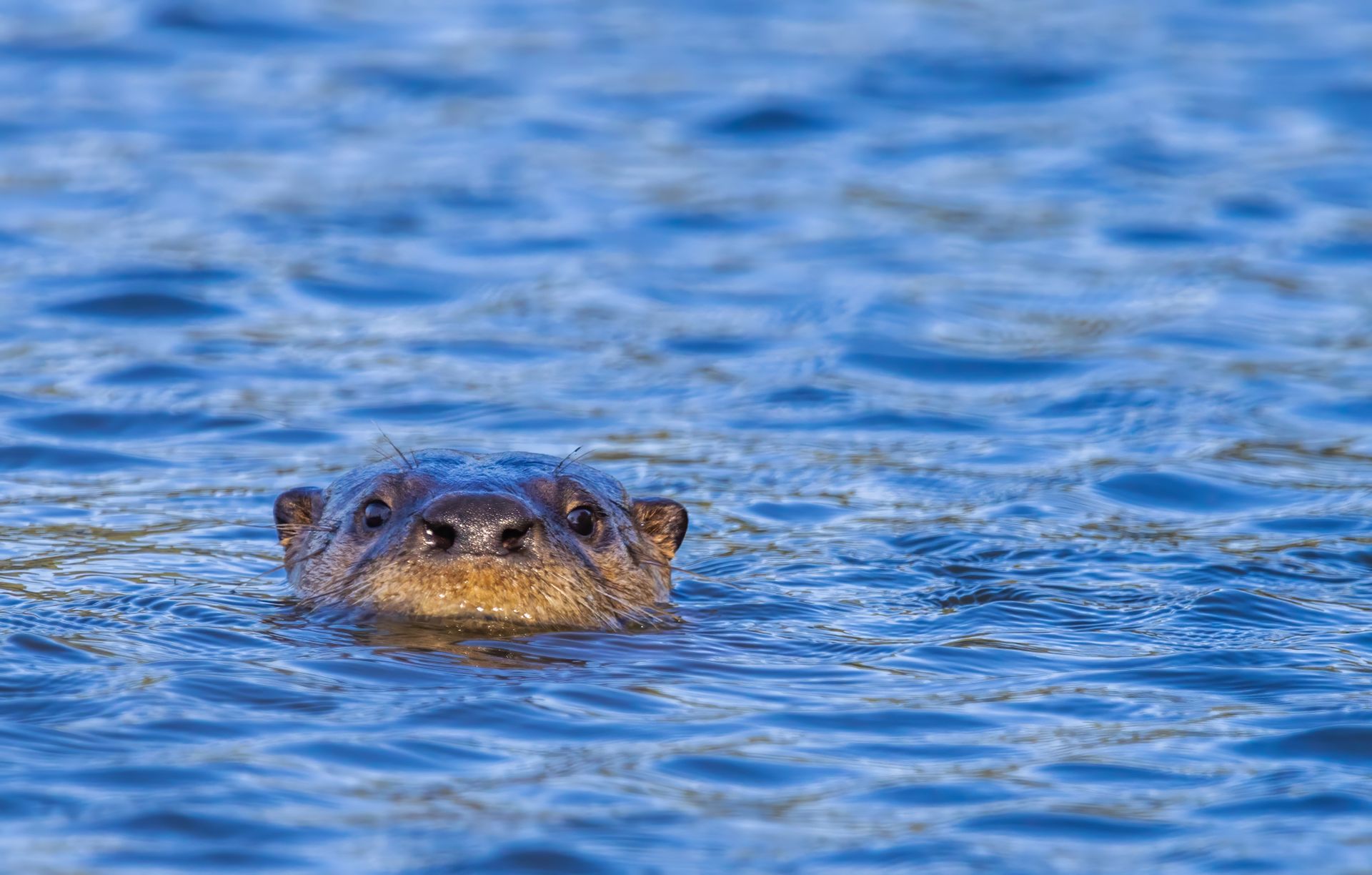
The northern river otter, a member of the carnivora family, is a sleek and agile creature. They have a slender body, typically measuring between 3 to 4 feet in length.
Their fur is thick and water-repellent, with a distinctive brown or black coat that helps them blend in with their aquatic environment. They have webbed feet, perfect for swimming and diving in search of food.
River otters are found in freshwater habitats, such as rivers, streams, and lakes, across North America. They are highly adaptable and can thrive in a variety of aquatic environments.
Taxonomy and Classification
The northern river otter is a fascinating creature, and understanding its taxonomy and classification can give us a deeper appreciation for its place in the natural world.
The northern river otter belongs to the kingdom Animalia, which is home to all animals.
In terms of phylum, the northern river otter falls under Chordata, a group that includes all animals with a backbone.
The northern river otter's class is Mammalia, which is the largest group of warm-blooded animals.
As a member of the order Carnivora, the northern river otter is a meat-eater, feeding on fish, crustaceans, and other aquatic animals.
The family Mustelidae is where we find the northern river otter's closest relatives, including weasels and minks.
Here is a breakdown of the northern river otter's taxonomy:
- Kingdom: Animalia
- Phylum: Chordata
- Class: Mammalia
- Order: Carnivora
- Family: Mustelidae
- Genus: Lontra
- Species: Lontra canadensis
Physical Characteristics
Northern river otters have streamlined bodies with short legs, webbed toes, and a long tapering tail.
They have dark brown fur, with a lighter underside. Otter fur is short and ranges in color from light brown to black.
Their bodies are built for streamlined swimming, with a stocky body, short legs, webbed feet, and a long tail.
In the North American river otter, males are about 5% larger than females. Males are typically larger than females.
Northern river otters can weigh anywhere from 12 to 31 pounds and range from 26 to 42 inches long plus a 12 to 20 inch tail.
Their tail length ranges from 11.8” to 18.7” in some areas, and from 11.8” to 15.7” in others.
Habitat and Distribution
Northern river otters are found near permanent watersheds throughout North America, from Alaska and northern Canada south to the Gulf of Mexico.
Their typical habitats include lakes, rivers, marshes, and coastal shorelines. They are also found in areas such as the Great Lakes region, Atlantic seaboard, and Mississippi Valley.
Here's a breakdown of the otter's distribution across North America:
- Secure populations are found in Ontario, Michigan, Wisconsin, and Minnesota.
- Vulnerable populations are found in Iowa.
- Imperiled populations are found in South Dakota.
- Critically imperiled populations are found in North Dakota.
Habitat and Distribution
North American river otters live near permanent watersheds throughout North America, from Alaska and northern Canada south to the Gulf of Mexico. They thrive in various habitats, including lakes, rivers, marshes, and coastal shorelines.
You can find otters in the Western U.S., Great Lakes region, Atlantic seaboard, Mississippi Valley, and Southeastern United States. In fact, they're found closely associated with waterways throughout these areas.
Otters are most commonly found in states like Ontario, Michigan, Wisconsin, and Minnesota, where populations are secure or apparently secure. In contrast, states like Iowa and South Dakota have vulnerable or imperiled otter populations.
Here's a breakdown of otter populations by state:
- Secure or apparently secure: Ontario, Michigan, Wisconsin, Minnesota
- Vulnerable: Iowa
- Imperiled: South Dakota
- Critically imperiled: North Dakota
Otters have an impressive range, but they were once found throughout North America north of Mexico. Today, they're restricted to North America, and are classified as Least Concern by the IUCN.
North American River Otter
The North American River Otter is a fascinating creature that can be found in the watersheds of North America.
One of the most interesting things about the North American River Otter is its size, which can range from 26-42 inches in length, plus a 12-20 inch tail.
They are also quite heavy, weighing between 11-31 pounds.
Their diet consists mainly of meat, making them a carnivore.
Conservation and Behavior
The northern river otter is a carnivorous mammal that plays a vital role in maintaining the balance of its ecosystem.
It primarily feeds on aquatic animals, such as fish, crayfish, and snails, which it catches using its sensitive whiskers and webbed feet.
River otters are also skilled hunters, able to catch prey in water as deep as 20 feet.
Their diet consists of around 75% aquatic animals, with the remaining 25% made up of terrestrial animals such as frogs and small mammals.
Conservation Status
The conservation status of North American river otters is a topic of interest. They are classified as "least concern" by the IUCN, indicating a stable population.
However, their presence on Appendix II of CITES raises concerns about the potential impact of trade on their population. This means that trade must be closely regulated to prevent their numbers from declining.
River otters are found throughout much of North America, including Alaska, Canada, and the northern United States. They are secure or apparently secure in provinces and states like Ontario, Michigan, and Wisconsin.
But their status varies in other areas, with populations vulnerable in Iowa, imperiled in South Dakota, and critically imperiled in North Dakota. Historically, they were found throughout North America north of Mexico, but their range has since been restricted.
Here's a breakdown of their status by state and province:
- Ontario: secure
- Michigan: secure
- Wisconsin: secure
- Iowa: vulnerable
- South Dakota: imperiled
- North Dakota: critically imperiled
Otters and Humans
River otters are hunted and trapped for their fur. They pose no threat to humans, but in rare cases, they have been known to attack dogs.
Life History
Otters are most active in the mornings and evenings, with most of their feeding happening in the mornings.
Their diet consists mainly of fish and aquatic invertebrates, and they're closely associated with lakes and streams.
Otters are sociable creatures and can be seen sliding down banks into water.
They mate in late winter or early spring, and females typically give birth to 2-4 young after a gestation period of 10-12 months.
Adult otters don't mature sexually until 2 years old, and males often don't breed successfully until 5-7 years old.
Here's a breakdown of an otter's life cycle:
Otters generally avoid people and are not abundant enough to significantly impact fishing in streams and lakes.
However, they can be a problem at fish hatcheries due to their diet of game fish.
Their presence is a good indicator of quality riparian and aquatic habitat, but their populations are negatively impacted by decreases in water quality and destruction of riparian vegetation.
Species Information
The northern river otter is a mammal that belongs to the carnivora family. Its scientific name is Lontra canadensis.
This species is commonly known as the North American river otter or northern river otter. It's found in the watersheds of North America.
The northern river otter is a medium-sized animal, measuring 26-42 inches in length, plus an additional 12-20 inch tail. It weighs between 11-31 pounds.
The average lifespan of a northern river otter is 8-9 years. This species is abundant in its habitat.
Here's a summary of the northern river otter's basic characteristics:
General Information
The northern river otter is a carnivore that mainly eats fish, amphibians, and crustaceans.
Their population status is currently listed as Least Concern, according to the IUCN. They're also considered Apparently Secure in Montana, according to the Montana Field Guide.
You can find northern river otters in any aquatic habitat, from rivers and streams to marshes, bogs, ponds, lakes, and oceans.
These otters are mostly active at night, but they can also be active during the day - they're nocturnal, but can be diurnal too.
Frequently Asked Questions
Are otters part of Carnivora?
Yes, otters are part of the Carnivora order, which includes mammals like dogs, cats, and bears. They share a common ancestry with these carnivorous mammals.
Is a river otter a carnivore?
Yes, river otters are carnivores, primarily feeding on fish, invertebrates, and occasionally small mammals and birds. Their diet varies by species and habitat, but meat is their main source of nutrition.
Featured Images: pexels.com