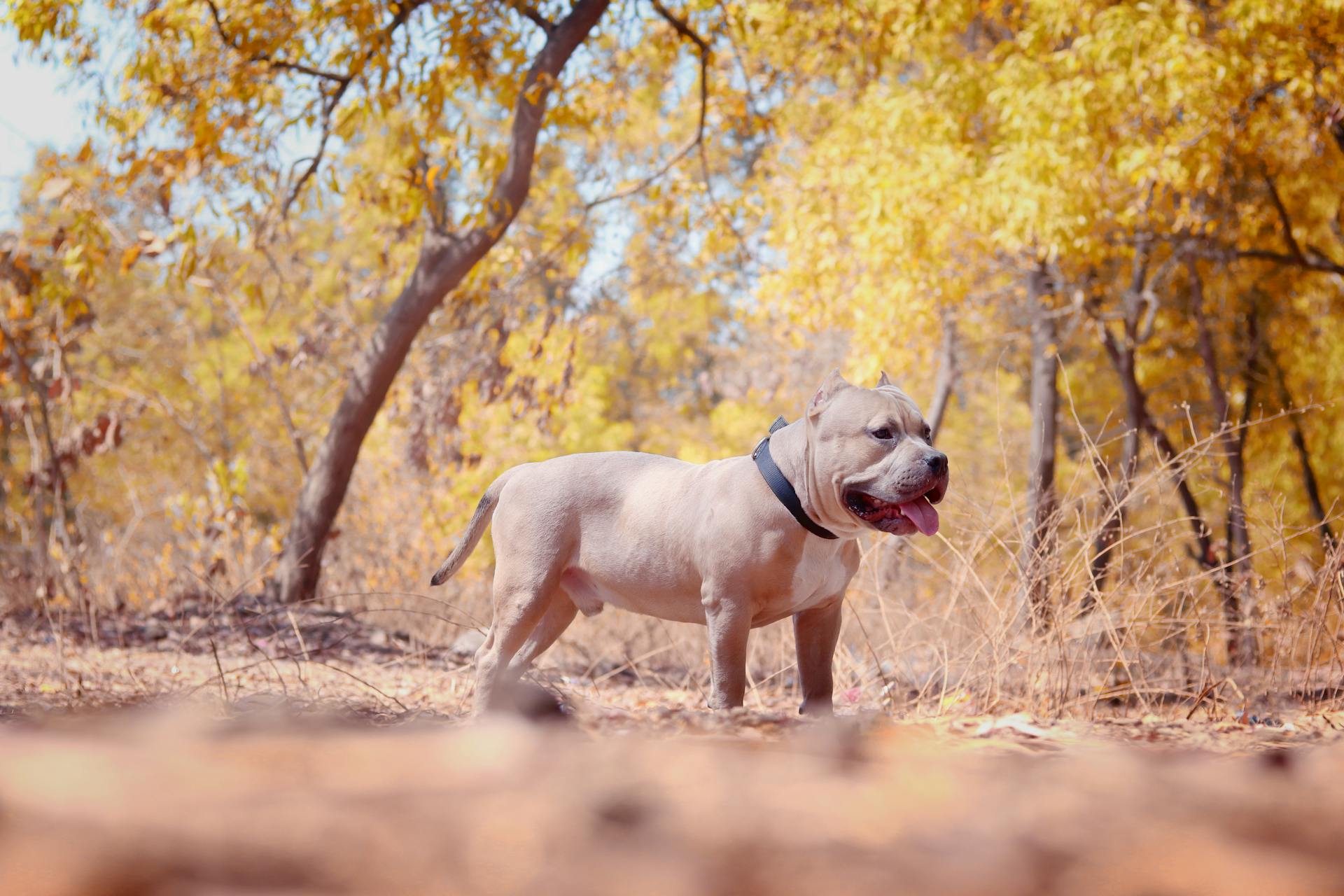
The North American Robin is a year-round resident in many parts of North America, but it's also a migratory bird, traveling to the southern United States and Mexico for the winter.
Robins are found in a variety of habitats, including backyards, parks, and woodlands, with a preference for areas with dense shrubs and trees.
They can be seen foraging for food on the ground, using their strong legs and sharp eyesight to spot earthworms, insects, and fruits.
Robins are also known to visit bird feeders, particularly during the winter months when natural food sources are scarce.
Physical Characteristics and Behavior
The North American robin is a fascinating bird, and understanding its physical characteristics and behavior can help us appreciate these amazing creatures.
Male and female robins work together to build their nests, with the female doing most of the construction and the male bringing materials to help out.
The female robin is very skilled at building a sturdy nest using twigs, straw, grass, moss, feathers, and dry leaves, which she reinforces with mud.
Here's an interesting read: North American Raccoon Male vs Female
Both parents take turns incubating eggs for about two weeks, with the male guarding the territory and bringing food to the female while she's on duty.
After the eggs hatch, the young robins stay in the nest for another two weeks, relying on both parents to feed them.
The parents work together to care for the chicks, bringing them food and keeping them safe until they're ready to leave the nest.
For another approach, see: Brown Headed Cowbird Egg
Habitat and Diet
American Robins are adaptable eaters, munching on a variety of foods including insects and fruit. They tend to eat more earthworms in the morning and more fruit later in the day.
In the summer, worms make up about 15% to 20% of a robin's diet. Robins can eat up to 14 feet of earthworms in a single day, which is a staggering amount of food.
Their diet is influenced by the time of day, with a shift from earthworms to fruit as the day progresses. This might be where the saying "the early bird gets the worm!" comes from.
Discover more: American Bully Puppy Diet
Why Don't I See Birds in Winter?
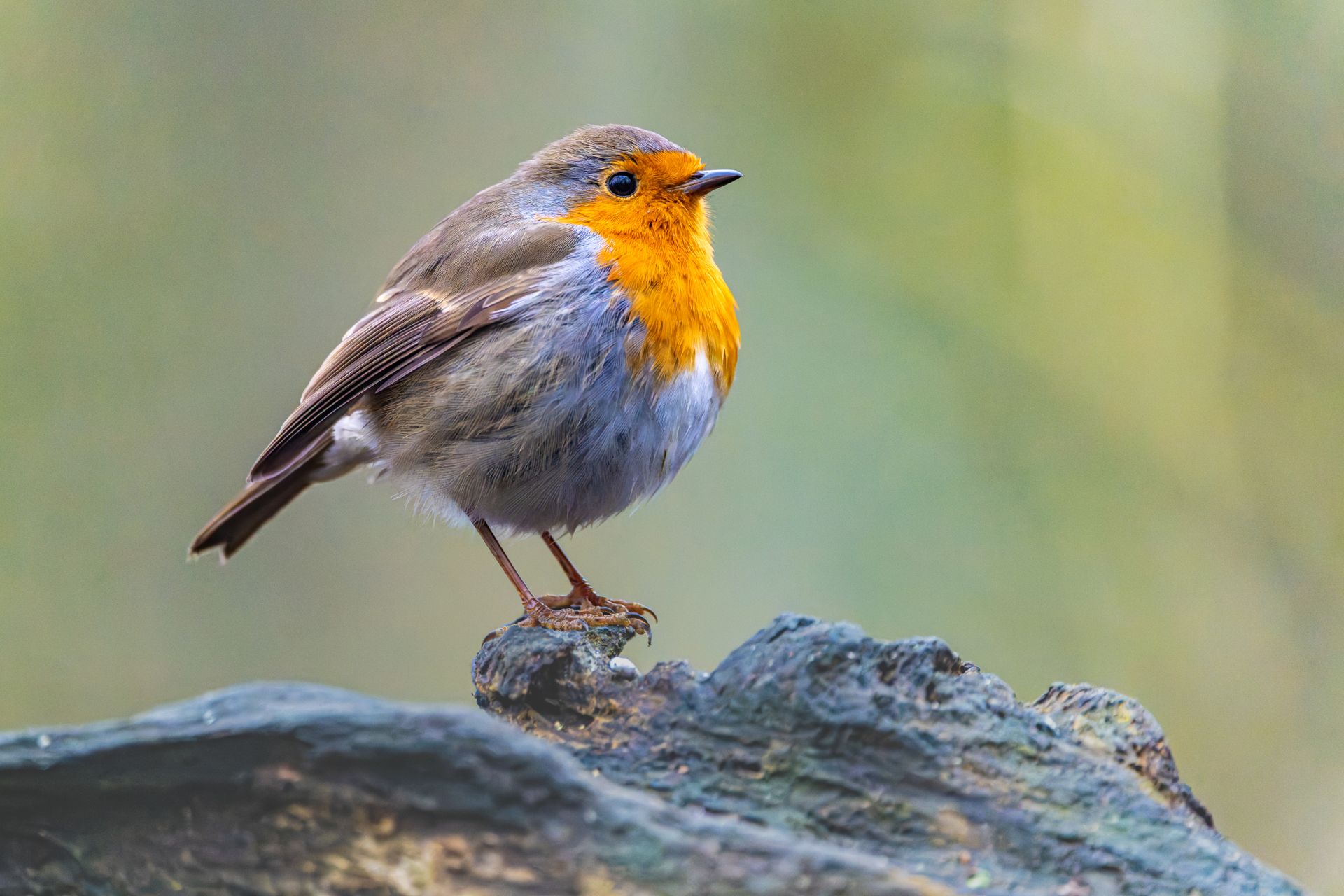
Robins are comfortable in most types of habitats and can endure cold quite well. They tend to be quieter in winter, so you're less likely to hear them.
Robins typically spend more time during winter roosting in trees and less time in yards. This means you might find them in nearby forests or other wooded areas, where they can find more protection from winter weather and potentially a greater number of food sources.
In some areas, robins may migrate a short distance to locations where winter food is more plentiful. For example, if you live in an area with Russian Olive Trees, you might spot robins feeding on their winter berries.
Robins feed heavily on fruit during the winter months. If they dine on honeysuckle berries exclusively, they can become intoxicated.
Robins' Diet
Robins eat a variety of foods including insects and fruit. They tend to eat more earthworms in the morning and more fruit later in the day.
In the summer, worms make up about 15% to 20% of a robin's diet. This is according to the Forest Preserve District of Will County, Illinois.
Robins can eat a lot of earthworms in one day, up to 14 feet of them.
Taxonomy and Biology
The North American Robin is a member of the animal kingdom, specifically classified as Animalia. This classification puts it in a group with other animals that are multicellular, eukaryotic, and heterotrophic.
As a member of the phylum Chordata, the North American Robin has a unique characteristic - a notochord, a flexible, rod-like structure that provides support and flexibility to its body.
Within the class Aves, the North American Robin is part of a larger group of birds that share similar characteristics, such as feathers, wings, and light skeletons.
Taxonomy
Taxonomy is a way to classify living things, and it's a vital tool for biologists.
The classification system starts with the Kingdom level, which is the highest level. In the case of birds, the Kingdom is Animalia.
The Phylum level is the next step down, and for birds, it's Chordata.
This level helps us understand the physical characteristics of the organism.
The Class level is where we find Aves, which is the class for birds.
The Order level is where we find Passeriformes, which is a specific order of birds.
The Family level is the next step down, and for these birds, it's Turdidae.
This level helps us understand the relationships between different species.
Do Birds Reuse the Same Mate?
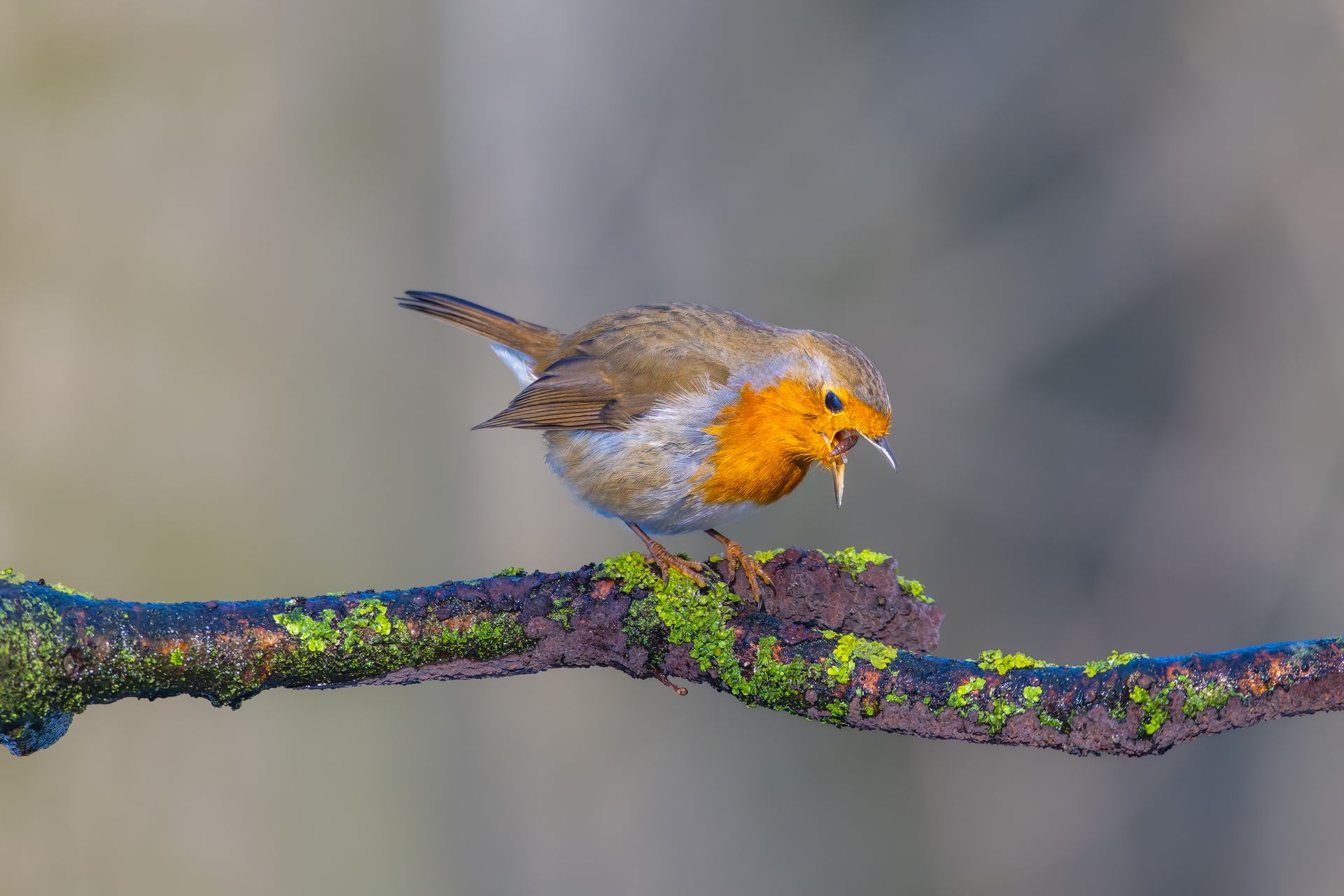
American Robins are a great example of birds that don't maintain their bonds over winter, often finding new mates each spring.
In the case of American Robins, if the same male and female survive the winter and return to the same territory, they are likely to mate again.
Males generally arrive at nesting grounds before females, and they'll sing and chase off intruders to establish their territory.
Females will often pick the actual nesting sight within the territory, usually choosing an unexposed area such as a tree branch hidden by leaves, or in a thicket.
They'll even sometimes nest on human-made objects such as outdoor light fixtures.
American Robin
The American Robin is a year-round resident in the northeastern United States.
They are known for their distinctive red breasts, which are a key identification feature.
American Robins are members of the thrush family, Turdidae, and are closely related to the Bluebird.
Their diet consists mainly of earthworms, which they dig up with their strong, pointed beaks.
They are also known to eat fruits, berries, and insects.
American Robins are cavity-nesting birds, often using existing nest boxes or digging their own nests in tree cavities.
They typically lay 3-5 eggs per clutch, which both parents take turns incubating for about 12 days.
The female American Robin builds the nest, usually with twigs and mud, while the male helps gather materials.
American Robins are monogamous, often forming long-term pair bonds with their mates.
Explore further: American Bald Eagles Nest
Frequently Asked Questions
What is the difference between red breast robin and American Robin?
The European robin and American Robin are two distinct bird species, belonging to different families: the flycatcher and thrush families respectively. The main differences lie in their size, beak color, and facial markings, with the European robin being smaller with a red-orange breast, and the American Robin being larger with a yellow beak and striking white markings.
Featured Images: pexels.com