The New Caledonian Crow is a fascinating bird species that has been extensively studied for its unique behavior and intelligence. These birds are known to inhabit the forests of the Pacific island of New Caledonia.
One of the most notable aspects of New Caledonian Crow behavior is their ability to use tools, with studies showing that they use sticks to dig up grubs and other invertebrates from tree bark. This level of cognitive ability is rare in the animal kingdom.
New Caledonian Crows are also known to be highly social birds, with observations suggesting that they form long-term monogamous relationships.
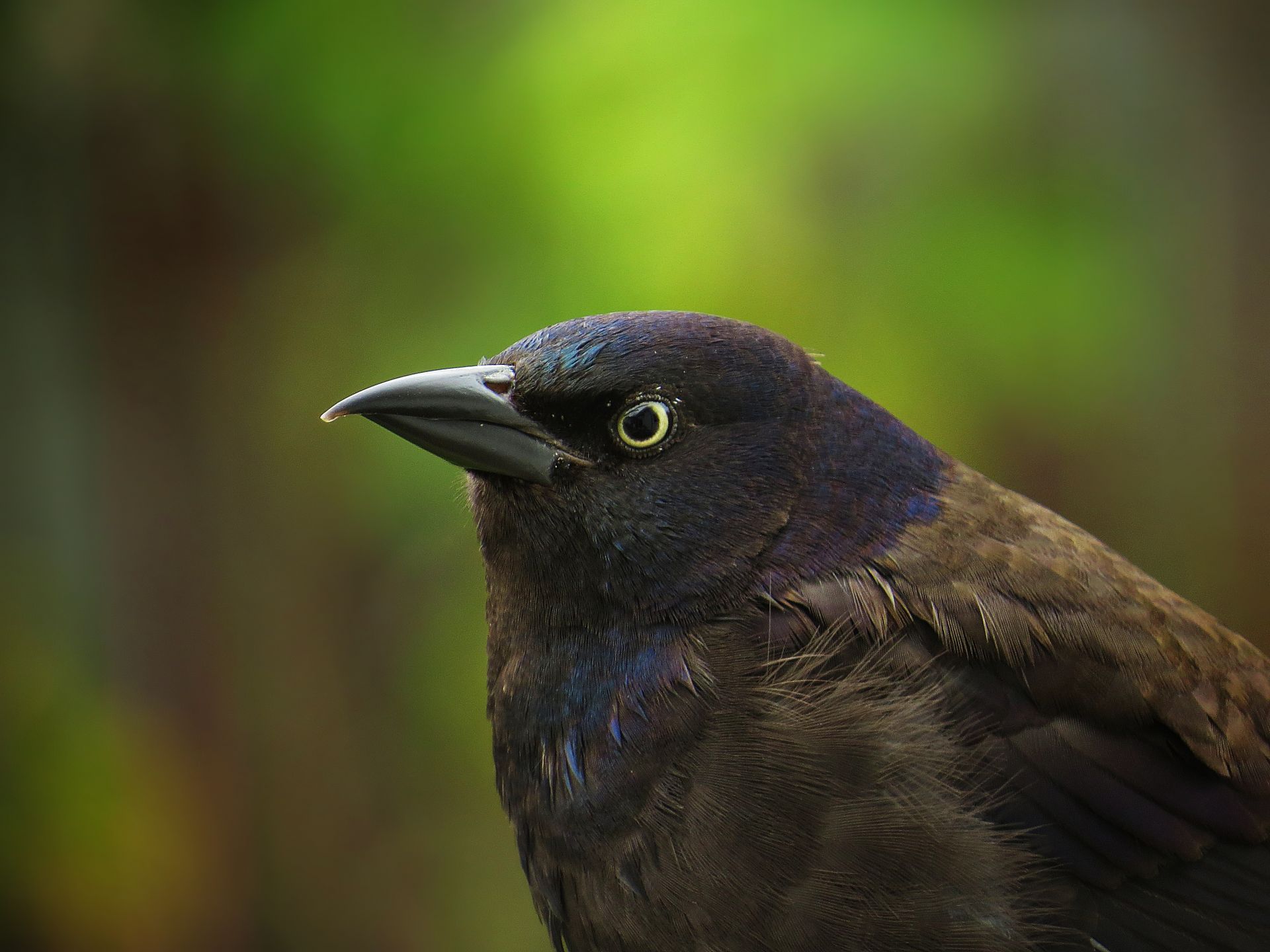
Explore further: Great Tailed Grackle vs Crow
Physical Characteristics
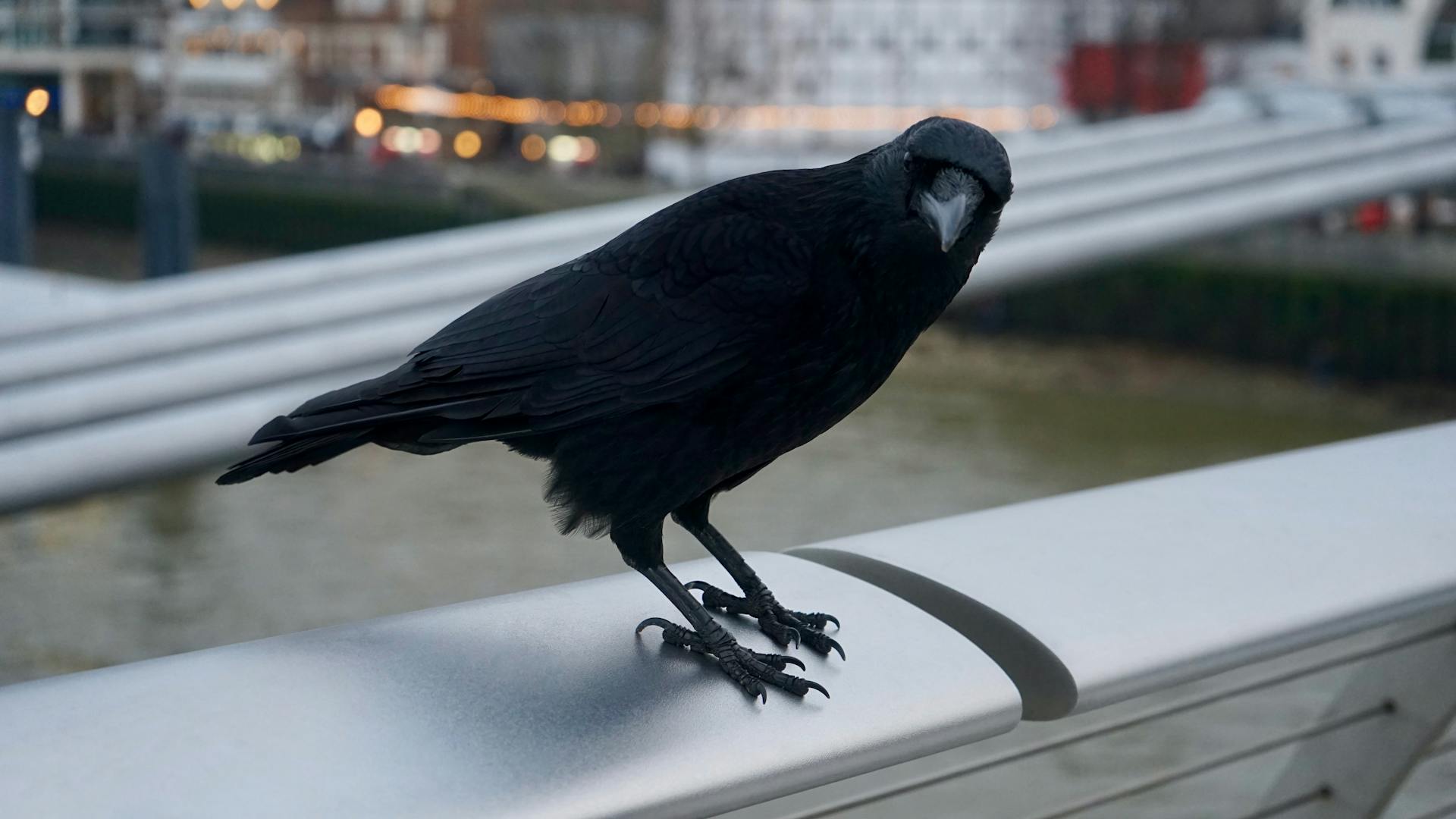
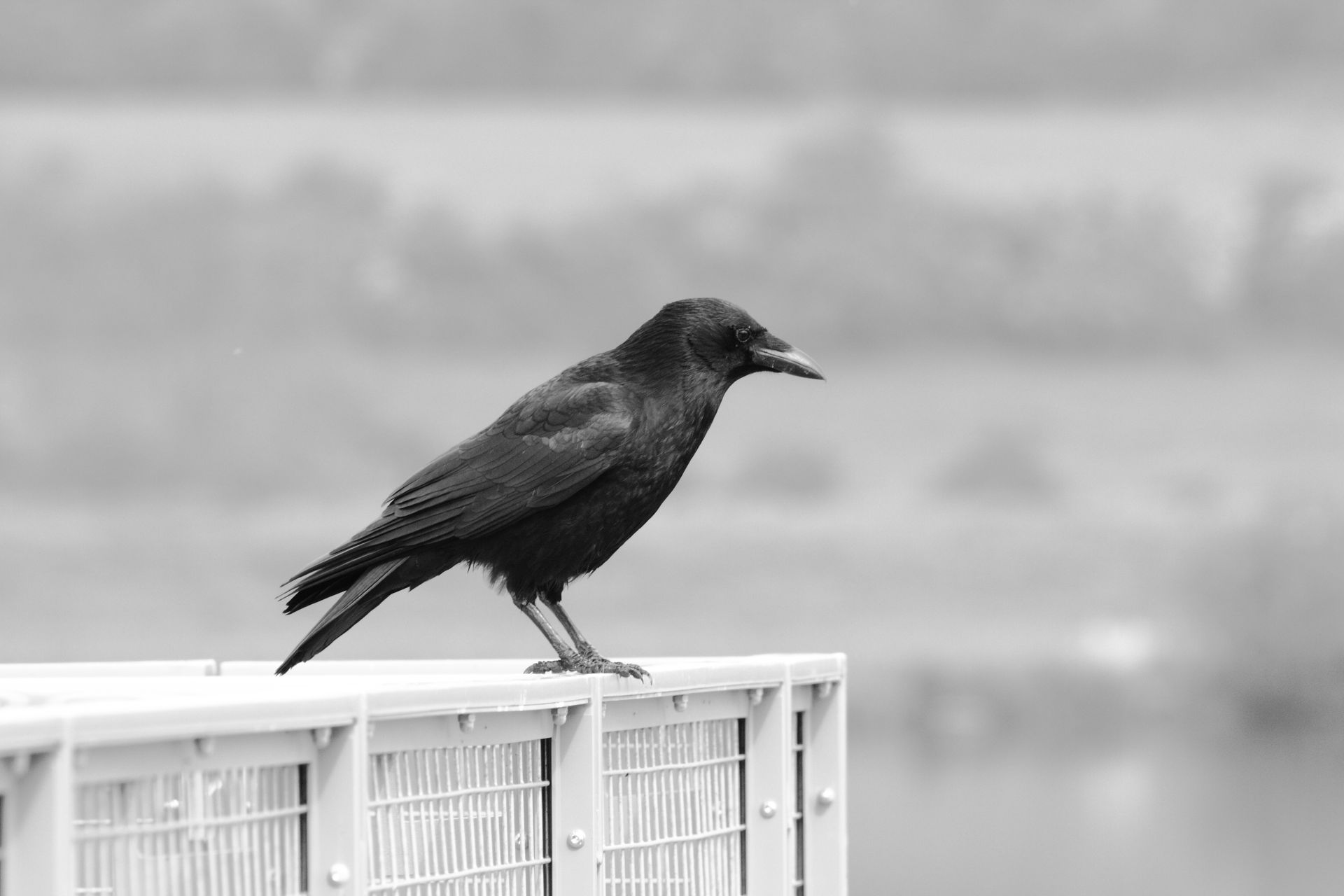
The New Caledonian Crow is a medium-sized corvid with predominantly black plumage. Its feathers have a glossy sheen, with subtle brown undertones visible in bright light.
The bird has a robust, slightly curved black beak. Strong black legs are also a distinctive feature of this species.
Both males and females share similar appearances, with no significant sexual dimorphism.
Behavior and Ecology
The New Caledonian crow is a master of problem-solving, using tools to capture prey and access food sources. This intelligent bird has been observed using sticks and leaves to create hooks, which it inserts into cracks and crevices to catch grubs.
The New Caledonian crow's unique beak shape is perfectly suited for tool use, with a blunter, straighter bill that allows it to hold tools securely. This adaptation is likely the result of natural selection, favoring birds with bills that could handle tools for foraging.
These clever crows have developed a specialized behavior, using tools to access the rich food source of insects buried in trees. This behavior is unique in the bird world, and is likely a response to the absence of woodpeckers in New Caledonia.
Here are some of the New Caledonian crow's favorite foods:
- Insects, including night-flying insects
- Snails, which it drops from a height onto hard stones
- Small mammals
- Nuts and seeds
- Grubs, which are an integral part of its diet
Habitat and Distribution
The bird calls the Pacific islands of New Caledonia home, specifically living in primary forest.
It's a very specific habitat, but one that's perfect for this bird.
The main island, Grande Terre, is where you can find it, as well as the Loyalty Islands' Maré Island.
Check this out: Inaccessible Island Rail
Ecology and Behavior
The New Caledonian crow is an incredibly resourceful bird, with a diet that consists of a wide range of food including insects, small mammals, snails, and various nuts and seeds.
These birds are known for using plant material to create stick and leaf tools to capture prey hiding in cracks and crevices. They can fashion these tools into hooks or leave them with naturally occurring barbs.
One of their most impressive foraging techniques is extracting grubs from dead wood using self-made tools. They create hooks from twigs to fish out insects from tree crevices, showcasing their innovative foraging techniques.
The New Caledonian crow's bill is shorter and blunter than a regular crow's, with a lower mandible that curves slightly up. This unique feature likely gives it the strength it needs to hold the tool in place.
The absence of woodpeckers in New Caledonia means that there is a rich food source of insects buried in trees that is there for the taking. These crows don't have the powerful head and bill anatomy of a woodpecker to hammer at trees, but by making tools, they are able to access this rich food supply.
Related reading: American Crow vs Common Raven
Here are some of the different types of food that New Caledonian crows eat:
The New Caledonian crow's innovative use of tools has become an integral part of its biology, allowing it to access food sources that other birds cannot.
Agility
Agility is a remarkable trait that allows birds to move with ease and precision. The New Caledonian Crow is a prime example of agility in action, performing aerial acrobatics like barrel rolls and loops with incredible finesse.
Their agility in flight is matched by their dexterity in manipulating tools, making them a fascinating species to study. The ability to craft and use tools is a testament to their problem-solving skills and adaptability.
Birds like the New Caledonian Crow demonstrate that agility is not just about physical movement, but also about mental flexibility and creativity.
Broaden your view: Crow Hopping
Discussion
Behavior and ecology are closely linked, as the way animals behave is often influenced by their environment and the other living things around them.
In many species, individuals will gather in groups, known as aggregations, to increase their chances of finding food and mates.
The study of animal behavior is crucial for understanding how species adapt to their environments and respond to changes in their ecosystems.
Some animals, like birds and bees, have complex social structures that involve communication and cooperation.
For example, some species of birds will work together to build complex nests, with each bird contributing a different skill or material.
The way animals behave can also be influenced by their evolutionary history, with some species developing unique adaptations to their environments over time.
As we explore the natural world, it's clear that behavior and ecology are intertwined in fascinating ways, offering insights into the complex relationships between living things.
Here's an interesting read: New Zealand Birds Also Known as Owl Parrots
Tool Use and Intelligence
New Caledonian crows are experts at making tools, a skill they've honed in their rainforest habitat where insects and grubs are hidden deep inside tree bark or crevices.
Their tool-making traditions are passed down through generations, with juvenile crows learning by observing their parents and practicing with discarded tools.
In the wild, these crows use tools to extract food from challenging locations, often adapting their behavior to maximize efficiency.
New Caledonian crows can perform multi-step tasks to retrieve food, using one tool to acquire another tool that's better suited for the final objective.
This ability to sequence actions and achieve a goal is a rare trait in the animal kingdom, highlighting their capacity for strategic thinking.
Their problem-solving skills are matched by their ability to assess situations and adapt their behavior, making them one of the most intelligent bird species.
These crows have consistently demonstrated an understanding of cause and effect in controlled experiments, showcasing their exceptional cognitive abilities.
By relying on cultural learning and vertical transmission, New Caledonian crows refine their skills within a structured framework, allowing them to maintain and advance their remarkable tool-making techniques.
Their tool-making traditions are so robust that young crows often use "counterparts", or the leftover impressions of tools on leaves, as templates to guide their own tool-making efforts.
This minimizes trial-and-error learning and helps refine their skills, a testament to their advanced cognitive abilities and problem-solving prowess.
Check this out: How to Get Cat to Use New Litter?
Nesting and Conservation
The New Caledonian Crow's native forest habitats are under threat from habitat loss due to mining and forest degradation.
Conservation efforts are in place to protect their habitats and raise awareness about their unique cognitive abilities.
These intelligent birds are worthy of our attention and protection, and by preserving their habitats, we can ensure their survival for generations to come.
Nesting & Breeding
New Caledonian Crows form monogamous pairs and breed between September and December. They engage in mutual preening and food sharing as part of their courtship rituals.
Nests are typically built high in trees, constructed with sticks and lined with softer materials like leaves and moss. The female lays 2-3 pale blue-green eggs with brown speckles.
Both parents participate in incubation, which lasts about 18-20 days. Nestlings fledge after approximately 35 days but may remain with their parents for several months, learning crucial skills.
Global Conservation Status
The New Caledonian Crow's habitat is under threat from mining and forest degradation, which is a major concern for their conservation.
Their native forest habitats are being protected through conservation efforts.
Habitat loss is a significant threat to the New Caledonian Crow's survival.
Conservation efforts are focusing on raising awareness about their unique cognitive abilities and cultural significance to the island.
Featured Images: pexels.com