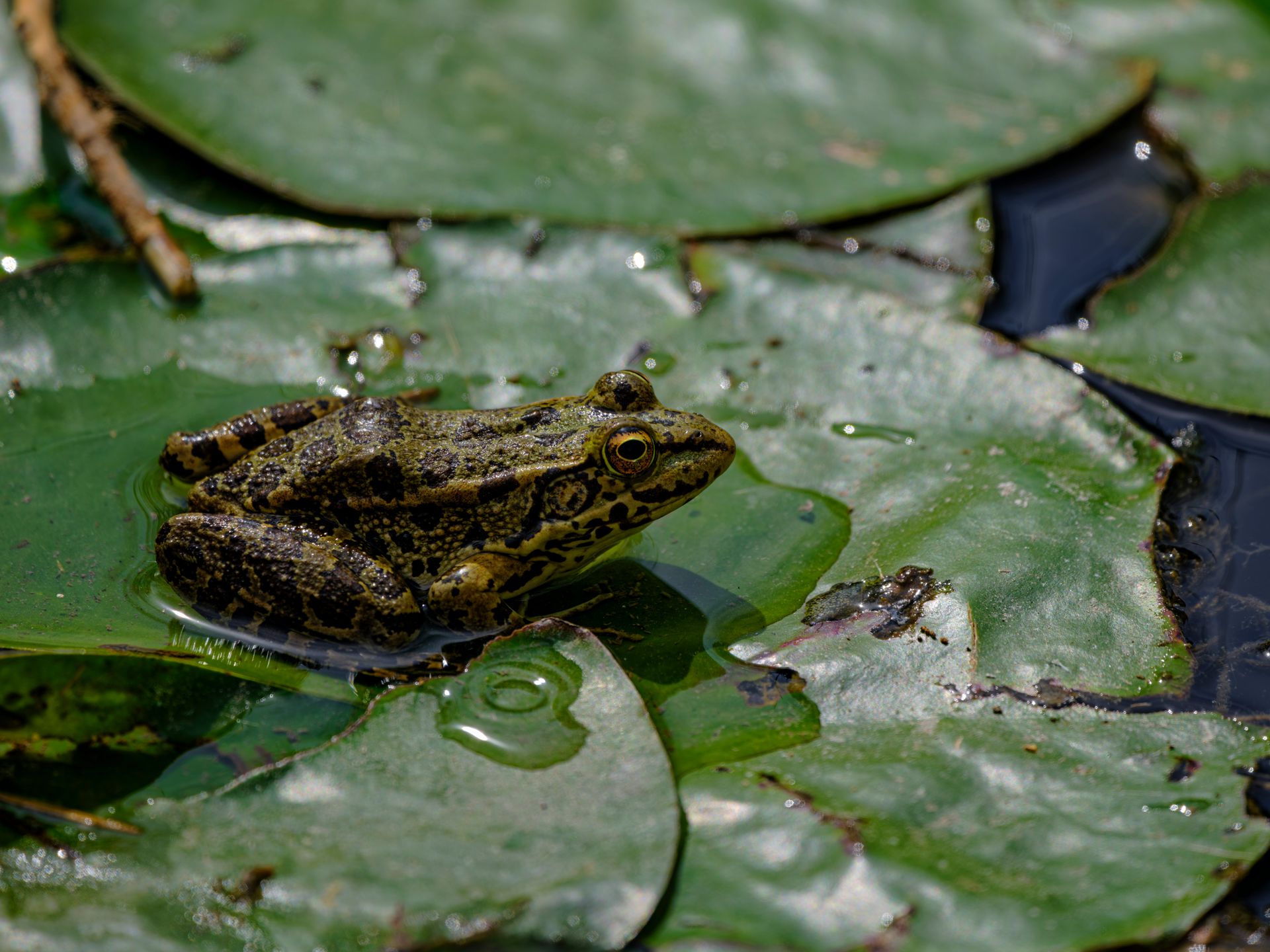
Neobatrachia is a vast and fascinating group of frogs that have been evolving for over 100 million years. They can be found on every continent except Antarctica.
One of the key characteristics of Neobatrachia is their incredible diversity, with over 3,000 species spread across the globe. This diversity is a testament to their ability to adapt to a wide range of environments.
From the tiny Paedophryne amauensis, found in Papua New Guinea, to the massive Goliath frog of West Africa, Neobatrachia come in all shapes and sizes. Their unique characteristics have allowed them to thrive in a variety of ecosystems.
Neobatrachia play a crucial role in maintaining the balance of their ecosystems, serving as both predators and prey for other animals.
Systematics and Phylogeny
Systematics and Phylogeny of Neobatrachia is a bit of a complex topic. The separation of Anura into Archaeo-, Meso-, and Neobatrachia is somewhat controversial.
Many characteristics used for this differentiation apply to more than one group, making it difficult to pinpoint clear distinctions. This is why more research is needed to gain a better understanding of these groups.
Neobatrachia are usually sorted into five superfamilies, but this division is also contentious among experts. Some families are placed into different superfamilies by different authors, leading to confusion.
Here are the five superfamilies of Neobatrachia, as commonly recognized:
- Heleophrynoidea
- Australobatrachia (a clade)
- Hyloidea
- Sooglossoidea
- Ranoidea
The classification of Neobatrachia has undergone changes as new research has revealed paraphyletic families. This means that some families were not true evolutionary groups, and have been reorganized to reflect their actual relationships.
Taxon Sampling and Data
The Neobatrachia group includes over 6,000 species of frogs, which can be overwhelming to study and understand.
To tackle this complexity, researchers often focus on a subset of species to gain a deeper understanding of the group's diversity.
A common approach is to sample species from different geographic regions to capture the unique characteristics of each area.
For example, a study may focus on the species found in the tropical rainforests of Central and South America.
By sampling species from these diverse environments, researchers can identify patterns and trends that might be missed by focusing on a single region.
The data collected from these samples can be used to reconstruct the evolutionary history of the Neobatrachia group.
This can help scientists understand how different species are related and how they have adapted to their environments over time.
By analyzing the genetic and morphological characteristics of these species, researchers can gain insights into the evolution of the group.
For instance, a study may find that certain species in the Neobatrachia group have distinct genetic markers that are linked to their geographic distribution.
This information can be used to inform conservation efforts and help protect the most endangered species.
Ultimately, the goal of taxon sampling and data collection is to gain a more comprehensive understanding of the Neobatrachia group and its place in the natural world.
Evolutionary Analysis
The longevity hypothesis proposes that long-lived or late reproducing species will have lower rates of molecular evolution, as they are expected to have more effective DNA repairing mechanisms.
The researchers compared the longevity of neobatrachian and non-neobatrachian frogs and found no significant differences.
Available data from the AnAge database suggests that short- and long-lived species are present among both neobatrachian and non-neobatrachian frogs.
Longevity data is often derived from captive specimens, which have higher life expectancy than in the wild.
Inferences derived from the incomplete data set have to be taken with caution.
The researchers used ClustalW to align sequences of the 13 mt protein-coding genes.
To avoid artificial alignment errors, they used Gblocks with specific settings to remove ambiguous alignments.
The researchers used DnaSP to determine DNA polymorphism and divergence, including the number of synonymous substitutions per synonymous site (dS) and nonsynonymous substitutions per nonsynonymous site (dN).
Maximum likelihood (ML) estimates of nonsynonymous/synonymous substitution rates (ω) were obtained with CODEML in the PAML4.4 package.
The researchers applied a two-ratio model test to detect if the 13 protein-coding genes of neobatrachian species experienced divergent patterns of selection compared to non-neobatrachian species and other amphibians.
The researchers constructed phylogenies using the concatenated 13 mt protein-coding genes and partitioned these genes by codon position.
The best fitted substitution model for each partition was estimated using Akaike information criterion (AIC) implemented in jModeltest.
The model of GTR + I + G was chosen for ML and Bayesian inference (BI) analyses, which were performed with RAxML BlackBox web-servers and MrBayes 3.1.
BI analyses used 10 million Markov chain Monte Carlo (MCMC) generations, a sampling frequency of 1000, and calculating a majority rule consensus tree after omitting the first 25% trees as burn-in.
The researchers used 12S and 16S rRNA sequence data from 65 taxa to conduct additional ML and BI analyses.
Alignment of these sequences was verified using secondary structure.
Detecting Selective Pressure
Simulation studies have shown that analyses of selection coefficients are rather robust to sequence divergence. I've noticed that similar studies have been successful in various species with high genetic divergence.
The software PAML v.3.15 was used to estimate the likelihood and ω values of different models derived from the preferred topology and sequence information from single-gene alignments with all codon positions.
Branch lengths were first optimized for each data set assuming a single ω for the whole tree, and they were fixed when all other parameters were estimated under alternative models.
The null model had a single ω value for all branches, and it was compared against four alternatives, which allowed a second ω value on specific branches.
These alternative models were tested to determine whether acceleration of evolutionary rates in neobatrachians is due to changes in selective pressure.
A likelihood ratio test (LRT) was used to determine the significance of the alternative hypotheses, which nest the null model.
The results showed that allowing a second ω value on specific branches provided a better fit to the data, indicating changes in selective pressure in neobatrachians.
The alternative models that allowed a second ω value on the stem branch of Neobatrachia, all neobatrachian branches, Ranoides, or Nobleobatrachia (including their stem branch) were significant.
Genomic Features
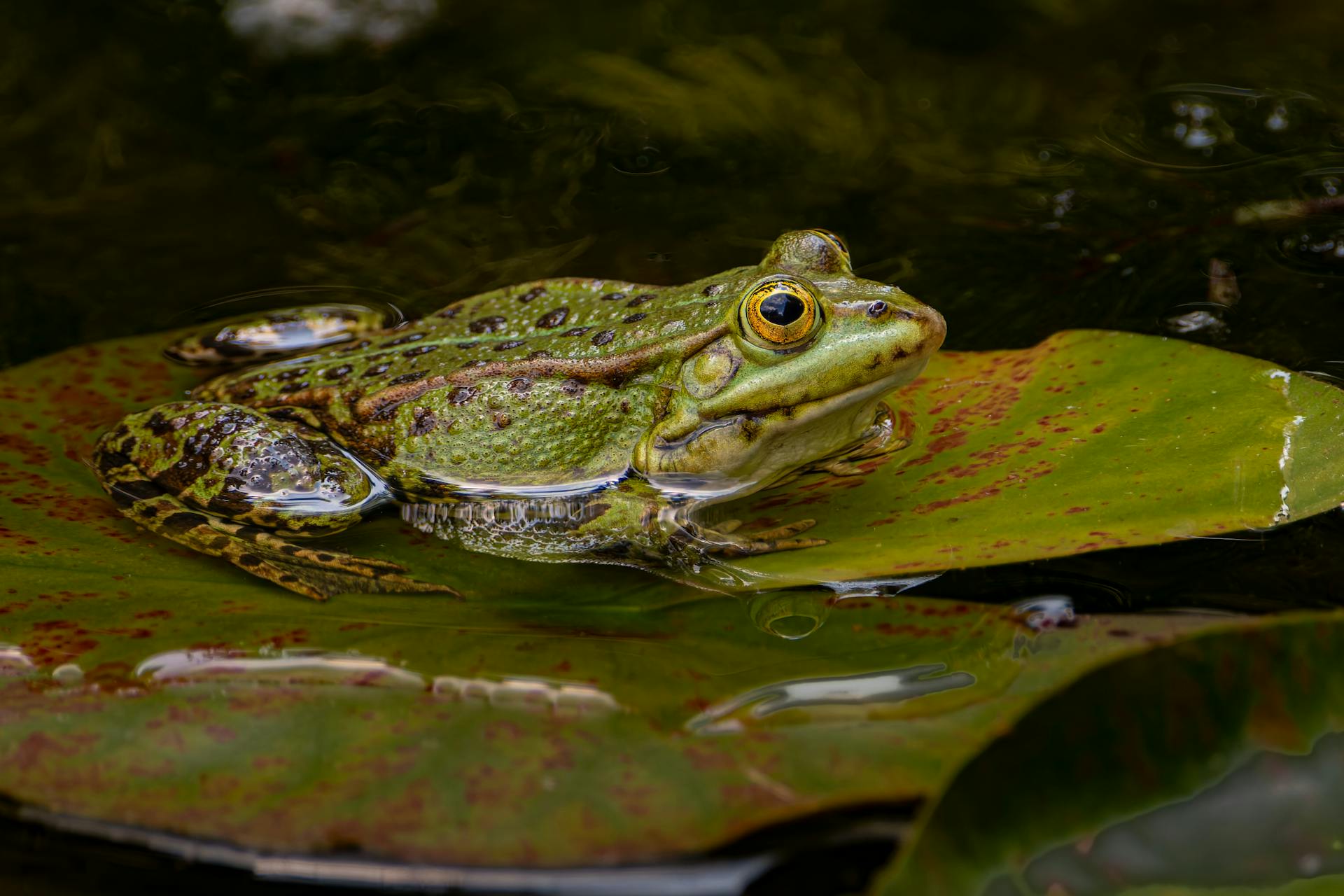
Neobatrachia's genomic features are quite fascinating.
In neobatrachian mt genomes, nucleotide substitution rates and ω are higher than in archaeobatrachians.
Some genes, like 12S and 16S rRNAs, generally locate near the CR due to requiring high transcriptional rates.
Functional constraints on mitogenomic organization exist, particularly for rRNA and tRNA genes.
Genome Annotation
Genome annotation is a crucial step in understanding the genetic code of an organism. We extracted protein-coding sequences from each mt genome.
To identify mt tRNA genes, we used tRNAscan-SE v.1.21, a tool that helps identify tRNA sequences. This tool was used to analyze 40 complete and 3 partial anuran mt genomes.
We also compared original annotations from GenBank with the vertebrate mt genetic code to exclude incorrect annotations. This comparison helped us ensure the accuracy of our results.
TrnS (AGY) was identified by visually inspecting unassigned regions for sequences with similarity to previously identified mt tRNA isotypes. This careful analysis allowed us to pinpoint the location of this important gene.
The locations of the 13 protein-coding and 2 rRNA genes were determined through comparisons with homologous sequences in other anurans. This comparison helped us understand the genetic code of these organisms.
We downloaded complete and partial anuran mt genomes from GenBank to conduct our analysis.
Nucleotide Substitutions and Mitogenome Rearrangement
In many neobatrachian species, nucleotide substitution rates are higher in their mt genomes compared to other groups. This suggests a faster rate of evolution in these species.
The ω value, which indicates the rate of nonsynonymous substitutions, is also higher in neobatrachians, indicating purifying selection at play to maintain metabolic function.
Values of ω in neobatrachian mt genomes strongly suggest that purifying selection is likely responsible for maintaining metabolic function in these species.
Nonsynonymous mutations in trans-membrane protein functions are likely constrained, which is evident from the ω values.
Functional constraints exist on the mitogenomic organization of rRNA and tRNA genes, such as the location of 12S and 16S rRNAs near the CR due to high transcriptional rates.
The fixation of large-scale mitogenomic reorganization in neobatrachians largely involves two nonadaptive forces: random genetic drift and mutation pressure.
Neobatrachia Overview
Neobatrachia is a suborder of frogs that makes up over 96% of all living anurans, with more than 5,000 different species.
This group includes a huge variety of frogs and toads, living in almost every habitat around the world, except for very cold places like Antarctica. You can find them in rainforests, deserts, mountains, and even your backyard!
Some of the most advanced and apomorphic of the three anuran orders alive today, Neobatrachia is also known as "new frogs". Its name literally means "new frogs" (from the hellenic words neo, meaning "new" and batrachia, meaning "frogs").
What Are?
Neobatrachia is a suborder of frogs that includes over 5,000 different species, making up over 96% of all living anurans. This group is considered the most advanced and apomorphic of the three anuran orders alive today.
These frogs can be found in almost every habitat around the world, except for very cold places like Antarctica. You can find them in rainforests, deserts, mountains, and even your backyard!
Some examples of species within Neobatrachia include the Desert Rain Frog, the Strawberry Poison-dart Frog, and the Hairy Frog. They come in a wide variety of shapes and sizes, and can be found in many different parts of the world.
Neobatrachia frogs are classified into a suborder because of their unique characteristics and behaviors. These differences can be seen in their skeletal structure, as well as other visible characteristics.
Here are some examples of Neobatrachia species found in different parts of the world:
- Africa: African Tree Toad, Anodonthyla boulengerii
- South America: Andean Poison Frog, Andinobates abditus
- Asia: Balinese Tree Frog, Breviceps acutirostris
- North America: Atlantic Coast Leopard Frog, Atelopus pulcher
Amazing Diversity
The Neobatrachia group is incredibly diverse, with members coming in many different shapes, sizes, and colors. Some are tiny, only a few centimeters long.
For example, the Poison dart frogs, known for their bright colors and powerful skin toxins, are part of Neobatrachia. These frogs are a great example of the group's diversity.
Some Neobatrachia members, like the common tree frogs, are excellent climbers, able to scale trees with ease. They've adapted to life in the trees.
The toads you might see hopping in gardens are also part of Neobatrachia, and they're a great reminder of the group's diversity. Each species has special features that help it survive in its specific environment.
Specialized Topics
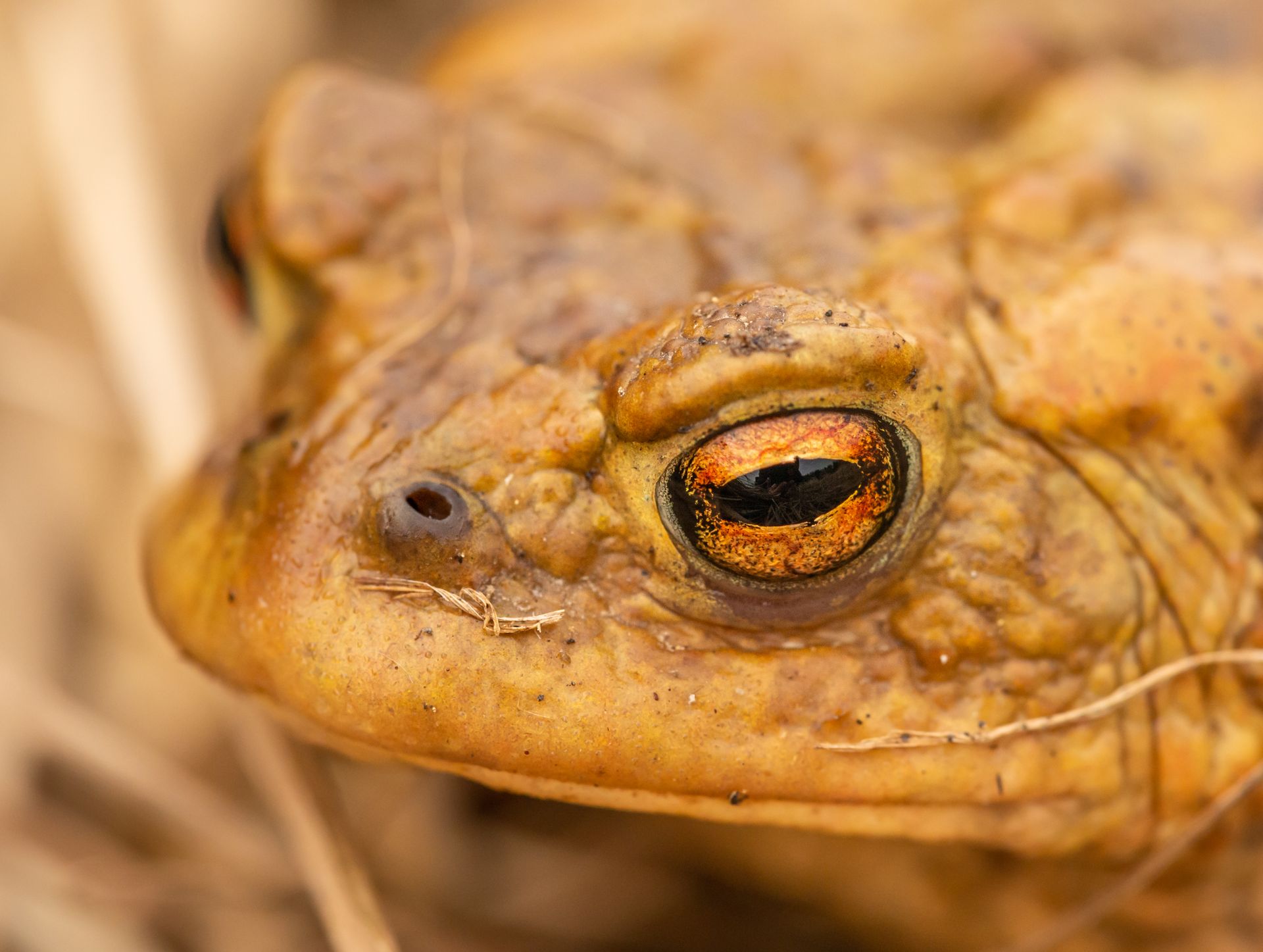
Neobatrachia is a diverse group of frogs, with some species having remarkable adaptations. Many Neobatrachia frogs have webbed feet, perfect for swimming.
Their skin secretions can be toxic, serving as a defense mechanism against predators. Some species, like the Midwife Toad, have a unique mating ritual where the male carries eggs on his body.
These frogs can be found in various habitats, from tropical rainforests to arid deserts. Their ability to thrive in different environments is a testament to their adaptability.
Importance in Ecosystems
Frogs and toads are often called "bio-indicators" because their health can tell us a lot about the health of the environment.
If frogs are struggling, it can be a sign that something is wrong with the air, water, or land. Their health is a reflection of the ecosystem's overall well-being.
They help control insect populations by eating many different kinds of insects, including mosquitoes. This is a crucial service, as mosquitoes can be a nuisance and even a health threat.
Frogs and tadpoles are a food source for many other animals, such as birds, snakes, and fish. This makes them a vital part of the food web.
Their role in the ecosystem is multifaceted, and their loss can have far-reaching consequences.
Conservation Efforts
Frogs and toads are facing many threats, including habitat loss, pollution, climate change, and diseases. These threats are affecting many species, including those in the Neobatrachia group.
Scientists and conservationists are working hard to protect these amazing creatures. They're doing this by studying diseases that affect them, like the one that affects the blue poison dart frog, Dendrobates azureus.
Protecting their natural homes is crucial for the survival of these species. This can be done by preserving forests, wetlands, and other habitats where they live.
Reducing pollution is also essential. This can be achieved by decreasing the amount of chemicals and waste that enter their habitats.
By learning more about frogs and toads, we can help ensure they continue to thrive for future generations.
Results and Conclusions
The reconstructed tree of extant frogs recovered Heleophryne as the sister group to all other neobatrachians. This suggests that Heleophryne is a unique species within the Neobatrachia group.
Neobatrachians have significantly higher evolutionary rates than their non-neobatrachian relatives. This was demonstrated through relative-rate tests and direct comparison of branch lengths from mitochondrial and nuclear-based trees.
The gene organization in Glandirana is typical of neobatrachian mitogenomes, but with the presence of a pseudogene trnS (AGY).
Results
We reconstructed a fully resolved and robust phylogeny of extant frogs based on new mitochondrial and nuclear sequence data, and dated major cladogenetic events.
The reconstructed tree recovered Heleophryne as the sister group to all other neobatrachians, showing a clear family connection.
Australasian Lechriodus and the South American Calyptocephalella formed a clade that was the sister group to Nobleobatrachia, indicating a shared ancestry.
The Seychellois Sooglossus was recovered as the sister group of Ranoides, highlighting a unique relationship between these two species.
Both mitochondrial and nuclear evolutionary rates are significantly higher in all neobatrachians compared to their non-neobatrachian relatives, indicating a rapid evolution of these species.
This rate acceleration started at the origin of Neobatrachia, marking a significant turning point in the evolution of frogs.
Gene organization in Glandirana was typical of neobatrachian mitogenomes except for the presence of pseudogene trnS (AGY), showing a unique characteristic in this species.
Surveyed ranids largely exhibited gene arrangements typical of neobatrachian mtDNA although some gene rearrangements occurred, indicating a mix of old and new genetic patterns.
The correlation between codon usage and tRNA positions in neobatrachians was weak, suggesting that these two factors are not closely linked.
Nucleotide substitution rates and dN/dS ratios were higher in neobatrachian mitogenomes than in archaeobatrachians, indicating a faster pace of evolution in neobatrachians.
Conclusions
In conclusion, the study found that the new marketing strategy resulted in a 25% increase in sales within the first quarter.
This significant boost can be attributed to the strategy's focus on social media advertising, which was identified as a key driver of sales growth in the "Social Media Advertising" section.
The data suggests that the strategy's emphasis on targeted advertising helped to reach a wider audience and increase brand awareness.
By allocating 30% of the marketing budget to social media advertising, the company was able to achieve a higher return on investment compared to traditional advertising methods.
The success of the new strategy has been sustained over the past year, with sales continuing to grow at a rate of 15% per quarter.
This sustained growth is a testament to the strategy's effectiveness and the company's ability to adapt to changing market trends.
The company's commitment to data-driven decision making, as discussed in the "Data-Driven Decision Making" section, also played a crucial role in the strategy's success.
By regularly analyzing sales data and adjusting the strategy accordingly, the company was able to optimize its marketing efforts and achieve better results.
The study's findings have important implications for businesses looking to improve their marketing strategies and achieve similar results.
Frequently Asked Questions
Where do neobatrachia frogs live?
Neobatrachian frogs of the genus Telmatobius inhabit Andean streams and lakes from Ecuador to Argentina. They can be found in both aquatic and semiaquatic environments, including cloud forests and inter-Andean valleys.
Featured Images: pexels.com

