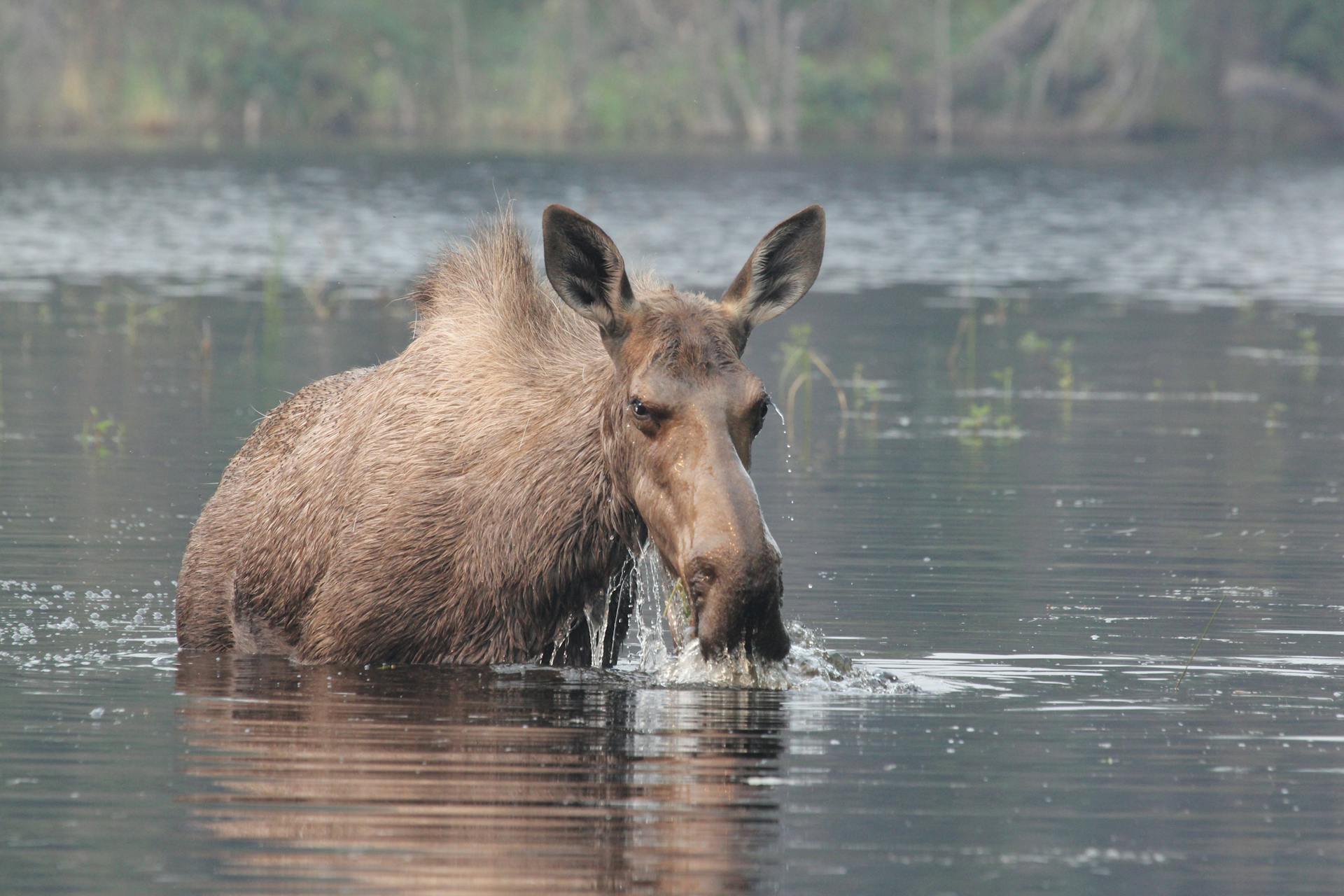
Moose vehicle collisions are a serious concern in many parts of North America. In areas with high moose populations, drivers are at risk of hitting these large animals.
Moose can weigh up to 1,500 pounds and reach speeds of 35 miles per hour. This size and speed combination makes them a formidable obstacle on the road.
Moose are most active at dawn and dusk, which are also the times when drivers are most likely to be commuting to and from work.
You might enjoy: Megapodius Reinwardt
Prevention and Safety
Slow down when driving at night, as this will give you more time to respond to a moose on or near the highway.
Care and attention when driving remains your best defense against a moose-vehicle accident. To spot a moose well in advance, scan both sides of the road ahead as far as possible, especially in posted High-Risk accident zones.
Here are some essential tips to keep in mind when driving in areas where moose are more likely to appear:
- Slow down and reduce your general driving speed, especially when visibility is limited due to unfamiliar terrain, weather, or glaring headlights of oncoming traffic.
- Be alert for wildlife and deliberately scan the side of the road for animals of any kind.
- Keep a safe distance between you and the car in front of you to allow for longer braking distances and reaction time.
- Clean your vehicle headlights and windshield to ensure maximum visibility.
Moose are unpredictable, so it's essential to leave plenty of space when driving around them, and never exit your vehicle if you encounter a moose.
When Should I Be Concerned?

You should be concerned about moose-vehicle collisions year-round, but especially during the winter months when visibility is low and moose are more active. This is because roadside vegetation attracts hungry moose, and they can save energy by traveling on plowed roads.
In fact, most moose-vehicle collisions occur over the winter months, making it a particularly hazardous time to be on the road. If you're driving during this time, be extra cautious and follow the tips outlined in the article to minimize your risk.
If you're concerned about specific times of the day, note that moose are most active around sunrise and sunset, which coincide with peak commuting times in the fall and winter. This is because the low light conditions make it harder to spot moose, increasing the risk of a collision.
Here's a breakdown of the seasons and their associated risks:
By understanding the risks associated with different times of the year, you can take extra precautions to stay safe on the road and avoid moose-vehicle collisions.
Stay Alert

Warning signs mark higher-risk areas for moose-vehicle collisions.
Moose can be difficult to see at night due to their dark coat and non-glowing eyes, making them more challenging to spot than deer.
If you see wildlife on the roadway, brake firmly and try to avoid swerving, as swerving can increase the risk of a collision.
Moose can weigh up to 450 kg and pose a significant risk of injury or death during a collision due to their long legs and tendency to be knocked into the passenger area of vehicles.
Here are some key things to watch out for when driving through moose country:
- Warning signs marking high-risk areas
- Moose on the side of the road, especially at dawn and dusk when they are most active
- Flickering headlights of oncoming traffic, which can indicate an animal is crossing the road
- Cows traveling with calves, as they often cross the road together
Accident Causes and Statistics
More than 70% of moose vehicle collisions occur between May and October, with June, July, and August being the most critical months.
The majority of accidents happen between dusk and dawn, when driver visibility is severely limited by darkness, and moose are most active.
Most accidents occur on clear nights, making it essential to be extra cautious when driving during these conditions.
Moose are most likely to be active near roads, especially on straight stretches of roadway, which is where many accidents occur.
In Alaska, moose-vehicle crashes are a significant threat, with the highest rate of moose-vehicle crashes in the world.
Between 1996 and 2006, 17 people died from moose-related car crashes in Alaska, and about 130 moose die every year from collisions with cars in Anchorage alone.
Explore further: Best Vehicle to Travel Cross Country with Dogs
Prevention Strategies
Driving slowly is key to avoiding moose-vehicle accidents. Slow down when driving at night, as this will give you more time to respond to a moose on or near the highway.
Moose are most active at dawn and dusk, so be extra cautious during these times. Most accidents occur on clear nights and on straight road sections, possibly because drivers are more cautious on curves or in poor weather.
Keep an eye out for warning signs, which mark high-risk areas where moose are commonly seen. These signs were placed along the roadways to alert drivers of potential hazards.
To scan for moose, pay attention to both sides of the road ahead as far as possible, especially when driving in high-risk areas. Moose on the right side of the vehicle are often avoided more often than those on the left, as drivers tend to focus more on the right side.
Here are some key tips to keep in mind when driving in areas where moose are present:
- Slow down and reduce your general driving speed, especially when visibility is limited.
- Be alert for wildlife and deliberately scan the side of the road for any animals.
- Keep a safe distance from the car in front of you to allow for longer braking distances and reaction time.
- Clean your vehicle headlights and windshield to ensure maximum visibility.
- Watch for signs and posted moose crossings, and adjust your driving accordingly.
- Look for groups of moose, as cows often travel with calves.
Remember, moose can be unpredictable and may bolt in front of your vehicle at the last moment. Keep your windshield and headlights clean, and drive with your headlights on high beam unless approaching or overtaking other traffic. Wear your seat belts, as they save lives.
Other Factors
Most accidents occur between 5 p.m. and 12 a.m. and in the morning between 6 a.m. and 9 a.m., which are also the most active times for moose as they feed.
These times are often rush hour times, when motorists are traveling between homes, shopping, and recreational areas. The animals are on the move, making it more likely for collisions to happen.
Steeper slopes with overgrown vegetation along the roadway are common locations for moose-car accidents. These conditions affect moose the most, making it difficult for them to see and be seen by drivers.
Many accidents occur on clear nights, when driver visibility is severely limited by darkness.
Weather affects accidents
Weather affects accidents, and it's not just a matter of rain or shine. In Alaska, winter months like December and January see a spike in moose-car accidents due to reduced visibility on roadways.
Deep snow can make it difficult for moose to navigate their terrain, and they often make their way to clearer roadways for relief. This can put drivers at risk of hitting them.
Alaska's dark winters also reduce visibility, making it even more challenging for drivers to spot wildlife. In these conditions, wildlife may not even enter your line of sight before it's too late.
In the summer, from June to August, there's another peak in moose-car accidents. This might be due to increased traffic volumes on rural roads during the tourist season.
June is also the month when moose cows are most active with their newborn calves, which can lead to more encounters with drivers.
Other Factors in Time and Location
Most accidents occur at dawn and dusk, peaking in the evening between 5 p.m. and 12 a.m. and in the morning between 6 a.m. and 9 a.m.
These times coincide with rush hour, when motorists are traveling between homes, shopping, and recreational areas. It's not surprising, then, that these are also the most active times for moose, who are on the move as they feed.
Many of the top locations for moose-car accidents have steeper slopes with overgrown vegetation along the roadway, which can reduce visibility for both moose and drivers.
These conditions can be particularly hazardous for moose, who may be feeding on the slope while trying to navigate through heavy vegetation.
More than 70% of accidents occur between May and October, with the three most critical months being June, July, and August.
The majority of accidents occur between dusk and dawn, when driver visibility is severely limited by darkness and moose are most active.

Most accidents occur on clear nights, which can make it even more challenging for drivers to spot moose.
It's worth noting that the Provincial highway system runs through good moose habitat, so drivers can expect to encounter moose while traveling on any section of the Trans Canada Highway or on any secondary roads.
Conclusion
Moose vehicle collisions are a significant concern in areas where these majestic creatures roam.
In fact, moose are responsible for over 60% of all large-animal collisions in the US.
Being aware of the time of year and the presence of moose in an area can help drivers avoid these collisions.
As we discussed earlier, moose are most active during dawn and dusk hours, making these times particularly hazardous.
In areas with high moose populations, such as Maine and New Hampshire, residents and visitors alike should exercise extra caution when driving.
By understanding the factors that contribute to moose vehicle collisions, we can take steps to prevent them.
In areas with high moose populations, having a pair of binoculars in the car can help drivers spot moose from a distance.
The consequences of a moose vehicle collision can be severe, with damage to vehicles and injuries to drivers and passengers.
Frequently Asked Questions
How many moose are hit by cars in Newfoundland?
In Newfoundland, an average of 539 moose are involved in collisions with cars and trucks each year. However, some locals believe the actual number may be higher due to unreported incidents.
Featured Images: pexels.com