Montana has a diverse range of bird species, with over 400 species documented in the state.
The best time to spot birds in Montana is during the spring and fall migrations, when many species pass through the state. This is a great opportunity to see a variety of birds in one place.
Some common birds you might see in Montana include the Western Tanager, which is known for its bright red head and yellow body, and the Mountain Bluebird, which is a small, cavity-nesting bird with a bright blue back.
Montana's open spaces and varied landscapes make it an ideal place for birdwatching, with opportunities to spot birds in forests, grasslands, and wetlands.
Intriguing read: Bird Identification Washington
Common Birds
Montana's skies are full of life with a variety of birds, making birdwatching a delightful experience for nature lovers. The American Coot, a distinctive black bird, is often seen in marshy areas and gathers in large groups.
The American Crow is known for its intelligence and unique flying style, thriving in various habitats, from woodlands to urban landscapes. Its adaptability makes it a delight for birdwatchers to observe.
A different take: North American Bird Identification
Some common birds to look out for in Montana include the American Goldfinch, which is easily spotted in open areas with its bright yellow coloring and social nature. The Black-billed Magpie is another common sight, playing a unique role in the ecosystem by aiding large mammals in grooming.
Here are some common birds to keep an eye out for in Montana:
- American Coot
- American Crow
- American Goldfinch
- Black-billed Magpie
- American Robin
- Bald Eagle
- Black-capped Chickadee
Black Birds
Black Birds are a fascinating group of birds, and I'm excited to share some interesting facts about them.
The Brewer's Blackbird is a common sight in many backyards, known for its glossy black plumage and distinctive call.
One of the most recognizable features of the Red-winged Blackbird is its bright red and yellow patch on its wing.
The Yellow-headed Blackbird is a stunning bird with a bright yellow head and breast, but it's also known for its aggressive behavior during breeding season.
These birds are often found in wetlands and fields, and the Common Grackle is a great example of this, with its iridescent feathers and long keel-shaped tail.
The Brown-headed Cowbird is a bit of a troublemaker, laying its eggs in the nests of other birds and leaving them to raise its young.
Here are some of the Black Birds mentioned:
- Brewer’s Blackbird
- Red-winged Blackbird
- Yellow-headed Blackbird
- Common Grackle
- Brown-headed Cowbird
Great Horned Owl
The Great Horned Owl is a large and imposing bird, with wingspans that can reach up to 57.1 inches.
They're known for their distinctive hooting sounds, which are unmistakable and can be heard in Montana year-round.
Their yellow eyes are a striking feature, and they also have white throats, black bills, and tufts of feathers that sit wide on their head.
These tufts of feathers are often mistaken for horns at night, giving the owl its common name.
The Great Horned Owl makes its nest in regions between river bottoms and timberlines, where it resides all year round.
Water Birds
The water birds of Montana are just as fascinating as the ones that inhabit the state's forests and fields. The Green Heron is a great place to start, as it's known to be a common sight in Montana's wetlands.
The Black-crowned Night Heron is another water bird you might spot, often seen wading in shallow waters. Its distinctive black crown and gray back make it a striking bird to observe.
If this caught your attention, see: Bird Heron Identification
If you're near a lake or river, keep an eye out for the Double-breasted Cormorant, which is known to thrive in these aquatic environments. Its large size and distinctive call make it a standout among other water birds.
The Black-capped Chickadee is a common sight in Montana's forests, but did you know it's also a water bird? It's often seen near water sources, where it can be spotted foraging for food.
Here are some of the water birds you might spot in Montana:
The Pied-billed Grebe is another water bird you might see, known for its distinctive black and white coloring. The Blue Winged Teal is a migratory bird that passes through Montana, but its distinctive blue and green feathers make it a beautiful sight to behold.
The Spotted Sandpiper is a common sight in Montana's wetlands, where it can be seen running along the water's edge in search of food.
Curious to learn more? Check out: Blue Bird Identification
Land Birds
Montana's land birds are a treat to spot, and you can find them in various habitats, including open forests, vast grasslands, and local parks.
The Northern Flicker is one of the most common birds in Montana, known for its distinctive call that sounds like a loud, shrill "wicka-wicka."
Northern Flickers can be found in woodlands and backyards, where they feed on insects and seeds.
Discover more: Northern California Bird Identification
Mountain Bluebird
The Mountain Bluebird is a striking bird found in Montana's open woodlands. They're known for their sky-blue to gray-brown color, which helps them blend in with their surroundings.
These birds have some unique features, including round heads, straight and thin bills, lanky bodies, long wings, and extended tails.
Mountain Bluebird males are quite the caregivers - they feed their mates during incubation and brooding periods.
They're also fiercely competitive when it comes to nesting locations, often contesting with other cavity-nesting birds.
Mountain Bluebirds are adaptable birds that can thrive in human-influenced habitats, including specially designed bluebird boxes.
Here are some interesting facts about Mountain Bluebird nesting habits:
- Males feed their mates during incubation and brooding periods.
- Nesting locations are fiercely contested with other cavity-nesting birds.
- They can adapt to human-influenced habitats, including bluebird boxes.
Spotting a Mountain Bluebird is a delight, as they often perch on exposed spots like treetops, fence posts, and power lines.
Mountain Chickadee
The Mountain Chickadee is a tiny yet bold bird that's full of energy. They have large heads, slender tails, and quick, round wings.
You can spot them flying through high tree branches, busily searching for insects and conifer seeds, often in mixed flocks with other small birds. This behavior is unique among chickadees.
Mountain Chickadees work hard to stock up on food, especially when they find a good source like a bird feeder. They even have specific behaviors that make them unique.
Here are some key characteristics of the Mountain Chickadee:
The Mountain Chickadee even have a unique eye stripe, which sets them apart from other chickadees.
Northern Flicker
The Northern Flicker is a big, friendly woodpecker that stands out with its fancy black marks, spots, bars, and crescents. They have handsome plumage and a gentle demeanor that makes bird watching a joy.
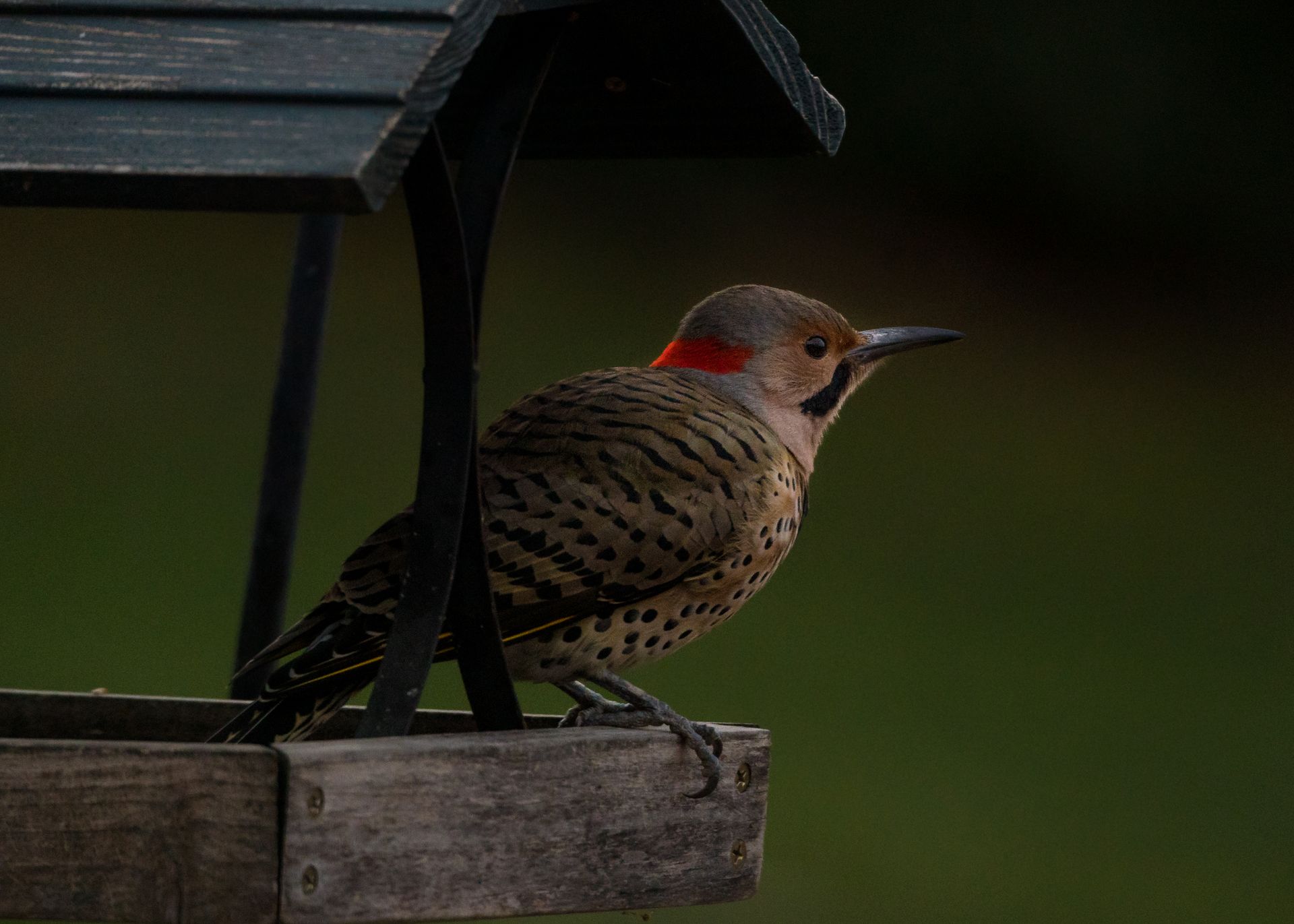
One of the unique things about Northern Flickers is that they're more into pecking at the ground for snacks rather than trees. This is a bit of a twist for a woodpecker.
To spot a Northern Flicker, head to open woods or spots where forests give way. They love to hunt on the ground, so be sure to check there too.
Northern Flickers display white rumps and a burst of color on their underwings during flight. This color is either bright yellow in birds from the eastern regions or reddish in flickers found west of the Rocky Mountains.
If you're lucky enough to spot a Northern Flicker in flight, listen for their loud call, a ringing cry, or a sharp yelp.
You might enjoy: Flicker Bird Identification
Western Meadowlark
The Western Meadowlark is a vibrant sight to behold, with its yellow breast adorned by a bold, black, V-shaped band. It's about the size of a robin but chunkier, and easily recognized by its flat head, long, slender bill, and compact shape that hides its neck.
These birds are quite social, and a male often has two mates simultaneously. They're also known to nest on the ground, constructing a cup of dried grasses and bark woven into the surrounding vegetation.
Western Meadowlarks are skilled foragers, using their long, pointed bill to search for insects, grain, and weed seeds in the ground and beneath the soil. At least 65-70% of their diet consists of beetles, cutworms, caterpillars, grasshoppers, spiders, sow bugs, and snails.
Their unique and cheerful song is a loud and clear warble, usually performed by males from fence posts. This distinctive melody consists of 7-10 notes, often ending with 3 descending notes.
Here are some fun facts about Western Meadowlark nests:
- Nests are often hidden under a cozy grass roof.
- Nests may be open or have a partial or full grass roof, and sometimes a grass entry tunnel several feet long.
Predators of Western Meadowlarks include hawks, crows, skunks, coyotes, raccoons, and weasels. Unfortunately, they are still declining throughout their range, but are a protected non-game species.
Red-Tailed Hawk
The Red-Tailed Hawk is the second largest hawk in both Montana and North America.
It can grow up to 25.6 inches in length and feature wingspans of up to 52.4 inches, making it a striking sight to spot soaring above open countries and woodlands.
Its dark brown wings and white belly speckled with bands of dark brown are distinctive features, but the most telling aspect is its cinnamon red tail.
The Red-Tailed Hawk can be identified by its variable appearance, but this characteristic tail is what gives it its name.
You can spot the Red-Tailed Hawk across the state from Fall to Spring, but most of the species migrate to the southern United States for the Winter.
Some populations near the Montana-Idaho border stay in the area year-round, making it a great spot for winter visitors to catch a glimpse of this local bird species.
A unique perspective: Bird Identification Photos
Key Takeaways on Birds
The American Coot is a distinctive black bird that often nests in marshy areas and gathers in large groups. If you're out birdwatching, keep an eye out for its distinctive appearance.
The American Crow is known for its intelligence and unique flying style, thriving in various habitats from woodlands to urban landscapes. Its adaptability makes it a delightful birdwatching subject.
The American Goldfinch is an easily spotted species in Montana's open areas, recognizable by its bright yellow coloring and social nature. Its distinct "potato chip" call is a dead giveaway.
American Robins announce spring's arrival with their cheery songs and earthworm-hunting technique. They're a common sight in lawns and gardens, where you can spot them foraging for food.
The Bald Eagle is a majestic bird that symbolizes American patriotism, and can primarily be seen near water sources in forested areas. If you're lucky, you might catch a glimpse of it soaring overhead.
The Black-billed Magpie plays a unique role in the ecosystem by aiding large mammals in grooming, making it a fascinating species to observe. Its presence in western North America is a treat for bird enthusiasts.
The Black-capped Chickadee is easily recognizable by its curious nature and unique vocalizations, making it an engaging subject for birdwatchers in forests. Its foraging habits are a joy to watch.
State Bird and Facts
The western meadowlark was designated the official state bird of Montana in 1931. It was chosen overwhelmingly by Montana's school children to represent the state.
The western meadowlark is a familiar songbird of open country in the western two-thirds of North America. Its distinctive black and white striped head, long pointed bill, and yellow cheeks make it easily recognizable.
Adult western meadowlarks have a bright yellow throat and a distinctive black "V" on their breast. They are often seen perched on fence-posts in grasslands and agricultural areas singing their distinct 7-10 note melody.
Western meadowlarks forage on the ground and beneath the soil for insects, grain, and weed seeds. At least 65-70% of their diet consists of beetles, cutworms, caterpillars, grasshoppers, spiders, sow bugs, and snails.
Here are some key facts about the western meadowlark's nesting habits:
- They construct a cup of dried grasses and bark woven into the surrounding vegetation.
- The nest may be open or have a partial or full grass roof.
- Some nests have a grass entry tunnel several feet long.
Western meadowlarks are still abundant but declining throughout their range. They are a protected non-game species, and their predators include hawks, crows, skunks, coyotes, raccoons, and weasels.
Featured Images: pexels.com