The Miniature Pinscher is a small but mighty dog breed that's perfect for city living. They typically weigh between 8-12 pounds and stand about 10-11 inches tall at the shoulder.
With their short coats, they require minimal grooming. In fact, a weekly brushing is all they need to stay looking their best.
Their intelligence and energy levels make them a great companion for active owners. They're also known to be loyal and affectionate with their families.
Physical Characteristics
Miniature Pinschers are small dogs with big personalities, and their physical characteristics reflect their unique heritage. They are only about 1 foot tall at the shoulder and weigh no more than 11 pounds.
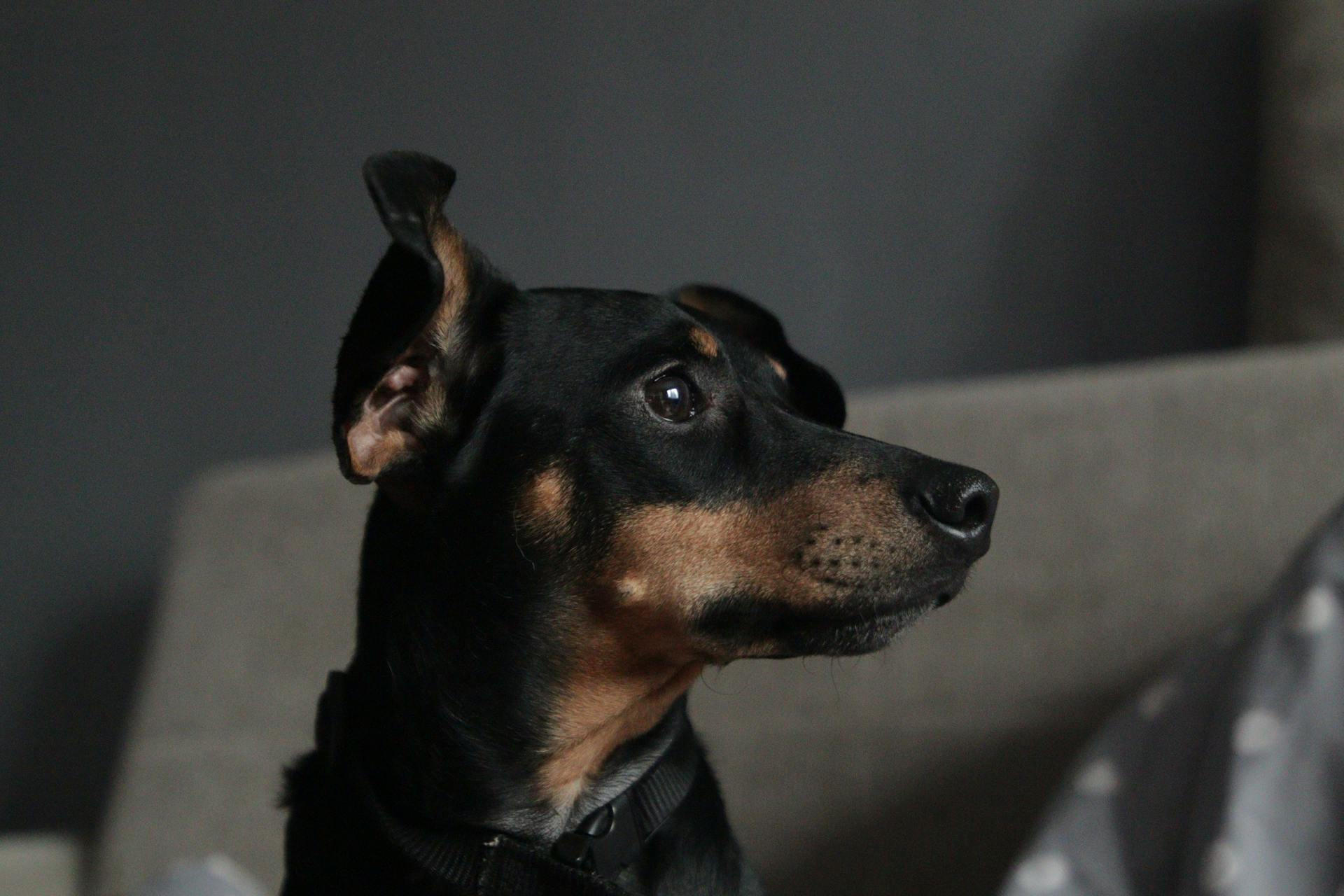
Their ears are set high and naturally tend to stand straight up from the base to tip, often alerting their owners to any suspicious sounds. Miniature Pinscher ears can be either cropped or uncropped.
Their eyes are full and oval-shaped, very dark, and sometimes even true black, giving them a curious and playful expression. These eyes are always worth a second look.
Their nose is usually black, but chocolate-colored dogs have chocolate-colored noses, adding to their unique charm. Miniature Pinschers are known for their sleek, shiny coats, which are short, straight, and smooth.
Their coat colors include a range of shades from rust to black and tan to chocolate to stag red (red with black hairs intermingled), making each dog a one-of-a-kind beauty.
Here are the key physical characteristics of the Miniature Pinscher breed:
- Ears: Set high and naturally tend to stand straight up from the base to tip
- Eyes: Full and oval-shaped, very dark, and sometimes even true black
- Nose: Usually black, but chocolate-colored dogs have chocolate-colored noses
- Coat: Short, straight, and smooth, with a range of coat colors
- Tail: Set high and docked
Personality and Temperament
Miniature Pinschers are fearless, spirited dogs that radiate confidence.
Their outgoing, active, and intelligent nature makes them excellent family pets with the right socialization and training.
These little dogs have big personalities and are always eager to learn and show off new tricks. They're motivated to explore uncharted territory and can be strong-willed if they don't get the attention they yearn for.
With proper socialization from puppyhood, Miniature Pinschers can be well-behaved members of the family, but without it, they can be feisty, nippy, and possessive of resources.
You might enjoy: Is a Doberman Pinscher a Good Family Dog
They love to work and have a penchant for chasing and capturing small critters, and their thin limbs can be easily injured if they play rough with younger children.
Miniature Pinschers are highly protective of their pet parents, especially when other dogs are in the mix, and may try to one-up other dogs to make themselves look bigger.
Despite their small size, they can be lightning fast and make the most of their adventure if they get loose, so it's essential to keep an eye on them when they're outside.
For another approach, see: What Can You Feed Dogs Instead of Dog Food
Health and Wellness
Miniature Pinschers are generally a healthy breed, but like all dogs, they can be prone to certain health issues. They have a lifespan of 12 to 16 years and are known to be very healthy dogs.
However, there are some health concerns to be aware of, including Progressive Retinal Atrophy (PRA), which can cause night blindness, and Luxating Patella, a condition where the kneecap slips in and out of place. These conditions are often genetic, but genetic screening testing is available to detect them.
It's also essential to keep an eye out for signs of Legg-Calve-Perthes Disease, a degenerative condition affecting the hip joint, and Hypothyroidism, a condition where the thyroid gland doesn't produce enough thyroid hormone. If you notice any of these symptoms, consult with your veterinarian as soon as possible.
Some common health issues in Miniature Pinschers include:
- Legg-Calve-Perthes Disease
- Epilepsy
- Hypothyroidism
- Knee and joint concerns
- Progressive Retinal Atrophy (PRA)
Regular veterinary check-ups and genetic screening can help minimize the risk of these health issues.
Health
Miniature Pinschers are generally a healthy breed, with an average lifespan of 12 to 16 years. However, like all breeds, they can be prone to certain health issues.
One of the most common health problems in Miniature Pinschers is patellar luxation, or a dislocated kneecap. This condition can cause a dog to lift their hind leg suddenly or walk with a periodic limp or "bunny hop." It's a hereditary condition that's more common in small dogs like the Min Pin.
Regular veterinary check-ups are essential to diagnose any potential health issues early on. Your vet may prescribe anti-inflammatory medications or restrict exercise to help manage the condition, and in severe cases, surgery may be necessary.
Miniature Pinschers can also be prone to other health issues, such as Legg-Calve-Perthes disease, which affects the hip joint, and hypothyroidism, which is caused by an underactive thyroid gland. Early treatment for these conditions can make a big difference in your dog's quality of life.
Here are some common health issues to watch out for in Miniature Pinschers:
- Legg-Calve-Perthes disease
- Hypothyroidism
- Patellar luxation
- Progressive retinal atrophy (PRA)
- Cataracts
It's essential to work with a reputable breeder who engages in responsible breeding practices and screens for common diseases and conditions. By being aware of these potential health issues, you can take steps to prevent or manage them and ensure your Miniature Pinscher lives a happy and healthy life.
Nutritional Tips
A high-quality dog food will meet a Min Pin's nutritional needs. Generally, a balanced diet is all they need to stay healthy.
Your dog shouldn't need nutritional supplements unless your vet recommends them.
Pet Care
Miniature Pinschers are intelligent, high-energy dogs that require ample exercise and consistent training. They need to be taken on daily walks to ensure they get optimal mental stimulation.
To feed a Miniature Pinscher, you'll need to divide their food into three or four meals for puppies, but adult Min Pins can eat all their daily nutrition needs in a single meal. A slow-feeder bowl can be beneficial to slow their eating.
The Miniature Pinscher's short, smooth coat is low maintenance, but it's essential to brush them about once a week to keep their fur shiny and clean. You can use a soft brush or a hound glove to achieve this.
Regular nail trimming is crucial to prevent discomfort and pain for your Miniature Pinscher. Trimming their nails about twice a month will keep them healthy.
Miniature Pinschers are prone to getting infested by ticks, fleas, and worms, so it's vital to get them checked by a vet regularly for year-round prevention. They require a proper vaccination schedule to prevent underlying health conditions, especially in their first year.
Here's a list of essential vaccinations for Miniature Pinschers:
- Influenza
- Coronavirus
- DHPP (vaccines for hepatitis, parainfluenza, and parvovirus)
- Lyme disease
- Bordetella
- Parvovirus
- Rabies
It's essential to brush your Miniature Pinscher's teeth daily using dog-specific toothpaste to prevent dental disease. Regular bathing is also vital to maintain their healthy skin and coat, but be sure not to overdo it, as excessive bathing can cause skin irritation.
See what others are reading: German Shorthaired Pointer Skin Problems
Breed Standard & History
The Miniature Pinscher displays a small, compact, yet sturdy appearance and should appear similar in length as height at the withers. They have a tapering head with dark, expressive eyes.
Erect, high-set ears may be cropped or uncropped, as preferred. Sloping shoulders create a hackney-like gait.
The high-set tail is docked proportionately. The smooth, short coat should cover the body uniformly.
Accepted colors include red, black and rust, or chocolate and rust markings with no more than a half inch of white. Other colors are considered a disqualification.
Miniature Pinschers are self-assured and proud. They were originally bred to hunt rats in Germany.
The breed's popularity rose during the end of the 19th century. America's first Miniature Pinschers arrived in 1919.
The Miniature Pinscher Club of America was formed in 1929, and the American Kennel Club (AKC) accepted the breed to the terrier group in 1929. In 1930, Miniature Pinschers were reclassified as toys.
On a similar theme: United Kennel Club American Bully
Training and Lifestyle
Miniature Pinschers are smart dogs that can quickly pick up training cues, but they can also be independent-minded and choose to not follow your signals.
Pairing training with feeding times can make learning a fun activity with a reward, making it easier to train your Miniature Pinscher.
Their high energy levels mean they require a moderate amount of daily exercise to keep them happy and healthy, which can be achieved through brisk walks, playtime in the yard, and interactive games that challenge their minds.
Their lively nature makes them ideal companions for individuals and families who lead active lifestyles, so if you're an active person, a Miniature Pinscher might be a great fit for you.
Exercise
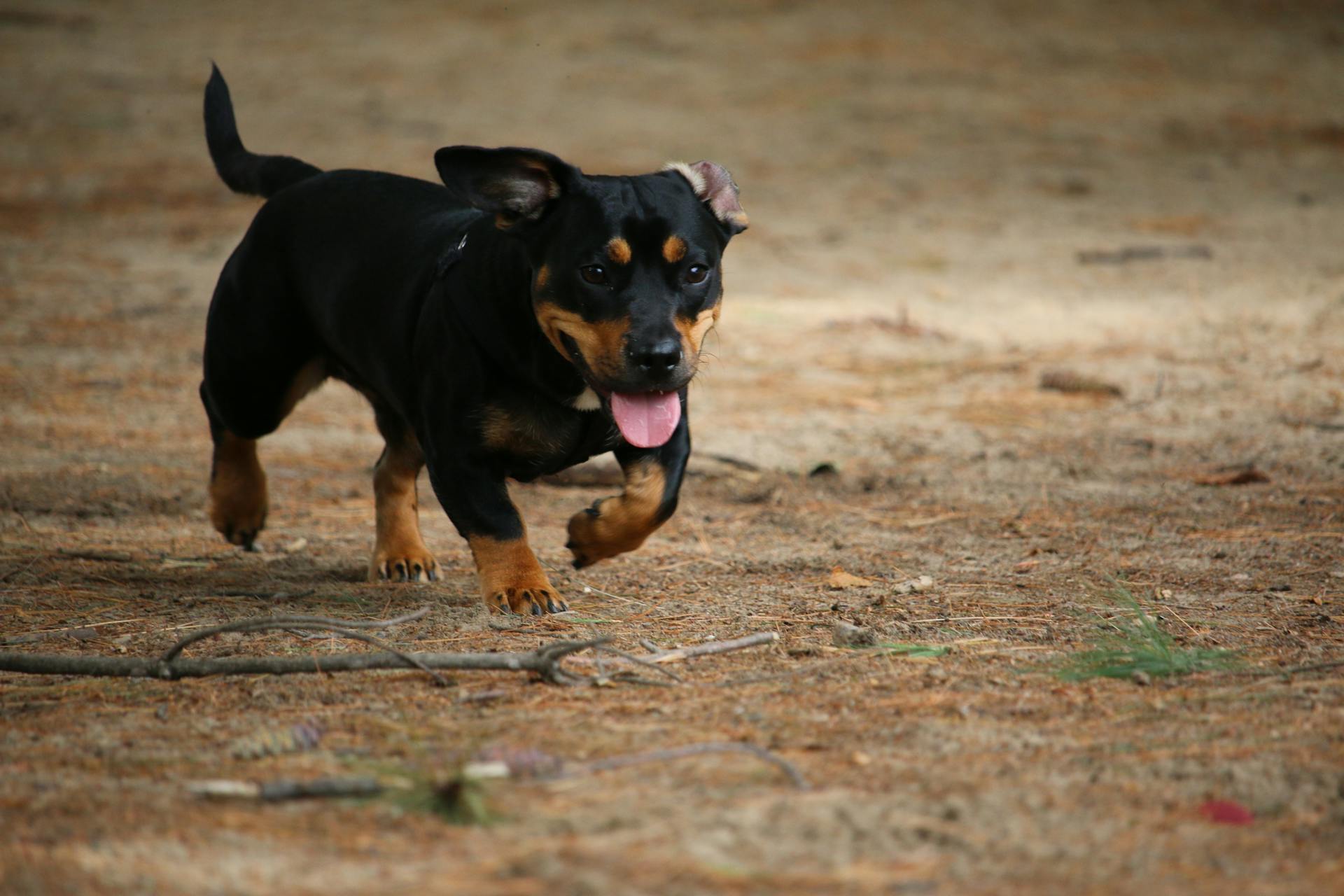
Exercise is a crucial part of a Miniature Pinscher's life, and they need it regularly to stay happy and healthy. They require a moderate amount of daily exercise, which can be achieved through brisk walks, playtime in the yard, and interactive games that challenge their minds.
Miniature Pinschers thrive in active households, but their high energy levels mean they need multiple exercise sessions throughout the day. Aim for two to three daily excursions, totaling 45 to 60 minutes of exercise per day.
They're not built for long-distance exercise like long hikes and walks on woodsy trails. Instead, think of exercise with a Miniature Pinscher as a sprint, not a marathon. Short bursts of exercise, like games of fetch or chase, are perfect for their energetic nature.
Remember, mental stimulation is just as important as physical exercise. Puzzle toys can help keep their brains engaged, and a tired Min Pin is one who's ready for snuggle time with you on the couch.
Here's a rough guide to help you plan your Miniature Pinscher's exercise routine:
Keep in mind that every dog is different, and you should adjust the exercise routine according to your Miniature Pinscher's age, size, and energy level.
Training
Training your Miniature Pinscher requires patience and consistency. They are smart dogs that can quickly pick up training cues.
To make training more enjoyable, pair it with feeding times, making learning a fun activity with a reward. This approach can help your Min Pin stay engaged and motivated.
Min Pins can be independent-minded and may choose to not follow your signals, so it's essential to establish clear boundaries and expectations.
Frequently Asked Questions
Do Miniature Pinschers bark a lot?
Yes, Miniature Pinschers are known to bark frequently, often due to communication, protection, or emotional reasons. This can be a consideration for owners who value a quieter living space.
Are mini Pinschers expensive?
Miniature Pinschers can range from moderately to very expensive, with prices typically between $350 and $1,215. The cost depends on factors like breeder reputation, bloodline, and location.
How long can a Min Pin be left alone?
Min Pin puppies can't be left alone for more than a few hours, while adult Min Pins can tolerate longer periods of alone time as long as their needs are met
Featured Images: pexels.com