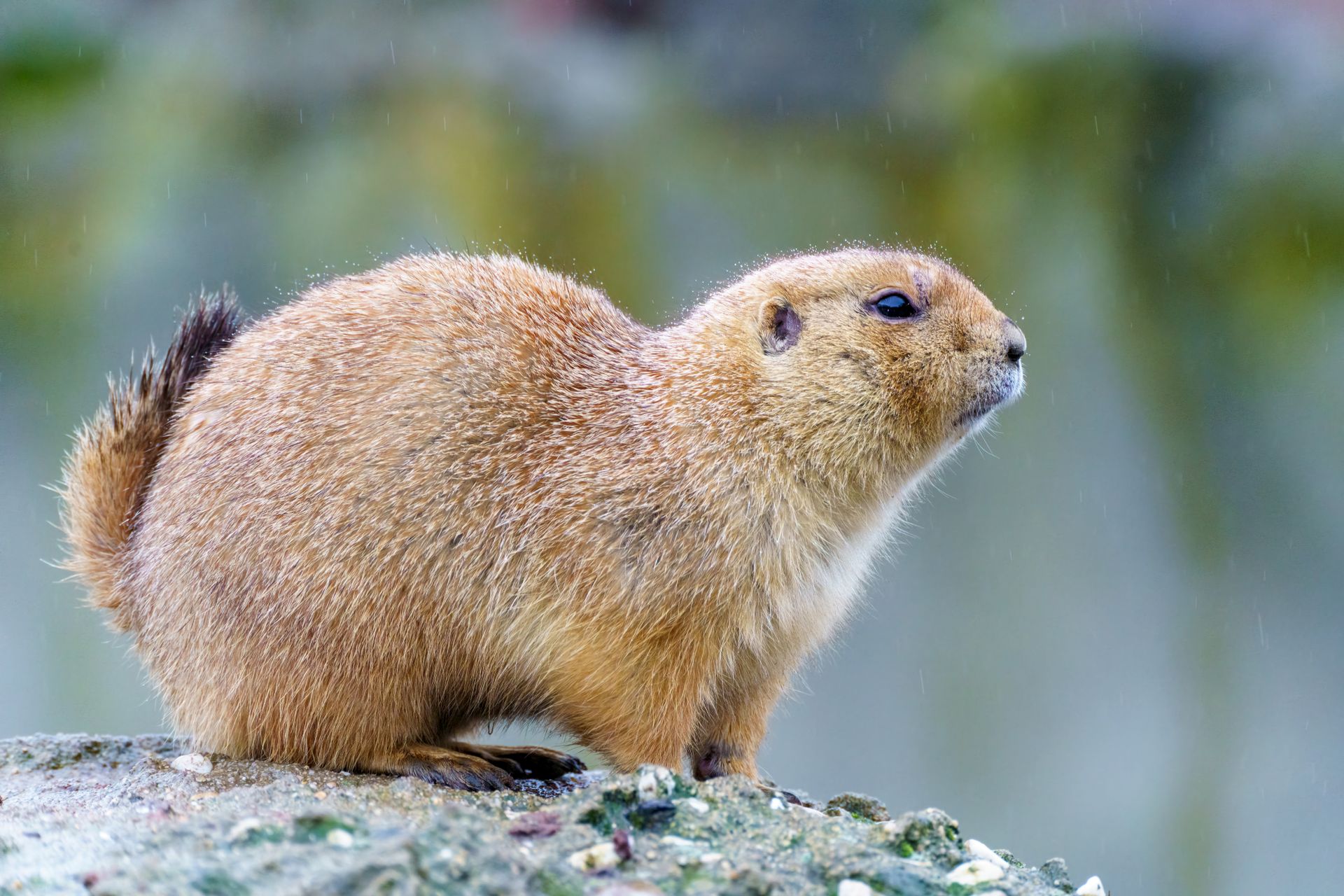
The prairie vole, also known as Microtus ochrogaster, is a small rodent native to North America.
These voles are primarily herbivores, feeding on grasses, fruits, and vegetation.
They are social creatures, often living in large colonies and forming long-term monogamous relationships.
Taxonomy and Classification
The prairie vole's scientific name, Microtus ochrogaster, is derived from Latin, with the genus name translating to "small ear" and the specific epithet translating to "yellow belly".
The scientific classification of the prairie vole is as follows: Animalia, Chordata, Vertebrata, Mammalia, Rodentia, Cricetidae, Microtus, and Microtus ochrogaster.
Here's a breakdown of the prairie vole's classification:
The prairie vole belongs to the genus Microtus, which includes meadow voles, and the specific species Microtus ochrogaster, which has only 4 specimens recorded.
Habitat and Distribution
Prairie voles are found in dry fields with a cover of grasses and weeds, and the largest populations are typically in fallow fields or hay fields. These fields provide the perfect environment for them to thrive.
They make shallow burrows and runways through surface vegetation, which they use for multiple purposes, including predator protection and food gathering. Their burrows are also used as a quick escape route if they sense predators or disturbances nearby.
In winter, prairie voles tunnel underneath the snow to stay safe and cozy. They prefer drier areas compared to the meadow vole, and their runways are easily disturbed.
Here are some specific types of habitats where prairie voles can be found:
- Fallow fields
- Hay fields
- Ungrazed pastures
- Managed rights-of-way
- Old field borders
- Alfalfa and soybean fields
They prefer a thick ground cover of herbaceous vegetation, and populations are lower in short, sparse grass than in tall, lush vegetation growth.
Behavior and Characteristics
The vole's physical appearance is quite distinctive, with long, coarse grayish-brown fur on its upper body and yellowish fur on its lower body.
Voles have relatively short ears and a short tail, which is darker on top.
Prairie voles have a relatively short lifespan, typically living no more than one or two years.
Their life expectancy is influenced by the presence of predators and natural factors in their environment.
Life Cycle and Longevity
Prairie voles have a relatively short lifespan, typically living less than a year in the wild. However, they can live up to 3 years in captivity.
Their reproductive cycle is quite active, with females able to produce multiple litters per year, and the maximum breeding interval is about one litter every month and a half.
Here's a breakdown of the prairie vole's reproductive cycle:
They begin to mature at around 30 to 40 days, and their young can start eating solid food at 12 days old. Fur appears on the young by the second day, and they can crawl by 5 days.
Reproduction
Prairie voles can reproduce at any time of the year, but the main breeding seasons are in the fall and the spring. They are generally monogamous, and male and female partners form lifelong pair bonds.
The female's gestation period is between 20 and 30 days, and she can have two to four litters of two to seven young per year in a nest lined with vegetation in a burrow or on the ground. Litter size varies depending on food availability and the age of the female.
Prairie voles breed throughout the year except during severe winters and summers. The highest levels of reproductive activity occur between May and October, and the lowest levels in December and January.
The gestation period lasts 21 days, after which 3 or 4 hairless young are born. Young are altricial at birth, with both eyes and ears closed.
Here's a breakdown of the reproductive features of prairie voles:
- They are iteroparous, meaning they can produce multiple litters per year.
- They breed year-round.
- They are gonochoric, meaning males and females are separate.
- The average number of offspring is 3.8.
- The average gestation period is 21 days.
- They are viviparous, meaning they give birth to live young.
Both males and females care for the young, which are born naked and helpless in a grass-lined nest. The young average 3 grams at birth and begin eating solid food at 12 days.
Lifespan/Longevity
In the wild, prairie voles have a relatively short average lifespan of less than 1 year. This is a stark contrast to their captive counterparts, who can live up to 3 years.
Their lifespan in captivity is a notable exception, with some individuals living up to 3 years. However, the typical lifespan of a prairie vole in captivity is around 1 year.
Here's a breakdown of their lifespan in different environments:
- Average lifespan: less than 1 year (wild)
- Range lifespan: up to 3 years (captive)
- Typical lifespan: 1 year (captive)
Featured Images: pexels.com