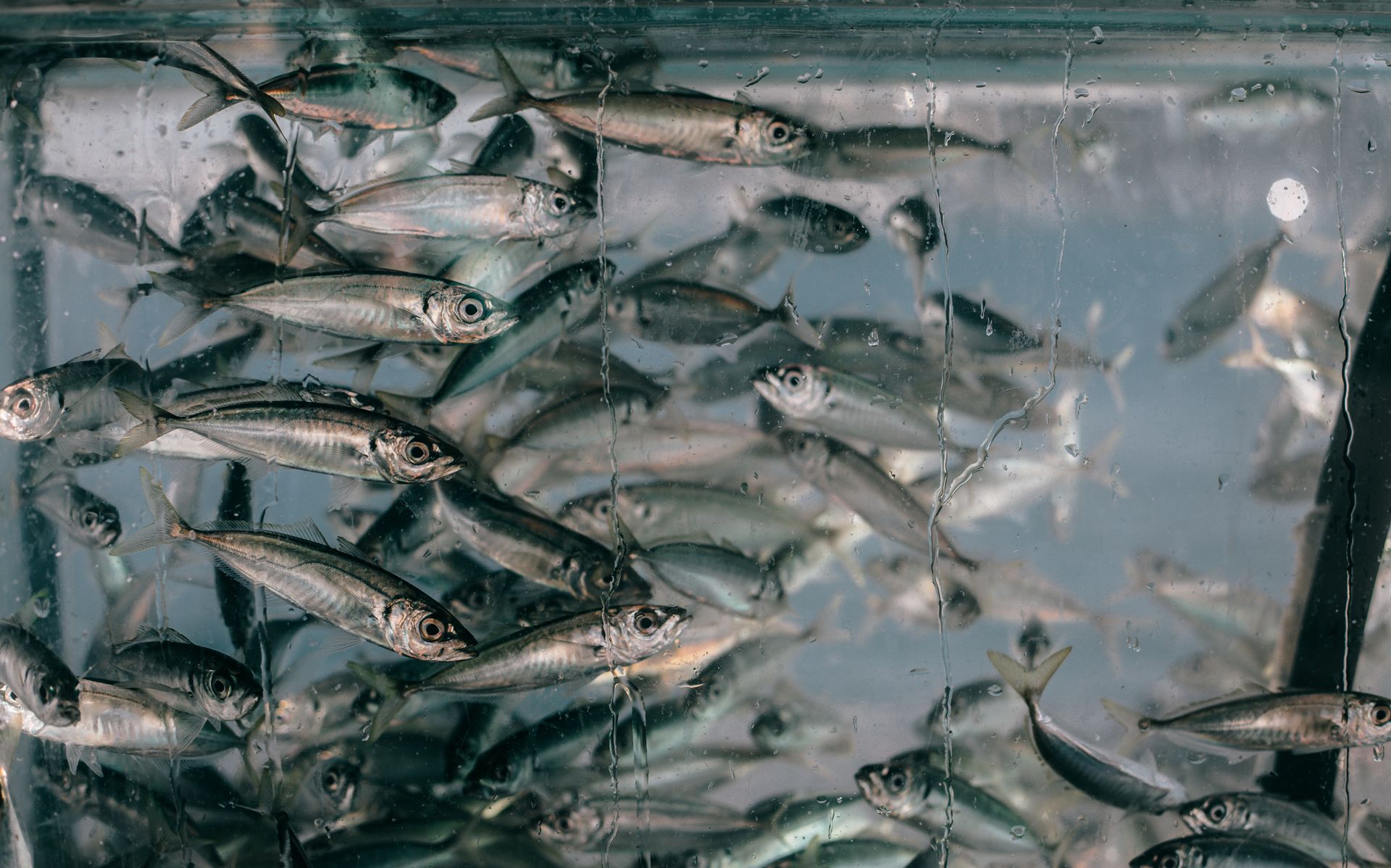
Microdevario is a fascinating genus of small cyprinid fish that has gained popularity among aquarium enthusiasts in recent years. They are native to Southeast Asia.
Microdevario species are typically small, ranging from 1 to 3 centimeters in length, making them a great choice for small aquariums. Their tiny size requires careful consideration when it comes to tankmates and aquarium design.
Microdevario are peaceful fish that thrive in well-planted tanks with plenty of hiding places and open swimming space.
Broaden your view: Gold Barbs Fish
Etymology
The name Microdevario is a combination of two words. It comes from the Ancient Greek word μικρός (mikrós), meaning 'small'. This refers to the small size of genus members.
The genus Devario is a key part of the name, as it alludes to the evolutionary relationship between Microdevario and Devario.
Water Conditions and Care
The pH level of the water for Microdevario should be between 6.0 and 7.5. This range is suitable for their well-being.
Hardness in the water should be between 18 and 215 ppm. This will help ensure the water is safe for your Microdevario to thrive in.
You can easily maintain this pH and hardness level by using a water conditioner or adjusting the water pH with a pH adjuster.
Classification and Behavior
Microdevario are small, peaceful fish that can thrive in a well-maintained aquarium. They are native to the freshwater rivers and streams of Thailand and Myanmar.
Their peaceful nature makes them a great choice for community tanks, and they can be kept with other small, non-aggressive fish. In fact, they are often kept with other species of small cyprinids.
Microdevario are omnivores, which means they eat both plant and animal matter, and they can be fed a diet of flake food, pellets, and live or frozen foods.
Tank-Bred
Tank-bred Kubotai Rasboras are a great option for aquarists. They are perfect for adding a pop of color to your tank.
These fish are known for their sparkling neon green color, which is a rare sight in freshwater animals. They are also known as Neon Green Rasboras, Neon Yellow Rasboras, and Green Danios.
Tank-bred Kubotai Rasboras are fairly easy to care for, as long as they live in stable water parameters with good water quality. They are completely peaceful and totally safe to keep with other peaceful fish, snails, shrimp, and live plants.
Here are some key characteristics of tank-bred Kubotai Rasboras:
- Striking bright green coloration
- Form schools with each other and with other rasboras and danios
- Safe with plants
- Completely peaceful
They are a schooling fish and can really only thrive in groups, which is why they are sold in groups of 6 and 12. The more of these fish there are in your tank, the less shy they will behave.
Classification
Classification is a fundamental concept in understanding behavior. It's a way to group similar things together based on their characteristics.
In our previous discussions, we've talked about the importance of taxonomy in biology, where living organisms are classified into different groups based on their shared traits. This process helps us understand the relationships between different species.
A key aspect of classification is the use of hierarchical systems, where categories are nested within each other. For example, a species can be classified as a genus, then a family, and so on.
This hierarchical approach helps us organize complex information and make sense of the world around us. By breaking down complex systems into smaller, more manageable parts, we can gain a deeper understanding of how things work.
In the context of behavior, classification can help us identify patterns and trends that might not be immediately apparent. By grouping similar behaviors together, we can see how they relate to each other and understand the underlying causes.
Compatibility and Interactions

If you're considering getting a group of Microdevario, it's essential to understand their compatibility and interaction needs.
Microdevario are schooling species by nature, so it's recommended to purchase a group of at least 8-10 specimens.
Maintaining them in decent numbers will make the fish less nervous and result in a more effective, natural-looking display.
In fact, males will display their best colours as they compete with one another for female attention.
As for tankmates, Microdevario do best with comparably-sized species that enjoy similar conditions.
Behaviour and Compatibility
Maintaining the species alone or with comparably-sized fish that enjoy similar conditions is best.
Some excellent companions for this species include Celestichthys choprae, Brachydanio aesculapii, and Pethia phutunio, all of which are small fishes from Myanmar.
A group of at least 8-10 specimens should be purchased to create a natural-looking display and reduce nervous behavior in the fish.
Maintaining the species in decent numbers will also encourage males to display their best colours as they compete with each other for female attention.
Species like Parambassis lala and Dario hysginon may also do well in the same tank, despite not being typically recommended for community aquaria.
3 Responses to Nanus (Microrasbora Nana)
Nanus (Microrasbora Nana) has a correct spelling, Microdevario nanus, according to Maurice Kottelat's 1999 paper. This is a crucial detail to get right.
In fact, the correct spelling was pointed out by Killi on August 7th, 2014, in a comment on a discussion about the species. This highlights the importance of double-checking information, especially when it comes to scientific names.
Maurice Kottelat's paper, "The fishes of inland waters of Southeast Asia: a catalogue and core bibliography of the fishes known to occur in freshwaters, mangroves and estuaries", is a valuable resource for anyone interested in fish species. It's a comprehensive guide that's worth checking out.
Matt, one of the commenters, was working on updating information based on Kottelat's paper. He appreciated the feedback and made sure to correct the spelling of Nanus (Microrasbora Nana) to Microdevario nanus.
Physical Characteristics
Mature Microdevario females tend to be deeper-bodied and noticeably larger than the more compact, intensely-coloured males.
Their size difference is quite striking, making it easy to tell the sex of an individual.
One of the most notable physical characteristics of Microdevario is their size variation between males and females.
Overview and General Information
The Microdevario is a peaceful and active fish that thrives in community aquariums. Their shimmering golden hues are a delight to behold.
Native to Southeast Asia, these fish are well-suited for freshwater habitats. They're a great choice for nano aquariums, where space is limited.
These fish are small, making them perfect for smaller tanks. Their schooling behavior is a joy to watch, as they dart and weave through the water.
Frequently Asked Questions
What size tank for Microdevario Kubotai?
For optimal care, a minimum 10-gallon tank is recommended for Microdevario Kubotai. A larger tank provides a stable environment for this species.
Featured Images: pexels.com


