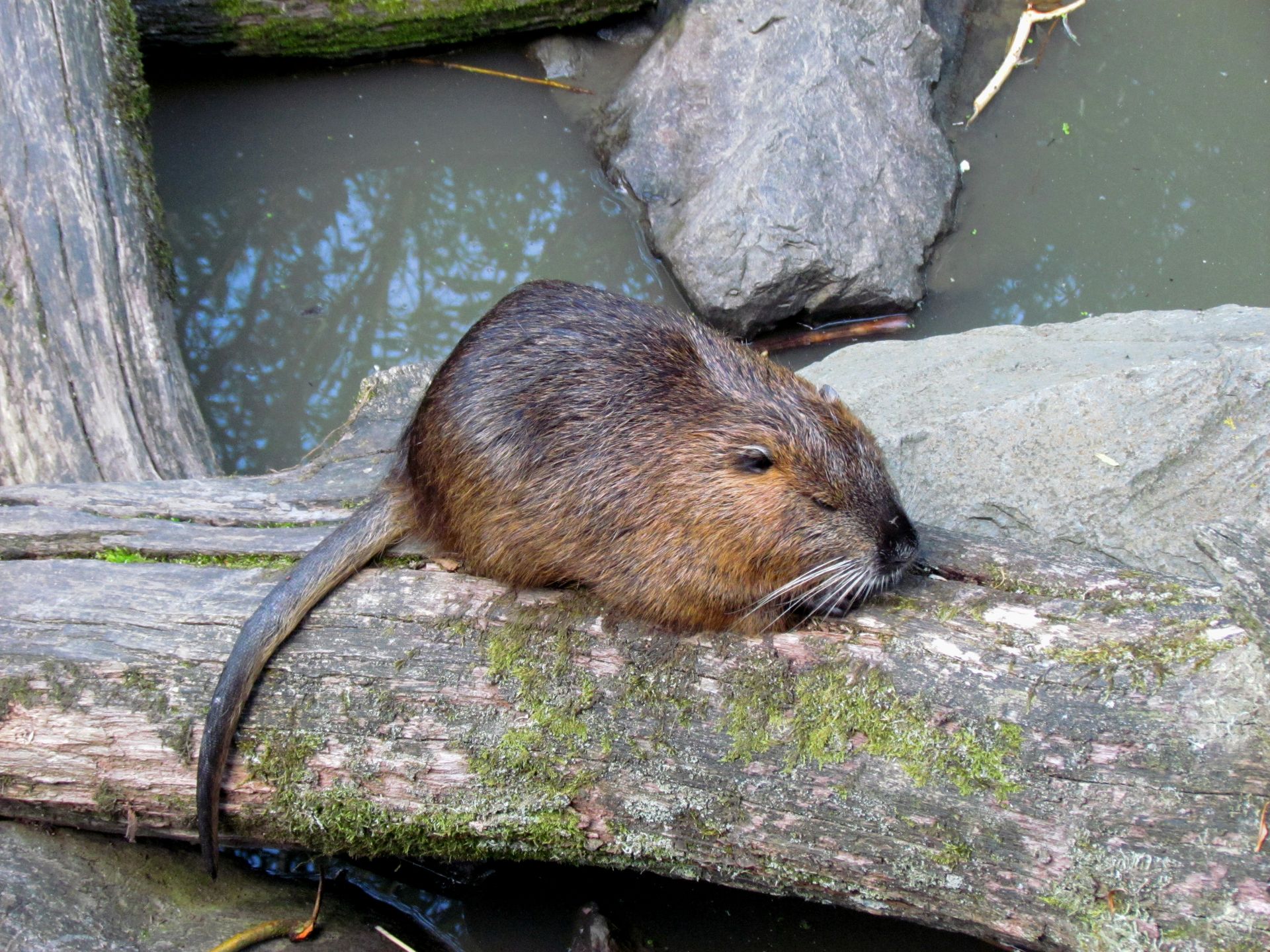
The Melomys is a fascinating group of rodents native to Australia and New Guinea. There are over 20 species of Melomys, each with unique characteristics.
Some Melomys species are expert burrowers, while others are skilled climbers. The Melomys is a medium-sized rodent, typically weighing between 50-150 grams.
Melomys are primarily herbivores, feeding on leaves, seeds, and fruits. In the wild, they play a crucial role in dispersing seeds and maintaining ecosystem balance.
Identifying Melomys
Melomys are native rodents that can be distinguished from introduced Black Rats by their size.
They have reddish-brown fur, which is a key characteristic to look out for.
The underbelly of a Melomys is paler than its back, making it a useful identification feature.
The scales on a Melomys' prehensile tail form a mosaic pattern, unlike many other rodents which have a concentric scale pattern.
This distinctive mosaic pattern is how Melomys got their common name: the mosaic-tailed rat.
Melomys Details
Melomys are small to medium-sized rodents that belong to the genus Melomys.
They are nocturnal, meaning they are active at night and rest during the day.
Melomys have a stocky build and a short, rounded snout.
Some species of Melomys are known to be excellent climbers.
Melomys are found in the wild in Australia, New Guinea, and nearby islands.
Their diet consists mainly of seeds, fruits, and leaves.
Melomys are social animals and often live in small groups.
Frequently Asked Questions
Why did the Melomys go extinct?
The Bramble Cay melomys went extinct due to human-induced climate change, which caused oceanic inundation and led to its disappearance between 2009 and 2011. This marked the first recorded extinction of a mammal attributed to rising sea levels.
How many babies do Melomys have?
Melomys females typically give birth to small litters of 1-3 pups. They are solitary mothers, raising their young alone without a male's presence.
What do Melomys eat?
Melomys primarily feed on seeds, leaves, and fruits. Their diet consists of plant-based materials that they forage at night.
Featured Images: pexels.com


