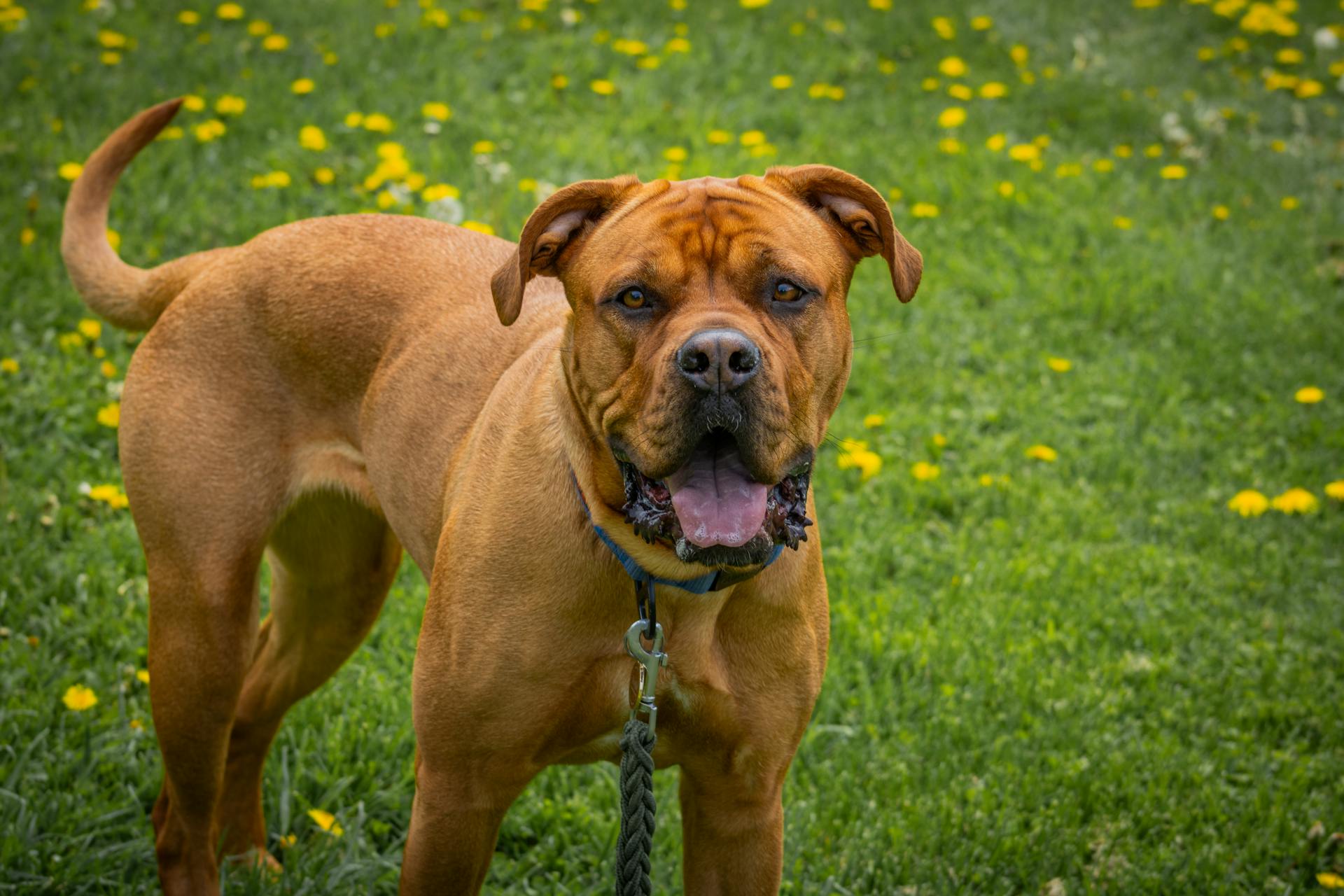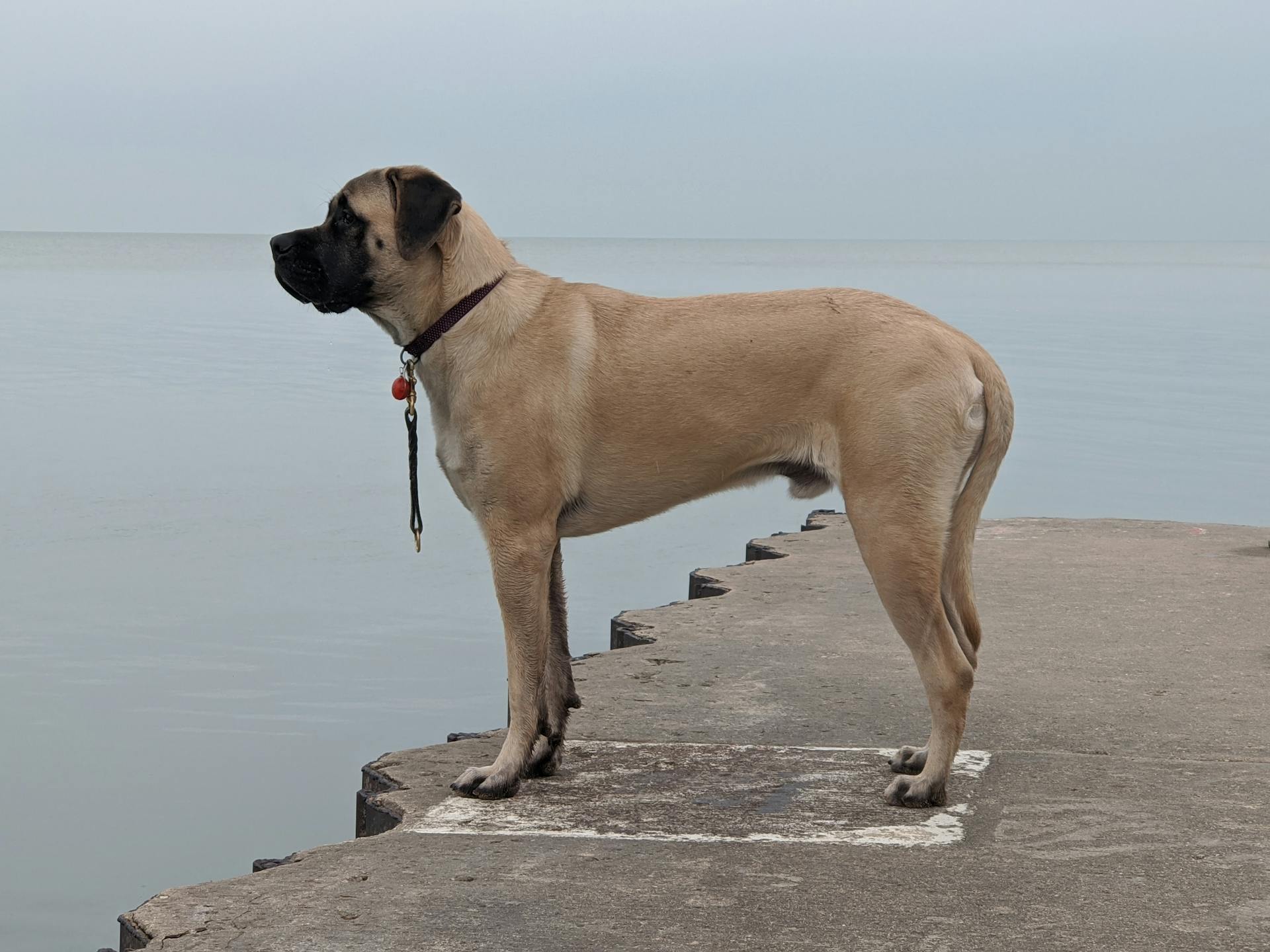
Mastiffs are massive dogs, with some breeds reaching weights of up to 230 pounds.
Their large size requires plenty of space to roam, making them a poor fit for apartment living.
Mastiffs are a relatively old breed, with some evidence suggesting they originated over 2,000 years ago.
They were originally bred for guarding and protection, which is still a key part of their nature today.
Mastiffs are known for their loyalty and affection towards their families, but can be wary of strangers and other animals.
With proper training and socialization, mastiffs can make great companions for active families.
History and Origins
The history of mastiffs is a long and fascinating one, with roots dating back thousands of years. They originated in the mountains of Asia, possibly in Tibet or northern India, where they were used to guard flocks from predators.
One of the most ancient types of dog, the Molosser, is the ancestor of many modern breeds, including the Mastiff and the Tibetan Mastiff. Archaeologists have uncovered depictions of Mastiff-type dogs in ancient civilizations, including Egyptian, Babylonian, and classical Greek cultures.
Mastiffs have been used for a variety of purposes throughout history, including guarding homes, farmland, and livestock, as well as participating in bear-baiting, lion-baiting, bull-baiting, and dogfighting. They were also used in war, fighting alongside their owners on the battlefield.
The modern Mastiff breed was developed in England, where they were prized for their size and courage. The breed was almost extinct after 1835, when the brutal sports of bear-baiting, bull-baiting, and dog-fighting were outlawed, but was revived in the mid-19th century with the rise of dog shows.
Here are some of the key events in the history of mastiffs:
- 55 B.C.: Caesar notes the ancestors of English Mastiffs when he invades the British Isles.
- 15th-20th centuries: The Lyme Hall strain of Mastiffs is bred and plays a role in saving the breed from extinction.
- 1835: Bear-baiting, bull-baiting, and dog-fighting are outlawed, causing a decline in the breed's numbers.
- 1879: The first Mastiff club is formed in the United States.
- 1885: The American Kennel Club recognizes the Mastiff breed.
- 1929: The current Mastiff Club of America is formed.
Today, mastiffs are a beloved companion breed worldwide, known for their gentle nature and massive size.
Breed Information
Mastiffs are known for their massive size, with some breeds weighing over 200 pounds. The English Mastiff, for instance, can weigh between 160-230 pounds.
The Neapolitan Mastiff has a unique appearance with large, loose skin and heavy wrinkles on its face and body. They are muscular dogs with a protective nature.
Bullmastiffs are a mix of English Mastiff and Bulldog, developed in England to guard estates and catch poachers. They are large, powerful dogs with males weighing around 100-130 pounds.
Some Mastiff breeds have a long lifespan, with the English Mastiff living between 6-10 years. The Dogue de Bordeaux has a large, muscular build and a distinctive wrinkled face.
Here's a list of some Mastiff breeds and their typical weights:
Temperament and Personality
The Mastiff's temperament is a big deal, and it's not just because of its massive size. It's a gentle giant, eager to please and affectionate, but also aloof towards strangers.
This breed is generally compatible with other household pets, including cats and other dogs. However, its sheer size and strength can make it difficult for children or the elderly to manage.
A well-socialized Mastiff is a dignified and courageous dog that treats normal strangers with polite aloofness. But if it senses a threat, it will step between you and the danger, escalating its response as needed.
Mastiffs are sensitive dogs that can become shy, fearful, or aggressive if mishandled. So, it's essential to treat them with kindness and respect, never rough or harsh.
Puppies with nice temperaments are curious and playful, willing to approach people and be held by them. Meeting the parents, especially the mother, can help you gauge their temperament and choose the right puppy for you.
Early socialization is crucial for Mastiffs, exposing them to various people, sights, sounds, and experiences when they're young. This helps ensure they grow up to be well-rounded dogs.
Care and Upkeep
Mastiffs require a large area to stretch out and sleep, preferably on soft bedding to avoid painful callouses and bursitis.
Their size also demands a large vehicle for travel, making them an expensive dog to own, especially when it comes to food.
A Mastiff's drool is a constant feature, making them a poor choice for fastidious housekeepers.
They're not suited for warm climates unless they can spend the warmer parts of the day in air-conditioned spaces.
Intriguing read: English Mastiff Large
Mastiffs are susceptible to overheating at temperatures tolerated by most other breeds due to their large body mass and short nasal passages.
They require about an hour of interactive playing or walking each day, enjoying games like tug, swimming, nose work, and trick training.
Coat care is minimal, consisting of weekly brushing and occasional bathing, with bathing of the forechest and forelimbs needed more often if the dog drools on itself.
The breed is not long-lived, averaging only 6-10 years and prone to gastric dilatation-volvulus, a life-threatening emergency that can require immediate veterinary intervention.
Many owners elect to have their stomach surgically attached to the abdominal wall to prevent this.
Health Needs
Mastiffs are prone to heart disease, so it's crucial to have their heart examined regularly after they turn two.
Regular check-ups with your veterinarian can help catch heart disease early on, which is a significant factor in determining the severity of the condition.
Eye problems are another common issue in Mastiffs, with many experiencing issues as early as two years or older. Having their eyes examined regularly can help prevent or detect these conditions.
Hip dysplasia is also a concern in Mastiffs, with their joints requiring annual checks to ensure a proper fit.
Some Mastiffs may be born with a genetic condition called Von Willebrand disease, which can be tested for by a veterinarian.
Bloat, or gastric dilation volvulus (GDV), is a life-threatening stomach condition that requires immediate veterinary attention.
Common Health Issues in Mastiffs:
- Heart disease (examine heart regularly after 2 years)
- Eye problems (examine eyes regularly after 2 years)
- Hip dysplasia (annual joint checks)
- Von Willebrand disease (genetic condition, test with veterinarian)
- Bloat (life-threatening stomach condition, treat with surgery)
Regular veterinary visits are essential for catching these health issues early on and preventing complications.
Special Considerations
Mastiffs are a great breed to have around kids, with the AKC rating them a five out of five for being great with children.
However, they can struggle with other dogs and strangers, so early training and socialization are crucial to ensure everyone feels safe interacting with your pet.
They need to be handled gently, using lots of eye contact and positive encouragement while training, and avoiding raised voices.
Training sessions should be kept short and interesting to maintain their interest.
Mastiffs are notorious for drooling a lot, so be prepared to have wipes on hand to clean up their faces, your clothes, and those of your guests.
A different take: Mastiff Dog Training
Pit Bull Bans: Should They Be Enacted?
Mastiffs have been used as guard and fighting dogs in England for over 2,000 years.
The Roman invaders of England even sent Mastiffs to compete in ancient Rome's arenas, where they fought against bears, lions, tigers, bulls, other dogs, and human gladiators.
Mastiffs are a powerful breed, but they're also characteristically gentle dogs.
According to the American Kennel Club, Mastiffs must stand at least 30 inches tall at the withers, with males weighing 120-230 pounds.
The Bullmastiff, a cross between the Mastiff and the Bulldog, was developed in 19th-century England to discourage poaching on estates and game preserves.
The Bullmastiff stands 24-27 inches tall and weighs 100-130 pounds, making it a sturdy breed.
The breed's history and characteristics raise questions about breed-specific legislation, like pit bull bans.
Special Considerations
Mastiffs are great with kids, but they can struggle with other dogs and strangers, so early socialization is key.
They need to be handled gently, with lots of eye contact and positive encouragement, and training sessions should be short and interesting.
Raising a mastiff means being comfortable with drool, as they drool a lot more than many dog breeds.
You'll want to keep wipes on hand to clean up after your dog and your guests.
Consider reading: English Mastiff Slobber
Rescue and Ownership
If you're considering bringing a Mastiff into your life, it's essential to understand the responsibility that comes with owning one. Many people purchase Mastiffs without doing their research, which can lead to a lifetime of challenges.
Mastiffs are often in need of adoption and fostering, so if you're not ready for the long-term commitment, consider giving a loving home to a rescue Mastiff. If you don't see a local rescue listed, contact the national or local breed clubs for guidance.
Here are a few reputable Mastiff rescue groups to get you started:
- Great Lakes Mastiff Rescue
- Sugarland Ranch
- Mastiffs To Mutts Rescue, Inc.
- Mastiff Rescue Oregon
Prospective Owners

If you're considering bringing a new furry friend into your life, there are a few things to think about first.
Choosing the right breed is crucial, and it's essential to do your research to find the perfect companion for you and your lifestyle. You can start by considering factors like energy level, grooming needs, and family dynamics.
Why get a dog in the first place? For many people, it's about companionship and having a loyal friend by their side. Dogs have a way of bringing joy and love into our lives, and they often become an integral part of the family.
Finding a responsible breeder is vital to ensure you're getting a healthy pup from a reputable source. Look for breeders who prioritize the health and well-being of their dogs, and don't be afraid to ask questions or do your research.
Getting started in dog sports can be a great way to bond with your new companion and provide them with mental and physical stimulation. From agility training to obedience classes, there are plenty of options to choose from.
All about puppies - they're adorable, playful, and full of energy! If you're bringing a new puppy home, be prepared for a lot of love, slobbery kisses, and maybe a few accidents along the way.
Rescue Groups
If you're considering bringing a Mastiff into your life, it's essential to think about the responsibilities that come with owning one. Many people purchase Mastiffs without understanding what goes into caring for them.
There are many Mastiffs in need of adoption and/or fostering, and it's heartbreaking to see these gentle giants without a loving home. If you're thinking of adopting, you can start by contacting a local Mastiff rescue group.
Mastiff Rescue Groups can be a great resource for finding a new furry friend. Some examples of reputable rescue groups include Great Lakes Mastiff Rescue, Sugarland Ranch, Mastiffs To Mutts Rescue, Inc., and Mastiff Rescue Oregon.
If you don't see a rescue listed for your area, don't worry! You can contact the national or local breed clubs, and they can point you toward a Mastiff rescue.
Check this out: Free English Mastiff
Frequently Asked Questions
Is a Mastiff a Cane Corso?
No, a Mastiff is a broader category of dog breeds, while a Cane Corso is a specific breed of Italian Mastiff
Is Mastiff the strongest dog?
Mastiffs have the strongest bite force among dog breeds, with some studies recording up to 700 PSI. Their powerful jaws are a result of their ancient lineage as large war dogs used by the Greeks and Romans.
Are English Mastiffs good family dogs?
English Mastiffs can make great family dogs for families with older children who understand how to interact with pets safely, but may not be the best fit for homes with young toddlers or babies. Suitable for families with children who know how to interact with pets responsibly.
What is the friendliest Mastiff?
The Pyrenean Mastiff is known for being gentle and loving, making it a great breed for families with young children and other pets. This friendly Mastiff is often described as kind and good-natured, according to breed experts.
Is an English Mastiff a Cane Corso?
No, an English Mastiff is not a Cane Corso, as they are distinct breeds with different sizes and weights. While they may share some physical similarities, they have unique characteristics that set them apart.
Featured Images: pexels.com