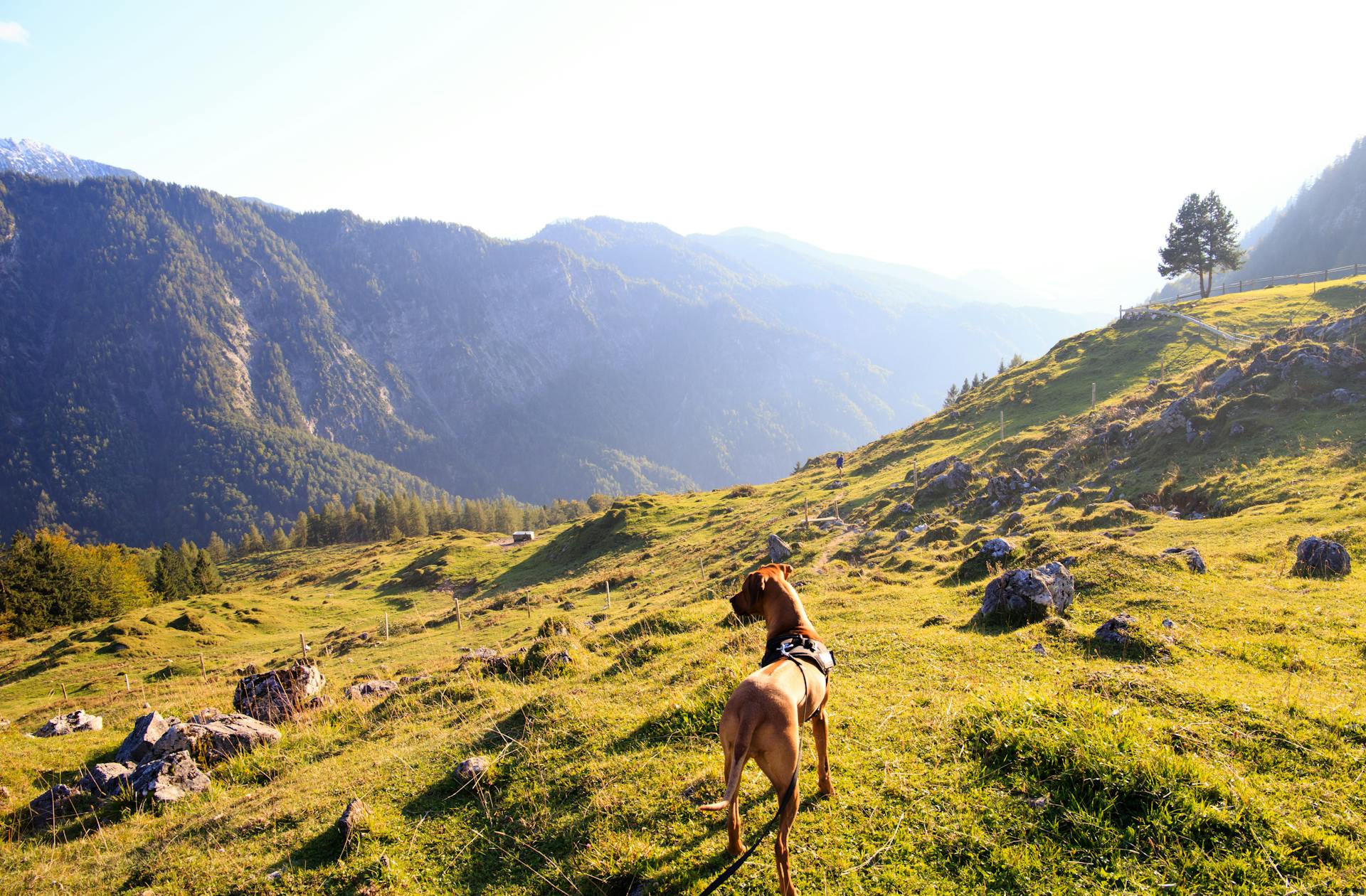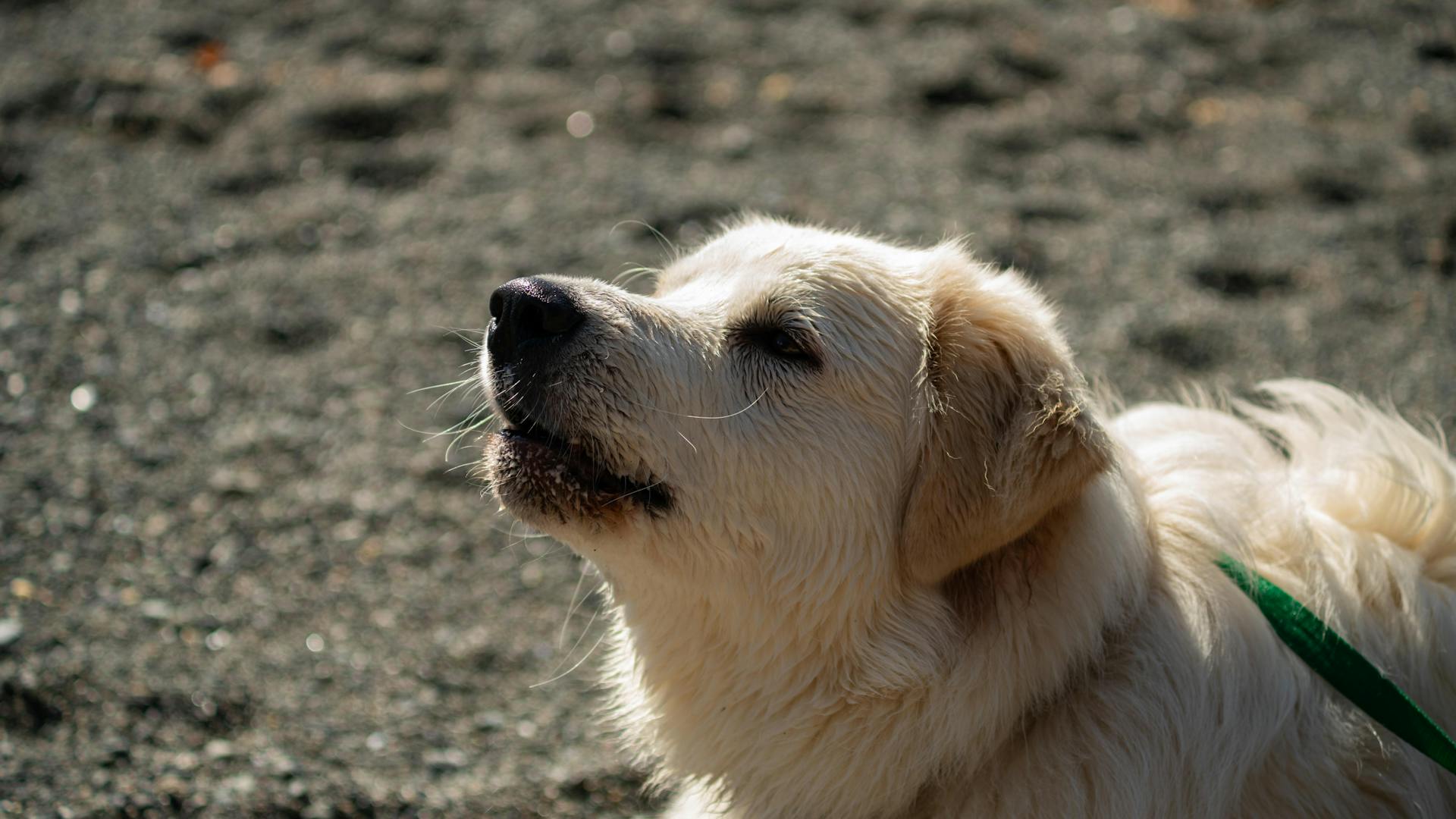
The Maremma and Great Pyrenees are two popular breeds often considered for guarding livestock, but they have some key differences. The Maremma is a smaller dog with a more compact build, weighing between 70-100 pounds.
One thing to note is that the Maremma is an ancient breed, originating from Italy, while the Great Pyrenees has its roots in the Pyrenees Mountains between France and Spain. The Maremma has a distinctive white coat and a more reserved nature, whereas the Great Pyrenees is known for its thick coat and gentle giant reputation.
Broaden your view: When Do Great Pyrenees Get Their Full Coat
Personality & Character
Maremma Sheepdogs have a loving spirit and are affectionate toward their families.
They can be extremely wary of strangers, which is why proper socialization is crucial to prevent aggression.
With the right socialization, they can get along with other pets, especially if the animals were raised together.
Maremma Sheepdogs are highly intelligent, but they can be stubborn and unwilling to listen to orders.
They require a strong leader who will help them adapt and learn through positive reinforcement.
Suitable for:
If you're looking for a loyal and protective companion, the Maremma Sheepdog might be a great fit. They're extremely intelligent and loving, making them excellent companions for active families.
The Maremma Sheepdog is a high-energy breed that thrives on physical and mental stimulation. They're not overly high maintenance, but they do require regular exercise and mental challenges to prevent boredom and destructive behavior.
One of the key characteristics of the Maremma Sheepdog is their loyalty and independence. They form strong bonds with their family, but they also value their independence and can be wary of strangers.
Here are some key characteristics of the Maremma Sheepdog:
- Intelligent and affectionate
- Loyal and independent
- Excellent guard dog
- Not overly high maintenance
- Great pets for active families
Differences
The Great Pyrenees and Maremma Sheepdog may share some similarities, but they also have some key differences. The main difference between the two breeds is their size, with the Great Pyrenees being noticeably larger.
Great Pyrenees males can weigh 100 pounds and up, while Maremma Sheepdog males weigh 77 to 100 pounds. Females of the Great Pyrenees breed weigh 85 pounds and up, while Maremma Sheepdog females weigh 66 to 88 pounds.
The height difference between the two breeds is relatively small, with Great Pyrenees males reaching 27 to 32 inches tall and Maremma Sheepdog males reaching 25 to 29 inches tall. Females of the Great Pyrenees breed reach 25 to 30 inches tall, while Maremma Sheepdog females reach 23 to 27 inches tall.
One of the most noticeable differences between the two breeds is the placement of their ears. The Great Pyrenees has ears that are set relatively low on the skull at eye level when in repose, while the Maremma Sheepdog's ears are set high on the skull, above the level of the zygomatic arches.
The shape of the ears also differs between the two breeds, with both having triangular V-shaped ears, but the Great Pyrenees has rounded tips, while the Maremma Sheepdog has pointed tips.
Consider reading: Great Pyrenees Ears
Facts, Appearance, and Behavior
The Maremma Sheepdog and the Great Pyrenees are both large dogs with thick coats.
The Maremma Sheepdog typically stands between 23.5 to 28.5 inches tall, while the Great Pyrenees can reach heights of up to 32 inches at the shoulder.
The Maremma Sheepdog weighs between 65 to 100 pounds, with the Great Pyrenees often weighing over 100 pounds.
Both breeds have thick, weatherproof coats, but the Maremma Sheepdog's coat is strictly white, while the Great Pyrenees can have white, cream, or tan/gray patches.
The Great Pyrenees shed consistently throughout the year, with one major shedding period annually, requiring only about 30 minutes of brushing each week.
Maremma Sheepdogs shed quite a bit, so they may not be the best choice for people with allergies.
The Maremma Sheepdog and the Great Pyrenees both live for around 11 to 13 years, with some Great Pyrenees living up to 12 years.
These dogs are both loyal and devoted to their families, but they can be independent thinkers and require early training and socialization to adjust to home and family.
A fresh viewpoint: Does a Great Pyrenees Shed
Temperament
Both Maremma Sheepdogs and Great Pyrenees are loyal, loving, protective, and family-friendly breeds.
They require experienced owners who have had prior contact with dogs, as they can be a bit challenging to handle.
One key difference in temperament is that Great Pyrenees are generally better at adapting to new people, situations, and environments.
Maremma Sheepdogs, on the other hand, can be more stubborn and harder to train, making their care a bit more of a hassle.
Great Pyrenees are also typically easier to train than Maremma Sheepdogs, which can make a big difference for first-time dog owners.
If this caught your attention, see: Great Pyrenees Trainability
Choosing the Right Breed
Both Maremma Sheepdogs and Great Pyrenees can make good pets, but it's essential to consider what kind of dog you're looking for.
Either breed can thrive in large spaces where they can have their freedom.
They require experience, patience, and dedication, but with the right owner, they'll become loving companions and loyal guardians.
As long as you have the space and the right mindset, either breed can be a great family pet.
For your interest: Great Pyrenees Standard
Key Facts
The Great Pyrenees and Maremma are both large, powerful breeds of dogs. They are originally from different parts of the world, with the Great Pyrenees hailing from the Pyrenees Mountains between France and Spain, and the Maremma from Italy.
The Great Pyrenees is a large dog, typically weighing between 85 and 115 pounds, with a thick double coat that sheds heavily. Maremmas are also large, weighing between 70 and 100 pounds, with a thick coat that sheds moderately.
Both breeds have a strong protective instinct and are known for their loyalty to their families. They are naturally wary of strangers and can be quite independent.
One of the key similarities between the Great Pyrenees and Maremma is their calm and gentle nature, making them great companions for families with children.
Take a look at this: Great Pyrenees Coat Colors
Similarities Between
Both the Maremma and Great Pyrenees have large, fluffy white coats that fare well with regular grooming, especially since they spend a lot of time outside in harsh conditions.
Their coats are made up of a thick undercoat and an outer coat that sheds yearly. The Great Pyrenees has a rough and flat coat type, while the Maremma Sheepdog has a long, supple outer coat.
Both breeds are independent but bond strongly with their intended herd and people. They are even-tempered and family-friendly, getting along well with other pets and animals they are socialized with early in life.
They are intelligent breeds that require proper training and socialization from an early age. This helps them become excellent watchdogs and guardians of their families and property.
Here are some key similarities between the Maremma and Great Pyrenees:
- Large, fluffy white coats
- Independent but loyal nature
- Even-tempered and family-friendly
- Intelligent and require proper training and socialization
Origins
Maremma Sheepdogs originate from Italy, specifically the Abruzzo area. This is a significant difference from the Great Pyrenees, which come from the French side of the Pyrenees Mountains. The Italian roots of the Maremma Sheepdog are a testament to its unique heritage.
Health and Care
Both Maremmas and Great Pyrenees are known for their high energy levels, requiring at least 30 minutes of exercise per day to keep them happy and healthy.
Their large size also means they need regular veterinary check-ups to monitor their joint health, with Great Pyrenees being prone to hip dysplasia and Maremmas to elbow issues.
In terms of grooming, Maremmas have a thick double coat that sheds heavily, requiring daily brushing to prevent matting, while Great Pyrenees have a single coat that sheds moderately, needing weekly brushing to keep them clean.
Related reading: How to Keep a Great Pyrenees from Roaming
Health And Lifespan
The lifespan of a dog is a crucial factor to consider when deciding to bring a new furry friend into your life. The average lifespan of a Bouvier des Flandres, Great Pyrenees, and Maremma Sheepdog is between 10-12 years, with the Maremma Sheepdog living up to 12 years on average.
These breeds are known for their adaptability to different climates, but each has its own strengths and weaknesses. The Bouvier des Flandres can adapt well to cold weather conditions, while the Great Pyrenees prefers cold weather. The Maremma Sheepdog, on the other hand, tolerates both warm and cold weather.
For another approach, see: Great Pyrenees in Hot Weather
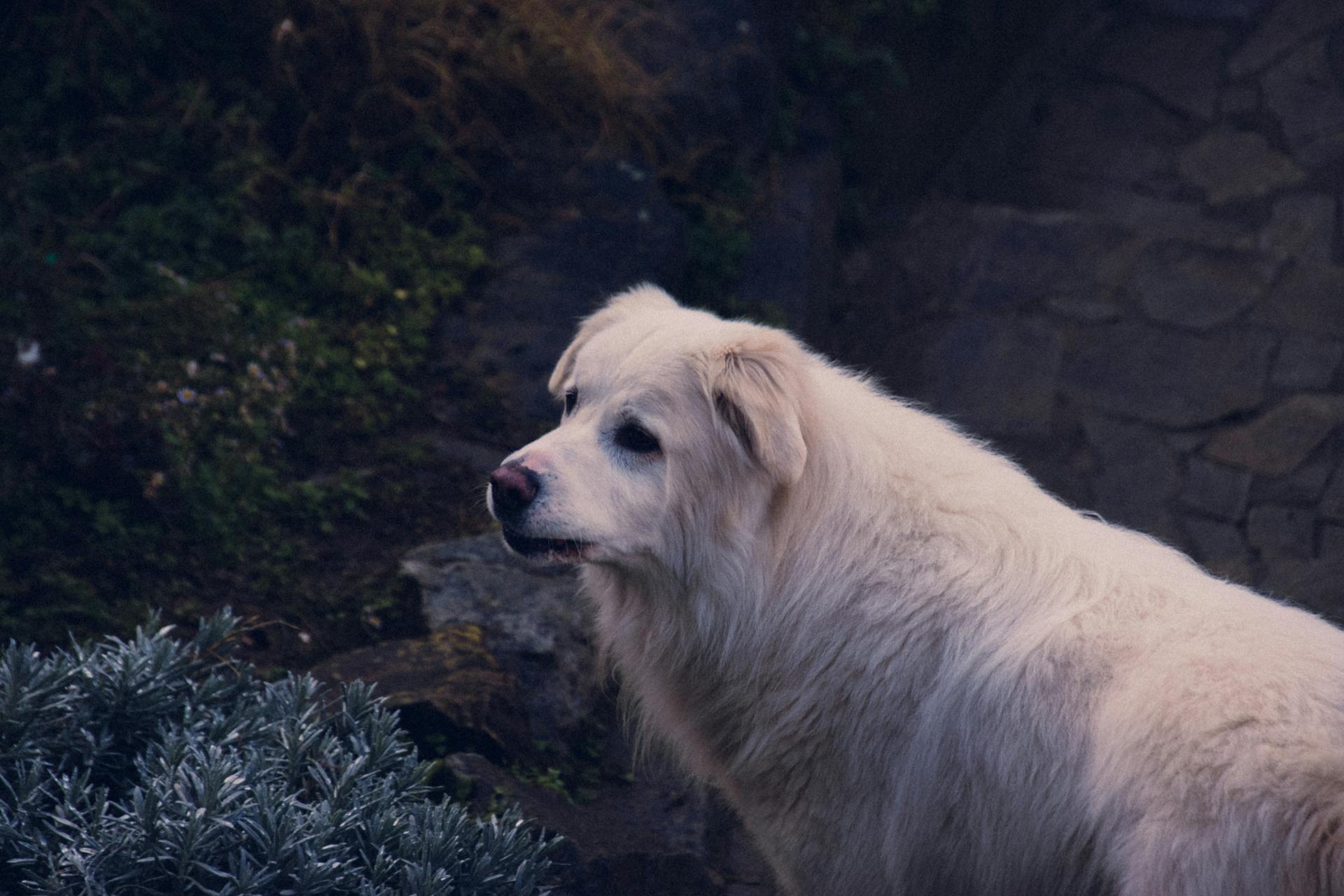
Regular veterinary check-ups are essential for maintaining the health of these breeds. The Bouvier des Flandres and Maremma Sheepdog require annual check-ups, while the Great Pyrenees can go up to 18 months without a visit.
Here's a breakdown of the average lifespan of each breed:
It's essential to be aware of the potential health concerns associated with each breed. The Bouvier des Flandres is prone to Cataracts, Hip Dysplasia, Heart Problems, Elbow Dysplasia, and Glaucoma, while the Great Pyrenees is susceptible to Cataracts, Hip Dysplasia, Patellar Luxation, Bloat, Entropion, Drug Sensitivity, Elbow Dysplasia, and Addison's Disease. The Maremma Sheepdog is at risk of Hip Dysplasia, Bloat, Vaccination Sensitivity, Drug Sensitivity, and Obesity.
For your interest: Great Pyrenees Hip Dysplasia
Diet and Weight Management
Diet and weight management is a crucial aspect of caring for your Bouvier des Flandres, Great Pyrenees, or Maremma Sheepdog. To keep your furry friend healthy, you need to pay attention to their food intake.
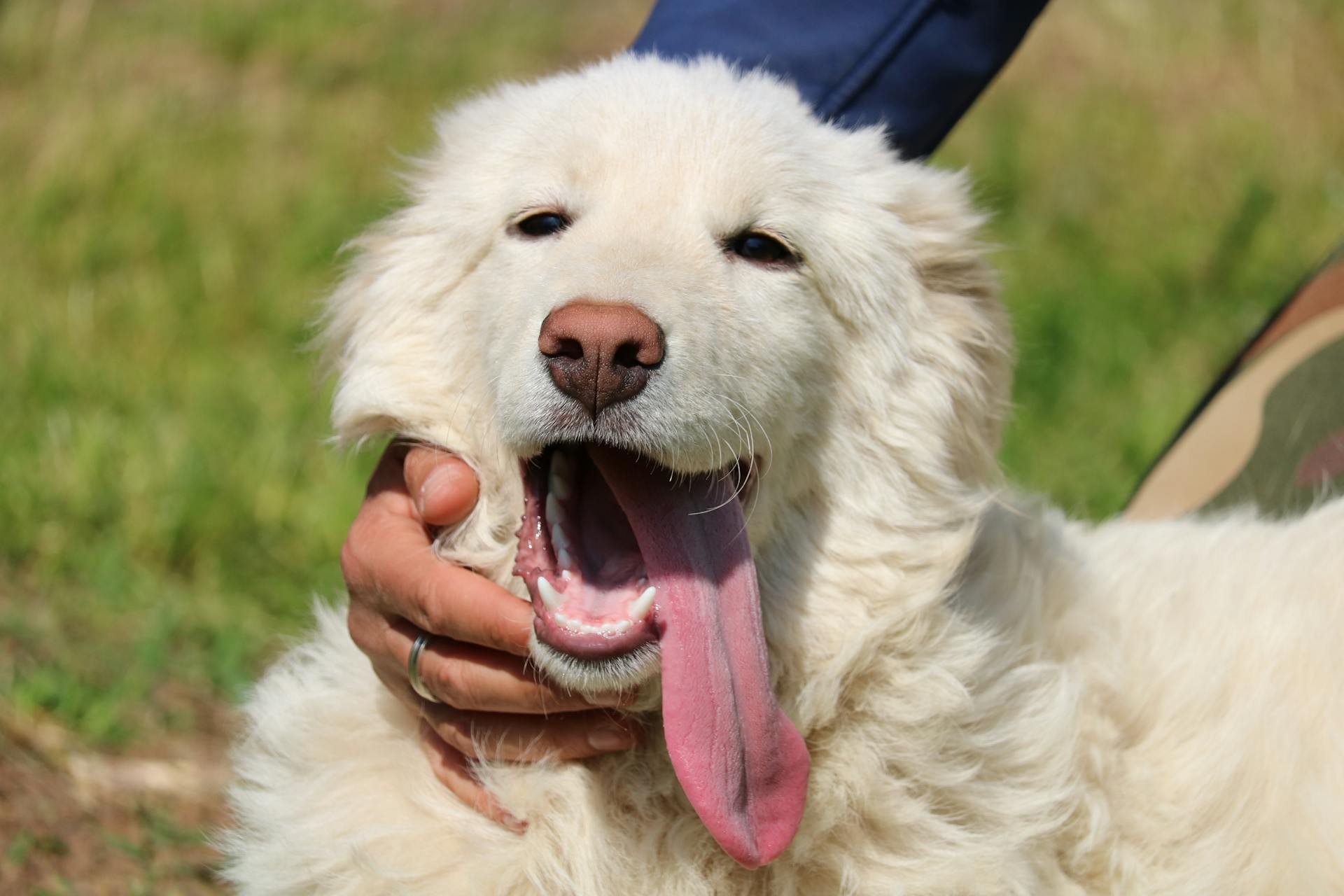
Bouvier des Flandres and Great Pyrenees are both prone to obesity if their weight isn't monitored. In fact, both breeds can easily gain weight if they're not fed a balanced diet and exercised regularly.
The Maremma Sheepdog breed, however, has a strong tendency to be overweight, making it even more crucial to keep a close eye on their food consumption.
Here's a comparison of the food requirements for each breed:
By understanding the unique dietary needs of your breed, you can take steps to prevent obesity and ensure your furry friend lives a happy and healthy life.
Behavior and Training
Maremma Sheepdogs and Great Pyrenees are both loyal and devoted breeds, but they have distinct personalities when it comes to training and behavior.
Maremma Sheepdogs are known to be independent thinkers and require early training and socialization to adjust to home and family. They thrive in environments with plenty of space where they can be active and independent.
You might like: Great Pyrenees Potty Training
Great Pyrenees dogs, on the other hand, have an independent nature that can make training challenging. They require consistent training and socialization with positive reinforcement, making them less suitable for new or timid dog owners.
Both breeds are generally loyal and devoted to their job and family, but Maremma Sheepdogs may be more suited to active families with plenty of space. Great Pyrenees dogs, however, can make excellent watchdogs for families with proper socialization.
Here's a comparison of the two breeds' training difficulty and intelligence:
Keep in mind that both breeds require patience and consistent training to reach their full potential.
Aggression
Aggression is a complex trait that can be influenced by a dog's breed, upbringing, and training. The Maremma, for example, has a more aggressive nature due to its training as a guard dog, often displaying aggression by growling or barking when threatened.
Great Pyrenees dogs, on the other hand, are generally calmer and less aggressive, with occasional barking when interacting with their favorite humans.
If this caught your attention, see: Training a Great Pyrenees
While Great Pyrenees can be vigilant guardians, they require proper socialization to prevent shyness or aggression towards other dogs and people. This is crucial for new or timid dog owners, as they need consistent training and socialization with positive reinforcement.
In fact, Great Pyrenees are not suitable for new or timid dog owners due to their independent nature, making training a challenging but essential task.
Trainability And Intelligence
Trainability and intelligence are essential aspects of a dog's behavior and training. The Bouvier des Flandres dogs have great intelligence.
If you're considering bringing one of these breeds into your family, it's worth noting that they can be quite easy to train, especially the Bouvier des Flandres dogs, which are one of the easiest to train. This means you can teach them new tricks and commands with patience and consistency.
However, the Maremma Sheepdog dogs are not the brightest, with an intelligence rating of low to average. This doesn't mean they're not lovable or loyal companions, but it does require more effort and creativity when training them.
Here's a quick comparison of the three breeds' intelligence ratings:
Overall, while the Bouvier des Flandres dogs have a natural edge when it comes to intelligence and trainability, with patience and practice, any of these breeds can learn and thrive with their owners.
Adaptability and Independence
The Bouvier des Flandres is extremely adaptable to lifestyle changes and can thrive in almost any living environment. Their ability to adjust to new situations is impressive.
Great Pyrenees dogs also adapt well to lifestyle changes and can handle different living environments. However, they do require some special attention. If you have a job that allows you to take your dog to work, it's a good option for them.
Maremma Sheepdog dogs can adapt to lifestyle changes and different living environments, but they're not as flexible as the Bouvier des Flandres. They do best when a family member is at home during the day or if their workplace is dog-friendly.
Here's a comparison of the three breeds' adaptability and independence:
Remember, every dog is different, and their adaptability and independence may vary.
Activity and Lifestyle
Both Maremmas and Great Pyrenees are bred to be working dogs, but their activity levels and lifestyles differ significantly.
Maremmas are known for their high energy levels and require at least 2 hours of exercise per day. They need regular physical and mental stimulation to prevent boredom and destructive behavior.
Great Pyrenees, on the other hand, are generally more laid back and require less exercise, about 1-2 hours per day. They still need regular activity to maintain their physical health and prevent obesity.
Maremmas are naturally more alert and vigilant, making them well-suited for farms and rural areas where they can roam freely and monitor the property. Great Pyrenees, while still protective, are more gentle and calm, making them a great fit for families with smaller children.
Their size also plays a role in their activity levels, as Maremmas are generally smaller than Great Pyrenees, requiring less space and exercise to stay happy and healthy.
For another approach, see: Great Pyrenees Exercise
Bite Characteristics
When comparing the bite characteristics of Maremma Sheepdogs and Great Pyrenees, it's interesting to note that both breeds have a low chance of biting somebody.
Both Maremma Sheepdogs and Great Pyrenees have a lower than average tendency to nip, chew, playbite, or herd people, making them generally gentle companions.
However, if we look at the bite force, Great Pyrenees have the strongest bite, with a rating above 400 PSI, which is quite remarkable.
In contrast, Maremma Sheepdogs and Bouvier des Flandres have a similar bite force, ranging between 200 and 400 PSI, which is considered ordinary.
Here's a brief comparison of the three breeds' bite characteristics:
Price and Availability
If you're considering bringing home a Maremma Sheepdog or a Great Pyrenees, you're likely wondering about the costs involved. The price range for a Maremma Sheepdog is $600-$800, which is slightly higher than the Great Pyrenees, which costs between $500-$600.
Both breeds are relatively easy to get, with the Great Pyrenees being very frequent in availability, while the Maremma Sheepdog is average. If you're looking for a breed that's easy to find, the Great Pyrenees might be the better choice.
Here's a quick comparison of the prices and availability of these two breeds:
Keep in mind that prices can vary depending on factors like location and breeder reputation, so it's always a good idea to research and compare prices in your area.
Comparison
The Maremma Sheepdog and Great Pyrenees are both large, powerful breeds with unique characteristics. The Maremma Sheepdog is a social breed that thrives on interaction with its family, while the Great Pyrenees is also social but has a strong desire for exploring the world.
Both breeds are considered to be relatively high-energy dogs, requiring regular exercise to keep them happy and healthy. However, the Maremma Sheepdog is generally more laid-back and requires less exercise than the Great Pyrenees.
In terms of affection level, both breeds are loyal and loving, but the Maremma Sheepdog is often described as being more gentle and soft in its interactions. The Great Pyrenees, on the other hand, is known for being confident and fearless.
Here's a quick comparison of the two breeds:
The Maremma Sheepdog is also known for being a bit more sensitive than other breeds, so it may not be the best fit for families with very young children. However, with proper training and socialization, it can make a wonderful companion for active families.
Ultimately, the decision between a Maremma Sheepdog and a Great Pyrenees will depend on your individual lifestyle and preferences. If you're looking for a more laid-back breed that is happy to lounge around the house, the Maremma Sheepdog may be the better choice. But if you're an active family who loves to explore the outdoors, the Great Pyrenees may be a better fit.
Frequently Asked Questions
Do Maremmas make good pets?
Maremmas can make excellent pets for the right owner, known for being friendly, loyal, and affectionate. However, their suitability depends on the individual's lifestyle and ability to provide a suitable environment.
Do Maremma dogs bark a lot?
Maremmas are known to bark frequently due to their guardian instincts, alerting to perceived unusual situations. They tend to reserve barking for legitimate reasons, making them effective watchdogs.
Is there a difference between a Pyrenees and a Great Pyrenees?
Yes, there is a difference between a Pyrenees and a Great Pyrenees, with the latter being the name used in the United States. The breed is also known as the Pyrenean Mountain Dog in the UK and Europe.
What two dogs make Great Pyrenees?
The Great Pyrenees is descended from the Maremma Sheepdog and Anatolian Shepherd breeds. These ancient ancestors contribute to the Great Pyrenees' strong herding instincts and protective nature.
Do Maremma sheepdogs have double dew claws?
Yes, Maremma sheepdogs often have double dewclaws, typically on the front legs and sometimes on the hind legs. The rear dewclaws may be smaller and less developed than those on the front legs.
Featured Images: pexels.com