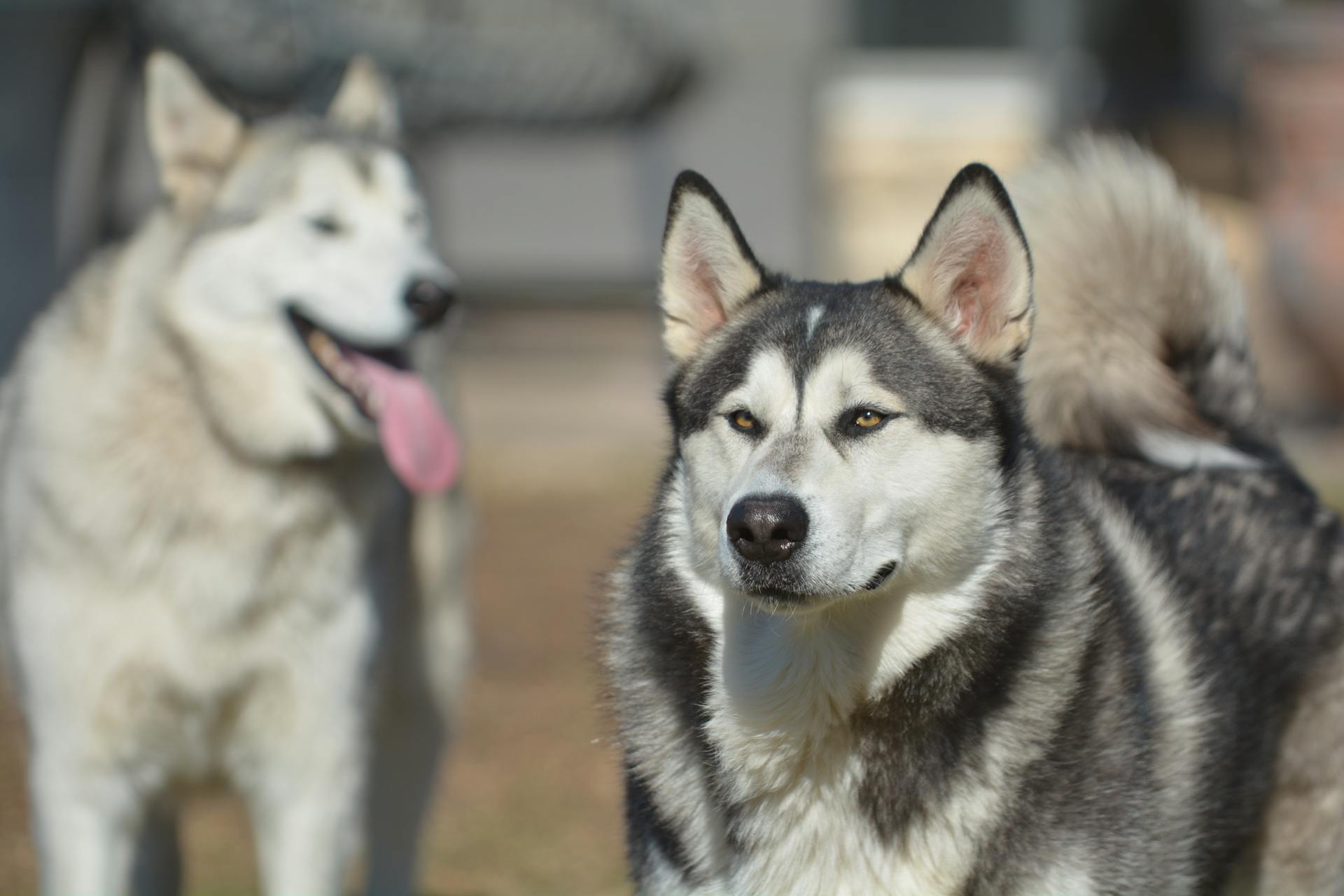
Malamute owners often find themselves at their wit's end due to excessive barking. This is because Malamutes are a high-energy breed that requires regular exercise and mental stimulation.
Malamutes were bred to be working dogs, and as such, they have a strong instinct to alert and protect their families. They will often bark to signal potential threats or to initiate play.
A key factor in managing Malamute bark is understanding the underlying causes. Malamutes may bark due to boredom, anxiety, or a lack of exercise.
You might enjoy: Malamute Dog Aggression
Understanding Malamute Barking
Barking is a common vocalization for Alaskan Malamutes, a short, sharp sound used to communicate various messages.
They may bark to alert their owners of danger or to express excitement or frustration.
If your Malamute is barking excessively, desensitization can be a helpful technique to reduce their barking.
This process involves exposing your dog to their triggers at a comfortable distance, allowing them to become more accustomed to the stimulus without reacting.
Over time, you can slowly decrease the distance between your dog and the trigger, always rewarding calm behavior.
By following this process, your Malamute can become less reactive to the trigger, ultimately reducing their barking.
Reducing Malamute Barking
Malamutes are naturally alert dogs and may bark at strangers, noises, or other animals.
Exercise is essential to reduce barking, as a tired Malamute is less likely to bark excessively. Regular walks and playtime can help.
Malamutes need mental stimulation, so engaging them in activities like agility training or scent work can also reduce barking.
Some Malamutes may bark due to anxiety or separation issues, so providing a calm and secure environment can help alleviate this.
A Malamute's barking can be a warning sign of an underlying issue, so it's essential to address the root cause rather than just silencing the barking.
Training a Malamute to respond to a "quiet" command can be an effective way to manage excessive barking.
Rewarding good behavior, such as remaining calm, can help reinforce desired habits and reduce barking.
You might enjoy: Malamute Shedding
Training Commands
Training your Alaskan Malamute to respond to basic commands is essential for effective communication and a well-behaved dog.
Teaching the "quiet" command is a great place to start, as it can help reduce excessive barking. You can train your Malamute to understand and respond to this command by calmly saying "quiet" and waiting for them to stop barking.
Consistency is key when training your dog, so be sure to repeat this process until your Malamute associates the command with the desired behavior.
Barking and Howling
Malamutes are known to be vocal dogs, and their barking and howling are two of their most distinctive characteristics. Malamutes bark to alert their owners to potential threats or to express excitement.
A Malamute's bark is often described as deep and resonant, typically ranging from 80 to 120 decibels. This is much louder than the average household vacuum cleaner.
Differences in Howling vs. Other Vocalizations
Alaskan Malamutes are known for their vocalizations, which include barking, growling, whining, and howling.
Barking is a distinct vocalization that is often different from howling. While both can be loud and attention-grabbing, barking is typically a more high-pitched sound.
Growling is a low, rumbling sound that Malamutes use to express aggression or warning. It's a clear sign that they're feeling threatened or protective.
Whining is a high-pitched, nasal sound that Malamutes use to communicate their needs or wants. It's often a sign that they're feeling anxious or seeking attention.
Suggestion: Beagle Bark Sound
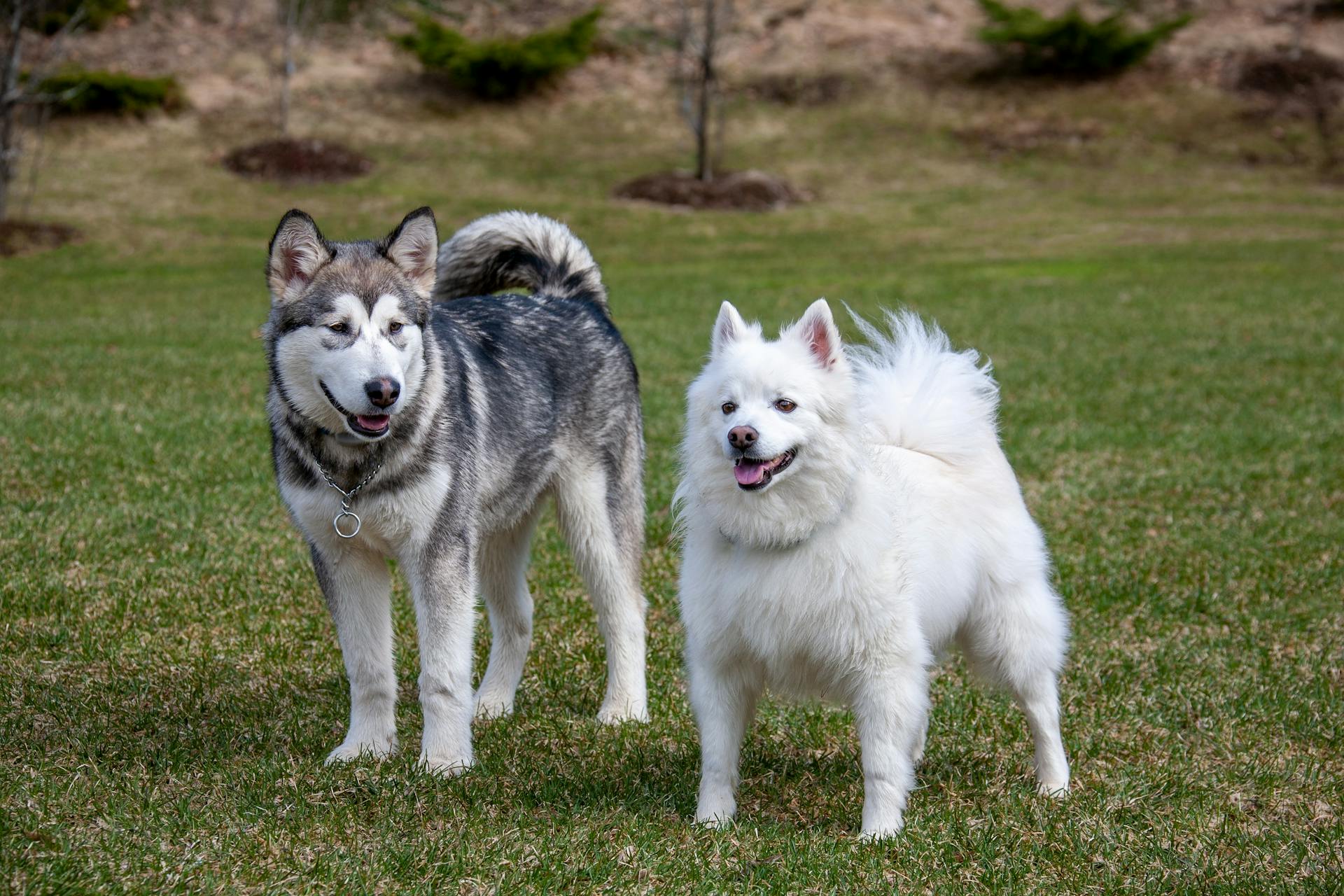
Howling, on the other hand, is a long, mournful sound that Malamutes use to communicate with other Malamutes over long distances. It's a natural behavior for them and an important form of communication.
The frequency and intensity of these vocalizations can vary depending on the individual dog and their environment.
Barking
Barking is a short, sharp sound that Alaskan Malamutes use to communicate various messages.
Alaskan Malamutes may bark to alert their owners of danger.
Reactivity and Training
Reactive barking in Alaskan Malamutes can be a challenging behavior to manage, but with the right strategies and consistent effort, it can be overcome.
Understanding the underlying reasons for the barking is crucial to developing an effective plan. Alaskan Malamutes may bark reactively due to territoriality, anxiety, lack of socialization, separation anxiety, reinforced behavior, lack of obedience training, genetics, sensory stimuli, boredom or lack of exercise, or health issues.
Identifying your Alaskan Malamute's triggers is the first step to addressing reactive barking. Observe your dog closely to determine what situations or stimuli provoke their barking.
For your interest: Alaskan Malamute Behavior
Here are some common triggers to consider:
Once you understand the triggers, you can develop a targeted plan to address the issue. This may involve positive reinforcement training techniques, providing adequate exercise, socialization, and mental stimulation, and addressing any underlying health issues.
Home Care
Supervise your Alaskan Malamute as you would a toddler, keeping doors closed and picking up after yourself to prevent her from getting into trouble.
Alaskan Malamutes need regular grooming, including brushing their coat at least weekly and brushing their teeth at least three times a week to prevent serious dental problems.
Cleaning your Malamute's ears weekly, even as a puppy, is essential for her health.
To keep your Malamute's mind and body active, you'll need to provide regular exercise, but be careful not to overdo it at first.
A high-quality diet is crucial for your Malamute's health, and you should feed her according to her age and keep her diet consistent.
For your interest: Malamute Health Issues
Here are some specific care tasks to remember:
- Brush her coat at least weekly
- Brush her teeth at least three times a week
- Clean her ears weekly
- Provide regular exercise, but don't overdo it at first
- Feed a high-quality diet appropriate for her age
With these care tasks in mind, you'll be well on your way to keeping your Alaskan Malamute happy and healthy at home.
Featured Images: pexels.com