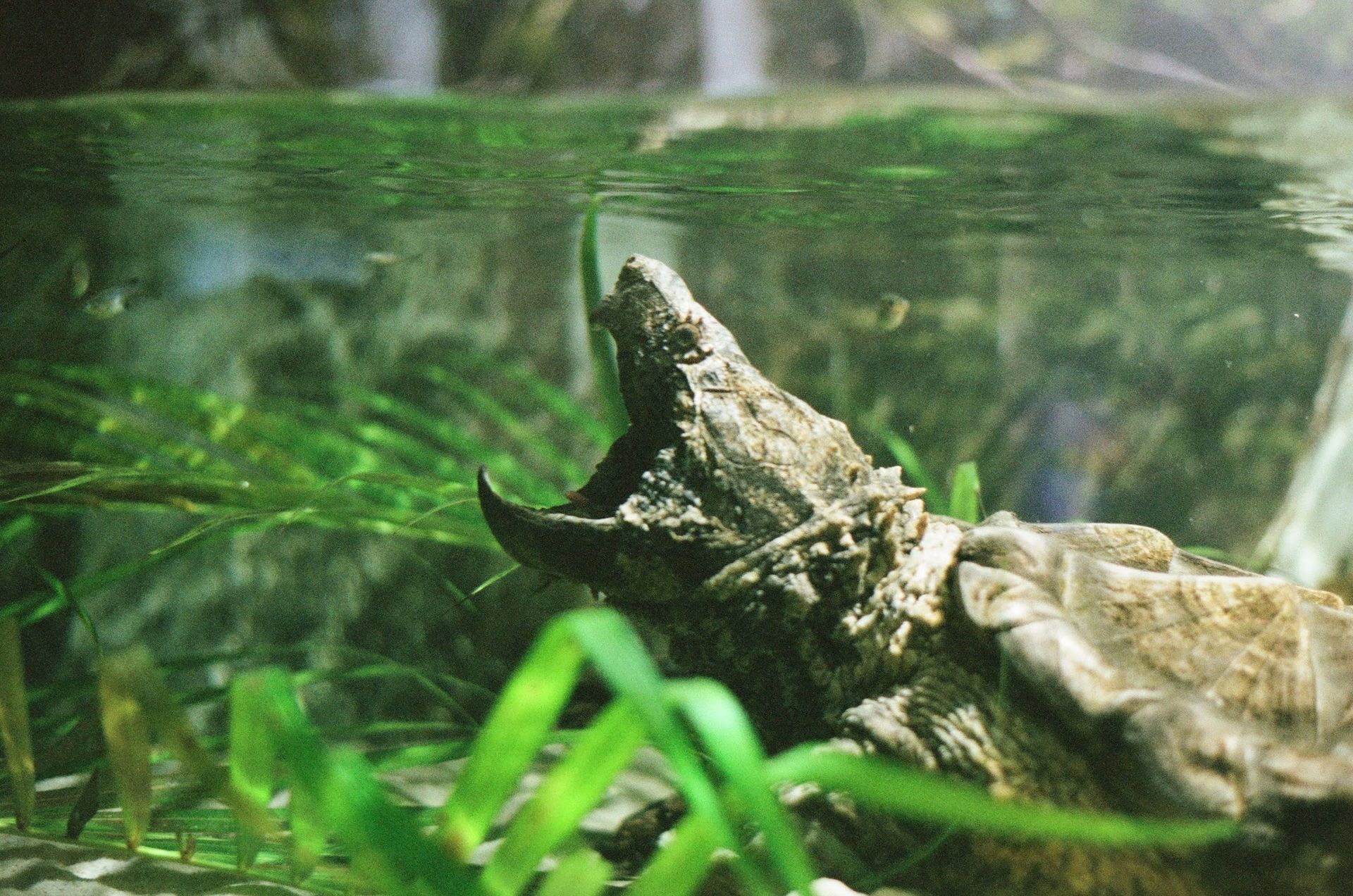
The Macrochelys temminckii, also known as the alligator snapping turtle, is a large freshwater turtle species.
It can grow up to 29 inches in length and weigh up to 175 pounds.
This massive turtle has a distinctive appearance, with a broad, flat head and a long, pointed snout.
Its shell is dark brown to black in color, with yellow or white markings on the edges of the scutes.
Physical Characteristics
The alligator snapping turtle is a truly impressive creature, and one of its most striking features is its physical characteristics.
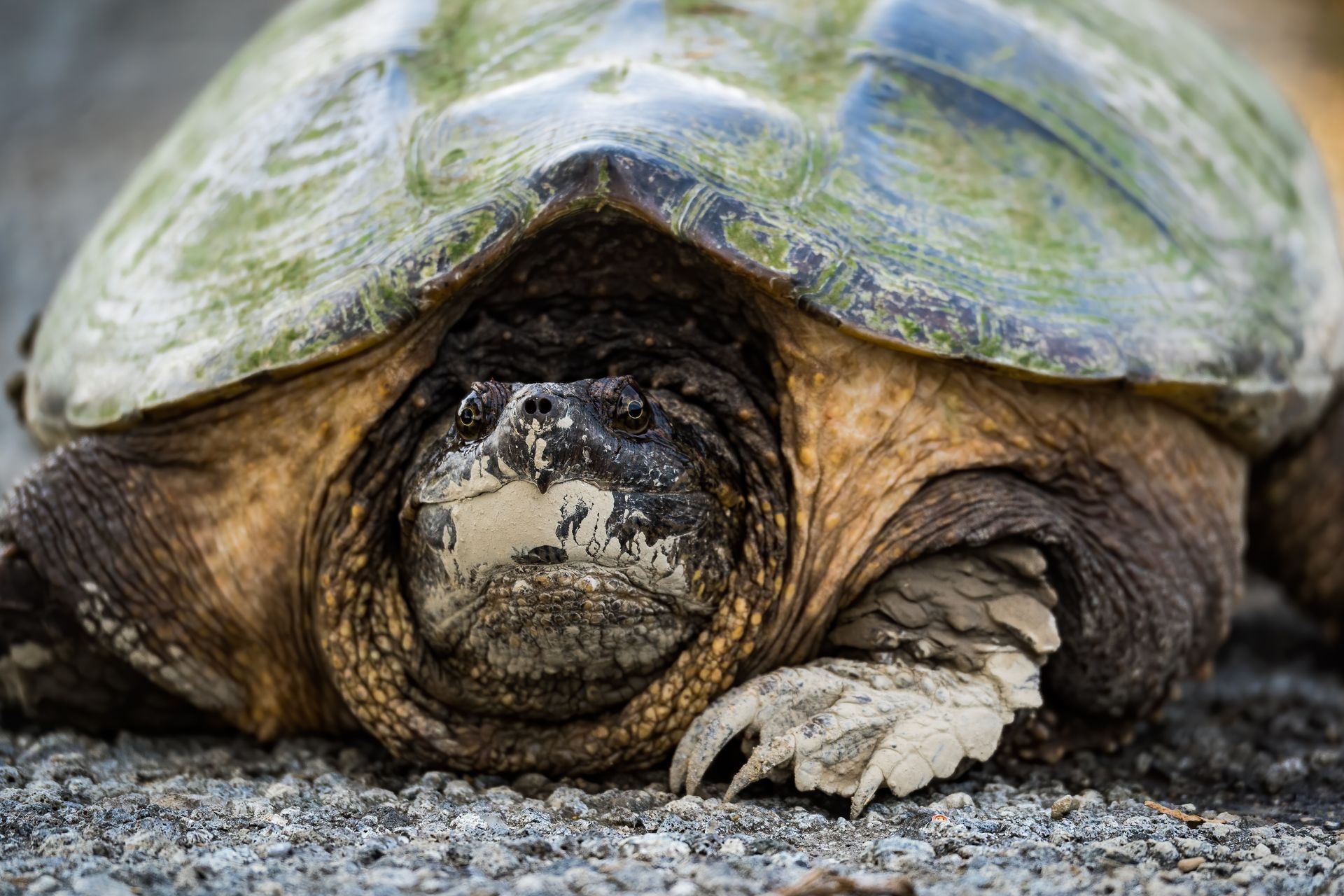
They are deep brown and often have algae growth, which aids in their camouflage.
Adult males can reach lengths of up to 29 inches and weigh up to 249 pounds, making them the largest freshwater turtle species in the United States.
Their shells have three rows of spikes giving them a prehistoric appearance.
They have a long tail and muscular legs with webbed toes and long, pointed claws.
Pointed, fleshy projections surround their eyes on the sides of their huge heads.
Their inner mouth lining is gray/brown with black splotches, which is different from most turtles.
Male alligator snapping turtles can reach lengths of 29 inches and 249 pounds, while females can reach lengths of 22 inches and 62 pounds.
Habitat and Distribution
The alligator snapping turtle is found in the southeastern United States, specifically in the freshwater areas of the region.
They can be found from the Florida Panhandle west to East Texas, north to southeastern Kansas, Missouri, southeastern Iowa, western Illinois, southern Indiana, western Michigan, western Kentucky, Louisiana, and western Tennessee.
These turtles often use core sites, characterized by specific microhabitat features such as an abundance of structural cover like cut banks, root balls, and submerged trees, and dense canopy cover.
Only nesting females venture onto open land, while males tend to stay within their core sites.
The average home range for an individual alligator snapping turtle is 750 m (2,460 ft).
Females have larger home ranges than males, and they tend to have larger movement patterns as well.
Here are some specific features of their preferred habitats:
They generally prefer bodies of water that flow into the Gulf of Mexico and usually do not occur in isolated wetlands or ponds.
Behavior and Life Cycle
The alligator snapping turtle's behavior is quite fascinating. They're the only turtle species that has a special lure on their tongue to attract prey.
This lure is a small worm-like part of their tongue that they use to catch small fish. They'll lay motionless, then slowly open their jaws over a period of one to two minutes, wriggling the lure to attract the prey into striking distance.
The turtle's jaws will snap shut on the prey, holding it there before they begin swallowing. This feeding behavior is thought to be relatively common among younger individuals, who are known to lie motionless on the stream bottom with their jaws agape, waiting for unsuspecting fish to wander by.
Sexual maturity is reached in approximately 11-21 years, with females producing only one clutch of eggs per year, ranging from 8 to 52 eggs.
Behavior
The alligator snapping turtle is a unique creature when it comes to hunting. It has a special lure on its tongue that it uses to catch prey.
This lure is a small worm-like part of its tongue that it uses to attract unsuspecting fish and other small animals. The turtle will often lay motionless, waiting for an unsuspecting victim to wander by.
The turtle's hunting process is a slow and deliberate one, taking anywhere from one to two minutes to complete. It starts by opening its jaws slowly, giving the prey a chance to become enticed by the lure.
Once the prey is within striking distance, the turtle will wriggle the lure on its tongue to keep it interested. This is a clever tactic, as it makes the prey think the lure is a living worm.
Finally, when the prey moves into the turtle's mouth, its jaws will snap shut on the prey, holding it in place until it's ready to swallow.
Life Cycle

The life cycle of alligator snapping turtles is quite fascinating. They can live up to 80 years in captivity, but their lifespan in the wild is unknown.
Reaching sexual maturity is a long process, taking anywhere from 11 to 21 years.
Mature females produce only one clutch of eggs per year, which can range from eight to 52 eggs.
Nesting typically occurs in late winter or early spring, and females will often dig their nests in riverbanks. The number of eggs deposited can be as low as 10 or as high as 61.
Hatchlings emerge 2½ -3½ months after nesting, and their gender is determined by the incubation temperature of the eggs.
It takes around 11-13 years for alligator snapping turtles to reach sexual maturity.
Conservation and Threats
The alligator snapping turtle, macrochelys temminckii, faces numerous conservation threats.
Historically, overharvesting for its meat and habitat destruction have led to population declines. In the 1960s and 1970s, the highest amount of harvesting occurred, causing regional population declines. Commercial harvesting in the late 1960s and 1970s caused a significant decline in alligator snapping turtle populations across its historic range.
The species is now protected in some states, including Florida, where it is illegal to take, possess, or sell the alligator snapping turtle, as it is a protected species. However, in Mississippi and Louisiana, recreational harvest is allowed with some restrictions.
Illegal harvest poses a threat to the species due to the global demand for pet turtles and turtle meat. In 2017, three men were convicted of illegally collecting 60 large alligator snapping turtles in a single year and transporting them across state lines in violation of the Lacey Act.
Alligator snapping turtles also face threats from incidental harm from fishing and recreational activities, including accidental capture, swallowing fishhooks, drowning when captured on trotlines and limb-lines, and drowning from entanglement in fishing line. Surveys conducted in Flint River 22 years after commercial harvest ended showed populations had not recovered.
Human-caused changes to freshwater habitat, such as dredging, logging for submerged wood, erosion, and climate change, pose challenges to the alligator snapping turtle's survival.
Here are some of the main conservation threats to the alligator snapping turtle:
- Overharvesting for its meat
- Habitat destruction
- Incidental harm from fishing and recreational activities
- Human-caused changes to freshwater habitat
- Climate change
Care and Management
If you're considering keeping an alligator snapping turtle as a pet, it's essential to remember that they don't make good pets for inexperienced aquatic turtle keepers.
Their specific needs and potential size make them a challenge to care for. They require a suitable environment with regulated temperatures, as extreme temperatures can affect their appetite.
To feed them, you'll need to offer live fish, but they'll also accept other types of meat or leafy vegetables. Be cautious, as hand feeding can be dangerous.
When handling an adult alligator snapping turtle, it's crucial to be aware of their size and potential reach. Smaller turtles can be held safely by grasping the sides of their shell.
However, larger turtles require a more secure grip, with one hand grasping the shell just behind the head and the other hand grasping the shell just above the tail's base.
Frequently Asked Questions
What is the common name for the Macrochelys temminckii?
The common name for the Macrochelys temminckii is the alligator snapping turtle. This massive turtle is known for its unique appearance and habits in the United States.
What is the oldest living alligator snapping turtle?
The oldest living alligator snapping turtle is estimated to be around 120 years old, hatched in 1900. This ancient creature has been living at the North Carolina Zoo since its early days, long before the invention of cars.
Featured Images: pexels.com