The Luzon Bleeding Heart Dove is a unique and fascinating species. It's found in the wild only on the island of Luzon in the Philippines.
This dove is relatively small, with a length of about 12-13 centimeters. Its plumage is a mix of gray and brown, helping it blend in with its forest habitat.
The Luzon Bleeding Heart Dove is a member of the Columbidae family, which includes over 300 species of doves and pigeons.
Conservation Status
The Luzon Bleeding Heart Dove is considered "near threatened" according to the IUCN Red List.
Their native habitat has been significantly reduced, and their population has decreased further since being recognized by CITES in 1975.
The Philippine Red Data Book also lists the species as "near threatened", making it a national conservation priority.
The Luzon Bleeding Heart Dove is threatened by the native people's practice of trapping the birds for meat and the pet trade.
A major eruption of Mt. Pinatubo and deforestation have also had a significant impact on the species' population.
Here are some key conservation facts about the Luzon Bleeding Heart Dove:
- IUCN Red List: Near Threatened
- CITES: Appendix II
This species is vulnerable to habitat fragmentation and loss due to agriculture expansion and deforestation for timber.
Habitat and Geographic Range
The Luzon bleeding heart dove's habitat is crucial to its survival. It's primarily found in primary and secondary forests, which are greatly affected by habitat destruction.
Luzon is a heavily populated island, but it's also home to a mountainous region in the north. The climate varies greatly, with a wet season occurring from June to October and a dry season from November to May.
The Luzon bleeding heart dove is an island endemic species, meaning it's found only on the island of Luzon and the smaller offshore island of Polillo.
Habitat
The Luzon bleeding heart dove's habitat is a fascinating topic. They can be found in lowland forest, where they spend most of their time on the forest floor feeding.
These birds roost and nest in low to medium height trees, shrubbery, and vines, which provide them with a safe haven from predators. They use the thick surrounding undergrowth to escape from danger.
The Luzon bleeding heart dove's range elevation is quite impressive, spanning from sea level to elevations of 1400 m.
Here are some key details about their habitat:
- Habitat Regions: tropical
- Terrestrial Biomes: forest
- Range elevation: 0 to 1400 m (0.00 to 4593.18 ft)
Geographic Range
Gallicolumba luzonica is found in the central and southern regions of Luzon and the smaller offshore island Polillo. These islands are located in the northern region of the Philippine Archipelago.
Luzon is a heavily populated island with a mountainous region in the north, which affects the habitat of Gallicolumba luzonica. The climate on Luzon varies greatly, with a wet season occurring from June to October and a dry season from November to May.
Gallicolumba luzonica is an island endemic species, meaning it is found only in these specific islands.
Reproduction and Predation
The luzon bleeding heart has a unique way of escaping from predators, using the thick surrounding undergrowth to hide. This adaptation is crucial for its survival.
Predators include native mammals, reptiles, and birds of prey, which are a constant threat to the luzon bleeding heart's existence.
Reproduction
Reproduction is a fascinating aspect of these birds' lives. In captivity, they are monogamous and form strong bonds, often pairing for life.
Mating is a beautiful display of courtship, with males showcasing their vibrant blood markings to attract females. The male's "heart" display is a crucial part of the mating process.
Males and females take turns incubating eggs, with the male sitting on them during the day and the female at night. The incubation period lasts around 15 to 17 days.
Both parents are dedicated caregivers, feeding their chicks a nutritious substance called "crop milk" that's similar to mammal milk. This process is crucial for the chicks' growth and development.
Here's a summary of the key reproductive features of these birds:
The breeding season typically occurs in mid-May, when other subspecies of the same genus nest on nearby Philippine islands.
Predation
Predation is a significant threat to the Gallicolumba luzonica.
Predators of the Gallicolumba luzonica include native mammals, reptiles, and birds of prey.
To avoid predators, the Gallicolumba luzonica uses the thick surrounding undergrowth as a shelter.
The presence of predators forces the Gallicolumba luzonica to adapt its behavior and habitat use.
Classification and Ecosystem Roles
The Luzon bleeding-heart is a member of the Columbidae family, which includes doves and pigeons. Specifically, it belongs to the genus Gallicolumba, known as island ground-doves.
This bird plays a vital role in its ecosystem, particularly in seed dispersal. In fact, many plant species depend on the Luzon bleeding-heart for seed dispersal, which helps ensure the success of the forests.
Here's a breakdown of the Luzon bleeding-heart's classification:
- Kingdom: Animalia
- Phylum: Chordata
- Subphylum: Vertebrata
- Class: Aves
- Order: Columbiformes
- Family: Columbidae
- Genus: Gallicolumba
- Species: Gallicolumba luzonica
The Luzon bleeding-heart is also an important part of the local ecology, with its habitat being home to many rare and endemic species, including those found in watersheds that protect against soil erosion and landslides.
Gallicolumba
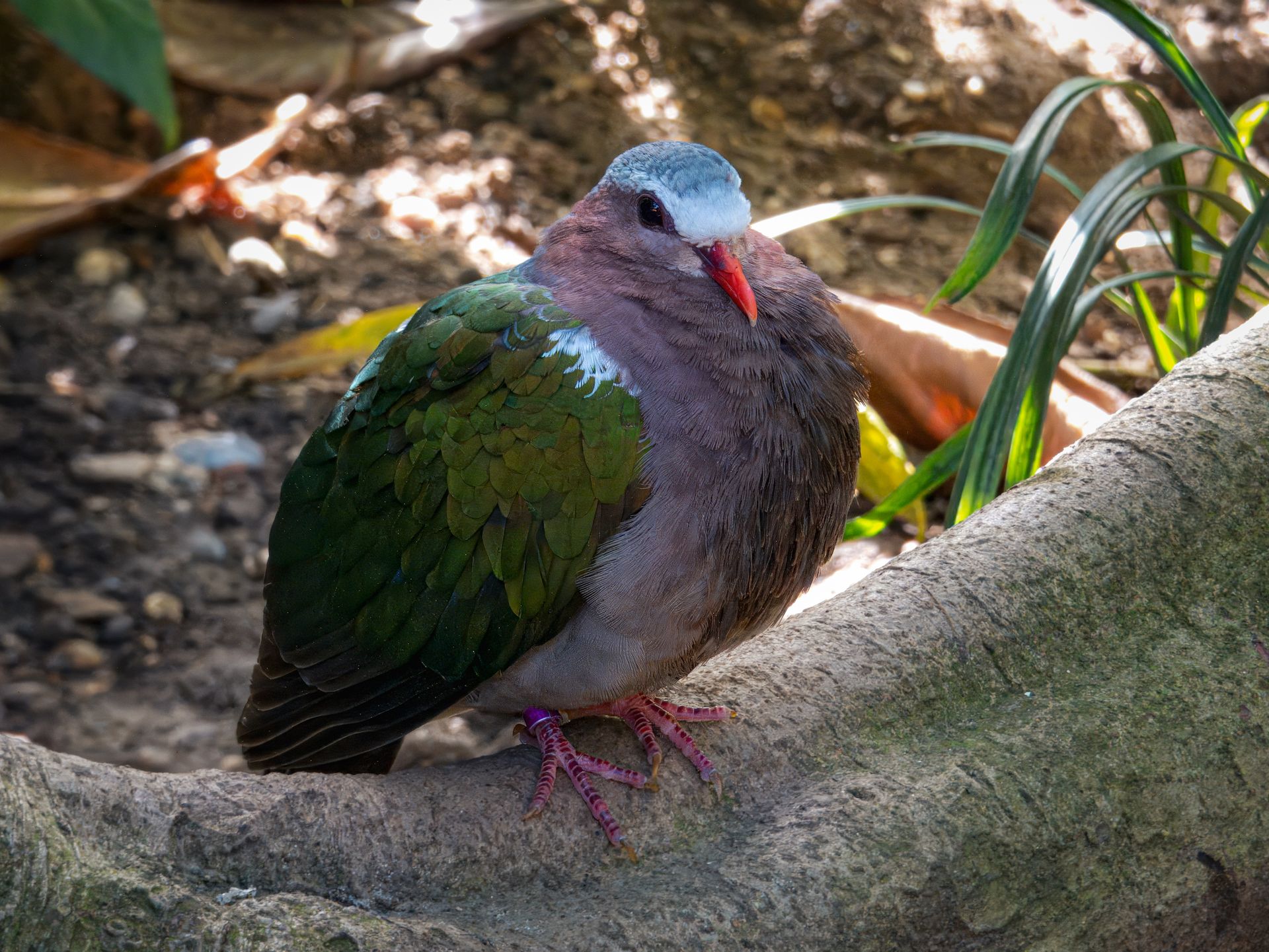
Gallicolumba is a genus of island ground-doves.
They can be found in lowland forests on the islands of Luzon and 2 other islands in northern Philippines.
Gallicolumba luzonica, also known as the Luzon bleeding-heart, is a species within this genus.
This bird can be spotted foraging along the floor of the Gems of the Jungle exhibit.
Gallicolumba luzonica has a limited number of pictures available, with only 5 images found in the scientific literature.
Here's a breakdown of the classification hierarchy for Gallicolumba luzonica:
- Kingdom: Animalia
- Phylum: Chordata
- Subphylum: Vertebrata
- Class: Aves
- Order: Columbiformes
- Family: Columbidae
- Genus: Gallicolumba
- Species: Gallicolumba luzonica
Ecosystem Roles
Gallicolumba luzonica plays a vital role in seed dispersal for many plant species.
In captivity, these birds are susceptible to parasites like Trichomonas and develop cankers that can be fatal if left untreated.
They are hosts to these parasites in captivity.
These birds help ensure the success of the forests they inhabit by dispersing seeds.
Their habitat, particularly the islands of Luzon and Polillo, is one of the top five biodiversity hotspots in the world.
Gallicolumba luzonica and their habitat are essential for ecotourism, which helps sustain the island's biodiversity.
These birds are hunted for food and the pet trade, which poses a threat to their populations.
They help protect against soil erosion and landslides through their role in maintaining the watersheds of their habitats.
Interesting Facts and Did You Know?
The Luzon bleeding heart dove is a unique bird with some fascinating features. It's named for the bright red patch on its chest, which looks like a wound but is actually a display structure.
These birds are found only on the island of Luzon in the Philippines, and they're known for their ground-dwelling habits. They spend most of their time searching for seeds, fruits, and insects in the leaf litter.
One of the most interesting facts about Luzon bleeding heart doves is that both males and females produce crop milk to feed their young. This is different from true milk, which is produced by mammals.
In the wild, Luzon bleeding heart doves tend to build nests at a mid-tree level to stay protected from predators. At the Tropics, you can spot them shuffling around on the ground, looking for food.
Here are some key facts about Luzon bleeding heart doves:
- Named for the bright red patch on their chest, which looks like a wound but is actually a display structure.
- Both males and females produce crop milk to feed their young.
- Tend to build nests at a mid-tree level to stay protected from predators.
- Found only on the island of Luzon in the Philippines.
Interestingly, Luzon bleeding heart doves don't fly very often, and when they do, it's only for short distances. They even run from predators instead of flying away!
Gallicolumba and Luzon Bleeding Heart
The Luzon bleeding heart is a fascinating bird species. The Gallicolumba luzonica is its scientific name, found in the Gems of the Jungle exhibit foraging along the floor.
This bird can be found in lowland forests on the island of Luzon and two other islands in northern Philippines.
They inhabit a specific region of the Philippines, which is worth noting for anyone interested in birdwatching or learning about local wildlife.
Explore further: Bird Bleeding
Frequently Asked Questions
How many Luzon bleeding heart are left?
The Luzon bleeding heart population is estimated to be below 10,000 individuals, with a high degree of uncertainty surrounding its exact size.
What is Gallicolumba Luzonica griseolateralis?
The Luzon Bleeding-heart, also known as Gallicolumba Luzonica griseolateralis, is a species of ground dove found only on the island of Luzon in the Philippines. It's named for its distinctive red breast patch.
Featured Images: pexels.com