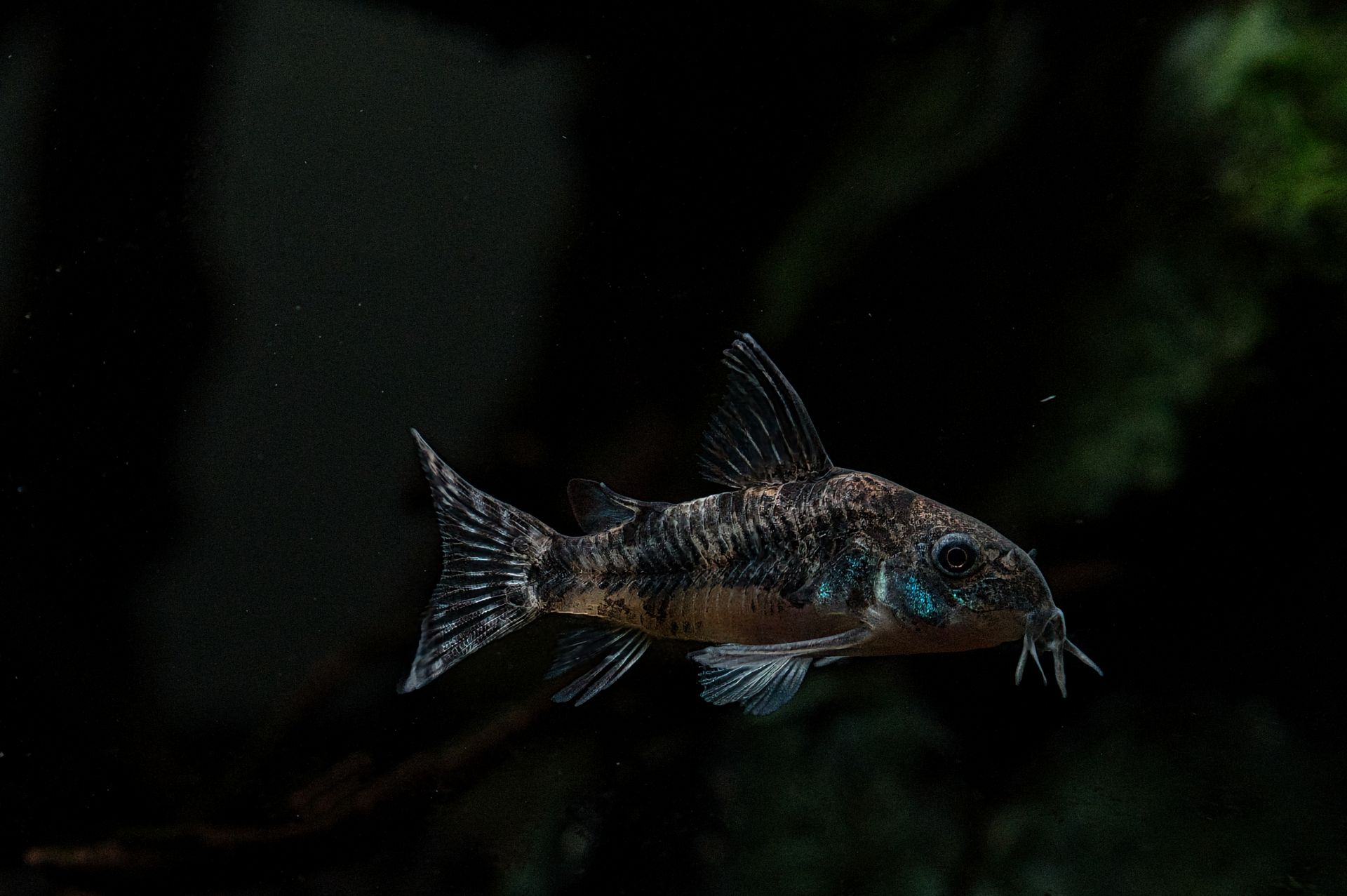
The Loricariidae family is a diverse group of armored catfish, with over 800 species spread across the Americas.
Their armored plates, or scutes, are a distinctive feature of Loricariidae fish, providing protection from predators.
These fish are found in a variety of freshwater habitats, from slow-moving rivers to swampy wetlands.
Some species of Loricariidae are specialized to live in caves, where they have lost their eyes and developed other senses to navigate their surroundings.
Their unique appearance and adaptations have made them a popular choice among aquarium enthusiasts.
Taxonomy and Evolution
The Loricariidae family is the largest catfish family, consisting of about 684 species in around 92 genera. This family is in flux, with new species being described each year and revisions likely.
Loricariidae is a monophyletic assemblage, meaning it consists of a natural grouping with a common ancestor and all of its descendants. This is recognized even in the earliest classifications of the Siluriformes.
The family is part of the superfamily Loricarioidea, which also includes six other families, such as Amphiliidae and Trichomycteridae. Some of these families exhibit suckermouths or armor, but never in the same individual as in loricariids.
The subfamily Ancistrinae is no longer accepted as a distinct group, but is instead recognized as a tribe within the Loricariidae family. This is due to its recognition as a sister group to the Pterygoplichthyini.
Lithogenes is the only genus within the subfamily Lithogeneinae, and is considered the most basal group in Loricariidae.
Distribution and Habitat
Loricariidae is a family of catfish that's incredibly widespread, found on both sides of the Andes Mountains in South America. They're not just limited to one type of environment either, as they can thrive in various freshwater habitats, including swift-flowing streams, quiet brackish estuaries, and even subterranean habitats.
Some species of Loricariidae can be found in torrential mountain rivers, where the water is fast-moving and rocky. Others prefer the slower waters of quiet brackish estuaries, where the water is a mix of fresh and saltwater.
You can find Loricariidae in a variety of other freshwater environments, including black acidic waters. Some species have even adapted to living in subterranean habitats, where the water is underground.
Here's a breakdown of some of the different types of habitats where Loricariidae can be found:
- Swift-flowing streams
- Quiet brackish estuaries
- Black acidic waters
- Subterranean habitats
Description and Biology
The armored catfishes, part of the Loricariidae family, are incredibly diverse, with varying color patterns and body shapes. They can range in size from a tiny 2.22 cm to over 100 cm in length.
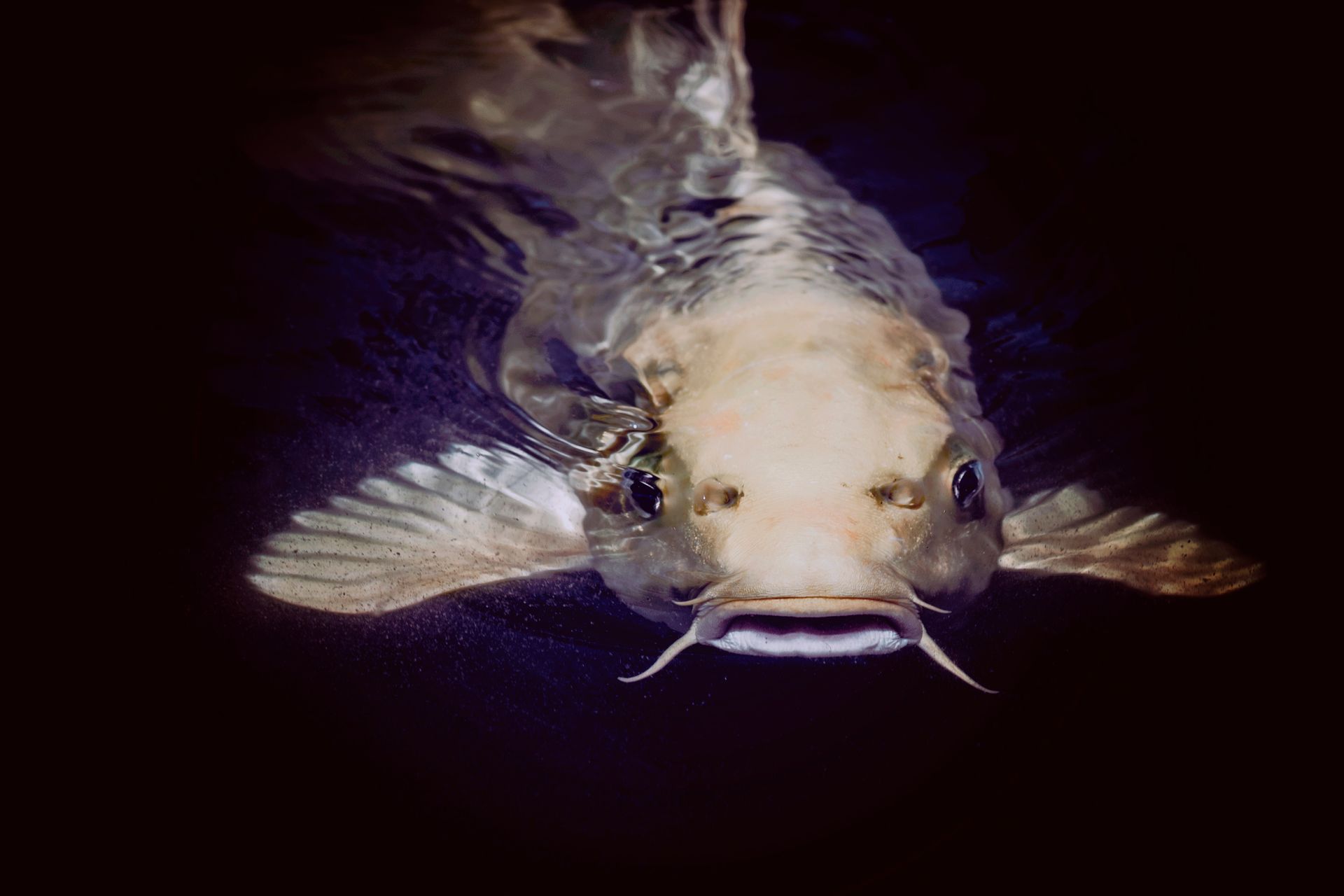
Their bodies are characterized by bony plates, similar to those found in callichthyids, and a ventral suckermouth with papillae on the lips. This unique mouth structure allows them to feed, breathe, and attach to the substrate through suction.
These fish have relatively long intestines due to their herbivorous or detrivorous diets, and their bodies are flattened to facilitate movement on the substrate. Taste buds cover almost the entire surface of their bodies and fin spines.
One of the most distinctive features of loricariids is their ability to use their suckermouth to attach to the substrate and feed or breathe simultaneously. This is made possible by a thin stream of inflowing water passing under the sucker.
Genetics
The genetic makeup of loricariid fish is quite fascinating. As of 2000, only 56 species have been cytogenically investigated.
The basal diploid number of chromosomes in this family is 2n = 54, but there's a wide variation in chromosome number, ranging from 2n = 36 in the Loricariinae to 2n = 96 in a species of Upsilodus.
Most members of the Ancistrini and Pterygoplichthyini have 52 chromosomes. This is a notable characteristic of these subgroups.
Karyotypic evolution through centric fusions and centric fissions seems to be a common feature among loricariids. This is evident in the higher number of biarmed chromosomes in species with lower diploid numbers.
In some species, there is a ZZ/ZW sex-determination system. This is an interesting aspect of loricariid genetics.
Description and Biology
Loricariid catfishes have extremely variable color patterns and body shapes, making them a fascinating group of fish. They are characterized by bony plates covering their bodies, similar to the bony plates in callichthyids.
These fish exhibit a ventral suckermouth, with papillae on the lips, which allows them to feed, breathe, and attach to the substrate through suction. The suckermouth is a unique feature of loricariids.
Their bodies are characteristically flattened, which helps them to use their suckers on most substrates. Body lengths can range from 2.22 cm to over 100 cm.
One of the most obvious characteristics of the loricariids is the ability to breathe air, thanks to their large vascular stomach. Even loricariids with unmodified stomachs have a slight ability to breathe air.
Loricariid catfishes have evolved several modifications of their digestive tracts that function as accessory respiratory organs or hydrostatic organs. These complex structures would have been independently evolved a number of times within the family.
Considerable sexual dimorphism occurs in this family, with males often having larger odontodes and more developed cheek spines than females. In some species, males even have snouts with fleshy tentacles.
Loricariids are cavity builders and can lay more than 300 eggs in their nests, which are guarded by the males. The eggs hatch within 4 to 20 days depending on the species.
Plecostomus and Pterygoplichthys
Plecostomus and Pterygoplichthys are two related species of armored catfish that are often found together in aquatic environments.
The Hypostomus plecostomus and Pterygoplichthys anisitsi are examples of these armored catfish species.
Pterygoplichthys anisitsi is a species of armored catfish that is often confused with the Hypostomus plecostomus.
Photographs of these species can be found on Bugwood.org, a reliable source for images of various species.
These armored catfish species are identified as Pterygoplichthys sp. in some references.
Ecology and Behavior
Loricariids are nocturnal animals, meaning they're most active at night. This adaptation helps them thrive in their environments.
Some species, like Otocinclus, prefer to live in groups, while others are territorial. This diversity in social behavior is fascinating and likely influenced by their habitats.
These catfish have an impressive ability to adhere to objects in their habitats, even in fast-flowing waters, thanks to their suckermouth. This adaptation is crucial for their survival.
Loricariids are facultative air breathers, meaning they'll only breathe air if under stress and will only use their gills when oxygen levels are high. This unique ability allows them to cope with changing environments.
What Do Fish Like to Snack On?

Some fish have a unique craving for wood, which is a great source of fiber in their diet. They can gnaw on driftwood to satisfy their cravings.
Our exhibit features tanks with wood, providing fish with a natural snack option. This is a deliberate choice to meet the dietary needs of some of our fish.
Fish with wood cravings will often target driftwood in the tanks. This behavior is a key part of their natural diet and habitat.
Ecology
Loricariids are incredibly adaptable creatures that can thrive in a variety of aquatic environments.
They can adhere to objects in their habitats, even in fast-flowing waters, thanks to their suckermouth, which allows them to stick to surfaces.
Most species of loricariids are nocturnal animals, meaning they're most active at night.
Some species, like the Panaque, have the unique ability to digest wood, a trait known as xylophagy.
Loricariids have a range of feeding habits, including eating algae, invertebrates, and detritus.
They're also facultative air breathers, which means they'll only breathe air if they're under stress or in low-oxygen environments.
Some species, like those of Hypostomus, have a great ability to breathe air, especially in low-land or pool-dwelling environments.
Pterygoplichthys is known for its impressive ability to survive out of water for up to 30 hours, a testament to their adaptability.
Loricariids exhibit a wide range of reproductive strategies, including cavity spawning and egg-carrying.
Parental care is usually good, with males often guarding the eggs and sometimes the larvae.
The eggs hatch after four to 20 days, depending on the species.
Organism-Substrate Interaction
Organisms interact with their environment through complex relationships with their substrate, which can be a physical surface, a body of water, or even other living organisms.
The type of substrate an organism lives in can greatly influence its behavior and ecology. For example, coral reefs are home to a vast array of marine life, from fish to invertebrates.
Organisms have evolved to adapt to their specific substrate, developing unique characteristics such as specialized feeding structures or burrowing behaviors.
In terrestrial environments, plants have developed deep roots to access water and nutrients, while in aquatic environments, plants have adapted to absorb nutrients from the water.
The interaction between an organism and its substrate can also impact its population dynamics, with some organisms competing for resources and others forming symbiotic relationships.
Aquarium Care
Loricariids are nocturnal, so they'll appreciate some darkness in their aquarium. You can use plants or decorations to create hiding spots and reduce stress.
Most species of loricariids originate from habitats with fast-moving water, so vigorous filtration is a must. This will help keep the water clean and clear.
Some loricariids are sold as "plecs", "plecos", or "plecostomus" because of their algae-eating habits, but be aware that not all species will carry out this role. Research the specific needs of your fish before purchasing.
A great many species of loricariids are sold for their ornamental qualities, representing many body shapes and colors. This makes them a great choice for anyone looking to add some visual interest to their aquarium.
Background and Discussion
The Loricariidae family, commonly known as armored catfish, has a fascinating history. They originated in South America, specifically in the freshwater rivers and streams.
Their distinctive armored plates, made of bone and skin, provide protection from predators and help them thrive in their environment. These plates can be quite thick, with some species having them up to 1 mm thick.
Their armored plates are not just for show; they also play a crucial role in their ability to survive and adapt to changing water conditions.
Background
The concept of background noise has been a topic of interest in various fields, including psychology and acoustics.
Background noise is a constant presence in our daily lives, and research suggests that it can have a significant impact on our cognitive abilities.
Studies have shown that exposure to background noise can reduce productivity by up to 66%.
The human brain is wired to pick up on subtle changes in its environment, making it difficult to filter out background noise completely.
The effects of background noise can be particularly pronounced in environments with high levels of ambient noise, such as open offices or public transportation.
In some cases, background noise can even have a positive impact, such as in the case of white noise machines, which can help individuals with insomnia or tinnitus sleep more soundly.
Discussion
The discussion around the topic is centered around the idea that a key factor in understanding the subject is to look at the historical context. This is highlighted in the article, where it's mentioned that the subject has its roots in the early 20th century.
The article notes that the subject has undergone significant changes over the years, with a major shift occurring in the 1950s. This shift had a lasting impact on the subject's development.
One of the most significant effects of this shift was the introduction of new technologies, which are discussed in the article as being instrumental in driving innovation. The article highlights the importance of these technologies in shaping the subject's future.
The article also points out that the subject's growth has been influenced by various social and economic factors. For example, it mentions that changes in government policies have had a significant impact on the subject's development.
A key takeaway from the discussion is that the subject's evolution is closely tied to the broader social and economic context. This is evident in the article's analysis of the subject's history and development.
Frequently Asked Questions
Why are armored catfish a problem?
Armored catfish outcompete native species and disrupt aquatic food chains, causing harm to the ecosystem. Their presence also leads to bank erosion, further threatening the environment.
Can armored catfish breathe air?
Yes, armored catfish can breathe air, making them well-suited to thrive in low-oxygen environments. This unique ability allows them to survive in waters with limited oxygen.
Featured Images: pexels.com