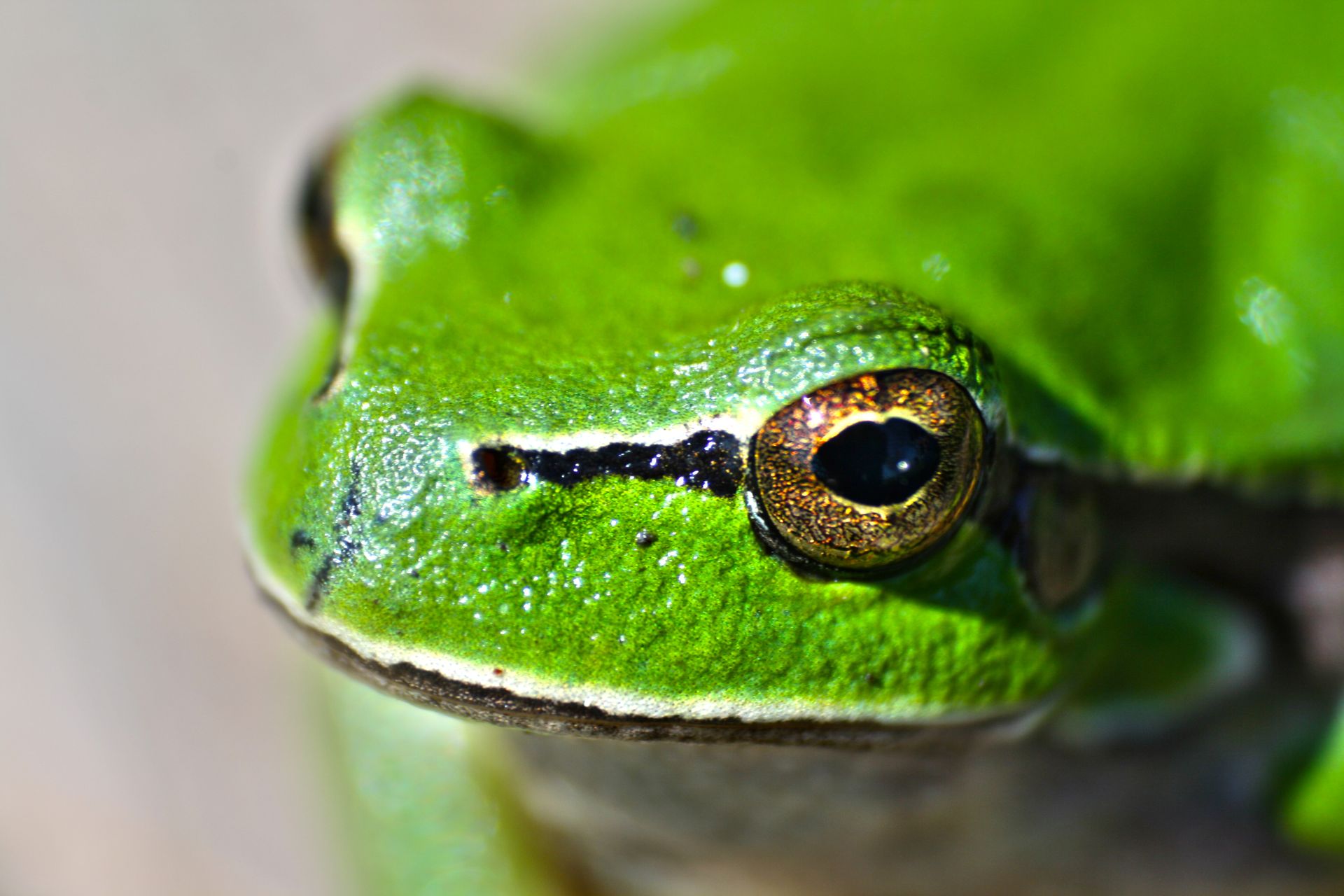
Litoria frogs are a type of frog that belongs to the family Hylidae.
They are native to Australia and New Guinea.
These frogs are also known as tree frogs due to their habitat in trees and shrubs.
Some species of Litoria frogs are known to be semi-aquatic, spending part of their time in water.
General Information
Litoria is a genus of frogs that belongs to the family Hylidae.
They are native to Australia and New Guinea, with some species found in nearby islands.
Litoria frogs are semi-aquatic and live in freshwater environments, such as ponds, lakes, and slow-moving streams.
Their habitats range from tropical rainforests to grasslands and savannas.
Species Details
The Litoria genus is home to over 200 species of frogs, each with its own unique characteristics. These frogs can be found in various parts of the world, including Australia, New Guinea, and surrounding islands.
Some of the most notable species within the Litoria genus include the slender tree frog (L. adelaidensis), the Wandolleck's white-lipped tree frog (L. albolabris), and the Horst's tree frog (L. amboinensis). These species are just a few examples of the many that can be found within this genus.
In terms of their physical characteristics, some Litoria species have distinctive color patterns. For example, the Arfak Mountain tree frog (L. chloronota) has a striking green and brown coloration. The striped rocket frog (L. nasuta) also has a unique color pattern, with a striped pattern on its back.
Other species, such as the brown tree frog (L. ewingii) and the eastern dwarf tree frog (L. fallax), have more subdued coloration. These frogs often blend in with their surroundings, making them difficult to spot.
The Litoria genus also includes some species with distinctive calls. For example, the screaming tree frog (L. quiritatus) has a loud, screeching call that can be heard for long distances. The whirring tree frog (L. revelata) also has a unique call, which sounds like a high-pitched whirring noise.
Here is a list of some of the species mentioned above:
- Slender tree frog (L. adelaidensis)
- Wandolleck's white-lipped tree frog (L. albolabris)
- Horst's tree frog (L. amboinensis)
- Arfak Mountain tree frog (L. chloronota)
- Striped rocket frog (L. nasuta)
- Brown tree frog (L. ewingii)
- Eastern dwarf tree frog (L. fallax)
- Screaming tree frog (L. quiritatus)
- Whirring tree frog (L. revelata)
Conservation
The Yellow-spotted Bell Frog and Peppered Tree Frog are in need of conservation efforts.
Their Recovery Plan aims to clarify their current status and increase habitat protection.
Community involvement and scientific research are key in assessing their current status.
The Recovery Plan proposes measures to identify remaining populations in the wild, including encouraging community involvement and location efforts.
Protecting potential habitat through community awareness is crucial for their survival.
Any extant populations located in the future will need effective protection and management.
Determining the agents that contributed to their decline is also an essential objective.
Ecology and Behaviour
The broad-palmed frog will call in a large chorus during mating season, around a still water source, normally a dam, but may be a roadside ditch, temporary puddle or still area of a stream.
The call is a short "quark" repeated continuously. This species of frog can be found great distances from the breeding area and tends to inhabit open country or forest.
The eggs are laid in small groups or singly, attached to twigs or vegetation under the surface of the water in dams, ponds, creek pools, swamps, and even in abandoned swimming pools.
Up to 350 eggs are laid in mass either floating or attached to vegetation. This egg mass will often sink once disturbed.
Distribution and Range
The Yellow-spotted Bell Frog is found in two disjunct populations, with the northern population centered around the town of Guyra on the New England Tableland, New South Wales.
Its habitat ranges from 1000 to 1500 meters above sea level, with the species occupying the headwaters of several rivers and creeks.
In the northern population, the Yellow-spotted Bell Frog has been recorded from 13 known sites, all of which have been verified by examination of museum specimens or photographs.
The species has a relatively restricted distribution, with no verified records of the northern population after 1975.
The southern population has a restricted distribution between Canberra, ACT, and Bombala, NSW, on the Southern Tablelands at altitudes between 700 and 800 meters.
The extent of occurrence for the Yellow-spotted Bell Frog is approximately 9000 km².
Here's a breakdown of the species' distribution:
Featured Images: pexels.com