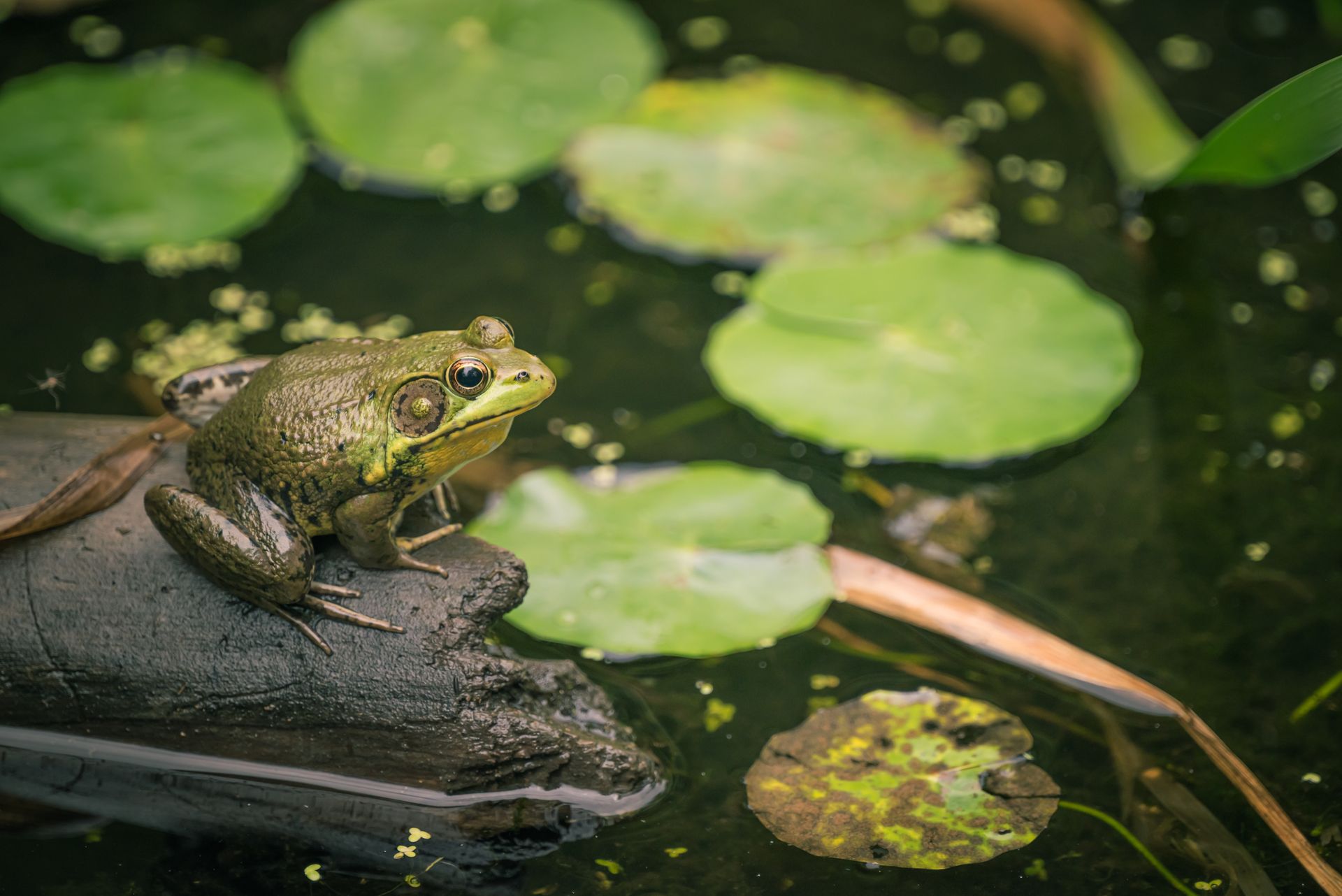
The Leptodactylidae family of frogs has a rich history that dates back to the Paleocene epoch, around 60 million years ago. This is when the first members of the family emerged, setting the stage for the diversity of species we see today.
The earliest known Leptodactylidae fossils were found in Argentina and date back to the Paleocene epoch. These ancient frogs likely played a crucial role in shaping the ecosystems of their time.
One of the most distinctive features of Leptodactylidae frogs is their wide range of habitats, from tropical forests to temperate grasslands. This adaptability has allowed them to thrive in a variety of environments.
Leptodactylid Frogs
Leptodactylid frogs are one of the most diverse and widely distributed frog families in the neotropical region. They can be found from Mexico to Argentina and Brazil, including the northern Antilles.
The Leptodactylidae family comprises over 230 species, distributed in three monophyletic subfamilies: Leiuperinae, Leptodactylinae, and Paratelmatobiinae.
Most species of Leptodactylidae are terrestrial, living in open formations in forested areas and feeding in leaf litter or close to temporary ponds.
Several species can reach high mountainous areas over 1200 meters above sea level, such as Leptodactylus fragilis, L. fuscus, L. savagei, and L. ventrimaculatus.
Leptodactylus colombiensis can even reach 2800 meters above sea level in the Colombian Cordillera Oriental.
Representative species for the study of skin metabolites from Leptodactylidae have extensive distributions, such as Leptodactylus knudseni, which can be found in Bolivia, Brazil, Colombia, Ecuador, French Guiana, Guyana, Peru, Suriname, and Venezuela.
Skin Secretions
Skin Secretions are a unique feature of Leptodactylidae species, producing a variety of compounds that have been identified as amines and peptides.
These compounds have been found to be present in the skin secretion of different Leptodactylidae species, with 12 amines identified from 15 species of one genus and 88 peptides classified as neuroactive peptides and antimicrobial peptides from 25 species of four genera.
The most common amines found in Leptodactylidae skin secretions are 5-hydroxytryptamine (5-HT), histamine, and tyramine. These amines have been detected using chromatographic techniques such as Paper Chromatography (PC) and Alumina Chromatography column (ACC).
One of the most interesting amines found in Leptodactylidae skin secretions is 5-hydroxytryptamine (5-HT), which has been detected in several species, including Leptodactylus labrosus and Leptodactylus labyrinthicus.
The peptides found in Leptodactylidae skin secretions are also of great interest, with 88 peptides identified from 25 species of four genera. These peptides have been classified as neuroactive peptides and antimicrobial peptides.
Here is a list of some of the peptides found in Leptodactylidae skin secretions:
These peptides have been found to have various functions, including antimicrobial and neuroactive properties. Further research is needed to fully understand the role of these peptides in Leptodactylidae skin secretions.
Medicinal Uses
Leptodactylidae has shown significant promise in the medicinal field, with various species exhibiting unique properties that can be used to treat a range of diseases.
One of the most exciting applications is in the treatment of rabies, a deadly virus that affects mammals. Ocellatin-F1, a peptide found in L. fallax, L. pentadactylus, and L. labyrinthicus, has been shown to have antiviral activity against rabies virus.
The crude skin secretion of L. knudseni has also been found to exhibit insecticidal activity, affecting both adults and larvae of the Aedes aegypti and Anopheles darling mosquito species.
Leptodactylidae has also been found to have anti-cancer properties, with pentadactylin from Leptodactylus pentadactylus and a crude secretion from Physalaemus nattereri showing a significant reduction of growth and proliferation of melanoma cells.
The skin extracts of several Leptodactylidae species have also been found to have anti-Alzheimer's disease properties, inhibiting acetylcholinesterase and butyrylcholinesterase enzymes, which are associated with the disease.
Here are some of the medicinal uses of Leptodactylidae species:
These are just a few examples of the many medicinal uses of Leptodactylidae species. Further research is needed to fully explore the potential of these species in the treatment of various diseases.
Habitat and Reproduction
Leptodactylidae frogs are quite fascinating, and their reproductive habits are no exception. They lay their eggs in foam nests, which can be found in various spots.
Some Leptodactylidae frogs are particular about where they lay their eggs, preferring small cracks or crevices. They might also lay eggs right on the surface of the water.
Other frogs in this family prefer to lay their eggs on the forest floor. This diversity in egg-laying habits is a testament to the adaptability of Leptodactylidae frogs.
Where Frogs Live
Leptodactylidae frogs can be found in many places, from Mexico to Argentina and Brazil, including northern Antilles. They inhabit a wide range of habitats, from lowland ecosystems to high mountainous areas over 1200 meters above sea level.
Some species, like Leptodactylus colombiensis, can reach elevations of up to 2800 meters in the Colombian Cordillera Oriental. Others, such as Leptodactylus oreomantis and Physalaemus rupestris, are found in high-altitude ecosystems.
These frogs are very adaptable and can be found in open formations in forested areas, as well as in leaf litter or close to temporary ponds. They are also known to inhabit high-altitude areas, such as mountainous regions and rocky outcrops.
Leptodactylidae frogs have extensive distributions, with some species found in multiple countries. For example, Leptodactylus knudseni can be found in Bolivia, Brazil, Colombia, Ecuador, French Guiana, Guyana, Peru, Suriname, and Venezuela.
Reproduction
Leptodactylidae frogs have interesting ways to lay their eggs, some of which are laid in foam nests that can be found in different spots.
These nests might be located in small cracks or crevices, while others are laid right on the surface of the water.
Some Leptodactylidae frogs prefer to lay their eggs on the forest floor.
Their eggs are laid in various locations, showing the adaptability of these frogs to different environments.
Physical Characteristics and History
The Leptodactylidae family is incredibly diverse, with over 1,100 species that come in all shapes and sizes. The smallest species can grow to just 0.4 inches long, while the largest can reach up to 12.8 inches.
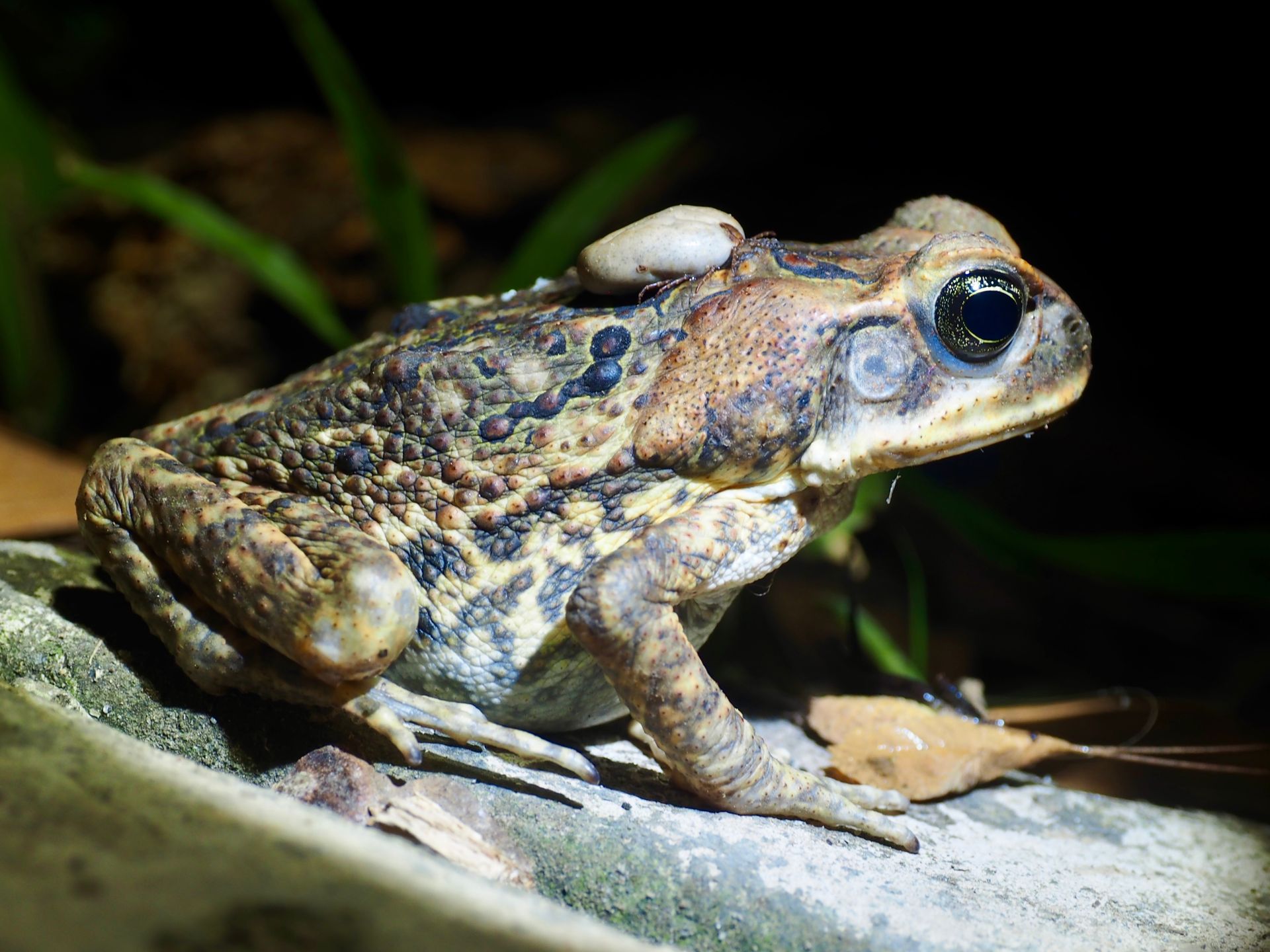
Many species in this family have toadlike features, such as short legs and warty backs, while others have the typical frog appearance with long hind legs and smooth skin. Some species have chunky bodies, while others are slender or even flat.
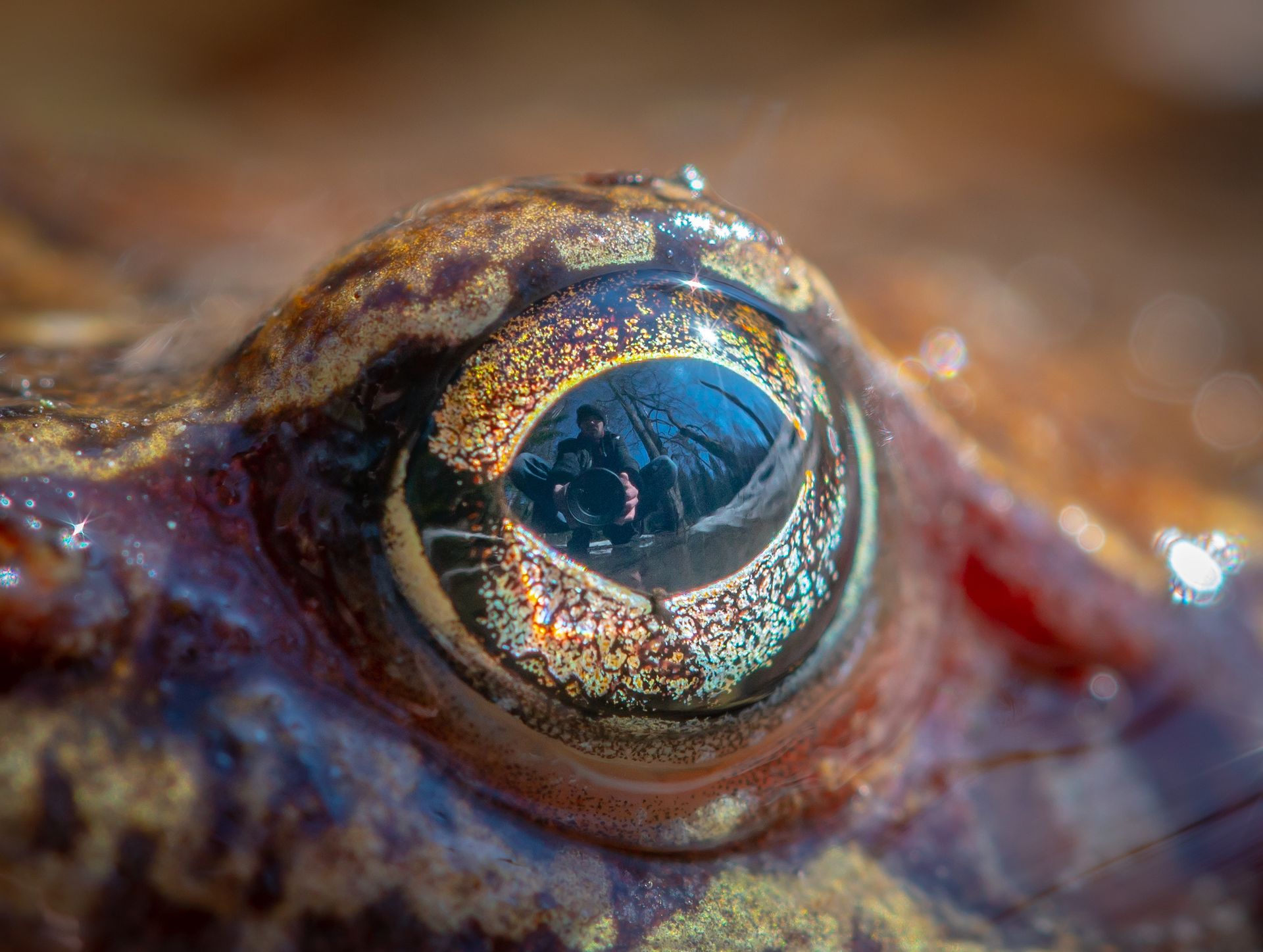
Most Leptodactylidae frogs share some common features, including teeth on the upper jaw and horizontal pupils in their eyes. A few species have vertical pupils instead.
These frogs have been around for a long time, with fossil records showing that they've been present for at least 37 million years.
Physical Characteristics
The leptodactylid frogs come in a staggering variety of shapes and sizes, with over 1,100 species to their name. Some of the smallest species can grow to just 0.4 inches long, while the female helmeted water toad can reach an impressive 12.8 inches in length.
Many species in this family have toadlike features, such as short legs and warty backs. Others have the typical frog look with long, jumping hind legs and smooth skin on their backs.
Some leptodactylid frogs have chunky bodies, while others are slender or even quite flat. A few have very baggy skin that hangs in folds from their sides and the upper part of each hind leg.
Most species in this family have teeth on the upper jaw and horizontal pupils in their eyes. A few have vertical pupils instead.
The bones at the tips of the toes of all species in this family are either T-shaped or have knobs. In some species, small pads cover the tips of the toes, helping the frog to climb up slippery rocks or tall trees.
Most species are gray, green, or brown and blend into their surroundings. A few, however, have bright patterns, such as the gold-striped frog's black body with bright yellow stripes.
The bright colors of some species, like the gold-striped frog, may actually be a defense mechanism to trick predators into thinking they're a poisonous species.
On a similar theme: Paedophryne Amauensis Frog
Ancient Frogs
Leptodactylidae frogs have been around for a very long time, with fossil records showing their presence in the past.
One fossil found is thought to be about 37 million years old, giving us a glimpse into their history.
These ancient frogs have been preserved in fossil records, allowing us to learn about their history and how they've evolved over time.
Featured Images: pexels.com