The Landseer Ect and Newfoundland Dog breeds share a striking resemblance, but they have distinct differences.
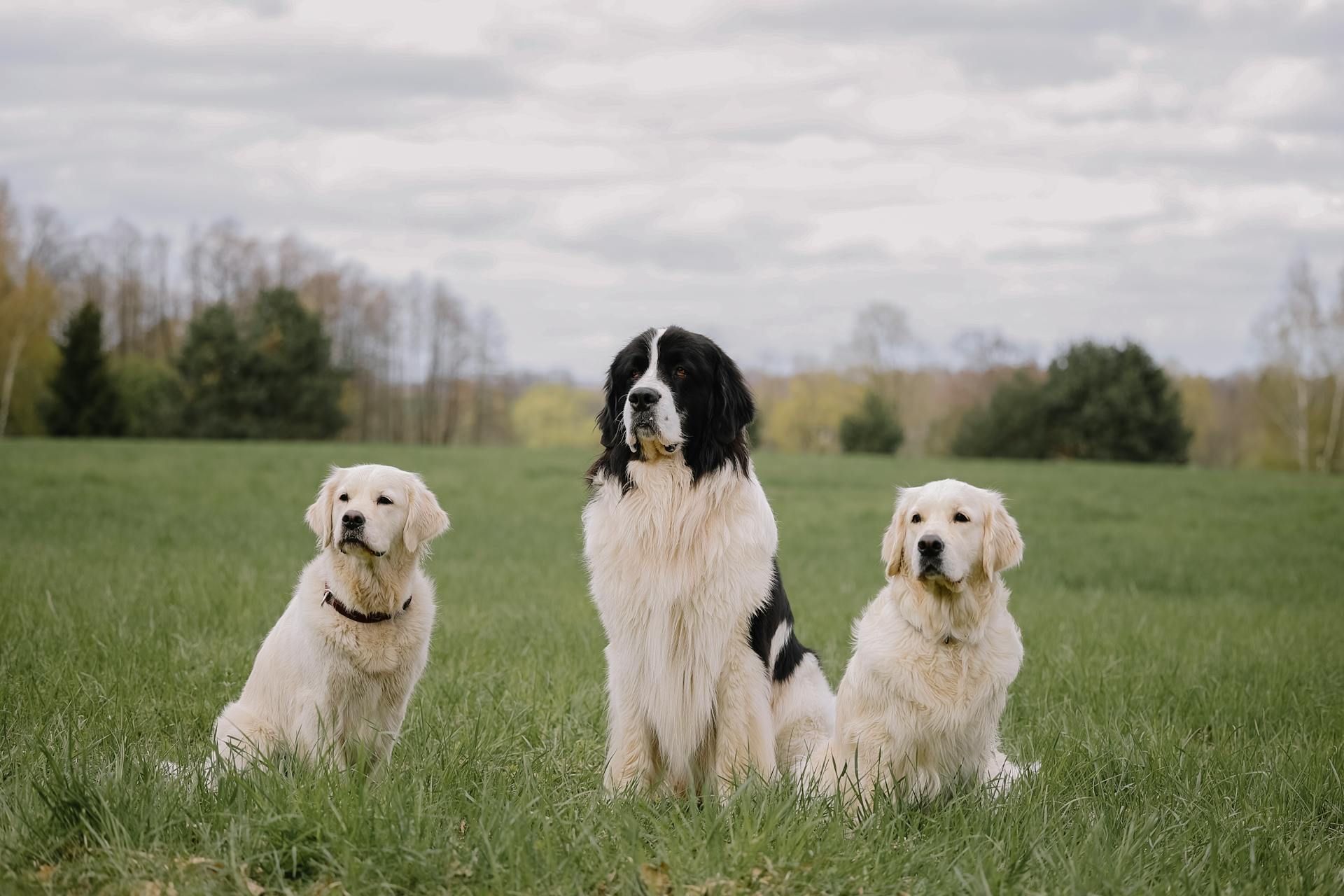
The Landseer Ect is a rare variant of the Newfoundland Dog, characterized by its black coat with white markings.
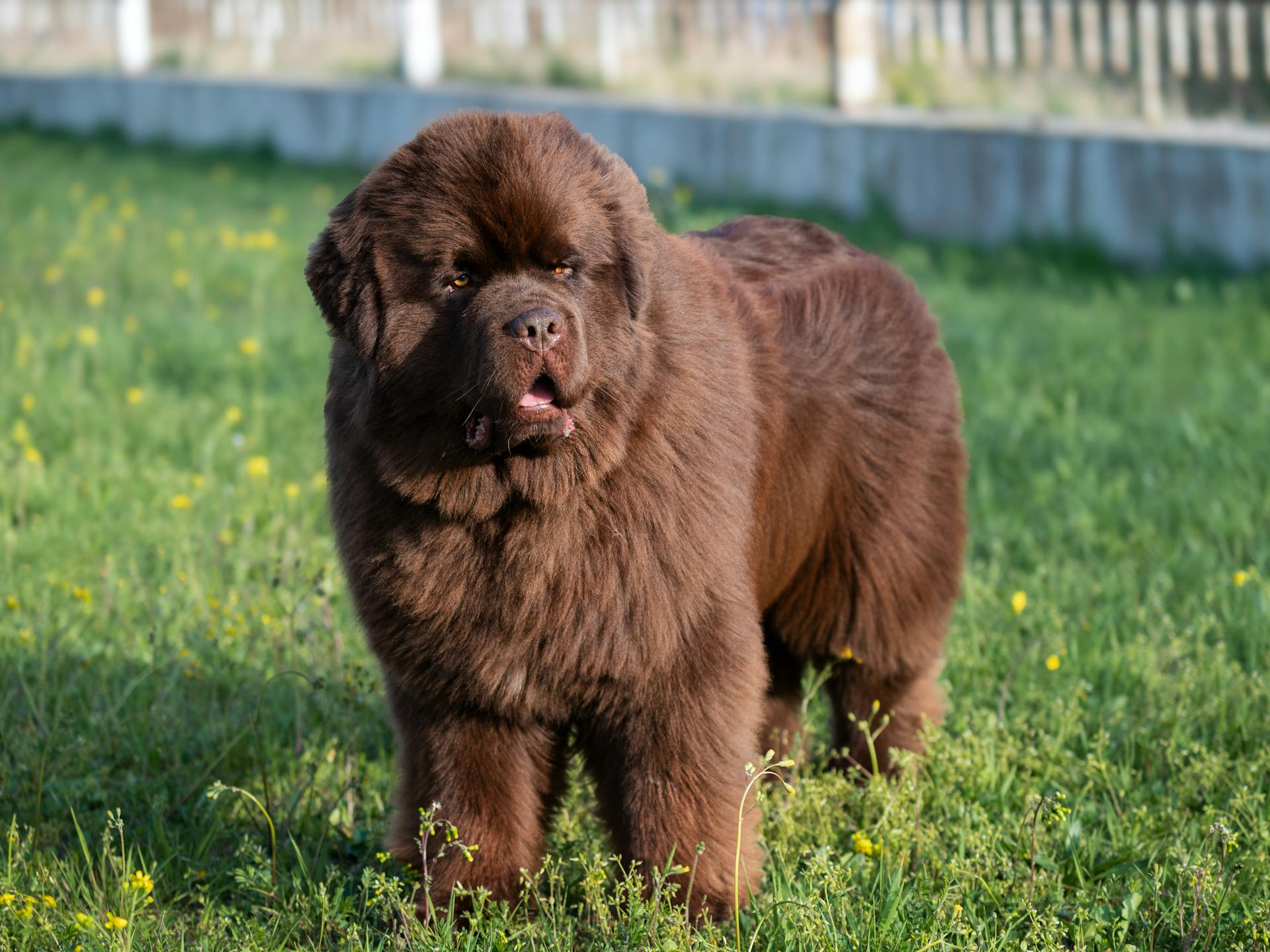
One of the most notable differences between the two breeds is their coat color. The Landseer Ect has a black coat with white markings, while the Newfoundland Dog has a thick, double coat that can be black, brown, or gray.
The Landseer Ect is known for its intelligence and loyalty, traits that make it a popular choice for families.
Newfoundland Dogs are also highly intelligent and loyal, but they tend to be more laid-back and gentle.
In terms of size, both breeds are massive, but the Newfoundland Dog is generally larger, weighing between 100-150 pounds.
Landseer Ect dogs typically weigh between 80-120 pounds.
Readers also liked: Little Friends Dogs and Cats Breeds
History
The Landseer ECT has its roots in dogs used by fishermen in Newfoundland and Labrador, Canada, which are believed to be descended from water dogs and livestock guardian dogs imported by Portuguese and Basque fishing vessels.
These early dogs were highly valued for their ability to work in the water and protect livestock, and it's no wonder that they were often featured in 19th-century art.
In the Victorian era, black-and-white Newfoundland dogs were more popular than solid black coloration, and they were the subject of many famous paintings, including those by Edwin Landseer, whose name was later used to describe black-and-white Newfoundlands.
The solid black coloration eventually became more popular, and by the 1930s, breeders were working to recreate the dogs seen in Landseer's paintings, resulting in the creation of the Landseer breed.
In Germany, a separate breed club for Landseer-colored dogs was established in 1960, by crossing livestock guardian dogs with Landseer-colored Newfoundlands.
See what others are reading: Miniature White Poodle
Temperament
The Landseer Newfoundland is known for its sweet disposition, gentleness, and serenity. They're a joy to be around, and it's no wonder why they're a popular breed.
Landseer Newfoundlands enjoy swimming and tend to drool, though not as much as some other giant breeds. This makes them perfect for families who love the water.
While the Landseer European Continental Type is also sweet, it's quite different from the Landseer Newfoundland in regard to response, agility, and speed. This is something to consider if you're looking for a specific type of dog.
Frequently Asked Questions
Are Landseer and Newfoundland the same?
No, Landseer and Newfoundland are not the same, although Landseer is considered a variety of the Newfoundland breed in some regions. However, in Germany and other European countries, Landseer is a distinct breed developed from crossing Newfoundland with livestock guardian dogs.
Why are Black-and-White Newfoundland called Landseer?
The Black-and-White Newfoundland is called a Landseer because it was often depicted by English artist Sir Edwin Henry Landseer in his paintings. The breed's distinctive coloring was a favorite subject of Landseer's, inspiring its name.
What are the health issues with Landseer Newfoundland?
Landseer Newfoundlands are prone to heart issues like sub-aortic stenosis and obesity, as well as joint problems like elbow dysplasia and a genetic disorder called cystinuria. Regular veterinary check-ups and a balanced lifestyle can help manage these conditions.
Featured Images: pexels.com