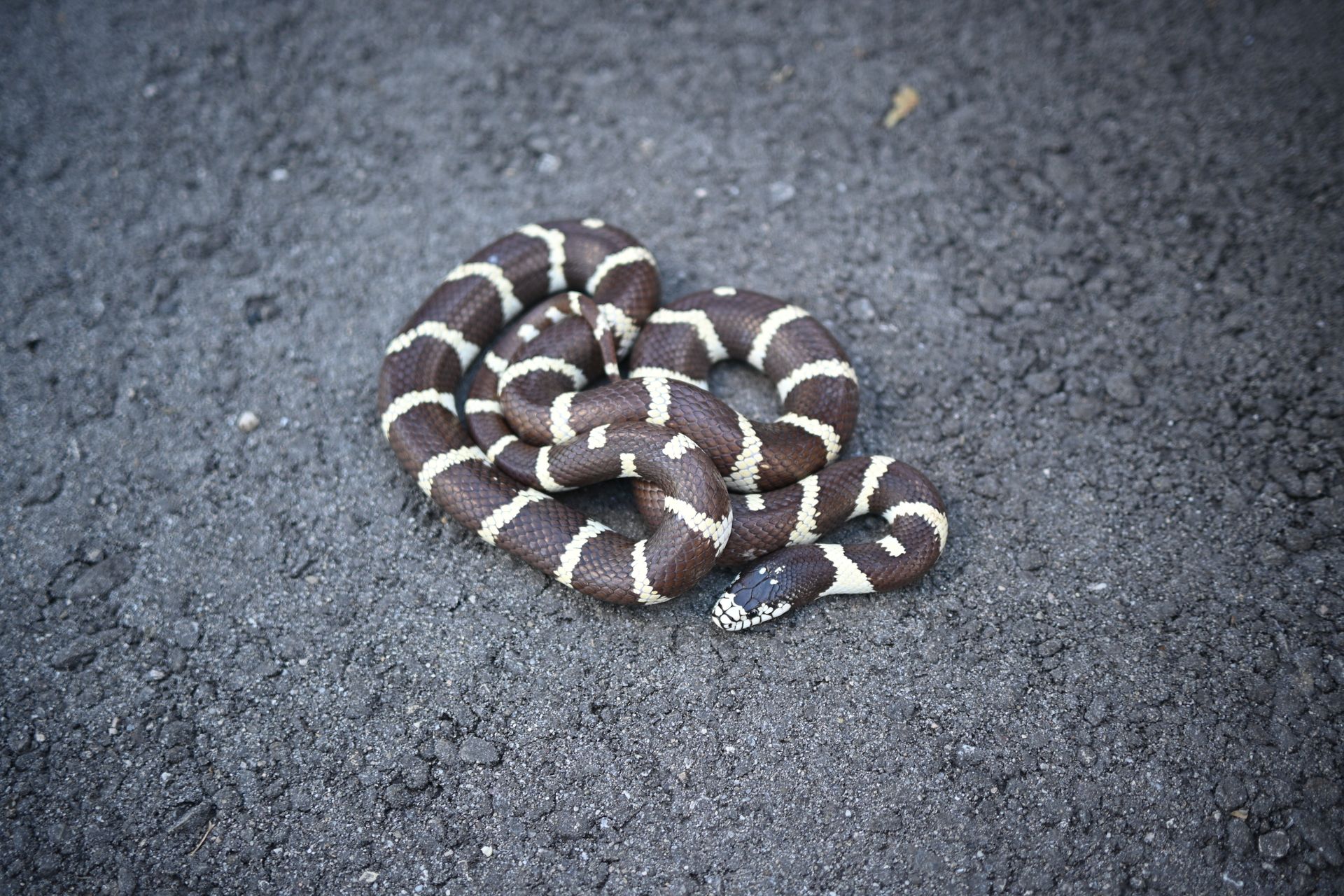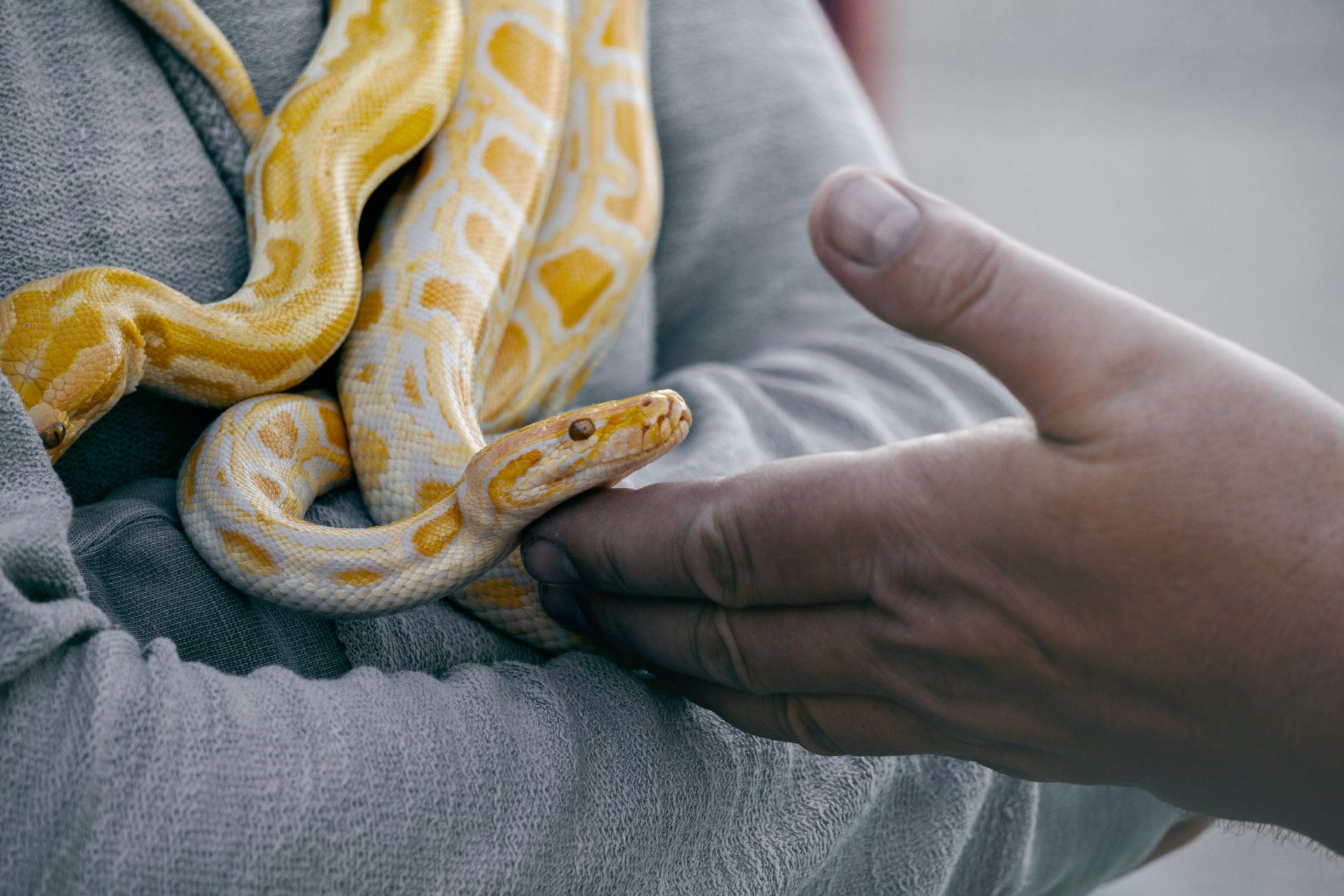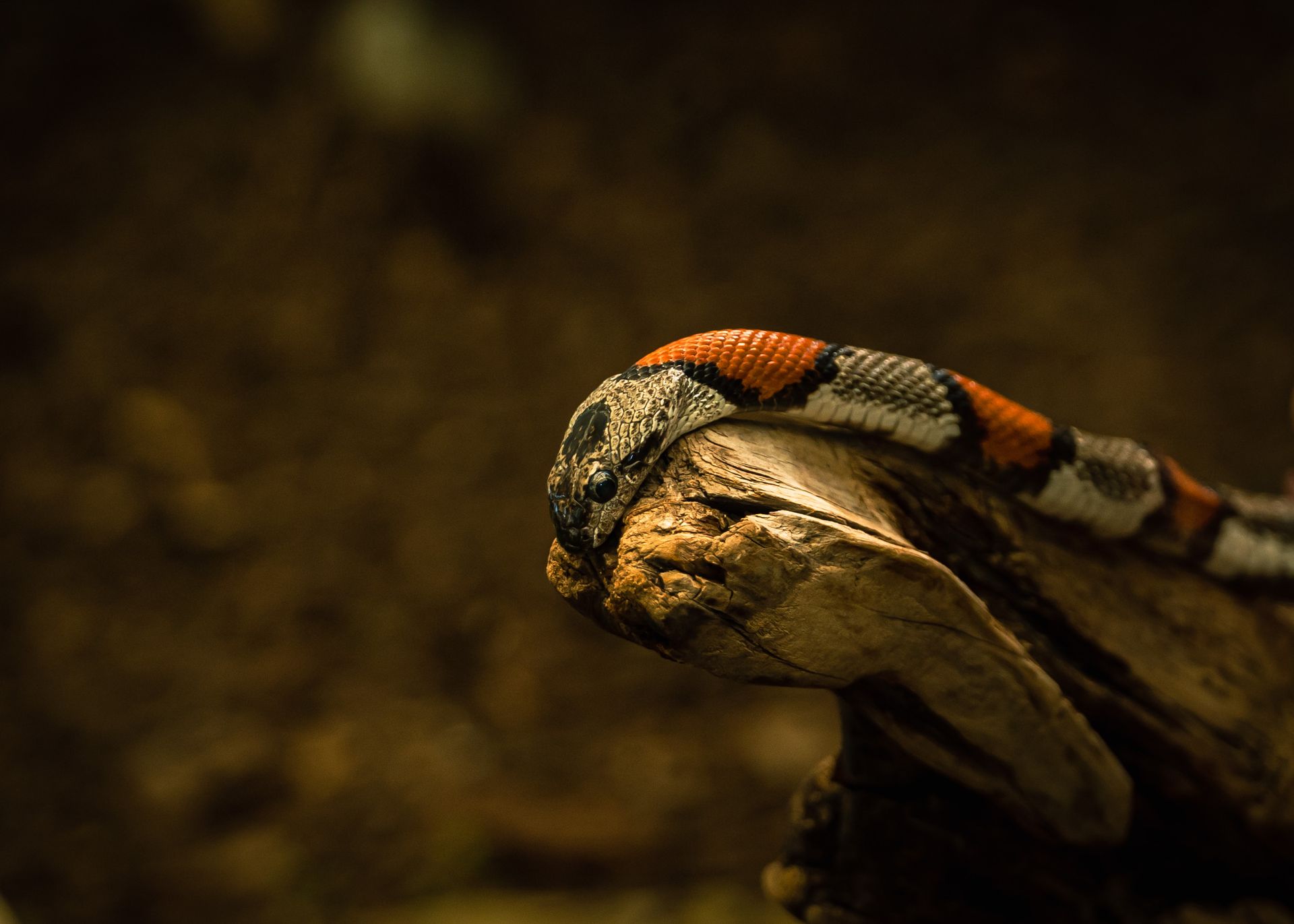
Lampropeltis getula splendida, a stunning subspecies of kingsnake, requires careful attention to thrive.
They are a relatively small species, reaching lengths of up to 36 inches.
In the wild, they inhabit rocky outcrops and dry scrublands, where they can be found hunting small mammals and other snakes.
A well-ventilated enclosure with a temperature range of 75-85°F is essential for their comfort.
Kingsnake Care Basics
Desert Kingsnakes require a spacious environment to thrive, so a 48x18x18″ enclosure is recommended for adults, although a smaller setup can be started for juveniles.
They are active and inquisitive, so it's essential to provide a natural habitat environment for them to explore.
To create a hot and cold end of the tank, place all heating on one side, with an ambient temperature of 83F – 90F (28c – 32c), and a cooler temperature of 68F – 75F (21c – 23c) on the unheated side.
Desert Kingsnakes are confident and food-oriented, which can sometimes be mistaken for aggression, but with regular handling and proper care, they can be docile and easily tamed.
To avoid confusion, it's essential to handle them regularly, open the tank daily for exercise and stimulation, and use tongs when feeding to prevent them from associating the door opening with food.
A good feeding regime is also crucial, with hatchlings eating every 5-7 days, juveniles every 7 days, and adults every 7-14 days, depending on their size and needs.
Housing for Kingsnakes
When considering housing for Kingsnakes, it's essential to think about providing a natural habitat environment for them to thrive in, not just a space for them to survive.
A 48x18x18" enclosure is recommended for adult Desert Kingsnakes, allowing for exercise and exploration.
For juveniles, you can start with a smaller setup, but it's best to give them room to grow and expand their territory.
Kingsnakes are active and inquisitive, so they'll use the space you provide them, making it crucial to give them a suitable environment from the start.
The Corn Snake Setup is suitable for the vast majority of snakes, including Desert Kingsnakes, and is a great starting point for creating a natural habitat.
Kingsnake Temperature
To create a comfortable environment for your Desert Kingsnake, you need to set up a hot and a cold end of its tank for thermoregulation. This allows the snake to choose between hot areas and cold areas depending on its body temperature.
The hot end of the tank should have an ambient temperature of 83F to 90F (28C to 32C), which is achieved by placing all the heating on one side of the tank.
A heat mat is a reliable option for heating, but it's an older method. It should be controlled by a thermostat and well-covered with substrate to prevent the snake from sitting directly on it.
A ceramic bulb is a better option for larger tanks and provides a higher heat output. It's particularly good for larger snakes or larger enclosures, and should also be controlled by a thermostat.
The unheated cool side of the tank should have an ambient temperature of around 68F to 75F (21C to 23C). At night, you can allow this cooler temperature to be steady throughout the tank.
Humidity
Humidity is key for your Desert Kingsnake, and the ideal range is between 50-75%.
A medium to large water bowl on the cool side is a great way to maintain humidity without overdoing it.
Their semi-arid nature means they're comfortable in a range of humidity levels, but having a water source nearby is essential.
If the enclosure gets wet, clean it out promptly to prevent any issues.
King Snake Lighting
A small daylight bulb in the tank can help provide a natural photoperiod for your Desert King Snake, allowing it to distinguish between night and day. This isn't strictly necessary, but it has plenty of benefits and is very inexpensive.
You can use a low wattage LED, which won't raise the heat much at all, or a low wattage basking bulb if you want to raise the heat a little in this area. Just be sure to put a guard around the bulb to prevent your snake from curling around it and inflicting burns upon itself.
Snakes don't recognize pain very quickly, so it's essential to take precautions to prevent burns. A snake can have horrific burns before it registers to move away.
UVB lighting is optional for nocturnal snakes like the Desert Kingsnake, but it's highly recommended. You can achieve a UV Index of 2-3 with a 6% T8 UVB at 10-15" height or a T5 6% UVB or a T8 12% UVB at 15-18" height.
To use UVB lighting safely, be sure to use a UVB guard to prevent your snake from damaging itself or the bulb.
Feeding King Snakes
Feeding Lampropeltis getula splendida, specifically Desert Kingsnakes, is a crucial aspect of their care in captivity.
Desert Kingsnakes generally have a good appetite and will readily eat defrost mice or rats.
A hatchling will eat a pinkie every 5-7 days, juveniles every 7 days, and adults every 7-14 days depending on their size and needs.
Breeding females may eat more often, so be sure to monitor their food intake closely.
It's essential to feed based on the amount of food that will maintain a healthy weight, not the amount your snake wants to eat, as overeating can lead to obesity and related health issues.
In the wild, Desert Kingsnakes have been observed eating other snakes, birds, frogs, and eggs, but in captivity, a diet entirely of rodents is sufficient for good health.
You should always wash your hands before feeding to prevent your fingers from smelling like mice, and use long feeding tongs to avoid accidental bites.
As constrictors, Desert Kingsnakes will often strike and constrict their prey, so be cautious when opening the cage door, especially if your snake is hungry or particularly keen.
Health and Handling
Desert Kingsnakes are a confident species with a high prey drive, which can sometimes be misinterpreted as aggression.
To avoid this, it's essential to establish a regular handling routine and ensure a good feeding regime and hygiene. This will help your snake become docile and easily tamed.
If you only open your snake's tank once a week to feed it, your intelligent kingsnake will associate the door opening with food, leading to potential confusion.
Uvb for King Snakes
UVB for King Snakes is a topic that's gained more attention in recent years.
Research has shown that most snakes, including King Snakes, are active at dawn and dusk and may even bask in full sunlight.
Using a UVB light can offer several benefits, such as increased appetite, more activity, and brighter coloration.
A UV Index of 2-3 is recommended for King Snakes, which can be achieved with a 6% T8 UVB at 10-15″ height or a T5 6% UVB at 15-18″ height.
Using a UVB guard is crucial to prevent the snake from damaging itself or the bulb.
Handling Your Kingsnake
Handling your Kingsnake requires a consistent approach to avoid confusion. Desert Kingsnakes are a confident species with a high prey drive.
They can easily be misinterpreted as aggressive, but with regular handling and a good feeding regime, they can become docile and easily tamed.
Desert Kingsnakes are very food-oriented, which is why it's essential to establish a clear routine.
Opening the tank every day and associating it with exercise and stimulation can help prevent confusion. If you only open the tank once a week to drop a mouse in, your snake may associate the door opening with food.
Musk is a common issue with Kingsnakes, but it's not a cause for concern. However, it does smell bad and can be a sign that your snake is annoyed, alarmed, or confused.
The more you get your snake used to handling, the less likely it is to musk. With patience and consistency, some Kingsnakes won't musk at all.
Kingsnakes (Babies)
Breeding Desert Kingsnakes requires careful consideration of the adults' health and genetic fitness.
Before breeding, make sure your adults are healthy and free of genetic problems that can be passed down.
The female should be fully mature, as breeding her too early can cause serious health problems.
Even the most healthy snake can still experience issues during breeding, so it's essential to have a local exotics veterinarian on hand and the funds to cover any medical needs that may arise.
You'll also need to ensure you can house all the hatchlings separately, get them feeding, and find new homes for them.
Frequently Asked Questions
Is a Desert Kingsnake venomous?
No, a Desert Kingsnake is nonvenomous. Its unique immunity to venom makes it a fascinating and safe species to learn about.
Featured Images: pexels.com