The K9 police puppy recruitment and adoption process is a thrilling journey for both the puppies and their future handlers.
Puppies are typically selected between 8 and 11 weeks old, a time when their personalities and temperaments are still developing.
To be eligible, puppies must come from a reputable breeder or rescue organization, and meet specific physical and temperament requirements.
Each puppy undergoes rigorous testing to assess their aptitude for police work, including obedience, agility, and socialization exercises.
Training and Purpose
Training a k9 police puppy is a serious business, as they need to be socialized and trained to respond to commands and situations from a young age.
The training process typically begins at around 8-10 weeks old and can last up to 2 years. This extensive training is crucial in developing the puppy's skills and temperament.
Puppies are also trained in basic obedience commands, such as sit, stay, and walking on a leash, which is essential for their future role as police dogs.
Common Breeds
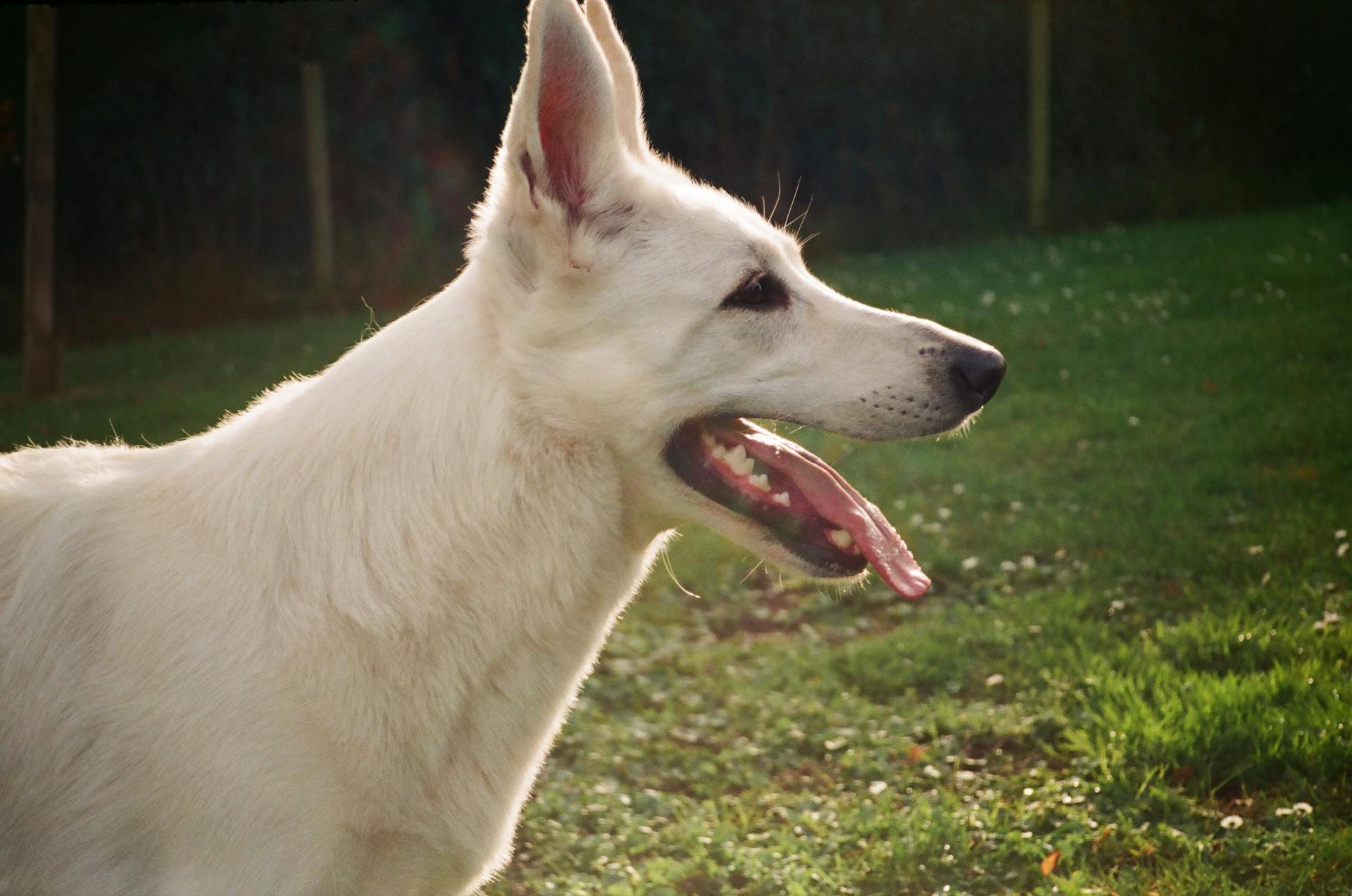
German Shepherds are often considered the quintessential police dog breed due to their high trainability and strong work ethic.
They are highly trainable, which makes them ideal for police work. Their ability to quickly learn commands is a valuable asset in law enforcement.
Dutch Shepherds are a great choice for law enforcement due to their high energy and intelligence. This breed's high energy level makes them well-suited for physically demanding tasks.
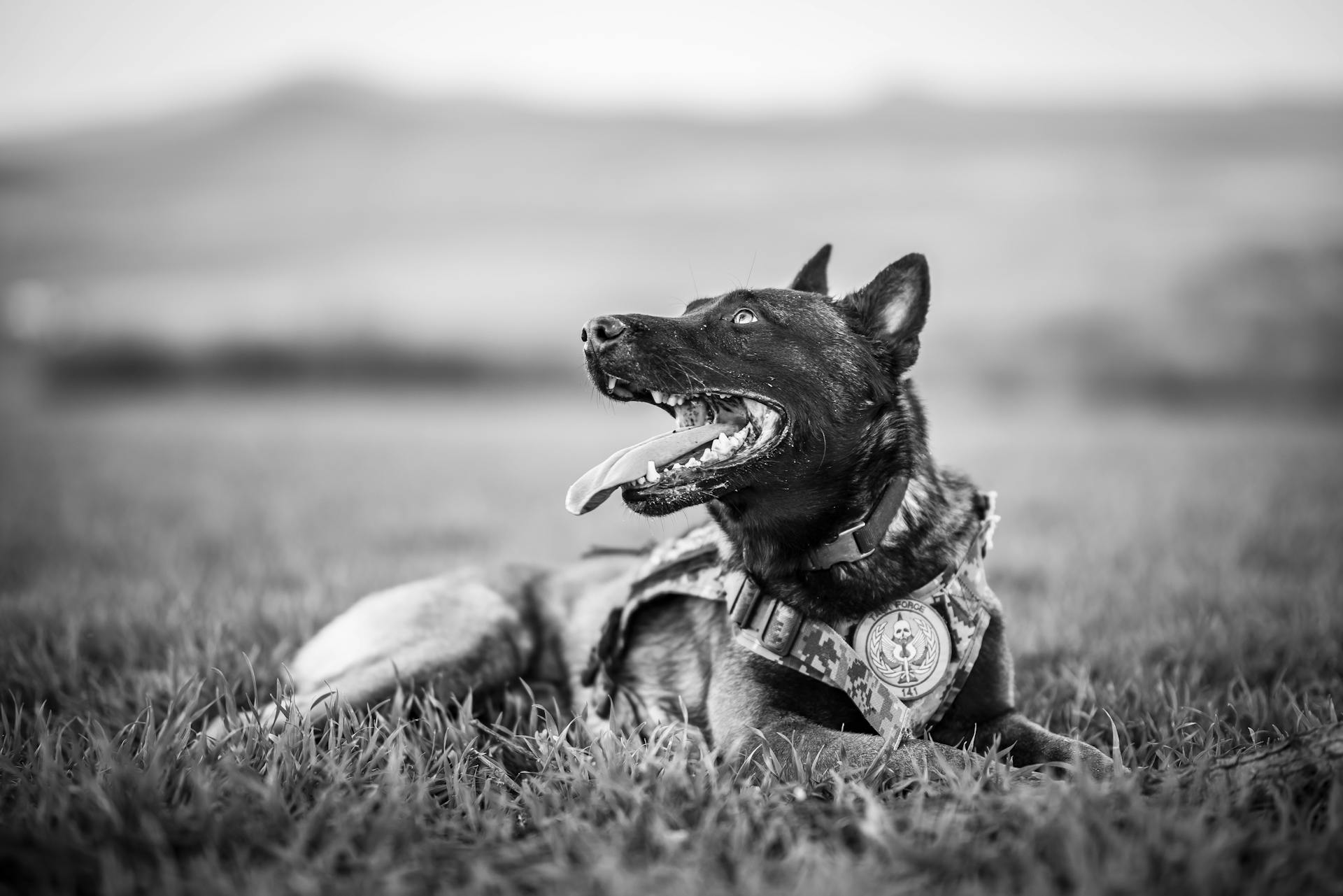
Belgian Shepherds, specifically the Malinois, are known for their agility and athleticism. This makes them well-suited for tasks such as tracking and apprehension.
For more insights, see: Police Dogs at Work
Dual Purpose K-9
A Dual Purpose K-9 is trained in a wide range of skills, including dog obedience and practical dog agility. This allows them to navigate complex environments with ease.
These dogs are also trained in criminal apprehension, which enables them to help apprehend suspects in high-pressure situations. Their training in handler protection ensures the safety of their handlers in the line of duty.

Area search and tactical building search are also key components of their training, allowing them to locate and identify potential threats. Their skills in felony vehicle stops help to keep roads safe from high-risk drivers.
Scent discrimination trailing and drug detection are also crucial skills for Dual Purpose K-9s, enabling them to track and identify substances. Explosives detection rounds out their impressive skillset, making them invaluable assets in law enforcement and security.
For another approach, see: Sar Dog Training
Patrol & Trailing
Patrol & Trailing is a crucial aspect of a K-9's training, and it's impressive to see what they're capable of. This K-9 is trained in dog obedience, a fundamental skill that allows them to respond to commands and stay focused in high-pressure situations.
Dog agility training is also a key component, enabling the K-9 to navigate through tight spaces and obstacles with ease. I've seen videos of K-9s running obstacle courses and it's truly remarkable.
Apprehension is a critical skill, allowing the K-9 to safely and effectively apprehend suspects. Handler protection is also a vital part of their training, ensuring the K-9 can defend their handler if necessary.
See what others are reading: Police K9 Handler
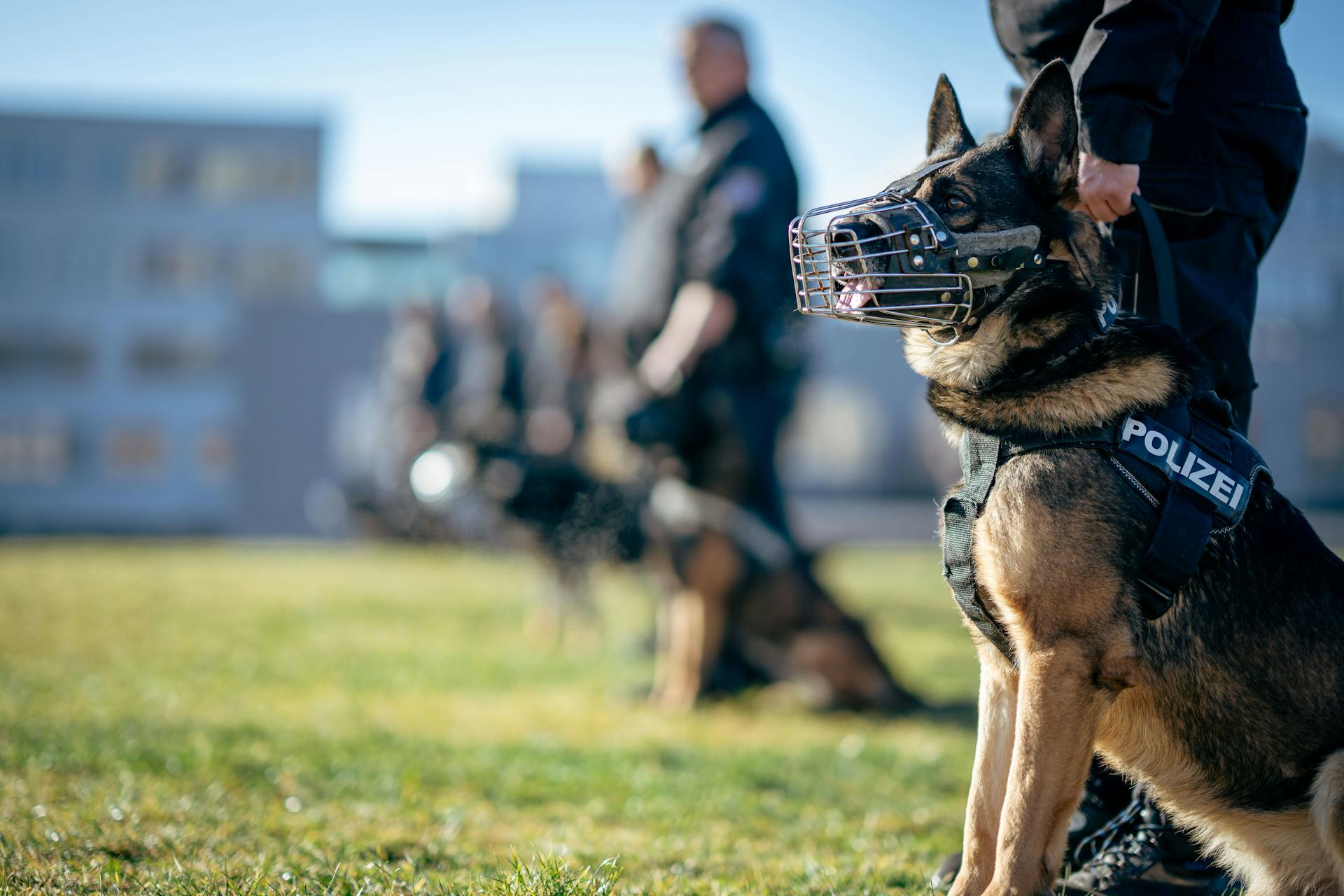
Tactical building searches are a specialized skill, where the K-9 is trained to search buildings and rooms for suspects or evidence. I've heard from law enforcement officers that this skill is invaluable in certain situations.
Felony vehicle stops require the K-9 to be trained to search vehicles and identify potential suspects. Area and wooded searches are also part of their training, allowing them to track scents in various environments.
Scent discrimination trailing is a highly specialized skill, where the K-9 can follow specific scents and track suspects. It's fascinating to learn about the complexities of scent work and how K-9s are trained to do it.
Recruitment and Adoption
The recruitment process for K9 police puppies involves selecting puppies from reputable breeders and trainers who specialize in breeding and training police dogs. These breeders and trainers work closely with law enforcement agencies to identify puppies with the right temperament and aptitude for police work.
Puppies are typically adopted by law enforcement agencies between 8 and 12 weeks old, after they have undergone initial training and socialization. This early adoption allows the puppies to bond with their handlers and begin their training as police dogs.
Suggestion: Police K9 Case Law
Police Recruits New Puppies
The Taiwan Police K-9 units have welcomed six adorable new puppies, Lucky Star, Schumann, Feida, Brother, AJ, and Full Moon, who will eventually join the NPA’s K-9 Anti Bomb And Drug force and Blood Detection units.
The puppies' mom, Yellow, is already a working dog in the K-9 unit, dealing with anti-drug and anti-bomb issues.
The puppies' dad, Leader, is also a working dog, indicating that being a police dog runs in their family.
For now, the 1-month-old puppies are more interested in sleeping and eating than in special dog training, fighting crimes, and saving the world.
Sometimes, Lucky Star would fall asleep while eating and then wake up suddenly to continue eating, a scene that's hard to resist.
The NPA hopes that the puppies will follow in their mom's footsteps and become successful service dogs, passing through service dog training successfully and entering the force.
Suggestion: Police Service Dogs
Shelter Dog Turns Police Officer
Rock, a German Shepherd, was rescued from Fort Worth's animal shelter and became a police K-9 officer.
He was trained to detect narcotics, including heroin, methamphetamine, crack cocaine, powder cocaine, and marijuana.
Rock's handler, Fort Worth Police Sgt. Charles Hubbard, said the 18-month-old dog has already helped with several arrests.
The Fort Worth Police Department has six K-9s, and three of them are shelter rescues.
Rock was free to the department because he was already in the Fort Worth system.
Many people don't realize there are high-quality dogs in shelters that have been given up on or abandoned.
The department plans to continue looking at shelters first for new K-9s because they think there are many good dogs waiting to be adopted.
Rock's sister was also rescued by the department and will work in a local school district.
Frequently Asked Questions
How much does a K9 dog cost?
A K9 dog can cost upwards of $15,000 to $20,000, including training, to become a valuable asset to law enforcement. This significant investment is a crucial part of providing police K9s with the skills and protection they need to stay safe on the job.
What breed is police K9?
Police K9s are typically Belgian Malinois or German Shepherds, with the German Shepherd being the most popular breed.
Can you pet a police K9?
No, it's not recommended to pet a police K9 without permission from the handler, as they are trained for protection and apprehension
Featured Images: pexels.com