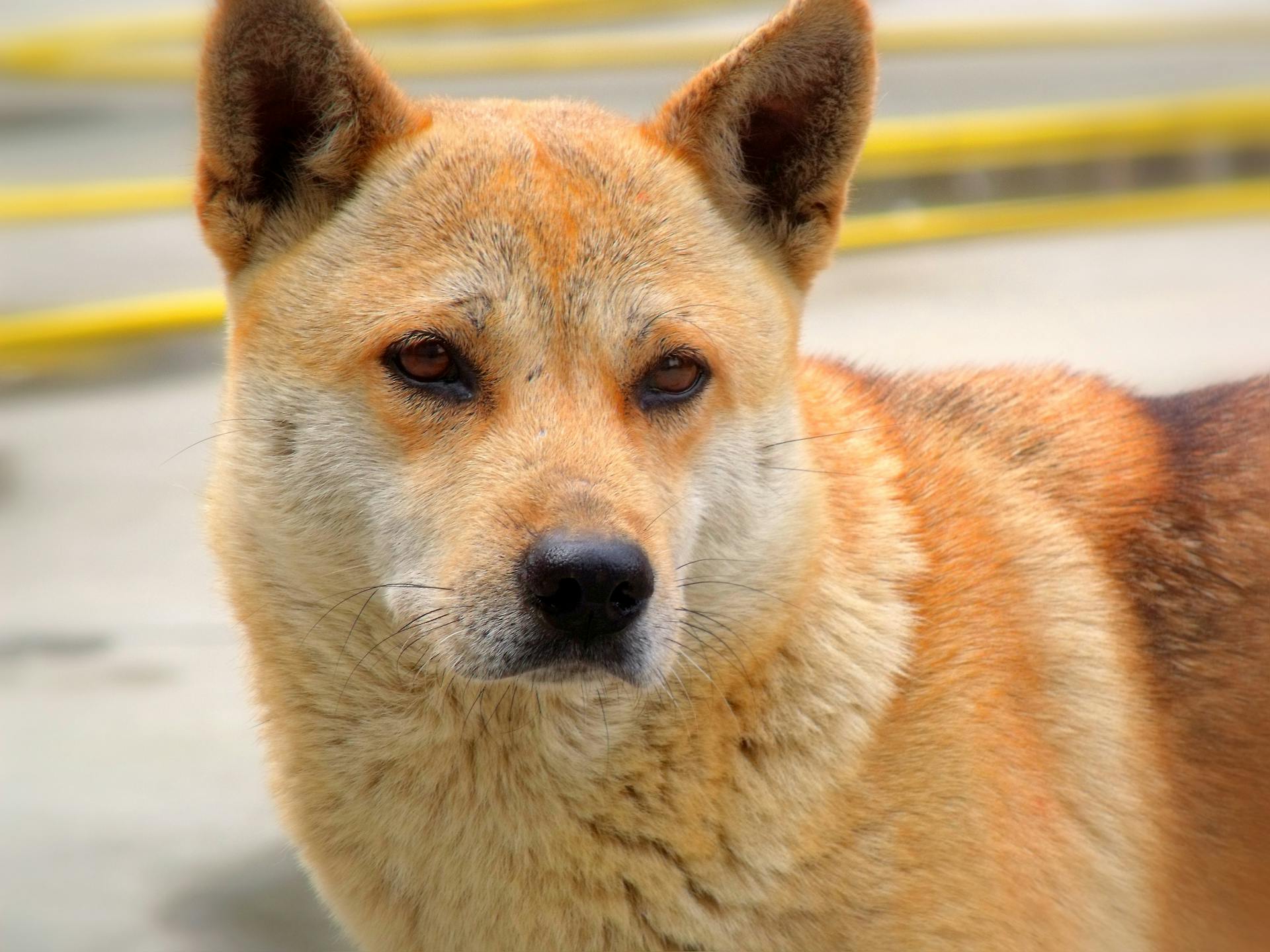
The Jindo is an ancient breed that originated in Korea over 2,000 years ago. They were bred to hunt and guard, and their distinctive appearance reflects their original purpose.
Their distinctive black and white coat is a result of their unique genetic makeup, which is also responsible for their pointed ears and alert expression.
Jindos are known for their intelligence and loyalty, making them a popular choice as family pets and working dogs.
Physical Characteristics
The Jindo dog is a unique breed with some distinctive physical characteristics. Their high-set tails curve like a sickle, and when down, the tip should touch the hocks.
Jindos are double-coated spitz-type dogs with a keen and alert appearance that gives the impression of intelligence, strength, loyalty, and agility. Their forward-pointing upright ears add to their alert and intelligent look.
The breed comes in two main body types: the Tonggol or Gyeopgae, which is more muscular and stocky, and the Hudu or Hotgae, which is more slender. The third body type, Gakgol, is a combination of the two.
Discover more: Dog Body Language with Other Dogs
A squarely built Jindo has a moderately deep chest that reaches to or just above the elbow. The back is strong and straight, and the loin is well-muscled, taut, and lean.
Male Jindos typically stand between 19½ and 21 inches tall at the withers, while females stand between 18½ and 20 inches tall. Their weight should be in proportion to their height, ranging from 35 to 60 pounds.
Here are the typical height and weight ranges for Jindos:
Coat and Grooming
The Jindo dog's coat is a remarkable feature that sets it apart from other breeds. They have a thick double coat that helps repel dirt and water, keeping them from developing a strong "dog" smell.
Their double coat consists of a soft, lightly colored undercoat and stiff hair on their outer coats. This unique combination helps keep them clean and requires regular grooming to maintain their health and appearance.
Jindos are naturally clean dogs and don't need to be bathed frequently, thanks to their self-cleaning coats. However, they do shed profusely, especially in hot weather.
Here are the six recognized colors of the Jindo dog breed:
- White (Baekgu/백구)
- Fawn (Hwanggu/황구)
- Wolf Grey (Jaegu/재구)
- Black and tan (Naenunbagi/네눈박이 or Black-tan/블랙탄)
- Brindle (hogu/호구)
- Black (heukgu/흑구)
Regular grooming is essential to remove shed fur and keep their coat healthy. Weekly brushings are recommended, and extra grooming during seasonal shedding periods will help keep them looking their best.
For another approach, see: Dog Grooming for Anxious Dogs
Health and Care
The Korean Jindo is generally a healthy breed with a lifespan of 14-15 years. They are prone to a few health issues, including hypothyroidism, which can cause hair loss, weight gain, and sluggishness.
Jindos are intelligent and active dogs that require regular exercise and mental stimulation. They need to be taken on long walks and engaged in activities that challenge their minds, such as obedience training and puzzle toys.
To keep your Jindo healthy and happy, it's essential to establish a routine care schedule. This includes brushing their teeth daily to prevent periodontal disease, brushing their coat weekly, and cleaning their ears regularly.
Here are some essential health checks to perform on your Jindo:
- Watch for signs of hip dysplasia, such as lameness in the hind legs or difficulty getting up from lying down.
- Catch any signs of skin problems, such as scaling, cracking, or sores on the nose, ears, or inside the mouth.
- Keep an eye out for anxiety or stress, which can lead to destructive behavior or wandering off.
By following these simple health checks and providing regular care and attention, you can help your Jindo live a long, happy, and healthy life.
Health

The Korean Jindo is generally a healthy breed with a lifespan of 14-15 years. However, like all dogs, they can be prone to certain health issues.
One of the most common health problems in Jindos is hypothyroidism, a condition that affects the thyroid gland and can cause hair loss, a dull coat, and weight gain. It's relatively inexpensive and simple to treat with daily oral medication.
Jindos are also prone to nose problems, including loss of nose pigment, scaling and cracking of the nose skin, and sores on the nose, ears, or inside the mouth. These issues can worsen when exposed to sunlight.
Hip dysplasia is another inherited disease that affects Jindos, causing the hip joints to form improperly and leading to arthritis. It's common in the breed and can be treated with surgery or medication.
To keep your Jindo healthy, it's essential to provide regular care and attention. This includes brushing their teeth daily, brushing their coat regularly, and cleaning their ears weekly. You should also supervise them closely to prevent them from getting into trouble.
Here are some common health issues to watch out for in Jindos:
- Loss of nose pigment
- Scaling and cracking of nose skin
- Sores on the nose, ears, or inside the mouth
- Sores that worsen when exposed to sunlight
- Hip dysplasia
- Hypothyroidism
Remember, regular veterinary check-ups and a healthy lifestyle can help prevent many of these health issues.
Rescue Groups
If you're considering adopting a Korean Jindo, it's essential to understand their independent nature and strong instincts. This may require patience and training for successful integration into a new home.
Rescue groups play a vital role in providing a second chance at life to Korean Jindos in need. Organizations like Jindo Love Rescue, Treasured K9s, Two Dog Farms, and Free Korean Dogs work tirelessly to care for and rehome these dogs.
By adopting from a rescue group, you'll not only be giving a loving home to a deserving dog but also contributing to the preservation of the breed.
Explore further: Rescue Dogs as Service Dogs
Behavior
Jindos are highly intelligent dogs that can be prone to anxiety, especially separation anxiety. They need regular interaction and exercise to prevent boredom and unwanted behaviors.
Leaving a Jindo alone for long periods can lead to anxiety, so it's essential to work with a veterinarian to learn how to help your dog cope with social anxiety. This might include training and providing mental stimulation.
Jindos are naturally wary of strangers, which means they require thoughtful and patient pet parents who can help them prepare for potentially stressful situations. This includes introducing them to new people, pets, and environments.
To prevent unwanted behaviors, Jindos need consistent positive training that uses rewards instead of punishment. They learn best with patient, gentle, and reward-based training.
Here are some key considerations for Jindo owners:
Jindos are fiercely loyal and intelligent dogs that require attention, exercise, and mental stimulation to thrive. With the right training and care, they can become confident and gentle companions.
Feeding
Jindos have digestive tracks optimized for a carnivorous diet, so standard commercial dog food may not be the best choice for this breed.
A healthy option for Jindos is home-cooked meals with natural ingredients and special supplements, or all-natural, high-quality, commercially produced foods.
The quality of dog food makes a difference, and better dog food will go further in nourishing your dog and require less quantity.
Every dog is unique, so it's best to work with your veterinarian to develop a feeding plan that's nutritionally complete and balanced for your pup's age, weight, and health.
Most adult Jindo dogs should eat two meals a day: once in the morning and again in the evening.
Jindo puppies have a higher metabolism than adult dogs, so it's generally best to add a midday feeding for a total of three meals.
If your Jindo is eating a complete and balanced diet of dog food approved by the AAFCO, they shouldn’t need anything extra.
However, nutritional supplements and even prescription diets are sometimes used to treat or prevent certain health conditions, so talk to your veterinary team before adding anything new to your Jindo’s diet.
On a similar theme: What Is the Best Large Breed Dog Food
Breed Information
The Korean Jindo is a unique breed that originated on Jindo Island in South Korea. They were bred to hunt small and large animals.
One of the most notable characteristics of the Jindo is their fierce loyalty and devotion to family. They're known to travel hundreds of miles to return to former owners and even mourn an owner's death.
Here are some key breed characteristics to keep in mind:
- Devoted, loyal, and protective
- Good with children
- Lovable, playful companion
- Quiet—not much of a barker
- Excellent watchdog
- Energetic, active, and athletic
The Jindo is a natural treasure in South Korea, known for their intelligence and protective nature. They require a strong leader and ample exercise to thrive.
Unique Breed
The Korean Jindo is a unique breed that's sure to capture your heart. They're known for their fierce loyalty and devotion to family, which can sometimes be a bit intimidating.
Their origins date back to Jindo Island in South Korea, where they were bred to hunt small and large animals. This breed is recognized as a natural treasure in South Korea.
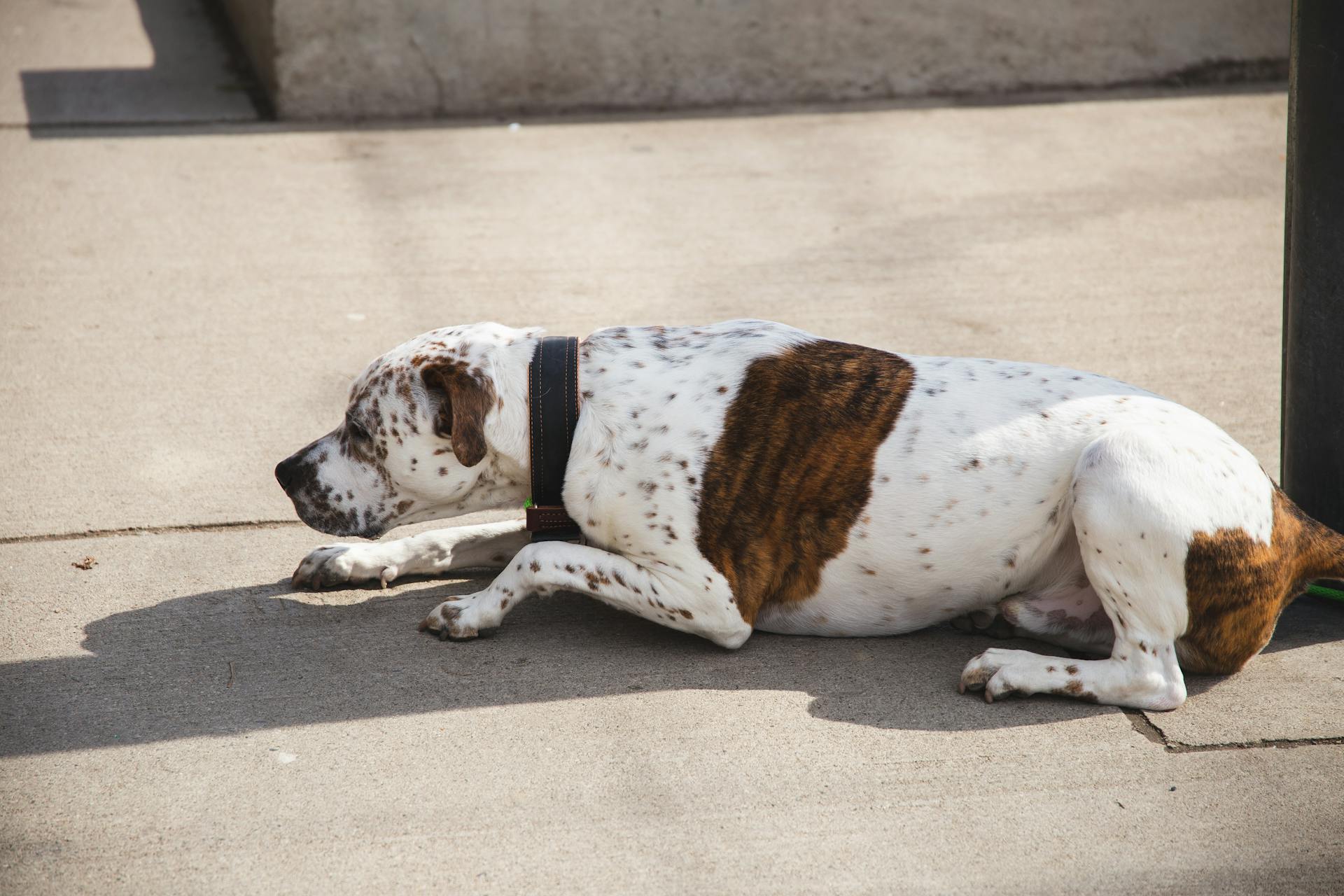
One of the most notable characteristics of the Jindo is their tendency to travel long distances to return to their former owners. They've even been known to mourn an owner's death.
Jindos are not overly demonstrative of affection, but they do demand frequent interaction. They're also extremely easy to housebreak, thanks to their fastidious cleanliness and lack of doggie odor.
Here are some key characteristics to keep in mind when considering a Jindo as a pet:
- Devoted, loyal, and protective
- Good with children
- Lovable, playful companion
- Quiet—not much of a barker
- Excellent watchdog
- Energetic, active, and athletic
However, they do require regular exercise and space to run, or they might get a bit restless. They can also be territorial with larger dogs, especially those of the same sex.
Jindos are intelligent and active, which can sometimes lead to a tendency toward dominance. But with the right training and leadership, they can be gentle and faithful family companions.
Breed Information
The Korean Jindo is a unique breed that originated on Jindo Island in South Korea. They are known for their fierce loyalty and devotion to family.
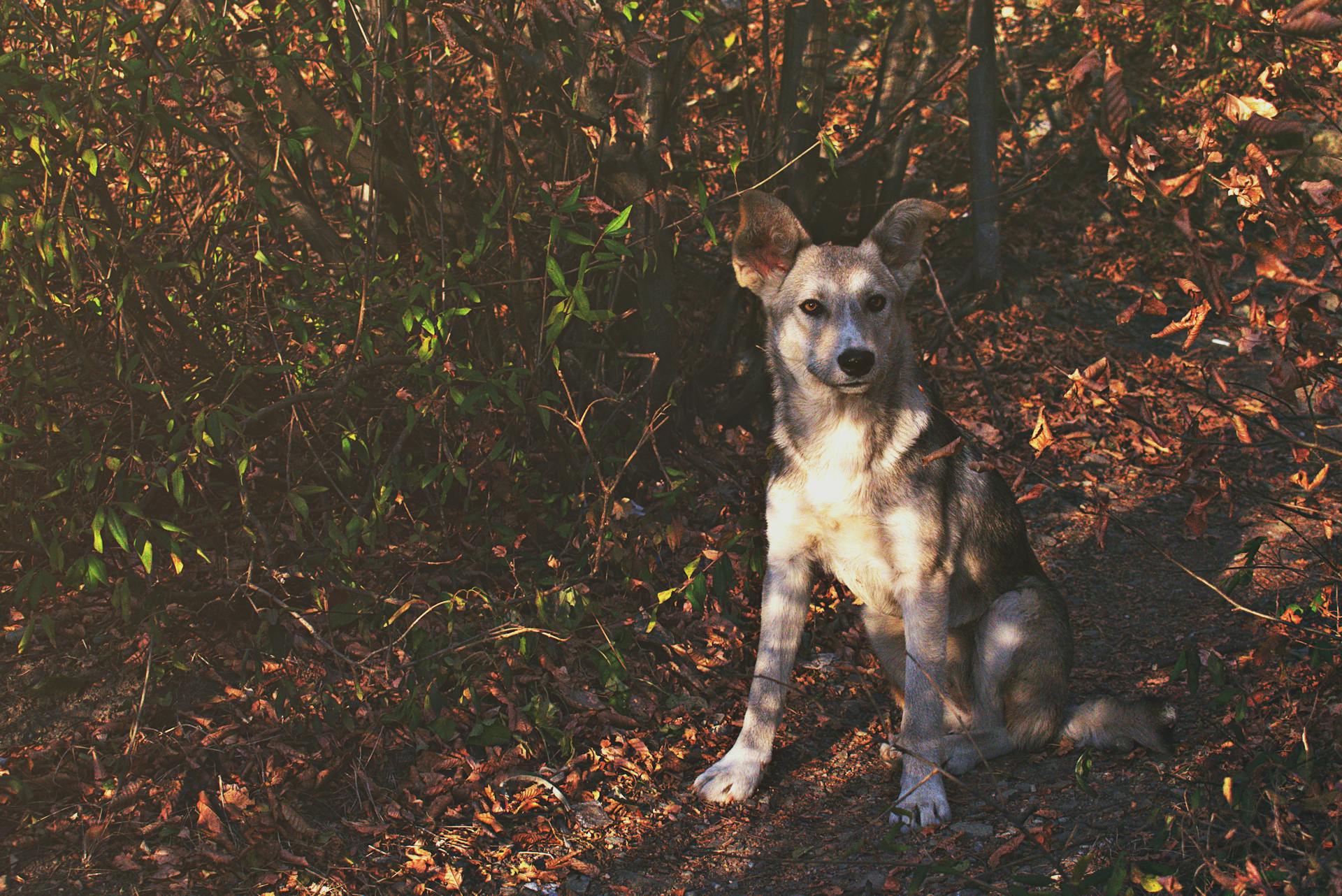
Their ancestry dates back to a common ancestor around 900 years ago with the Donggyeongi dog. This shared ancestry is reflected in their mitochondrial DNA genome.
The Jindo has been bred to hunt small and large animals, including boar and deer. This hunting ability makes them excellent companions for hunters.
Here are some key characteristics of the Korean Jindo breed:
- Devoted, loyal, and protective
- Good with children
- Lovable, playful companion
- Quiet—not much of a barker
- Excellent watchdog
- Energetic, active, and athletic
However, they do require regular exercise and mental stimulation to prevent boredom. They also have a tendency to escape and roam if not properly secured.
The Jindo is a fastidiously clean breed with no doggie odor and is extremely easy to housebreak. They are also known for their innate fear of running water and hatred of getting wet.
Despite their loyalty, the Jindo's strong hunting instincts can sometimes interfere with their work as search and rescue dogs. This is due to their tendency to follow their instincts and track prey instead of following commands.
Kennel Club Recognition
The Jindo is a well-recognized breed internationally, with the Fédération Cynologique Internationale and the United Kennel Club giving it full recognition.
The American Kennel Club has the Jindo under its Foundation Stock Service, which is the first step towards achieving full recognition.
Internationally, the Jindo is recognized by the Fédération Cynologique Internationale and the United Kennel Club, giving it a strong global presence.
In the UK, the Kennel Club recognizes the Jindo in its Import category, acknowledging its unique characteristics.
In its country of origin, South Korea, the Jindo is recognized by the Korean Kennel Federation and the Korean Kennel Club, and local Jindo clubs hold seasonal specialty shows.
Temperament and Loyalty
Jindo dogs are alert, courageous, and loyal companions.
Their loyalty is unmatched, as seen in the story of Baekgu, a Jindo who traveled 300 km to return to her original owner after being sold.
Jindos are intelligent and active dogs that need regular exercise and interaction.
They can be wary of strangers, but with proper socialization, they can become gentle and loving companions.
A Jindo's strong pack mentality makes them easy to train, but they can be stubborn in the early stages of training and require patience.
Their loyalty disposes them to be furiously protective, which can present itself as aggression in poorly socialized dogs.
Jindos are master escape artists, looking for ways to break free of their enclosures and defend their territories from all perceived intruders.
Their strong hind legs enable them to jump high, so fencing must be at least 6 feet high to keep them contained.
With proper training and socialization, Jindos can excel as guard dogs, leveraging their loyalty and protective instincts.
Their intelligence and loyalty make them quick to learn even the most complicated tricks and agility sequences.
However, their strong will and desire to control their territory mean they don't make the best family dogs, especially in homes with many different people coming and going.
For more insights, see: Strongest Dog Names
Exercise
Exercise is crucial for Jindo dogs, and they need regular physical activity to stay happy and healthy. They have a high energy level and will find ways to satisfy their need to move if they don't get enough exercise.
Jindos prefer high-intensity activities, such as hiking, jogging, and long walks. They also enjoy agility and other dog sports, which can be a great way to provide them with physical and mental stimulation.
If you don't provide adequate exercise, your Jindo may escape or get into trouble. To prevent this, make sure to use a strong leash and harness on walks, and be prepared to restrain your dog if they see other dogs.
Some owners use Jindos as sled dogs, and they welcome opportunities to work, especially in cold weather. Mental stimulation is also important, and you can provide this through tricks, games, or obedience training.
Here are some high-intensity activities that Jindos enjoy:
- Hiking
- Jogging
- Long walks
- Agility and other dog sports
- Lure coursing
- Hunting
Remember to provide your Jindo with regular exercise and mental stimulation to keep them happy and healthy.
Unique Aspects
The Korean Jindo is a unique breed with some fascinating characteristics. They are known for their fierce loyalty and devotion to family.
Their independent nature can sometimes make them standoffish toward strangers. This is not necessarily a bad thing, as it makes them excellent watchdogs.
One of the most interesting things about Jindos is their innate fear of running water. Yes, you read that right - they don't like getting wet! This can make bath time a bit of a challenge.
Jindos are also notorious for their tendency to escape, wander, and roam if they don't get enough exercise and mental stimulation. This is why they require vigorous, frequent exercise and space to run.
Here are some key characteristics of the Jindo breed:
Overall, the Jindo's unique personality and characteristics make them a one-of-a-kind breed that's definitely worth getting to know.
Frequently Asked Questions
Are Jindo dogs cuddly?
Jindos are not typically cuddly dogs, but they form strong bonds with a few close family members and are loyal companions. They may not be as affectionate as other breeds, but they have a unique way of showing love and loyalty.
Can you get a Jindo in America?
Yes, you can adopt a Jindo dog in America through our partner Jindo Love Rescue, which places rescued dogs from the meat trade in loving homes across the U.S. and Canada.
Is a Korean Jindo rare?
Yes, the Korean Jindo is a rare breed, with a limited presence outside of Korea due to its protected status.
How much does a Korean Jindo dog cost?
A Korean Jindo dog typically costs between $500 to $1,500 from a reputable breeder, with prices influenced by the puppy's lineage and parent health. Learn more about the factors that affect the price and what to expect from a reputable breeder.
Do Jindo dogs smell?
No, Jindo dogs are known for having little to no dog odor. Their fastidious nature makes them a great choice for those who value cleanliness.
Featured Images: pexels.com