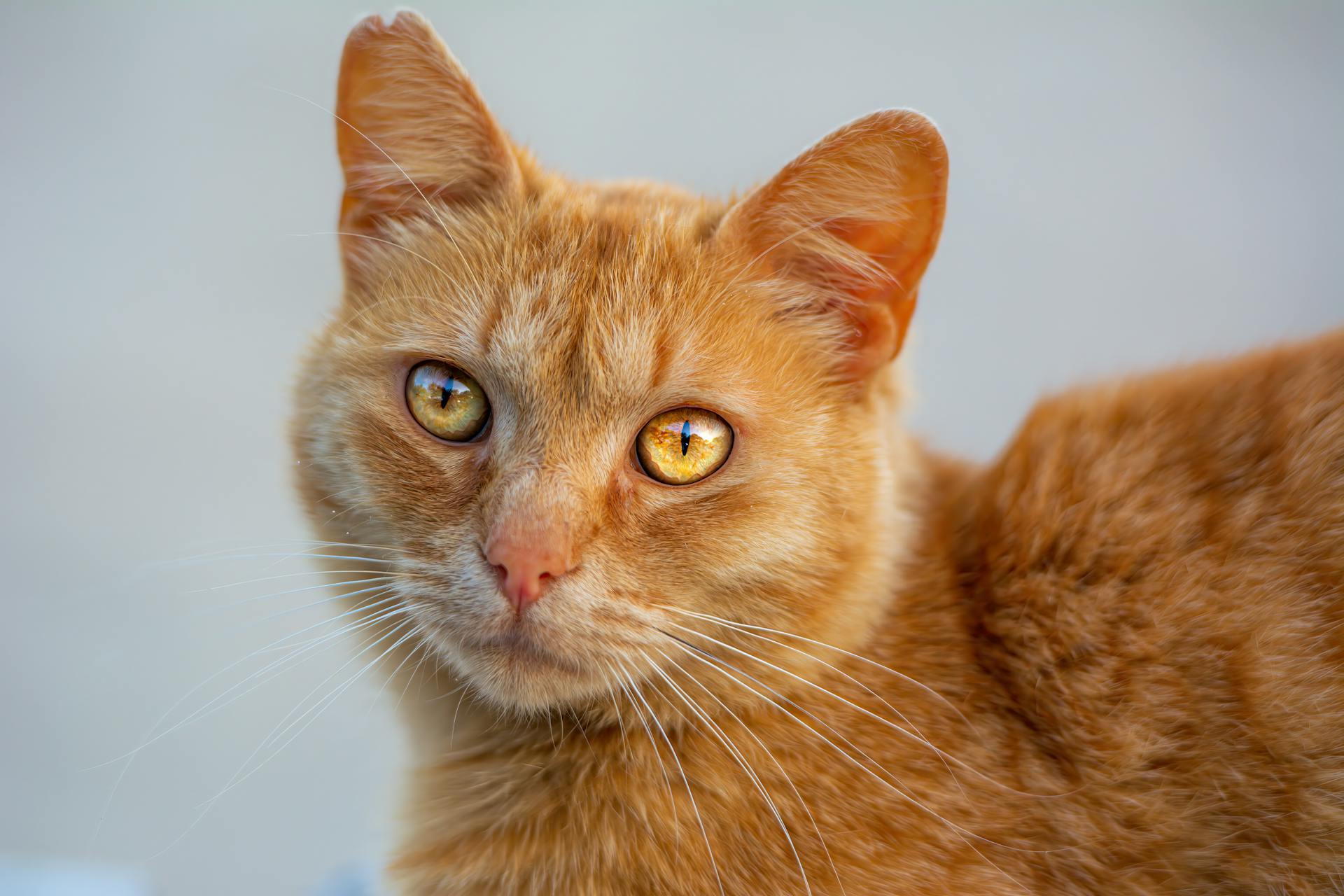
The Japanese Bobtail Cat is a unique and charming breed that's sure to capture your heart.
They have a short, easy-to-maintain coat that requires minimal grooming.
This adorable cat breed is known for its short tail, which is a result of a natural genetic mutation.
Japanese Bobtails are generally a healthy breed, but like all cats, they can be prone to certain health issues, such as hypertrophic cardiomyopathy and patellar luxation.
With proper care and attention, Japanese Bobtails can live up to 15 years or more, making them a long-term companion.
Their intelligence and playful nature make them a joy to interact with, and they thrive on attention and affection.
Worth a look: Best Cat Breed for Mouse Hunting
History
The Japanese Bobtail cat breed has a rich and fascinating history that spans over a thousand years. The breed appears in artwork and manuscripts dating back to ancient times.
It's believed that Buddhist monks brought Japanese Bobtails to their temples to protect their rice paper scrolls from rats. This theory is supported by the fact that the breed was later used to rid the city streets of rodents that threatened the silk industry in the 1600s.
The Japanese Bobtail is a symbol of good luck in Japan and is thought to bring prosperity to those who own one. Locals even use artwork portraying the breed to secure good fortune.
The breed's popularity in the United States began in the 1960s, when a woman named Elizabeth Freret imported the first Japanese Bobtails in 1968. These three cats became the foundation stock for the American breeding program.
The Japanese Bobtail was first recognized by the Cat Fanciers Association (CFA) in 1976, with the Shorthair variation receiving championship status. The Longhair variation followed suit in 1993.
The breed's origins are shrouded in mystery, with some experts believing it originated in China or Korea at least a thousand years ago. The Emperor of China may have even gifted these bobtail cats to the Emperor of Japan in the 7th century.
Suggestion: Cats in Japan
Physical Characteristics
The Japanese Bobtail is a unique breed with a one-of-a-kind tail that's like a fingerprint - no two are the same.
Their tail is a combination of curves, angles, or kinks and is clearly visible, but it doesn't extend more than three inches from the tailbone.
The Japanese Bobtail's head is triangular, and their ears are upright and set wide apart, giving them an alert appearance.
Their eyes are oval-shaped and their legs are long and slender, but not dainty, thanks to their well-developed muscles.
The hind legs are noticeably longer than their front legs, and their hocks are deeply angled.
Their paws are oval-shaped, with five toes on their front paws and four on the back.
The Japanese Bobtail comes in both shorthaired and longhaired varieties, with a soft and silky texture and no noticeable undercoat.
Their hair is longest on the tail and britches, and ear and toe tufts are common.
This breed comes in a wide array of colors, including solid, tabby, bi-color, and tri-color, with dramatic markings and contrasting colors being hallmarks of the Japanese Bobtail.
Take a look at this: Cat Breeds with Color Points
Genetics and Traits
The Japanese Bobtail breed is one of the most genetically diverse of pedigree breeds.
Recent studies have shown that Japanese Bobtails tend to have smaller litters with kittens being proportionally larger at birth and developing at a faster rate, which is a notable characteristic.
Kitten mortality rates are reported to be comparatively low in Japanese Bobtail litters.
Their unique physical traits are a defining feature of the breed, starting with a distinctive pompom tail that is made of a combination of curves, angles, or kinks.
The tail is clearly visible but doesn't extend more than three inches from the tailbone.
Genetics
Genetics plays a significant role in determining the characteristics of a breed. The Japanese Bobtail breed is one of the most genetically diverse of pedigree breeds.
Research has shown that Japanese Bobtails tend to have smaller litters. This can be beneficial for breeders who want to ensure the health and well-being of their kittens.
Kittens born to Japanese Bobtail parents are proportionally larger at birth. This is likely due to the breed's unique genetic makeup.
Japanese Bobtails develop at a faster rate than other breeds, which can be an advantage for breeders who want to see their kittens grow and thrive quickly.
Traits
The Japanese Bobtail's unique pompom tail is a result of a dominant gene mutation, making each tail a one-of-a-kind combination of curves, angles, or kinks.
This distinctive feature is clearly visible and doesn't extend more than three inches from the tailbone.
The Bobtail's head shape is triangular, a characteristic that sets them apart from other breeds.
Their ears are always upright, a trait that adds to their endearing appearance.
The Bobtail's eyes are oval-shaped, a feature that complements their unique facial structure.
Their legs are slender but muscular, allowing for a graceful and agile gait.
Broaden your view: Manx Cat Tail Types
Odd-Eyed Specimens
Odd-eyed specimens are a rare occurrence in the Japanese Bobtail breed, especially in predominantly white specimens.
This breed has a higher likelihood of having odd-eyed cats compared to most others, with the notable exception of the Turkish Van.
In Japanese Bobtails, one iris is often blue, referred to as "silver" in Japanese breeding terms, while the other iris is yellow, referred to as "gold".
Temperament and Personality
Japanese Bobtails are outgoing, happy cats that thrive on human companionship and want to be at the center of all family activities. They commonly follow their people around the house, conversing with them through melodious chirps and meows.
Japanese Bobtails are energetic and have natural athletic abilities that lend themselves to feline agility and obstacle courses. They have an endless desire to play and enjoy games of fetch and tag.
Japanese Bobtails are not typically lap cats, as sitting still for long periods is not their style - there's just too much to do and explore. They are a social breed that wants to spend time with you whenever possible, which means cuddling on the couch or watching you cook from atop the counter.
Temperament and Personality
Japanese Bobtails are outgoing and happy cats, thriving on human companionship and wanting to be at the center of all family activities.
They're energetic and have natural athletic abilities, making them perfect for feline agility and obstacle courses. They love to play games of fetch and tag, and their inquisitive nature often leads them to investigate every nook and cranny in the house.

This social breed wants to spend time with you whenever possible, whether it's cuddling on the couch or watching you cook from atop the counter. They're not too happy when left alone and might get a bit destructive.
Japanese Bobtails are super-intelligent, knowing how to cause mischief to get attention, and they'll quickly learn how to open cabinets and drawers. They'll also become aware of which items will make the loudest crash when pushed to the floor.
They're adaptable and hardy, warming up to people fast, including strangers, and enjoying meeting other animals. They'll even greet guests at the door, happy to see a new face.
Their talkative nature is quite entertaining, with many breeders calling their wide range of meows "singing". They'll use their chirp-like voices to get your attention, so be prepared to spend some time hearing about their day.
Remains Humble
Despite their fancy history, Japanese Bobtail cats weren't afraid to get their paws dirty. They hunted rodents and destroyed silkworms in the 15th century.
Japanese Bobtails quickly became working cats in Japan due to their hardiness and adaptability. They were set free by the government to protect the silk industry.
The Japanese Bobtail's humble nature is a testament to their ability to thrive in any situation. They've been able to adapt to living on the streets and as working cats.
The Cat Fanciers' Association finally granted the Japanese Bobtail championship status in 1976, but their humble roots remain a part of their history.
Check this out: Working Cats Program
Care and Grooming
Japanese Bobtails require regular grooming to stay healthy and happy. They need weekly brushing to remove dirt and loose hair, with more frequent brushing during heavier shedding periods in the spring and fall.
Providing a scratching post is essential to help your cat maintain their nail health. Long nails can snag on things and become torn or damaged, so it's best to trim them monthly to prevent this.
To support your Japanese Bobtail's overall health, brush their teeth daily and schedule visits with your veterinarian for professional dental cleanings and exams. This will help prevent dental issues and keep your cat's mouth healthy and clean.
Don't forget to check your cat's ears for wax buildup or debris and clean them as needed. You can use a vet-approved moist wipe to gently wipe away any dirt or wax.
Broaden your view: Cat Health
Care

Japanese Bobtails need access to fresh, clean water around the clock.
You should brush your cat's coat regularly, probably once a week, to ensure a sleek and healthy coat and eliminate dead fur that leads to excess shedding.
Providing a scratching post will allow your cat to do some nail maintenance themselves, thanks to their instinct to scratch.
Japanese Bobtails require monthly nail trimming to prevent their nails from getting too long and snagging on something.
Brushing your cat's teeth daily and scheduling visits with your veterinarian for professional dental cleanings and exams will support their overall health.
Always check your cat's ears for dirt and wax buildup and gently wipe away anything you see with a vet-approved moist wipe.
Don't let your Japanese Bobtail outside, as an indoor lifestyle protects them from feral cats, wild animals, dogs, and traffic.
Cons
Japanese Bobtails can be a handful when it comes to grooming, requiring regular brushing to prevent matting and tangling of their fur.
Their fur is medium-length and requires daily brushing to prevent matting and tangling.
Japanese Bobtails are not a lap cat, so be prepared to spend time with them on the floor or on a perch.
They are not hypoallergenic, so if you or a family member has allergies, a Japanese Bobtail may not be the best choice.
Here are some key cons to consider:
- Rare, hard-to-find
- Not hypoallergenic
- Not a lap cat
Health and Lifespan
Japanese Bobtails are known to live up to 15 years with proper treatment and regular vet visits.
They're considered strong and healthy cats, but like any domestic cat, they can be prone to common diseases.
Upper respiratory infections can easily spread to other cats in the household, so it's essential to get your cat treated if you suspect any infections of the ears, nose, throat, or sinuses.
Health Problems
Upper respiratory infections are a common problem that can affect your Japanese Bobtail, as well as other cats in your home. Symptoms to look out for include sneezing, congestion, coughing, open-mouthed breathing, and fever.
Despite being disease-resistant, Japanese Bobtails can still get sick.
Lifespan

The Japanese Bobtail is a hardy kitty that can live up to 15 years with proper treatment and regular vet visits.
With a lifespan of up to 15 years, you can expect a long and happy life with your Japanese Bobtail. Regular vet visits will help keep them healthy and thriving.
This hardy kitty can live up to 15 years with proper treatment and regular vet visits.
Buying and Owning
Buying a Japanese Bobtail cat can be a fun and rewarding experience. They are relatively easy to find, with a large number of breeders and rescues available.
Their short tails make them a great fit for apartment living, as they require less space to move around.
Japanese Bobtail cats are generally healthy, but like all breeds, they can be prone to certain health issues, such as hypertrophic cardiomyopathy and patellar luxation.
Adopt or Buy
If you're set on bringing home a Japanese bobtail, be prepared for a challenge. Adopting or buying one can be tough due to the breed's rarity in the US.
Breeders are still relatively rare, and these cats have very small litters, usually just two to four kittens. This means you might have to wait on a waiting list.
You can start your search with online resources like the Cat Fanciers' Association Breeder Listing and Tailless Cat Rescue. These can help you find a breeder or a Japanese bobtail in need of a forever home.
Expect to pay upwards of $1,000 for a Japanese bobtail, depending on coat color and markings.
Related reading: Japanese Spaniel Breeders
Pros
Buying a Japanese Bobtail can be a wonderful decision, and here's why:
They're friendly and adaptable, making them a great fit for many different living situations.
Their cute and petite appearance, paired with their fluffy "bunny" tail, is sure to win your heart.
As a relatively healthy breed, you can expect your Japanese Bobtail to live a long and happy life with proper care.
Here are some key pros to consider:
- Friendly and adaptable
- Cute and petite with a fluffy "bunny" tail
- Very healthy breed
More About This
The Japanese Bobtail cat is a unique breed with a distinctive short tail. They have a rich history in Japanese culture, dating back to the 1600s.
These cats are highly intelligent and active, requiring regular exercise and mental stimulation to prevent boredom and obesity. They are also known for their playful and affectionate personalities.
Japanese Bobtails are a relatively small breed, weighing between 8-12 pounds and standing about 10-12 inches tall. Their short coats require minimal grooming, making them a great choice for busy owners.
Their large ears and almond-shaped eyes give them a unique and endearing appearance. They come in a variety of colors and patterns, including solid, tabby, and calico.
Frequently Asked Questions
Do Japanese Bobtail cats shed a lot?
Japanese Bobtail cats are known for their low-shedding coat, which is soft and silky with no undercoat. This makes them a great choice for those with allergies or who prefer less cat hair.
Are Japanese Bobtail cats cuddly?
Yes, Japanese Bobtail cats are known for their friendly and affectionate nature, making them a great fit for families and households that want a cuddly companion. They thrive on human interaction and love being around people.
How much does a Japanese Bobtail cost?
The cost of a Japanese Bobtail ranges from $1500 to $2500 for regular cats, and from $400 to $1000 for young retired adults. Prices may vary depending on the cat's age, health, and other factors.
How rare is a Japanese Bobtail cat?
Japanese Bobtail cats are relatively rare due to limited breeders and small litter sizes, typically producing only 2-4 kittens per litter. This scarcity makes them a unique and sought-after breed for cat enthusiasts.
What are the different types of Japanese Bobtails?
Japanese Bobtails come in two varieties: shorthaired and longhaired, both with soft and silky coats. The main difference lies in their coat length, with shorthairs having a medium-length coat and longhairs having a medium-to-long coat.
Featured Images: pexels.com