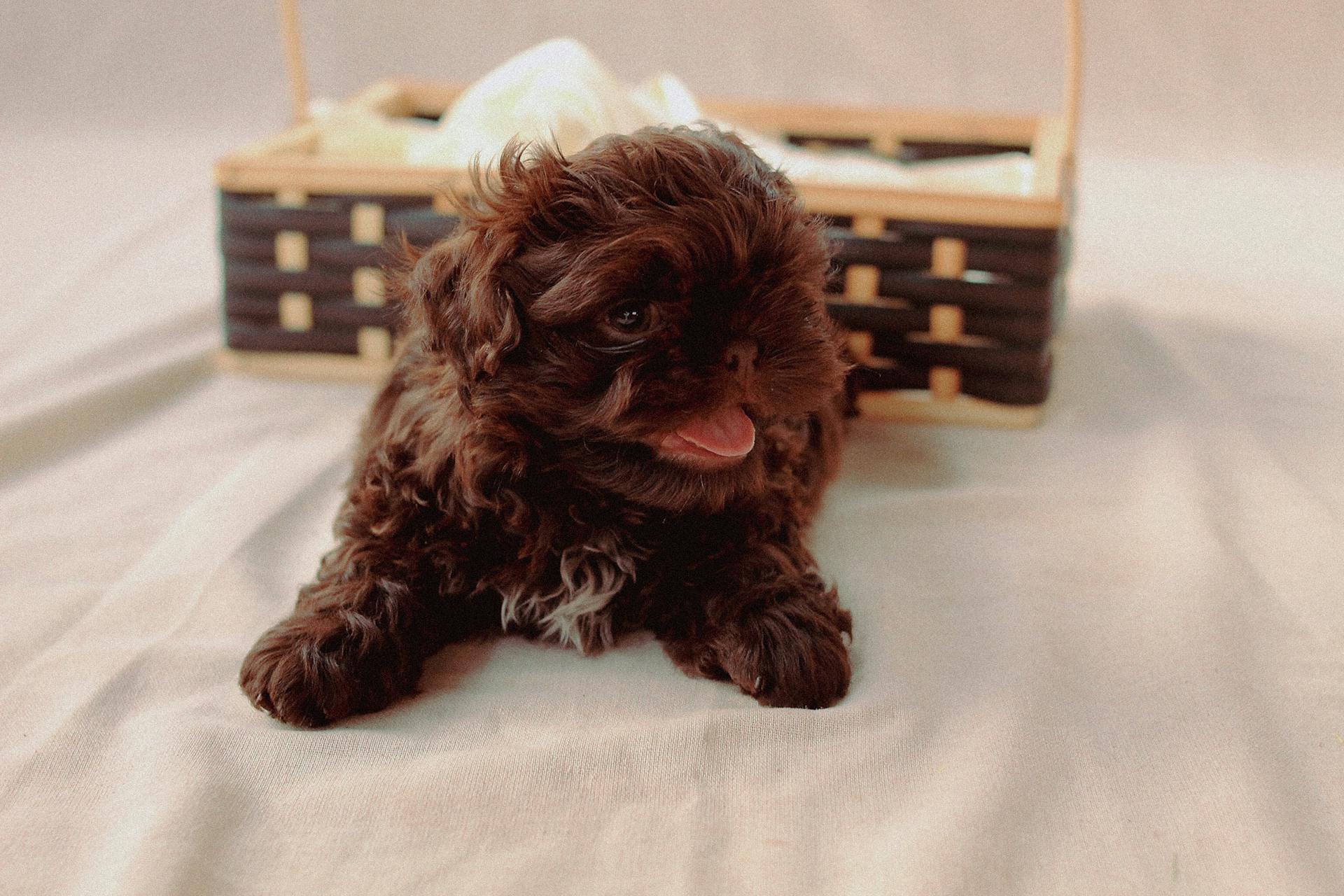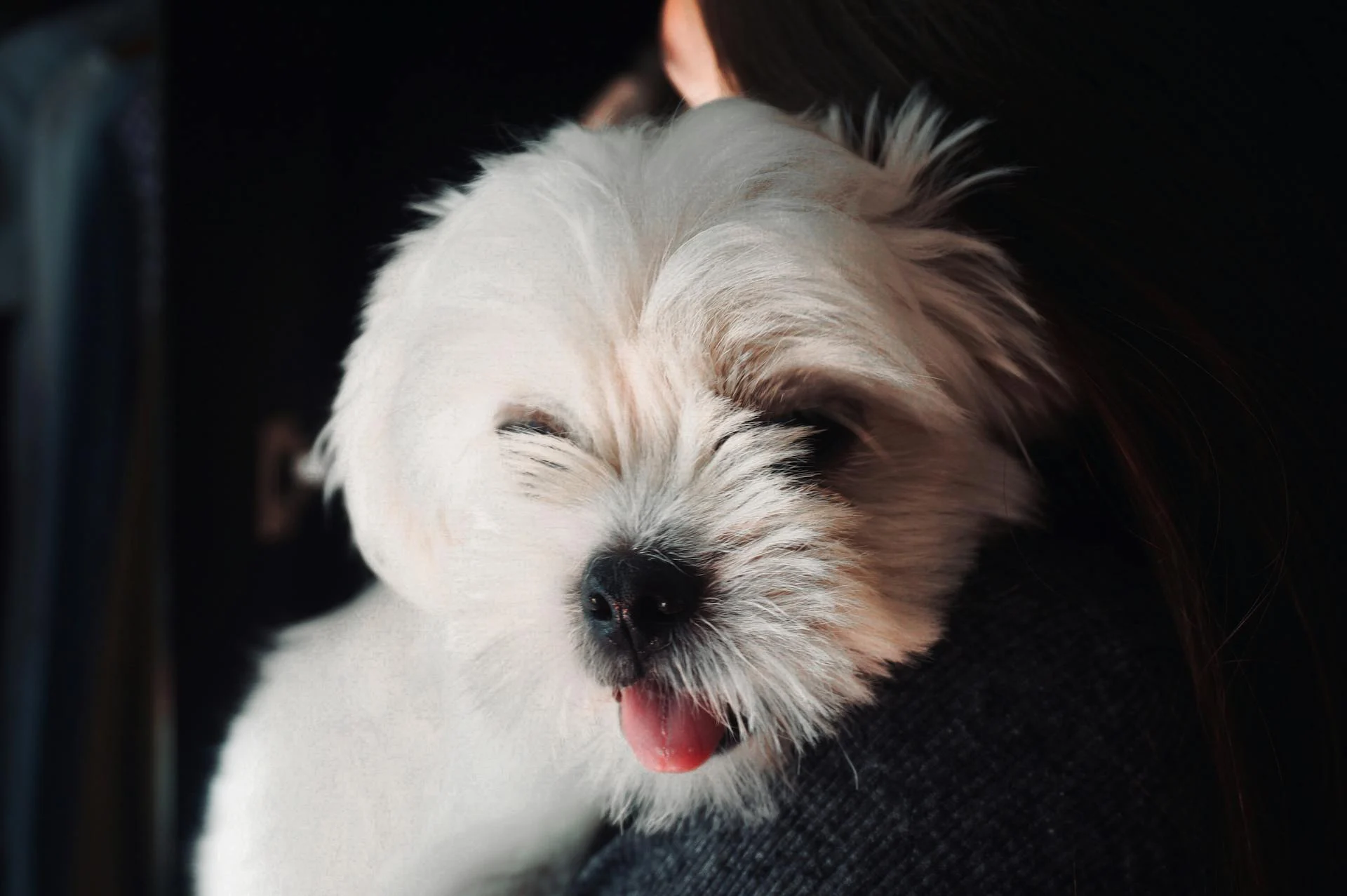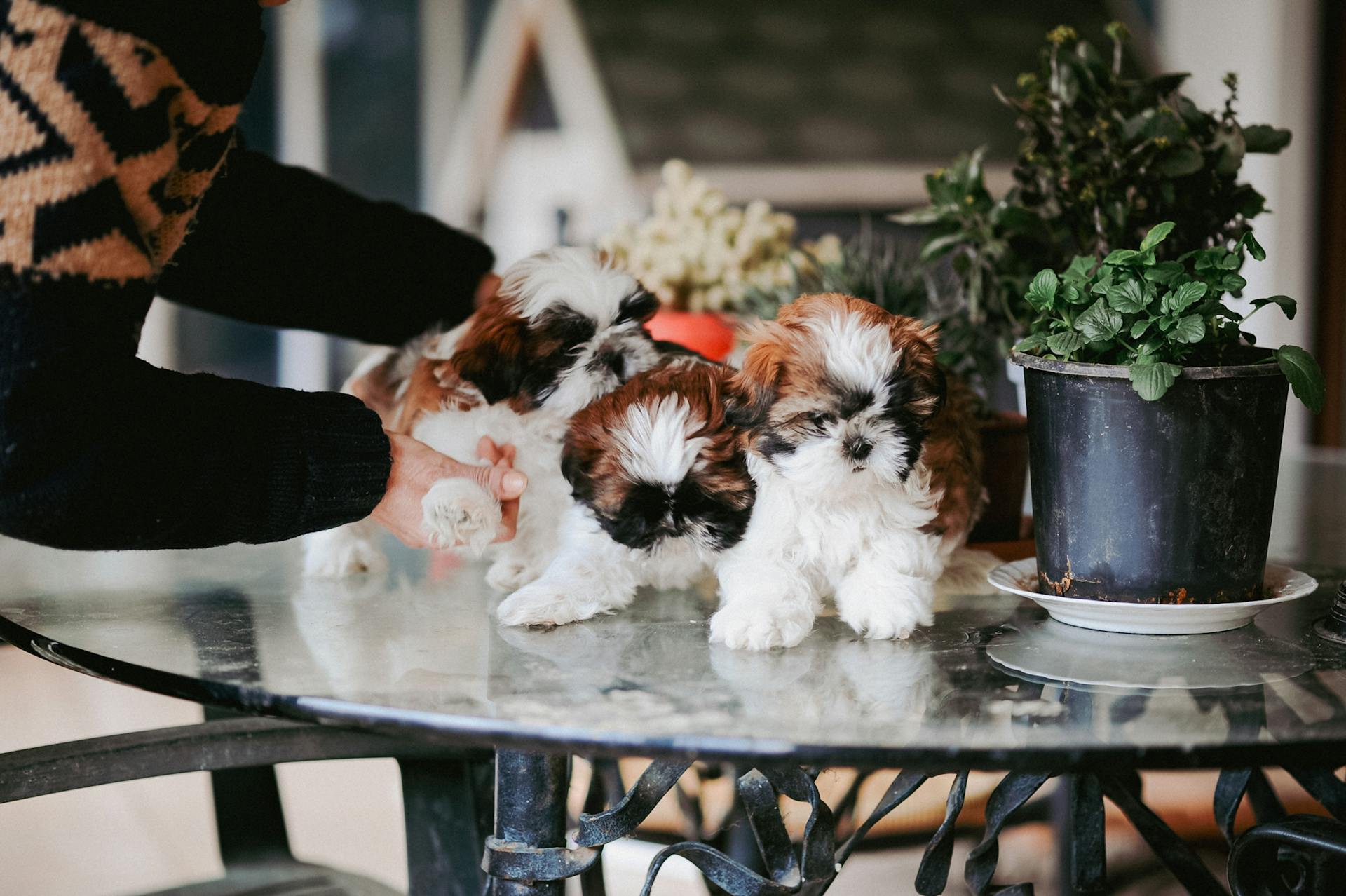
Inverted sneezes in Shih Tzus can be a sign of an underlying issue, such as allergies or a foreign object in the nasal passage.
Shih Tzus are prone to inverted sneezes due to their flat face and short nasal passages, which can make it difficult for air to pass through.
An inverted sneeze in a Shih Tzu typically starts with a sudden gasp or snort, followed by a loud, explosive sound.
This sound can be startling, especially if you're not expecting it, but it's usually a sign that your Shih Tzu needs some attention.
Causes and Prevention
Inverted sneezing in Shih Tzus can be caused by a variety of factors, including allergies, household products, and grooming products.
Allergies, particularly to environmental allergens like pollen and dust mites, are a common cause of inverted sneezing in dogs. Regular grooming and cleaning of your Shih Tzu's bedding can help reduce exposure to allergens.
In addition to allergies, household products like cleaning products and air fresheners can also trigger inverted sneezing in Shih Tzus. It's a good idea to minimize the use of these products and opt for natural alternatives instead.
Check this out: Shih Tzu Sneezing
Grooming products, such as perfume and cologne, can also irritate your Shih Tzu's soft palate and cause inverted sneezing. Be sure to keep these products away from your dog's face and nose.
Some Shih Tzus may be more prone to inverted sneezing due to their brachycephalic breed characteristics, which can cause an elongated soft palate that irritates the throat.
Here are some tips to help prevent inverted sneezing in your Shih Tzu:
- Minimize exposure to air irritants and allergens
- Use a harness instead of a collar to reduce pressure on the throat
- Regularly bathe and clean your dog's bedding
- Monitor pollen counts and minimize outdoor time during allergy season
- Avoid giving your dog medication without consulting with a veterinarian
By following these tips and being aware of the potential causes of inverted sneezing, you can help keep your Shih Tzu healthy and happy.
Symptoms and Diagnosis
Inverted sneezing in Shih Tzus can be a concerning issue, but rest assured it's not a serious condition. However, it's essential to evaluate your dog with a veterinarian to rule out other, more concerning conditions.
Your veterinarian will ask you to describe your dog's episode and ask about their environment and medical history. A video is extremely helpful, since your dog is unlikely to replicate the episode in the clinic. They will also examine your dog, taking their temperature, palpating their throat, and listening to their chest.
A unique perspective: Cost of Shih Tzu in India
If your veterinarian suspects other conditions, such as a collapsing trachea or nasal tumors, they may recommend X-rays of your dog's sinuses or chest. In some cases, a rhinoscopy may be performed to look for nasal cavity and throat abnormalities.
Here are some common signs to look out for:
- Lift their head up and rub their throat area
- Offer them some food or a treat
- Open their mouth and gently manipulate their tongue – don't get bitten!
- Lift up their ear and blow firmly in it
- Cover your dog's nostrils very briefly to make them gasp for breath
What It Sounds Like and How to Respond
Reverse sneezing in dogs can be a startling sound, but it's not as alarming as it seems. The sound is often described as a loud snorting noise that can be mistaken for coughing or respiratory distress.
People often mistake a reverse sneeze for a more serious issue, but it's usually just a harmless spasm in the nose or throat. The sound is caused by rapid inhalation of air, rather than the usual rapid exhalation of air during a normal sneeze.
If you're not sure what you're hearing, it's a good idea to keep a calm and gentle approach. Gently stroking your dog's neck can help keep them calm during an episode. Most of the time, your dog will return to normal without treatment.
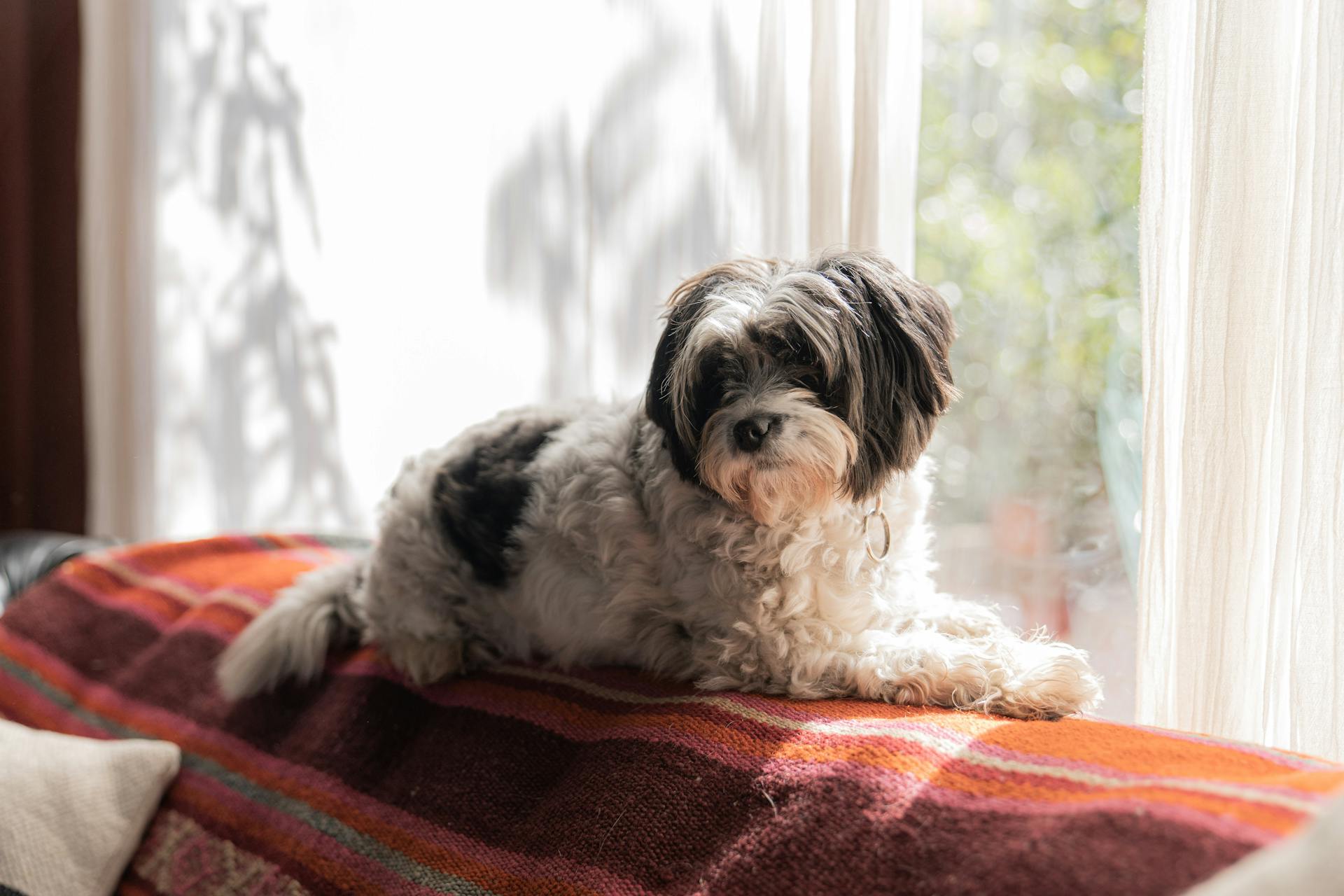
The triggers for reverse sneezing are similar to those for normal sneezes, such as dust mites, smoke, pollen, and other allergens. Dogs with short faces, like bulldogs and pugs, can be prone to reverse sneezing due to their elongated soft palate and narrow trachea.
It's essential to have a veterinarian examine your dog if you suspect reverse sneezing. They can rule out any other potential causes of the symptoms and ensure your dog doesn't need further care.
What Does My Dog Sound Like?
If you've ever heard your dog make that distinctive snorting noise, you're probably wondering what it sounds like. Reverse sneezing sounds like a loud, high-pitched snorting noise, often described as an inward sneeze.
It's hard to describe, but many owners say it's like their dog is trying to inhale a big breath of air. Some people even mistake it for a coughing fit or choking, but it's actually a reflex spasm caused by irritation in the nose or throat.
If you're still unsure, check out some videos online that demonstrate reverse sneezing. One video shows Mordecai the French Bulldog, who exhibits the classic posture and noise of a reverse sneeze. Another video shows a mixed-breed dog suffering from a short episode of reverse sneezing.
If you suspect your dog is reverse sneezing, try to remain calm and gently stroke their neck. In most cases, your dog will return to normal without treatment, but in severe cases, an anti-inflammatory medication may be needed.
Here are some common signs that your dog is reverse sneezing:
- Lift their head up and rub their throat area
- Offer them some food or a treat
- Open their mouth and gently manipulate their tongue – don’t get bitten!
- Lift up their ear and blow firmly in it
- Cover their nostrils very briefly to make them gasp for breath
Stopping Sneezes
Most reverse sneezing episodes last only a few seconds, so you don't have to worry for long. If your Shih Tzu is experiencing a reverse sneezing episode, try holding their nostrils closed for a second to help them swallow and stop the spasm.
You can also try lightly massaging their throat or blowing in their face, as these techniques can stimulate the dog to swallow and stop the reverse sneeze. These methods are simple and can be done at home.
For your interest: When Is a Shih Tzu Full Grown
Any age, breed, or sex of dog can be affected by reverse sneezing, but some breeds like Beagles, Terriers, and brachycephalic breeds (such as Shih Tzus) are more prone to it. If you're unsure what's causing your Shih Tzu's sneezing, it's always a good idea to consult with a veterinarian.
Sometimes, an episode can be stopped if the dog is stimulated to swallow by either massaging the throat or briefly pinching the nasal openings. Occasionally, opening a dog's mouth and gently pulling on the tongue or giving the dog something to eat and drink can also stop a reverse sneezing episode.
If your Shih Tzu is experiencing frequent reverse sneezing episodes, your veterinarian may recommend medications to reduce their frequency. In the meantime, you can try some of the following techniques to stop a sneezing episode:
- Lift their head up and rub their throat area
- Offer them some food or a treat
- Open their mouth and gently manipulate their tongue – don't get bitten!
- Lift up their ear and blow firmly in it
- Cover your dog's nostrils very briefly to make them gasp for breath
Understanding Canine Health
Reverse sneezing is a common condition in Shih Tzus, characterized by an involuntary inspiratory reflex that occurs when the soft palate is irritated. The exact reason for reverse sneezing episodes is unknown, but may be related to allergies, nasal irritants, nasal inflammation, pharyngeal irritation, or sinus drainage.
Some possible soft palate irritants that can result in a reverse sneeze include allergies, household products, grooming products, infection, abnormalities in the throat, nasal mites, pressure on the throat, overexcitement, and eating and drinking. Brachycephalic breeds, such as Shih Tzus, are at increased risk due to their elongated soft palate that can irritate the throat during inhalation.
To help your Shih Tzu, try these techniques: lift their head up and rub their throat area, offer them some food or a treat, open their mouth and gently manipulate their tongue, lift up their ear and blow firmly in it, or cover their nostrils very briefly to make them gasp for breath. These methods can help make your dog swallow, which will typically stop the reverse sneeze spasm.
You might enjoy: Shih Tzu Reverse Sneezing
Dogs' Health Issues
Reverse sneezing is a common condition in dogs, particularly in brachycephalic breeds like French Bulldogs and Pugs. It's a reflex that can be triggered by irritation of the pharynx, larynx, or throat area.
Any age, breed, or sex of dog can be affected, but some breeds are more prone to reverse sneezing than others. Beagles, Terriers, and brachycephalic breeds like Bulldogs and Shih Tzus are more likely to experience this condition.
Reverse sneezing can be caused by various factors, including allergies, irritants in the air, foreign material in the airway, respiratory infections, and even excitement or exercise.
Brachycephalic dog breeds have a unique anatomy that can lead to reverse sneezing. Their shortened snouts and elongated soft palate can cause irritation and reflex spasm.
If your dog is experiencing frequent or recurring reverse sneezing episodes, it's essential to rule out other underlying conditions, such as nasal mites, allergies, or nasal cancer.
Dog Appearance and Sound
A dog experiencing reverse sneezing will often exhibit a classic posture, as seen in a Greyhound, where they stand with their front legs splayed and their head thrown back.
Their noise can be quite distinctive, sounding like a series of loud, nasal inhalations, which can be a bit alarming if you've never seen it before.
In some cases, a dog's reverse sneezing episode might be accompanied by a slight cough or snort, but it's usually a relatively short-lived and harmless phenomenon.
Frequently Asked Questions
What can be mistaken for reverse sneezing in dogs?
Reverse sneezing in dogs can be mistaken for respiratory distress, coughing, or choking, which can be alarming for pet owners. If you suspect your dog is experiencing a reverse sneeze, it's essential to identify the correct cause to provide the right care.
Featured Images: pexels.com