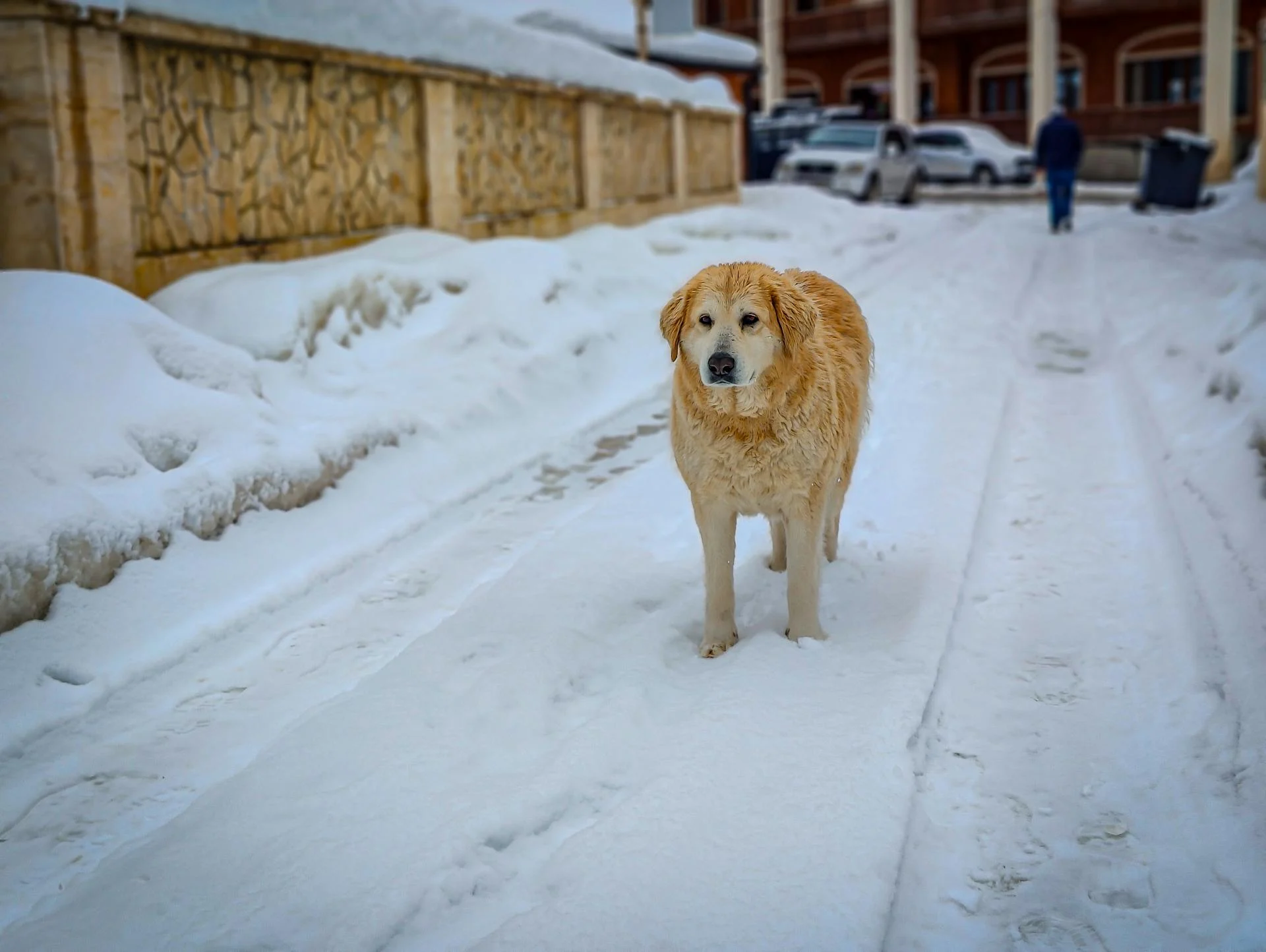
Great Pyrenees are naturally inclined to guard and protect their territory, which makes them an excellent choice for guarding chickens. They have a strong prey drive and can be quite fierce when defending their flock.
To start training your Great Pyrenees, it's essential to socialize them well from an early age. This means exposing them to various environments, people, and animals to help them develop good manners and a calm temperament.
Socialization is key to preventing unwanted behaviors like aggression and fear-based reactivity. By introducing your Great Pyrenees to different situations and stimuli, you can help them become confident and composed in the face of new experiences.
With patience and consistency, you can teach your Great Pyrenees to guard chickens effectively.
Can Great Pyrenees Be Trained?
Great Pyrenees can be trained to guard chickens, but it's essential to understand their nature and requirements. Generally, if a Great Pyrenees comes from a working line, they'll be more trainable to chickens.
To train a Great Pyrenees, you'll need to have the knowledge, time, and patience to do so. This is crucial for their success, as their training failures are often a result of your own training failures.
You can start by allowing the Great Pyrenees to observe the chickens from a distance, which helps them become familiar with the flock without direct interaction. This initial phase is a vital step in their gradual acclimatization to the chickens.
As the Great Pyrenees becomes more comfortable, you can introduce supervised interactions between them and the chickens. It's essential to define spaces for the chickens and establish a zone where the dogs can observe without direct access, creating a controlled environment for coexistence.
To ensure a harmonious relationship between the Great Pyrenees and chickens, it's crucial to set clear boundaries and monitor their interactions closely. This will help you address any signs of stress or discomfort promptly.
With patience, consistency, and proper training, you can develop a strong bond between your Great Pyrenees and chickens, resulting in a symbiotic relationship where the dogs assume their role as protectors and the chickens benefit from their watchful presence.
Training Duration and Method
Training a Great Pyrenees to guard chickens requires patience and consistency, and can take weeks or months to achieve. You can start introducing your puppies to chickens as soon as they are comfortable enough to walk around the farm with you.
Training should be done using positive methods, such as reward-based training, to ensure happy and healthy dogs with strong bonds to you. You will want to teach your Great Pyrenees to associate calmness with the chickens, and this can be achieved by spending time with them around the chickens and rewarding calm behavior.
Don't get discouraged if it takes time to see progress - this is a normal part of the training process, and with consistent effort, you can develop a harmonious partnership between your Great Pyrenees and your chicken flock.
When to Train Puppies
You can start introducing your puppies to chickens as soon as they are comfortable enough to walk around the farm with you. This early exposure is crucial in shaping their behavior and helping them understand their role as guardians.
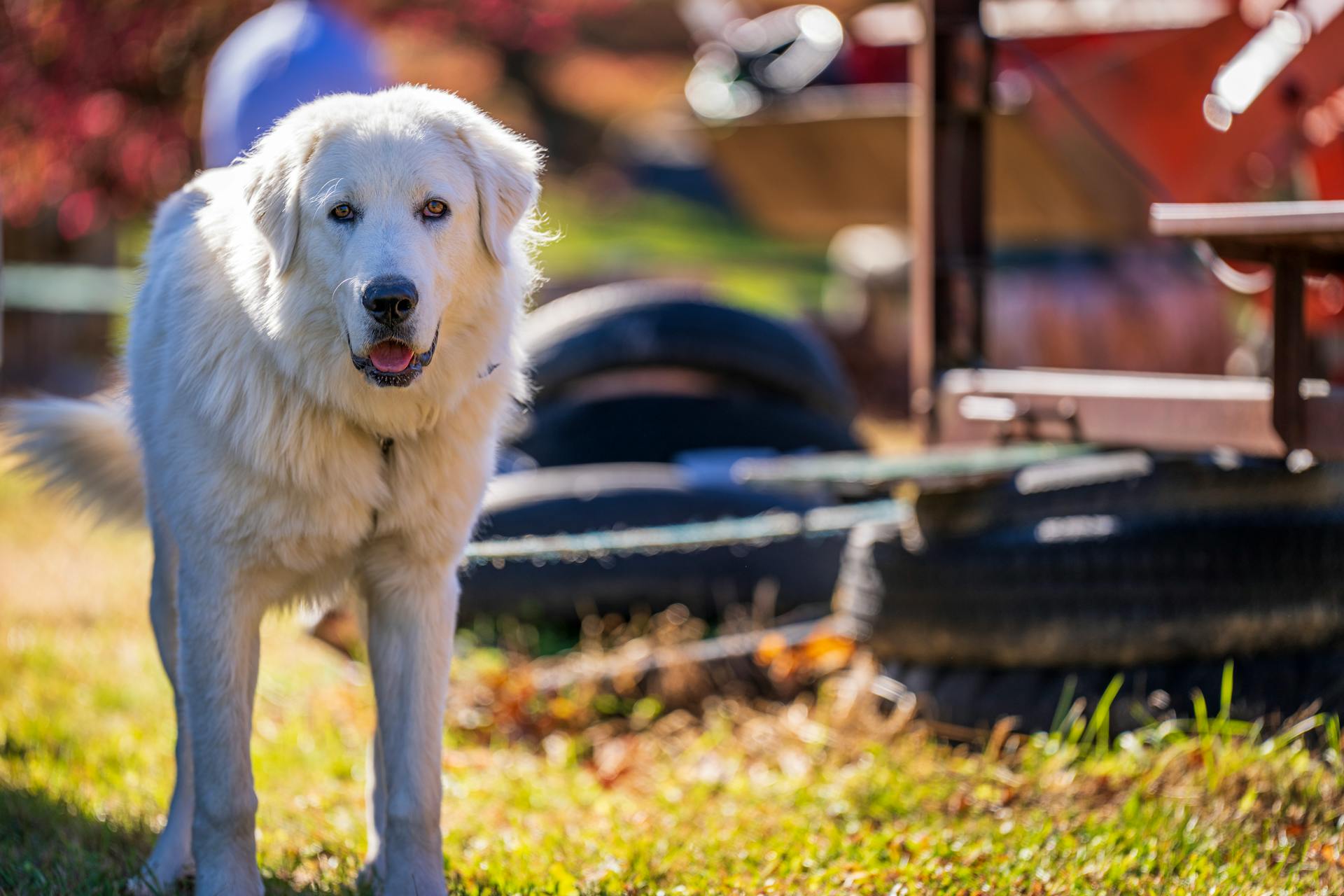
It's essential to consider the age and energy level of your puppies before starting training. If they're too energetic or excitable, it's best to wait until they've had some exercise to calm them down. You want your puppies to be in a state of mind where they're open to training.
Introducing puppies to chickens too early can be counterproductive, so it's crucial to wait until they're mature enough. This usually happens when they're comfortable walking around the farm with you, indicating they're ready for the next step in their training.
Training Duration
Training your Livestock Guardian Dogs to chickens will likely take weeks or months, assuming you're patient and consistent with positive training methods.
It's essential to set realistic expectations, as some dogs may need more time and effort than others.
Some of you may be lucky and end up with natural guardians that need little to no training, but don't count on it.
If this caught your attention, see: How Much Exercise Does a Great Pyrenees Need
How to Train Step-by-Step
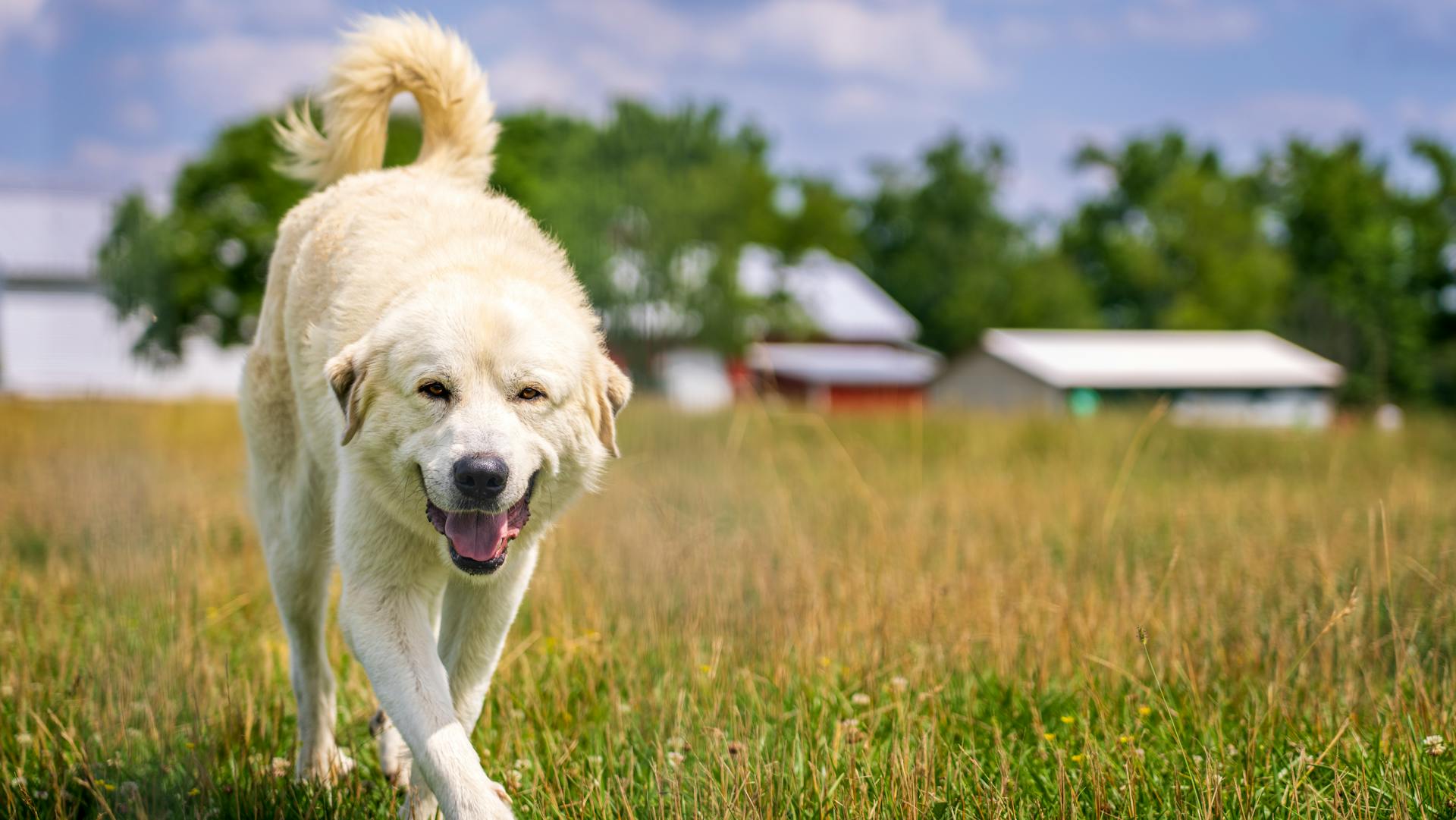
Training your Livestock Guardian Dogs (LGDs) to chickens requires a step-by-step approach. Start by introducing your puppies to chickens as soon as they are comfortable enough to walk around the farm with you.
To control the training environment, make sure your dogs have had exercise first, and introduce them to chickens in a calm area during a calm time. This will help prevent distractions and keep your dogs open to training.
You'll also want to make training pleasurable for your dogs, using positive reinforcement techniques like treats and rewards. Be prepared to reward your dogs frequently, especially when they exhibit calm behavior around chickens.
Here are the key steps to follow:
- Exercise your dogs before introducing them to chickens.
- Choose a calm area and time for training.
- Use positive reinforcement techniques like treats and rewards.
- Be prepared to reward your dogs frequently.
As you progress in the training process, you'll want to spend time with your LGDs around the chickens, rewarding them for calm behavior. This will help them associate the chickens with positive experiences.
Remember, training your LGDs to chickens takes time and patience. Don't get discouraged if you encounter setbacks – with consistent practice and positive reinforcement, your dogs can become excellent guardians.
Step 5: Exit
You'll know it's time to exit the training process when your dogs can be trusted alone with the chickens. This is a crucial milestone, and it's essential to proceed with caution.
To start, stay in the vicinity of your dogs and chickens, keeping a close eye on them at all times. If you need to intervene, you must be able to do so quickly.
As your dogs become more confident, you can gradually move further away, but still be in sight of your dogs through a window, around a building, or behind some bushes. This will help you gauge their behavior when they think you're not around.
You'll know it's too soon to exit the training process if you still have doubts or feel worried about leaving your dogs alone with the chickens. If that's the case, it's best to continue with the training.
Additional reading: When Do Great Pyrenees Get Their Full Coat
Introducing Great Pyrenees to Chickens
Introducing Great Pyrenees to Chickens is a delicate process that demands careful consideration. It's essential to remember that your dogs may not automatically understand that new poultry are their charges too, so training is crucial.
My neighbors' Great Pyrenees, Shaggy, was an excellent guardian of chickens and turkeys, but he killed them all immediately when they introduced ducks without training him to them.
The key to a harmonious introduction is gradual acclimatization. Start by allowing the dogs to observe the flock from a distance, fostering familiarity without direct interaction.
The Great Pyrenees' natural guardian instinct is the backbone of their protective nature, but thoughtful agility training is necessary for successful integration into a chicken-keeping environment.
Early exposure and positive reinforcement are the cornerstones of shaping their behavior, and these intelligent dogs respond remarkably well to consistent, reward-based training.
Training sessions should be viewed not only as a means to enforce commands but as opportunities to strengthen the bond between the dog and its human family.
Great Pyrenees as Guard Dogs
Training a Great Pyrenees to guard chickens requires thoughtful agility training to tap into their natural guardian instinct. Early exposure and positive reinforcement are key to shaping their behavior.
These intelligent dogs respond remarkably well to consistent, reward-based training, making them a great choice for chicken-keeping. Teaching commands like "stay" and "leave it" takes center stage in honing their protective skills.
Training sessions should be viewed as opportunities to strengthen the bond between the dog and its human family, not just as a means to enforce commands.
Great Pyrenees: Natural Connection
Great Pyrenees are natural guardians of chickens, and their gentle demeanor makes them an excellent choice for this role. They form a unique bond with the feathery members of your flock, a testament to their adaptability and ability to distinguish between friends and potential threats.
This connection is a delicate dance, a choreography of guardianship where the large, majestic dog assumes the role of protector while maintaining a gentle touch with its charges. The harmony that unfolds between Great Pyrenees and chickens fosters an environment of trust, and their mere presence becomes a reassuring presence for both the chickens and their human caretakers.
Great Pyrenees are more than just guardians; they offer a spectrum of benefits that transcend traditional expectations. They contribute to the holistic well-being of a farm or homestead, providing companionship, deterrence of intruders, and assistance in managing other aspects of farm life.
Their calming effect on the overall environment influences the behavior of other animals, creating a harmonious atmosphere. The adaptability of Great Pyrenees to diverse tasks showcases their versatility, making them integral members of the farm community.
You'll want to train your Great Pyrenees to chickens using only positive methods, as this ensures happy, healthy dogs with strong bonds to you.
Take a look at this: Great Pyrenees Working Dog
Training Great Pyrenees for Protection
Early exposure and positive reinforcement are the cornerstones of shaping Great Pyrenees behavior. Consistent, reward-based training is essential for their successful integration into a chicken-keeping environment.
Great Pyrenees respond remarkably well to training, especially when it's viewed as an opportunity to strengthen the bond between the dog and its human family. This approach ensures a harmonious partnership that fortifies the safety of your feathered companions.
Teaching commands like "stay" and "leave it" takes center stage in honing their protective skills. These commands are crucial in channeling their natural guardian instinct into actionable behaviors.
A gradual introduction to the flock is key to avoiding stress for both the dogs and the chickens. Start by allowing the dogs to observe the flock from a distance, then move on to supervised introductions.
Clear boundaries are essential in creating a controlled environment where the two species can coexist. Define spaces for the chickens and establish a zone where the dogs can observe without direct access.
Proper training is the key to preventing accidents and ensuring the dogs' protective capabilities are finely tuned to the specific needs of your chicken flock.
A unique perspective: Great Pyrenees Protecting
Advanced Training and Considerations
Setting clear boundaries is essential when integrating Great Pyrenees into a chicken flock. This involves defining spaces for the chickens and establishing a zone where the dogs can observe without direct access.
Gradual acclimatization is key to a harmonious relationship between Great Pyrenees and chickens. Start by allowing the dogs to observe the flock from a distance, then proceed to supervised introductions.
Consistent monitoring during the integration phase ensures that any signs of stress or discomfort are promptly addressed. This helps prevent any potential issues from escalating and allows the dogs to assume their role as protectors.
Understanding Predatory Threats
Understanding predatory threats is crucial to protecting your chicken flock. Chickens face a myriad of potential dangers, ranging from ground-dwelling predators like foxes and raccoons to aerial threats posed by birds of prey.
Great Pyrenees have developed an intuitive grasp of these behaviors through years of selective breeding and natural evolution. Their acute senses and innate guardian instincts allow them to actively deter these threats.
Their formidable size and imposing presence alone act as deterrents to ground predators. The Great Pyrenees' bursts of activity, triggered by a heightened sense of alertness, send a clear message to potential threats: this territory is guarded.
Their vocal expressions, manifested through deep barks, contribute to creating an environment where predators think twice before approaching.
Great Pyrenees: Beyond Basics
Great Pyrenees are incredibly intelligent dogs that respond remarkably well to consistent, reward-based training. This means that with patience and positive reinforcement, you can teach your Great Pyrenees to stay and leave it, honing their protective skills.
Training sessions should be viewed as opportunities to strengthen the bond between the dog and its human family. This bond is essential for the dog to understand its role as a guardian and to be dedicated to its flock.
The natural guardian instinct of Great Pyrenees is the backbone of their protective nature, and early exposure and positive reinforcement are key to shaping their behavior. This is especially true when introducing them to a chicken-keeping environment.
Gradual acclimatization is crucial when integrating Great Pyrenees into a chicken flock. Start by allowing the dogs to observe the flock from a distance, then proceed to supervised introductions. This will help establish a harmonious relationship between the two species.
Explore further: When to Neuter a Great Pyrenees
The harmony between Great Pyrenees and chickens is a delicate dance, where the dog assumes the role of protector while maintaining a gentle touch with its charges. This natural connection fosters an environment of trust.
By setting clear boundaries and defining spaces for the chickens, you can create a controlled environment where the two species can coexist. Consistent monitoring during the integration phase ensures that any signs of stress or discomfort are promptly addressed.
Great Pyrenees offer a spectrum of benefits beyond their role as guardians. They contribute to the holistic well-being of a farm or homestead, providing companionship, deterrence of intruders, and assistance in managing other aspects of farm life.
Expand your knowledge: American Farm Shepherd
Burstiness in Behavior
The burstiness in Great Pyrenees behavior is a fascinating aspect of their guardian instincts, serving as powerful deterrents to potential threats.
These bursts of activity, manifested through sudden and assertive actions, are an adaptive response honed through centuries of selective breeding.
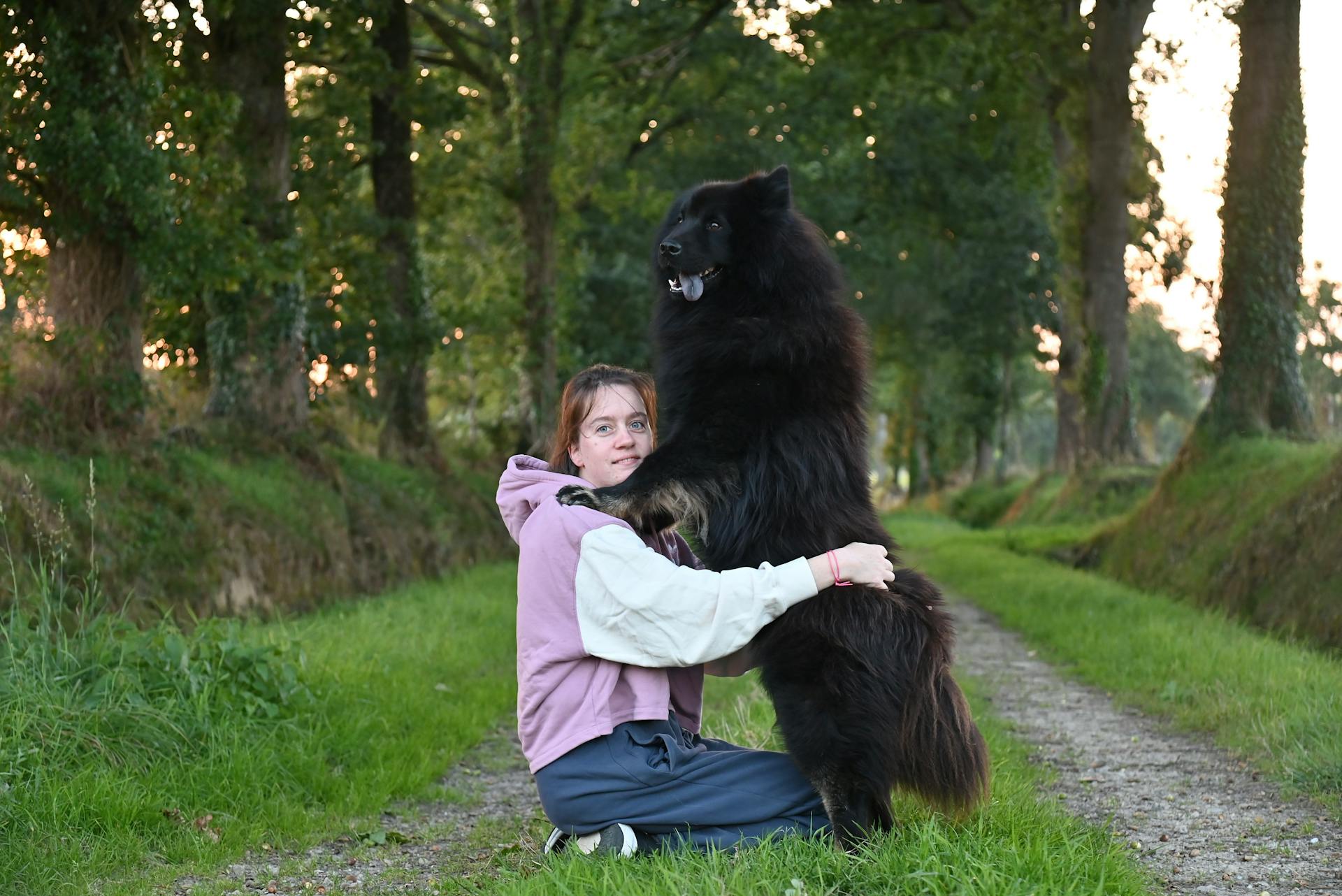
It's the unpredictable nature of their actions that confounds potential threats, creating an environment of dynamic defense.
Burstiness isn't a sign of erratic behavior but a calculated strategy employed by Great Pyrenees to actively discourage predators and ensure the safety of their charges.
Their bursty behavior can be a display of vigilance, like the sudden eruption of deep, resonant barks that echoes across the farm on a moonlit night.
This burst of sound is a strategic display of vigilance that keeps predators at bay, making it an essential aspect of their guardian instincts.
Explore further: Personality of a Great Pyrenees
Frequently Asked Questions
How to train Great Pyrenees to not eat chickens?
To train a Great Pyrenees to protect, not eat, your chickens, create artificial dangers and reward her for defending them, while also preventing wandering and unwanted interactions with the flock. Consistent training and positive reinforcement will help your Pyrenees develop a strong instinct to guard, not harm, your chickens.
Featured Images: pexels.com