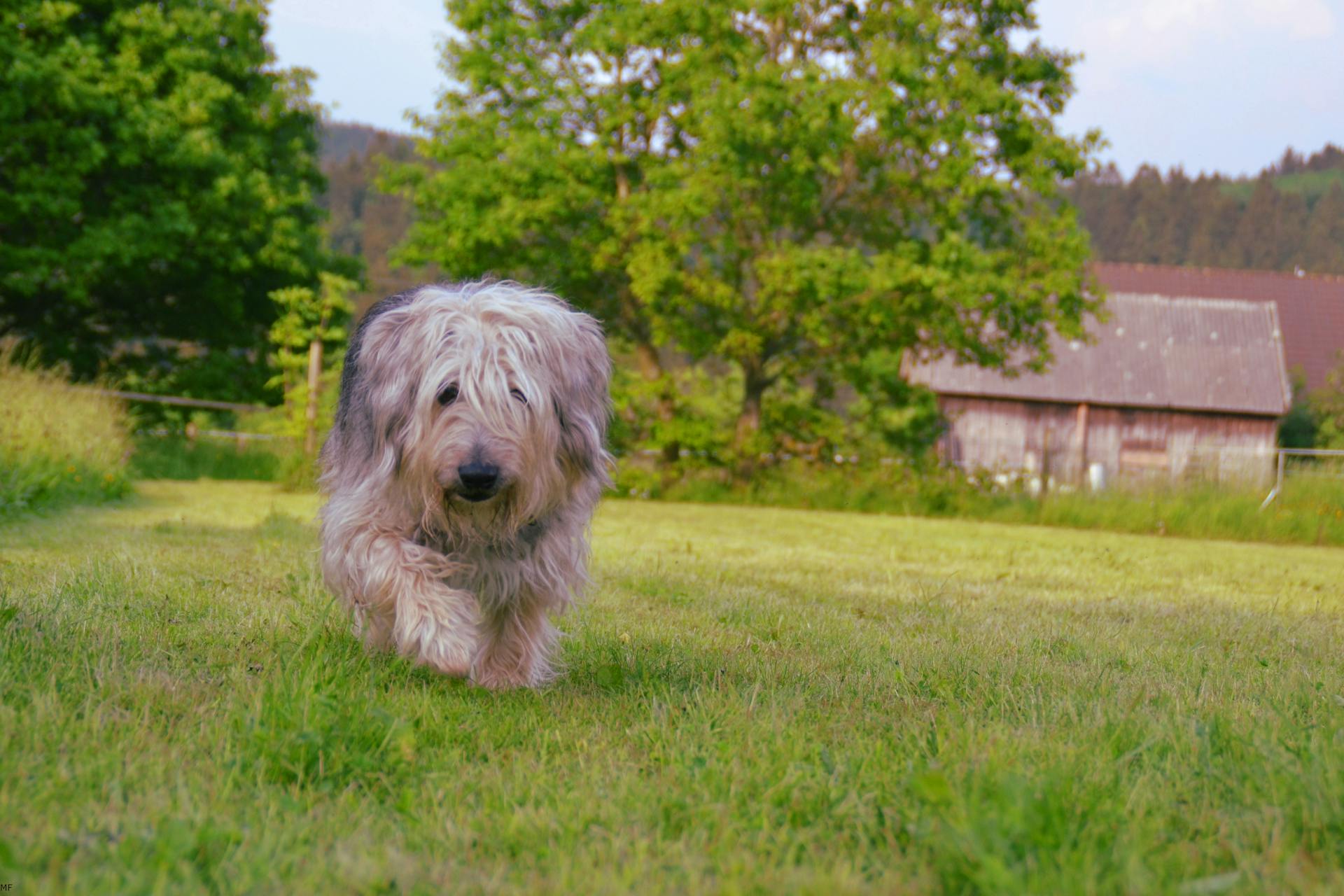
If you're unsure about what kind of dog you have, don't worry, it's a common dilemma. You can start by observing your dog's physical characteristics, such as their size, coat type, and color.
One way to narrow down the possibilities is to look at your dog's body shape. Is your dog tall and lean, or short and sturdy? This can help you identify breeds that are known for their similar body types, such as the Greyhound or the Bulldog.
Another factor to consider is your dog's coat type. Do they have a short, smooth coat or a long, fluffy one? This can be a big giveaway, as some breeds are known for their unique coat types, such as the Poodle or the Afghan Hound.
Pay attention to your dog's ears, too. Are they floppy and hanging down, or erect and standing up? This can be a key identifying feature, as some breeds are known for their distinctive ear shapes, such as the Beagle or the German Shepherd.
Physical Characteristics
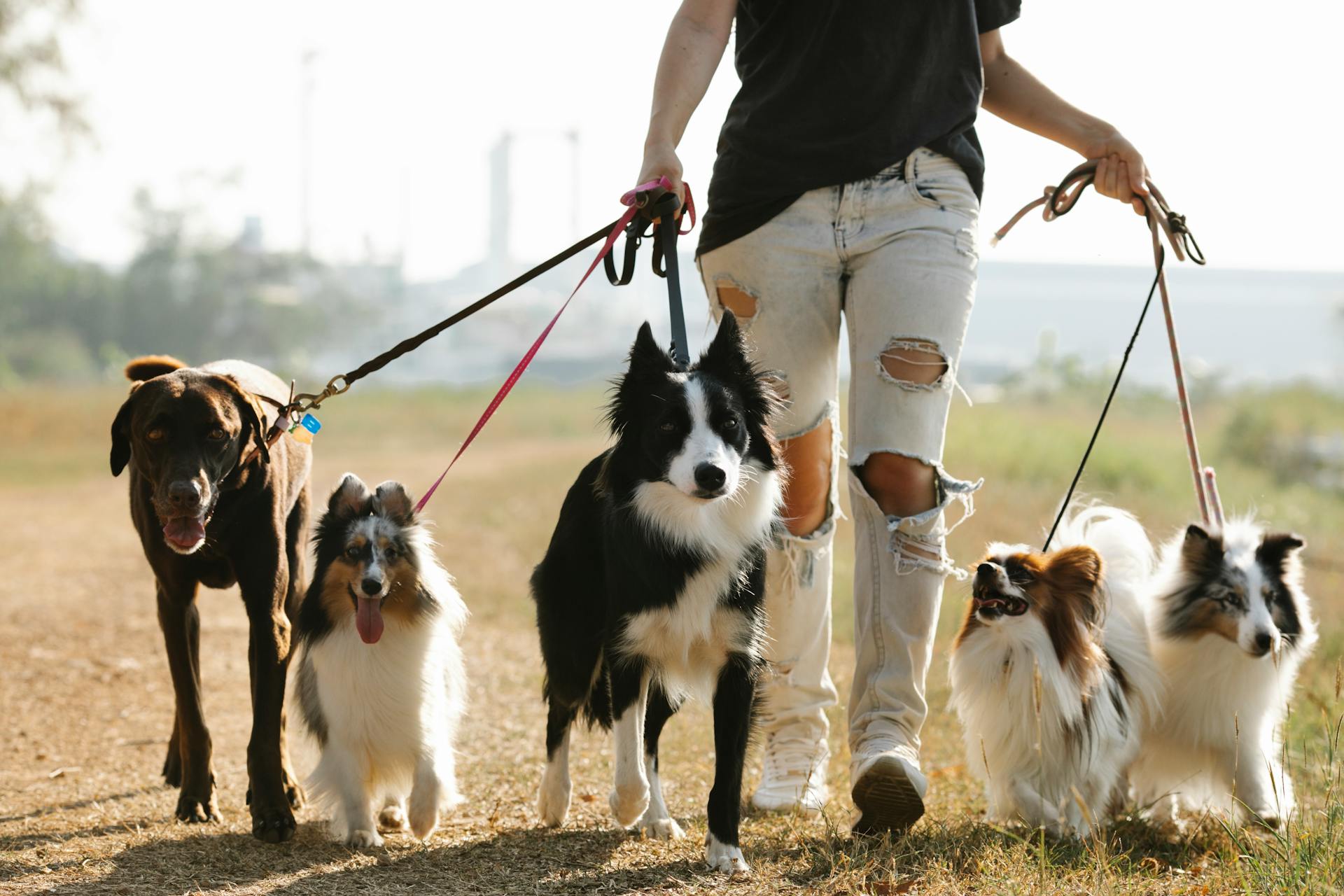
Physical characteristics can be a valuable dog breed identifier. Take a close account of your dog's physical features, such as their hair type, face shape, and ear shape.
You can use a combination of visual observation and measurement to gather information about your dog's physical characteristics. For example, you can weigh your dog by weighing yourself and then weighing yourself while holding your dog, or by getting their weight at a veterinary office.
Here are some specific characteristics to note:
- Body size: is your dog large, medium, or small-framed?
- Build: is your dog muscular or slender?
- Snout: is it long or short?
- Skull: is it deep-chested or not?
- Fur: is it long, short, or heavy with undercoat?
- Color: what color is the fur, and is there a pattern?
By paying attention to these physical characteristics, you can start to narrow down the possibilities and make an educated guess about your dog's breed.
Paw Size and Shape
Dogs with rounded big feet are likely to grow into larger adult dogs.
Puppies with webbed feet are linked to certain breeds, such as the Newfoundland, Labrador Retriever, and Poodles.
Dogs with webbed feet can help them navigate water with ease.
The Newfoundland and St. Bernard breeds have really large paws with big paw pads to help them walk on snow and ice.
Large paws with big paw pads are essential for dogs that originated in colder climates.
Worth a look: What Kind of Dog Is Skye
Characteristics of a Mutt

A ridge running down the middle of a dog's back with the hair running in the opposite direction to the rest of the coat is a clue that there is Rhodesian Ridgeback in the dog's genetic make-up.
Many mutts have this feature in their coats, which can be a dead giveaway.
A blue spotted tongue is a common trait in the Chow Chow, a sturdily built dog with a double coat that originally hails from Northern China.
However, there are several other breeds with spotted tongues too, including the Airedale, Akita, Australian Cattle Dog, the Chinese Shar Pei, Dalmatians, Doberman Pinscher, English Setter, the Pomeranian, the Pug, Newfoundland, the Shiba Inu, and the Tibetan Mastiff.
The size of a dog's tail can also be a helpful characteristic in identifying a breed, as some breeds have naturally shorter or longer tails than others.
Some breeds, like the Beagle, have a distinctive "yodel" howl that is easy to identify.
If you have a dog with webbed paws that loves water, they might be part Newfoundland.
If your dog tries to herd everything in sight, they might be part Collie.
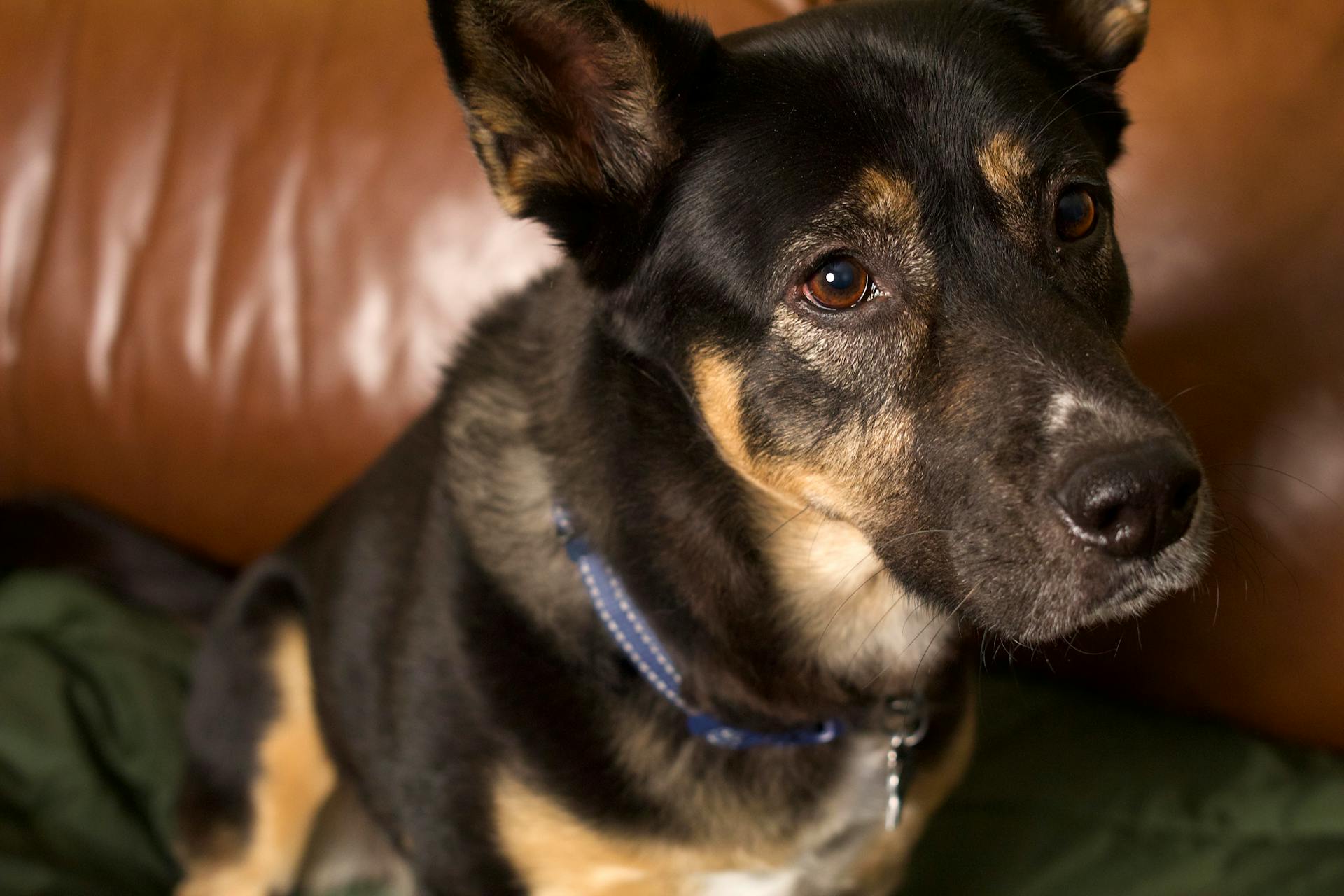
The shape of a dog's ears can also give away its breed, with pointy ears being a characteristic of some breeds and droopy ears being a trait of others.
Identify Animal Breed
You can use a dog breed identification app like Dog Scanner: Breed Recognition to identify your dog's breed and even tell you the percentage of each breed in your mixed dog.
These apps aren't guaranteed to work or be 100% accurate, but they can give you a good idea of what breeds are present.
You can also use a dog breed identifier like an online dog breed identification chart to narrow down your dog's breed by size, and then view photos that match the characteristics you choose.
The University of Florida College of Veterinary Medicine conducted a survey of over 5,000 dog experts, including breeders, trainers, and veterinarians, which provides a valuable resource for comparing physical appearance with actual DNA breed results.
This survey offers a wealth of information on dog breeds and their characteristics, and can be a helpful tool in identifying your dog's breed.
Here's an interesting read: What Kind of Dog Is Cannoli on B Positive?
DNA Testing
DNA testing is a great way to figure out what breeds are in your dog's makeup. The best dog DNA tests, like Embark and Wisdom Panel, cost around $100.
You can order a dog DNA test and get a saliva swab in the mail to send back for testing. This is as simple as swabbing your dog's mouth for saliva and sending it off to get tested.
These tests can identify your dog's breed makeup, as well as any hereditary health problems or unique traits. This information can save you thousands of dollars in the future if you know about potential health issues early on.
Some common hereditary health issues that can be identified through DNA testing include hip dysplasia and patella luxation. These conditions can be expensive to treat if not identified early.
It's as simple as taking a cheek swab from your dog, placing the swab in the provided container, and mailing it back in a prepaid envelope.
Research and Consultation
Researching your dog's breed can be a fun and rewarding experience. You can start by looking at your dog's physical characteristics, such as their size, coat type, and ear shape.
Consulting with a veterinarian or a professional dog trainer can also provide valuable insights into your dog's breed. They can help you identify your dog's unique characteristics and provide guidance on how to care for them.
A dog's DNA test can also give you information about their ancestry and breed. This can be especially helpful if you're unsure about your dog's breed.
Consulting with a veterinarian or a professional dog trainer can also provide valuable insights into your dog's breed. They can help you identify your dog's unique characteristics and provide guidance on how to care for them.
You can also look for online resources, such as breed clubs and dog registries, which can provide information on different breeds and their characteristics.
Predicting and Identifying
You can start by accepting the limitations of visual identification, as it's not the most accurate method. A more reliable approach is to write down your dog's defining characteristics and rank them from most to least prominent.
Determine your dog's weight and height by weighing yourself and then weighing yourself holding your dog. You can also get your pet's weight at any veterinary office.
Assess the build of your dog, noting any defining characteristics such as a large, medium, or small frame, deep chest, or muscular or slender build.
Other physical characteristics to evaluate include the snout, skull, back, legs, and tail. Take note of any distinctive elements, such as a long or short snout, or a curved or straight back.
The fur of your dog is also an important factor. Is it long or short, heavy with undercoat, coarse or soft? Some breeds have multiple types of fur, while others have only one.
The color of your dog's fur is another clue. What color is it, and is there a pattern to the coat color? Some breeds typically come in only one or a few colors or patterns, which can help narrow the possibilities.
Here are some key factors to consider when predicting and identifying your dog's breed:
- Weight and height
- Build (large, medium, or small frame, deep chest, or muscular or slender build)
- Snout (long or short, curved or straight)
- Fur (long or short, heavy with undercoat, coarse or soft)
- Color (solid, patterned, or multi-colored)
By considering these factors and using a dog breed identifier or online resource, you can make an educated guess about your dog's breed.
Frequently Asked Questions
Can Google identify a dog breed?
Yes, Google Lens can identify dog breeds using its image recognition technology. Learn how to use this feature to discover the breed of your furry friend.
Featured Images: pexels.com