Grooming a Cavalier King Charles Spaniel requires regular attention to their coat, which sheds heavily and requires daily brushing to prevent matting.
Their coat is moderate in length, requiring regular trimming to prevent overgrowth.
Cavalier King Charles Spaniels have a moderate energy level, which means they don't require excessive grooming sessions, but regular ones are still necessary to keep them clean and healthy.
Daily brushing helps to prevent matting and tangling, which can be painful for your dog if left unchecked.
If this caught your attention, see: Husky Blowing Coat before and after
Understanding Cavalier King Charles Spaniels
Understanding Cavalier King Charles Spaniels requires knowing their unique coat characteristics. Their medium-length, silky coat is moderately fine and soft to the touch, and it's naturally glossy.
Their coat comes in four recognized color patterns: Blenheim, tricolor, black and tan, and ruby. Each of these coat types has its own distinct features.
Here are the four primary coat types of the Cavalier King Charles Spaniel:
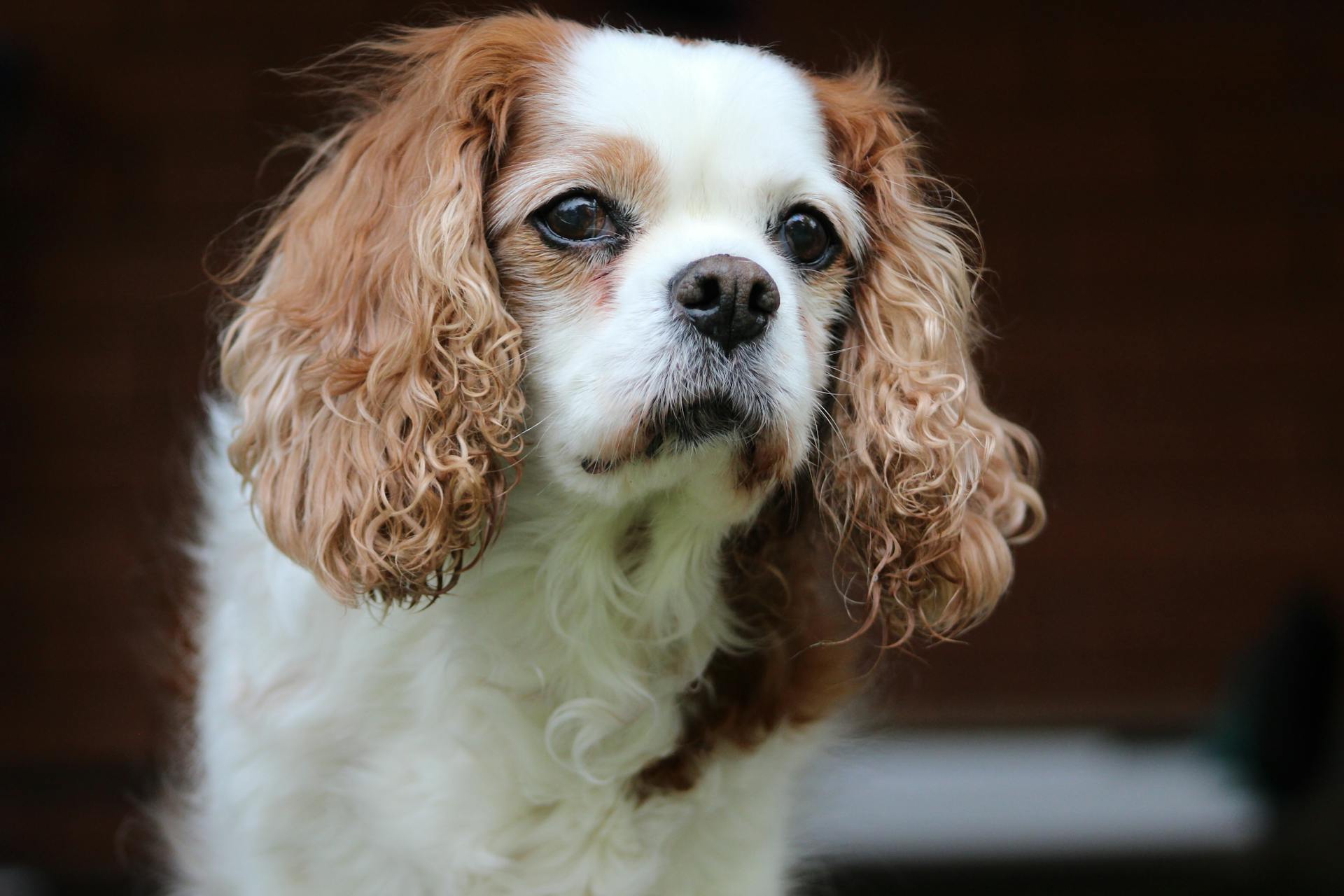
- Blenheim: chestnut-colored coat with white markings on the face, neck, chest, legs, and underside of the body, and a characteristic "Blenheim spot" on the top of the head.
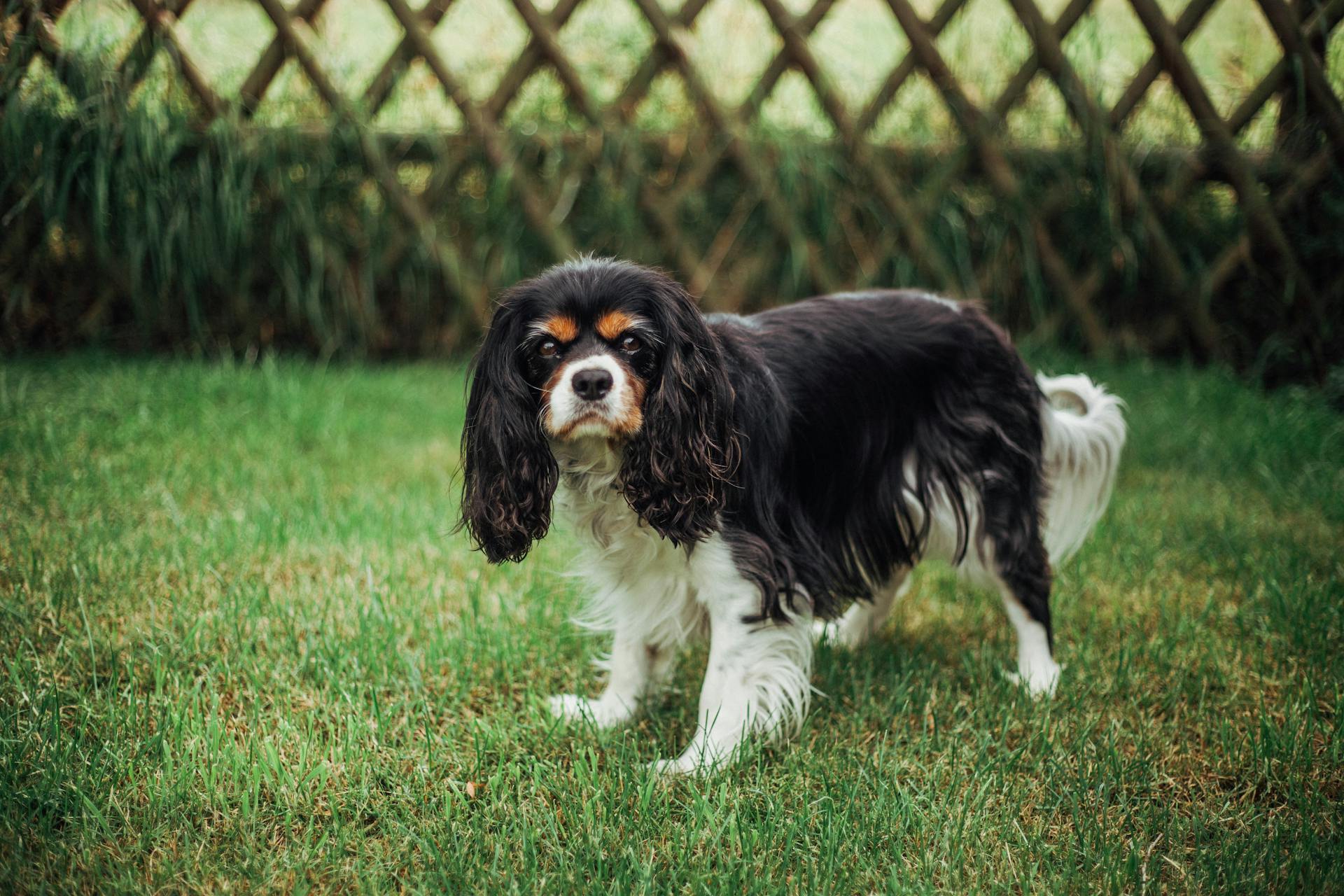
- Tricolor: predominantly black coat with white markings on the face, chest, legs, and underside, and tan accents above the eyes and on the cheeks and ears.
- Black and Tan: black coat with tan markings above the eyes, on the cheeks, inside the ears, on the legs, and on the underside of the tail.
- Ruby: solid chestnut or ruby-colored coat with no white or other color markings.
Regardless of the coat type, regular grooming is essential to maintain the silky and elegant appearance that Cavaliers are known for.
Grooming Routine
Grooming your Cavalier King Charles Spaniel can be a pleasant and bonding experience for both you and your dog.
Daily brushing is a must, and a 10-minute brush-out is recommended to keep knots from forming along the dog's ears, chest, back of the legs, tail, and underbelly.
A boar bristle brush or a pin brush is ideal for this task, as it gently removes dead hair and helps the coat lie flat and feel soft.
Cavalier King Charles Spaniels shed all year long, but daily brushing confines hair to the brush rather than around the house.
To make the process even easier, keep a lint brush handy to quickly pick up stray hairs, especially if you wear black clothing.
Regular grooming also helps to prevent matting and tangling, which can be painful for your dog if left unchecked.
Broaden your view: Dog Grooming Pin Brush
How to Bathe a CKCS
Bathing your CKCS is a crucial part of their grooming routine. It helps keep their coat healthy and fresh-smelling.
Before you start bathing, it's essential to brush out any mats and tangles from their coat. This will make the bathing process much smoother and less stressful for both you and your dog. Remove any loose hair and skin dander using a blaster, and use a rubber curry or undercoat rake to loosen any dirt or debris.
Pluck any long downy hair from the head and around the ears to encourage the coat to lay flat against the body. Always card in the direction of coat growth to avoid causing any tangles or mats.
A monthly bath is recommended for CKCS who don't go to dog shows, but if you do take them to shows, they'll need a weekly bath the day before competing. Use a canine shampoo with a mild, low-residue formula and rinse with water that feels cooler than you bathe in.
To dry your CKCS, use a canine dryer, which has a cooler temperature than a human hairdryer. For show dogs, use a drying coat for a few hours or overnight to flatten their hair and avoid it from curling.
Here's a checklist of things to do before and after bathing your CKCS:
- Pluck hair from the ear canal as necessary
- Use a blaster to loosen any skin dander, dirt, debris and loose/shedding coat
- Use a rubber curry, undercoat rake, carding tool or bristle brush to remove loose coat
- Brush out any tangles and/or matts from the longer coat or apply intensive conditioner
- Card any excess undercoat to encourage the coat to lay flat against the body
- Pluck or trim any long downy hair from the head and around the ears
- Use a damp cloth to wipe away tear stains
- Line brush using a firm slicker
- Neaten the bottom of the ear with thinning/safety scissors
- Shave paw pads with a #15 – #40 blade
- Back brush any excess hair between toes and trim with thinning/safety scissors
Coat and Nail Care
Regular brushing is essential to prevent mats and tangles, so make sure to use a soft bristle brush or a pin brush to gently work through your Cavalier's coat.
Start at the head and work your way down the body, paying close attention to the feathering on their ears, legs, and tail.
Use nail clippers once every three to four weeks to trim your Cavalier's nails, and aim to keep them short to avoid clicking on the floor.
Trim the hair on the bottom of the paws weekly with blunt-nose, curved scissors to prevent slipping on slick surfaces, but be sure not to trim the top of the feet.
Discover more: How to Use Curved Scissors for Dog Grooming
Brushing
Brushing is a daily must for Cavalier King Charles Spaniels, with a 10-minute brush-out a must to prevent knots from forming.
Use a boar bristle brush or a pin brush to gently work through your Cavalier's coat, as a daily 10-minute brush-out is essential to prevent mats and tangles.
Start at the head and work your way down the body, paying close attention to the feathering on their ears, legs, and tail, as this is where hair tends to tangle.
Regular brushing will also help confine hair to the brush rather than around the house, making shedding manageable.
Pay special attention to the hair around the ears, as it can easily tangle and lead to matting.
Use a soft bristle brush or a pin brush to gently work through the hair, and finish the grooming process with a final gentle brush to ensure their coat is smooth and tangle-free.
A pin brush is a good choice for Cavalier King Charles Spaniels, as it has widely spaced wire pins and a ball at one end to avoid damaging the coat.
Daily brushing will also help keep the coat looking its best, with a silky coat that lies flat and feels soft.
A unique perspective: Plucking Ears Dog Grooming
Trimming a Cavalier's Claws
Trimming a Cavalier's claws is a crucial part of their overall care.
You should trim your Cavalier's nails as needed to prevent them from becoming too long and causing discomfort or mobility issues.
It's a good idea to trim your Cavalier's nails once every three to four weeks, as this will help maintain their comfort and mobility.
Use nail clippers specifically designed for dogs, and consult your veterinarian or a professional groomer if you're unsure how to trim nails safely.
Trimming the hair on the bottom of your Cavalier's paws, between the pads of the toes, is also important.
To avoid your Cavalier slipping on slick surfaces, trim this hair weekly with blunt-nose, curved scissors.
Don't trim the top of the feet, as feathering on the feet is a feature of the breed.
Additional reading: How to Trim a Dachshunds Nails
Hair Clipping
Hair Clipping is a crucial part of keeping your Cavalier's coat in top condition. The short hair on the underside of their feet can be trimmed to prevent it from growing too long and becoming painful.
Regular nail trimming is also essential to prevent overgrowth, which can cause discomfort and lead to health issues. Trimming their nails every 4-6 weeks is a good rule of thumb.
Long nails can get caught on things and cause injury, so it's essential to keep them trimmed.
Curious to learn more? Check out: How Long Does Grooming a Dog Take
Ear and Eye Care
Cavalier King Charles Spaniels have beautiful, delicate features that require extra attention to stay healthy.
Their floppy ears are prone to ear infections due to moisture buildup and debris accumulation, so regular ear cleaning is essential.
Using a veterinarian-recommended ear cleaner will help prevent infections and keep your dog's ears clean and dry.
To clean your Cavalier's ears, inspect them daily and clean out any excessive wax and debris that may accumulate.
You can also protect their neck and ears during mealtime with a soft, cotton head covering or snood.
This will help keep their ears dry and clean, reducing the risk of infections.
Their eyes can be prone to stains until they grow in all their adult teeth, so some owners apply petroleum jelly under the eyes on the tear track every morning and rinse it off at night.
This helps keep their eyes clean and healthy.
If this caught your attention, see: Dog Ear Grooming
Tips and Recommendations
Grooming your Cavalier King Charles Spaniel requires the right tools for the job. You'll want to start with a good nail trimmer to keep those nails in check.
A hemostat or forceps can be useful for gripping and holding onto your dog's skin when removing mats or tangles. Clippers are also a must-have for trimming your dog's coat.
Rubber curry combs are great for removing loose hair and distributing skin oils. A pin brush is perfect for smoothing out your dog's coat and removing tangles. Bristle brushes are also useful for distributing skin oils and removing loose hair.
For more thorough grooming, you'll want to use a long-pinned firm/medium slicker or a dematting slicker to remove mats and tangles. A greyhound comb can also be helpful for removing loose hair and tangles.
If your Cavalier King Charles Spaniel sheds heavily, you may want to consider using a de-shedding tool to help reduce shedding. De-matting tools can also be useful for gently removing mats and tangles.
For more precise grooming tasks, you may want to use thinning scissors or detailing/safety scissors.
A unique perspective: Dog Grooming with Scissors
Featured Images: pexels.com