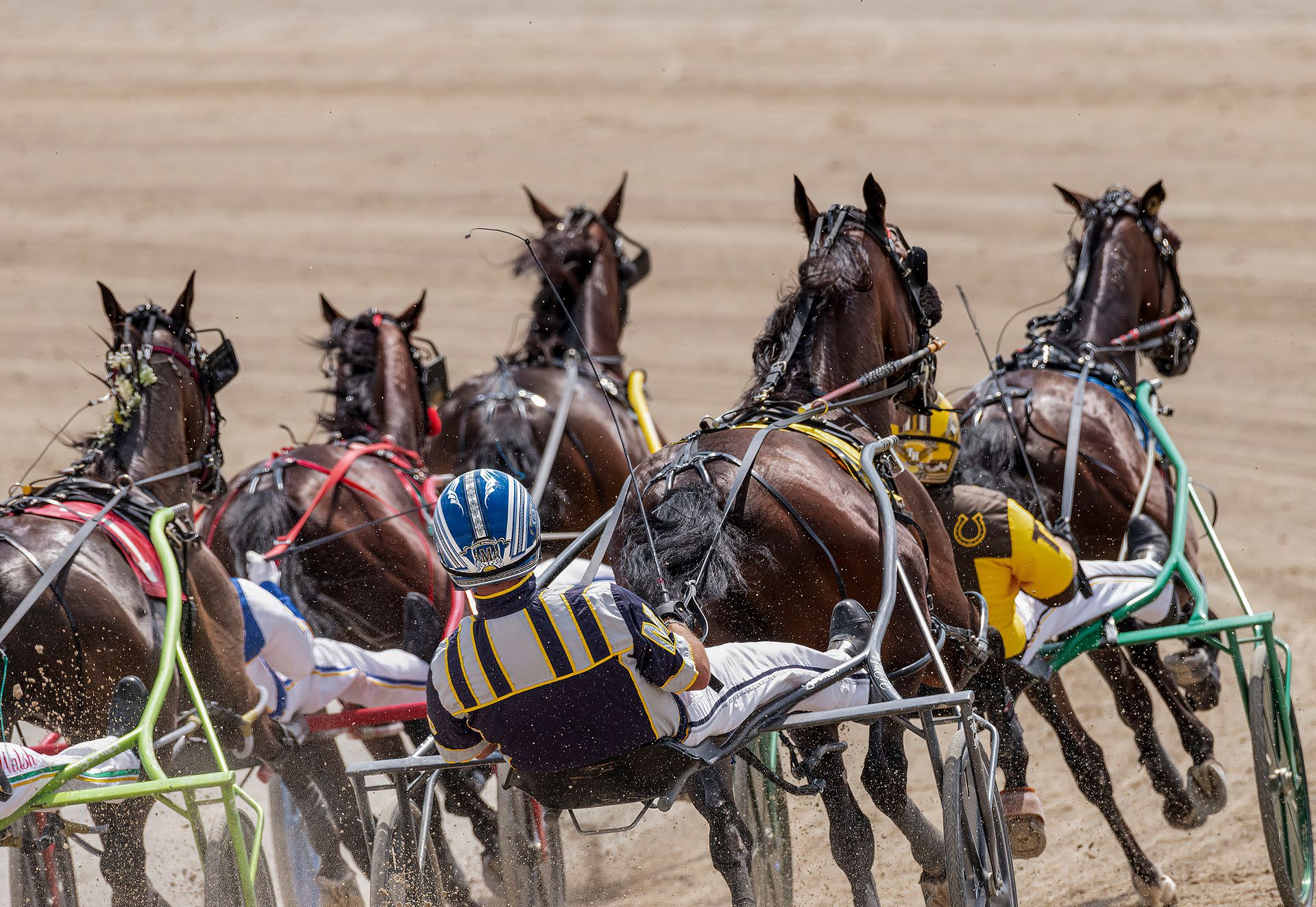
Horse driving carts have been around for thousands of years, with evidence of their use dating back to ancient civilizations in Egypt, Greece, and Rome. They were a primary mode of transportation and a symbol of wealth and status.
In many cultures, horse driving carts are still used today for recreational and competitive purposes. For example, in Scandinavia, horse driving carts are a popular activity during the winter months when snow covers the roads.
Horse driving carts can be used for a variety of activities, including racing, obstacle courses, and even therapeutic programs. One such program is the Hippotherapy program, which uses horse driving carts to help individuals with physical disabilities.
The use of horse driving carts requires a great deal of skill and coordination, as the horses must be trained to work together as a team to navigate the course or terrain.
Types of Horse Carts
There are several types of horse carts, each with its own unique characteristics and uses.
A buggy is a lightweight, two-wheeled horse cart that's ideal for short trips and gentle terrain.
A wagon is a sturdy, four-wheeled horse cart designed for heavier loads and longer journeys.
A phaeton is a lightweight, open-topped horse cart with two or four wheels, often used for recreation and leisure activities.
A surrey is a four-wheeled horse cart with a covered top, typically used for transportation and social events.
Cart Configuration and Setup
The key to a comfortable and safe horse driving cart experience is ensuring the cart fits your equine. This means being able to sit in the driver's seat and see over your equine's head.
It's actually better to have your shafts be too long than too short, as you'll rarely need to pull the equine closer to the cart, but often need to push them away.
A cart that's too small for your equine can lead to problems, such as the pony sitting on the dash and the shafts being too low on the pony's body, making it impossible to balance the cart properly.
Does My Horse Fit the Cart?
When you're in the driver's seat, you should be able to see over your horse's head. This is key to ensuring a comfortable and safe ride for both you and your equine.
The photo below shows Bonny and Tia in a vehicle that fits the mare beautifully, demonstrating the ideal position.
Shafts that stick out past your shoulder are too long, or your horse needs longer traces to fit comfortably. However, if you adjust the traces, the footman's loops may be too far back, making it hard to correctly wrap your hold back straps.
It's better to have shafts that are too long than too short. In most cases, you'll need to push your horse away from the cart seat and dashboard, rather than bringing them closer.
A cart that's too small for your horse can be disastrous. The photo below shows a cart that's far too small for the pinto pony hitched to it, with the pony nearly sitting on the dashboard and the shafts too low on their body. This setup can't be properly balanced, and the weight of the driver, passenger, and cart will put too much pressure on the horse's back.
Broaden your view: How to Train Your Horse to Back Up?
Metal Easy Entry

The Metal Easy Entry cart is a heavy-duty option perfect for mini horse training or pleasure driving. It features a full spring suspension system for a smooth ride.
This cart has extra cargo space under the seat, which can be a game-changer for transporting equipment or supplies. It's also available in pony size.
The standard features of this cart include a black vinyl seat, heavy-duty shafts, and a painted metal floor. The cart weighs 79lbs.
It's designed to fit mini horses of 28"-34" in height with 20" wire wheels. For mini horses of 35"-40" in height, 26" wire wheels are recommended.
Curious to learn more? Check out: Mini Horse
Pequea Deluxe Show
The Pequea Deluxe Show cart is a great option for those looking for a smooth ride. It features a half elliptic suspension system, which helps to absorb bumps and vibrations.
This cart can be customized with a variety of options, including floor boots, wheel guards, and pin striping. The adjustable seat also allows you to find a comfortable position.
The Pequea Deluxe Show cart is designed to fit miniatures with a minimum height of 28" to 38". It also accommodates wheel sizes of 20"-24" or 26".
Consider reading: Horse Show
Number 17 Mini

The Number 17 Mini cart is a great all-purpose option for your mini. It's very lightweight, making it easy to get in and out of.
This cart is our most popular model and can be dressed up for showing with the many add-on options available. It's perfect for riding around the farm or for mini owners who want a stylish cart.
The Number 17 Mini cart comes with interchangeable wood and wire spoked wheels, which is a great feature if you want to customize your cart. The weight capacity of this cart is 78lbs.
The cart is available in different sizes to fit various mini breeds, including 28"-34" and 35"-40" minis. The 20" wire wheels are suitable for 28"-34" minis, while the 26" wire wheels fit 35"-40" minis.
You can also get this cart in pony size, making it a great option for owners with smaller minis. The price for this cart is $795.00.
Driving Configurations

Driving configurations can be a bit confusing, but basically, it's about how you hitch up your horses to a vehicle. The most common arrangements are single, pair, and team.
A single configuration is when you have one horse in the shafts. Simple as that.
For pairs and teams, you'll need to consider the harness and reins. For pairs, the reins are branched so the driver holds just two reins, one for each horse. This is a big help when you're driving a pair.
Here are some common driving arrangements:
- Single: One horse in shafts
- Pair: Two horses side by side
- Four-in-hand: A pair with a second pair in front
In addition to these, you might also come across tandem, randem, and three abreast arrangements. These are a bit more complex and require more horses, but they can be useful for heavier loads.
It's worth noting that the rearmost single horse is placed in shafts, while the rearmost pair of horses has a pole between them. The foremost horses are called leaders, and they're responsible for pulling the vehicle forward. The rearmost horses are called wheelers, and they help with turning, slowing, and stopping the vehicle.
Horse Cart Activities
Harness racing involves horses pulling a lightweight one-person two-wheeled cart known as a sulky.
Chuckwagon racing is a thrilling event where teams of horses, drivers, and outriders compete together, with each team starting by loading a covered wagon.
In combined driving, precision and control are emphasized in an arena-based dressage test, while fitness and endurance are showcased in a cross-country marathon section.
Check this out: Horse Racing
05 Pequea Pleasure
The Pequea Pleasure Cart is a great option for those who want a well-balanced cart for pleasure driving.
It's an economy version of the #01 cart, which means you get standard features at an affordable price. The Pequea Pleasure Cart includes a spares box, seat side rails, fold-down back rest, and black vinyl seat.
You can choose from a variety of stain colors to match your personal style. The cart also comes with interchangeable wood and wire spoked wheels.
This cart is perfect for mini horses, with a weight capacity of 87lbs and a size range of 30"-40".
Pequea Classic Show
The Pequea Classic Show cart is a top-notch choice for a smooth ride. It features a half elliptic suspension system that ensures a balanced and comfortable experience for both you and your mini horse.
This cart is designed to fit minis with a height of 28"-38" and wheels of 20"-26". Its weight is a manageable 105lbs.
The Pequea Classic Show cart is a very classy cart with a spindle seat, fenders, and dashboard. It's a great option for those who want a cart that looks as good as it performs.
You can customize your Pequea Classic Show cart to fit your style with pinstripe colors, paint colors, seat materials, and different wheels. The price for this high-quality cart is $3210.00.
Four-in-Hand Driving
Four-in-hand driving is a team of four horses pulling a carriage, coach or other horse-drawn vehicle.
This style of driving is the top division of combined driving in equestrian sports, with other divisions for a single horse or a pair.
One of the international events featuring only four-in-hand teams is the FEI World Cup Driving series.
Racing
Horse racing is a thrilling sport that involves horses pulling various types of carts or wagons at high speeds. Harness racing is a type of speed sport where horses pull a lightweight one-person two-wheeled cart called a sulky.
Chuckwagon racing involves teams racing to the finish, each consisting of a driver, four horses, and several outriders. Each team starts by loading the wagon and then racing together to cross the finish line.
Racing events can be held at various distances and courses, and horses are expected to perform well in different conditions. In combined driving, horses compete in one, two, and four-horse teams, pulling light carriages or carts and performing an arena-based dressage test.
History
The history of horse driving carts is a fascinating story that spans thousands of years. The earliest evidence of horse domestication and use as a driving animal dates back to around 2000 BC in the southern Urals.
Horses were initially used in chariots, which quickly spread throughout Europe, Greece, Egypt, and Mesopotamia in just 500 years. By 2500 BC, horses were already being used in wheeled carts in ancient Sumer.
The Standard of Ur, a artifact from ancient Sumer, shows horses or donkeys hitched to carts with a yoke around their necks. This design was similar to that of oxen. The Hyksos invasions of Egypt in 1600 BC saw horses pulling chariots with an improved harness design that made use of a breast collar and breeching.
The breast collar style harness is still used today for pulling lightweight vehicles. The invention of the horse collar in China during the 5th century allowed horses to pull greater weight than before. This innovation arrived in Europe in the 9th century and became widespread by the 12th century.
The table below shows various types of horse-drawn vehicles and carriages:
The use of horses for driving carts continued until the invention of the automobile, which diminished the need for horse-drawn vehicles. However, interest in driving competition for horses continued, and many third world nations still rely on horses for basic farm work and transportation.
Frequently Asked Questions
What is the driver of a horse and cart called?
The driver of a horse and cart is called a coachman. This term applies to drivers of various coaches and carriages with independent seats.
What does cart driving the horse mean?
Cart before the horse" means doing things in the wrong order, often planning how to use something before you have it. This idiom warns against making decisions based on uncertain or future outcomes.
Featured Images: pexels.com