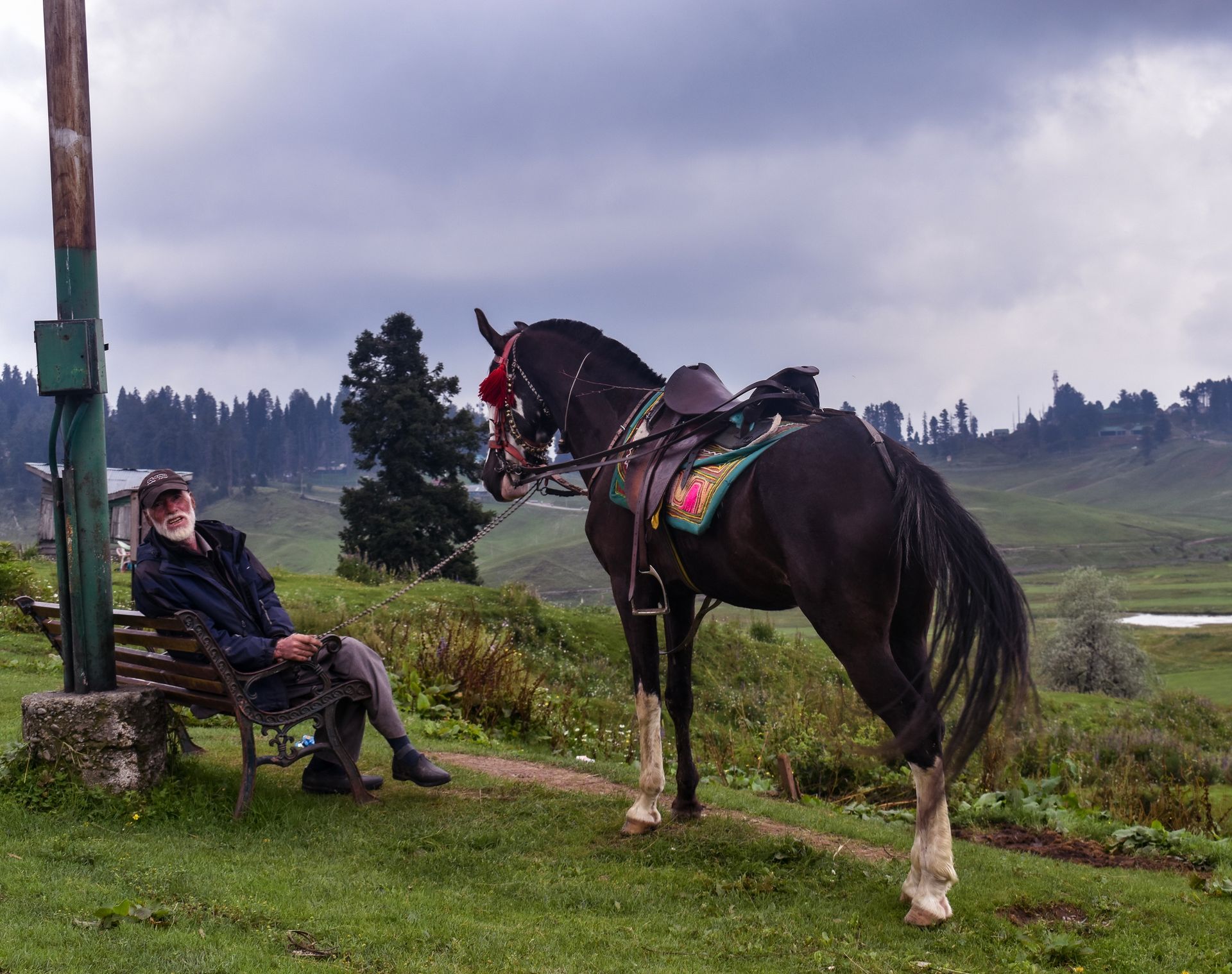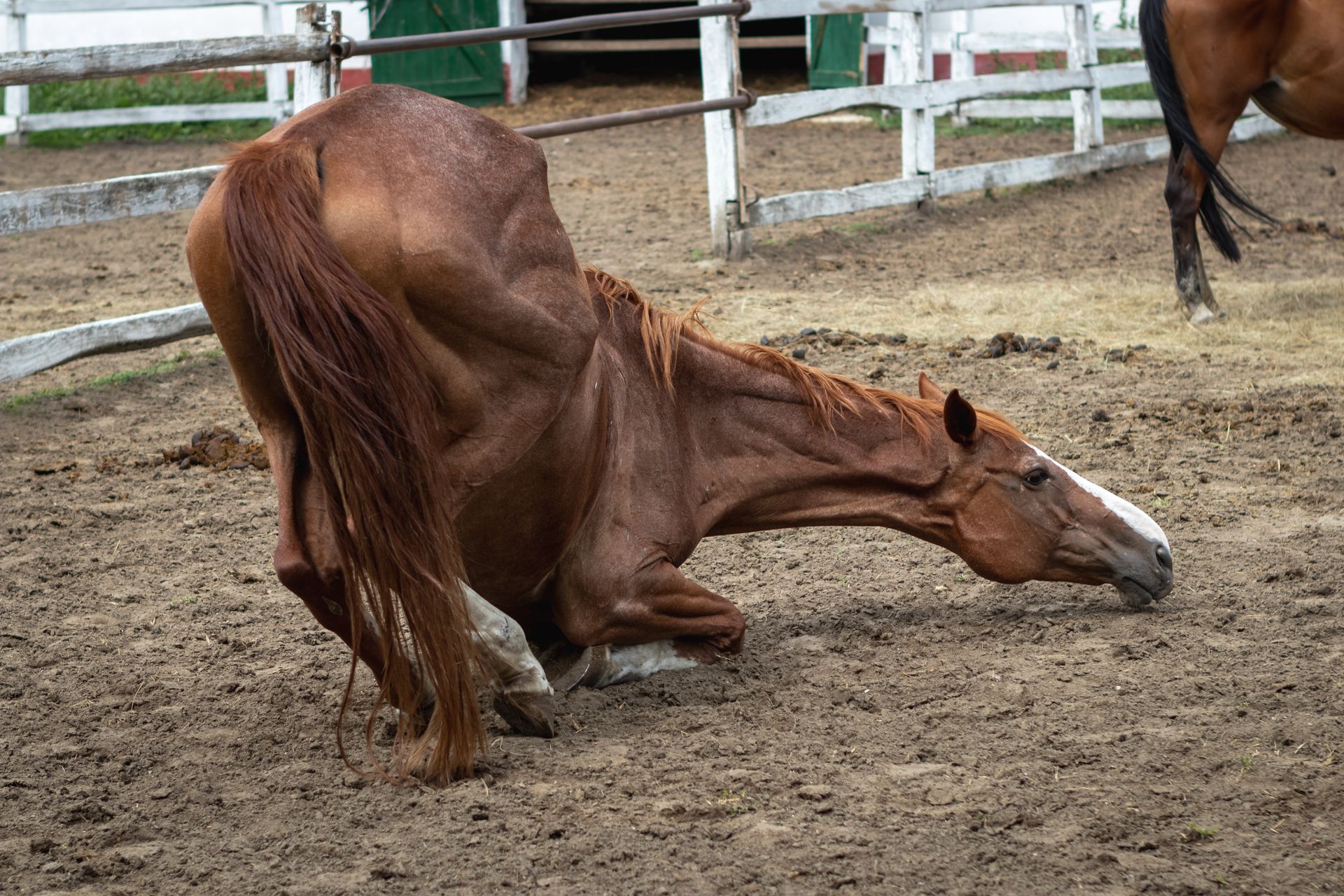
Horses communicate with each other through a variety of body language cues, including ear and tail positions, which can indicate their mood and intentions.
A horse's ears can be a good indicator of their emotional state, with forward ears typically indicating interest or alertness, while laid-back ears may suggest fear or anxiety.
Horses also use vocalizations to communicate, such as neighing to alert others to potential threats or to initiate interaction.
Neighing can be a loud and attention-grabbing sound, often used by horses to get the attention of other horses or humans.
Types of Equine Communication
Horses communicate through body language, which is their primary way of expressing emotions and intentions. This language is complex and multifaceted, making it essential to understand the various signals they send.
Ears are a crucial indicator of a horse's emotional state. Ears that are alert and forward can indicate interest, whether positive or negative. Ears that are floppy or droopy, on the other hand, suggest a relaxed horse.
The eyes are a window into the soul, and horses' eyes can reveal their emotional state. Wide eyes often indicate fear, while soft eyes suggest relaxation. You can even tell when a horse has submitted to you through their eyes, as they will be soft and looking downwards.
A horse's tail can also convey their energy level. Relaxed horses typically have tails hanging low and limp, while those that are scared or excited often carry their tails high.
A horse's body language can reveal a lot about their emotional state. Tense horses often carry their necks high and move rapidly, indicating fear or anxiety. In contrast, relaxed horses tend to carry their heads low and move with fluidity.
Horses also communicate through facial expressions. When a horse is relaxed, their face will typically have a calm and contented look. On the other hand, a tense or irritated horse will display a different facial expression.
You might like: What Do Horses Do When They Are Scared?
Facial and Body Language
Horses are highly social animals, and their facial and body language can tell us a lot about how they're feeling. They're excellent communicators, and understanding their language can help us build stronger bonds with them.
Horses use their facial expressions to convey emotions, just like humans do. They can recognize and respond to human facial expressions, and even assess our emotional states.
A horse's muzzle is a very expressive feature, and it can tell us a lot about their mood. A bored or at-rest horse will have a droopy muzzle, while a tense horse will have a pursed muzzle.
Horses also use their ears to communicate. Forward ears indicate alertness and interest, while pinned-back ears can mean fear, aggression, or stress. Rapidly flicking ears can indicate a heightened state of alertness or anxiety.
The white part of a horse's eye, called the sclera, can be a sign of fear, startled, or nervous behavior. A relaxed horse will have their eyes wide open, but the sclera not showing.
On a similar theme: How to Get a Horse's Attention?
Horses also use their forelegs to communicate. Standing splayed with the front legs can be a sign of fear or impending spooking. Pawing, stomping, and striking can indicate irritation, frustration, or aggression.
By paying attention to these subtle cues, we can build a stronger connection with our horses and better understand their needs and emotions.
Interpreting Equine Signals
A horse's ears are a quick way to get clues into their emotional state. Ears that are alert and forward indicate a horse that's interested, while floppy or droopy ears show a relaxed horse.
Horses also communicate through their eyes. Wide eyes can indicate a scared horse, while soft eyes show a relaxed horse. You can even tell if a horse has submitted to you through their eyes, as they'll be soft and looking downwards.
The tail is another important indicator of a horse's energy level. A relaxed horse will have a tail hanging low and limp, while a scared or excited horse will carry their tail high.
See what others are reading: Horse Show
A horse's body language can also tell you a lot about their state of mind. A tense horse will carry their neck high and move rapidly, while a relaxed horse will carry their head low and move fluidly.
Here are some common visual signals to look out for:
By paying attention to these visual signals, you can get a better understanding of your horse's emotional state and respond accordingly. For example, if your horse's ears are back and their tail is high, it may be a good idea to give them some space and let them calm down.
Horses also communicate through audible signals, such as whinnying, squealing, and snorting. Loud whinnying can indicate that a horse is trying to get attention, while kindly whinnying can be a friendly greeting. Squealing can be a sign of excitement or fear, while snorting can indicate that a horse is feeling threatened or uncomfortable.
Chemical signals are also an important part of horse communication, particularly when it comes to recognition and bonding. Horses will often smell each other's noses and mouths when they meet for the first time, and the scent of each individual horse is very important for recognition.
By paying attention to these different types of signals, you can get a better understanding of your horse's emotional state and respond in a way that is calm and respectful.
Recommended read: When to Blanket an Old Horse?
Equine Communication Methods
Horses communicate primarily through body language, which is a quick way to get clues into their emotional state. Ears that are alert and forward indicate a horse that's interested, while floppy or droopy ears are a telltale sign of a relaxed horse.
The eyes are a window into the soul, and in horses, they can reveal a lot about their emotional state. Wide eyes often indicate fear, while soft, relaxed eyes are a sign of a calm horse.
Horses also use their tail to express their energy, with relaxed horses carrying their tails low and limp. Scared or excited horses will often carry their tails high.
To read a horse's face, you need to spend some time observing their relaxed expressions. Horses that aren't feeling well will often look irritated or tense, while happy horses have a relaxed look to them.
Here are some common equine noises that can indicate a horse's emotional state:
- Whinny: often a sign of excitement or greeting
- Nicker: a sweet, inviting sound associated with affection
- Blow: a gusty blow from the nose indicating fear, excitement, or curiosity
- Squeal: often a sign of aggression, dominance, or displeasure
By understanding these vocal cues, you can better communicate with your horse and build a stronger partnership.
Horses also use visual signals to communicate, such as:
- Posture: a relaxed horse has an elongated body and carries their head and neck low, while a tense horse is short in the body and has their head and neck up
- Ear position: two ears pinned back means "go away", while a horse with two ears forward is alert
- Tail swishing: can indicate frustration or discomfort
In addition to these visual cues, horses also use chemical signals, such as scent marking, to communicate with each other. For example, when horses meet for the first time, they will smell each other's nose and mouth, followed by smelling the flanks and belly.
Here are some common chemical signals used by horses:
- Scent marking: horses use scent to recognize each other and mark their territory
- Urine marking: mares will show the stallion via her urine where she is in her estrus cycle
- Dung piles: stallions often defecate in the same places and on the same pile to show their strength
Context and Understanding
Horses are masters at reading context and understanding the subtleties of their environment. They can even pick up on the context of a situation, like when a stallion won't show interest in a mare's urine if there are no other receptive mares around.
Their ability to understand context is crucial for survival, as it helps them avoid predators and find potential mates. For example, a mare's urine can be a clear signal of receptivity, but only if there are no other mares around to distract the stallion.
Horses also give very clear and discreet signals, which can be easily misunderstood if you're not paying attention. They might rear up as a clear signal of excitement or warning, or leave piles of manure in a discreet signal of marking territory.
Here are some key differences between clear and discreet signals:
Their ability to understand human body language is also impressive, and can even be influenced by their past experiences with humans. If a horse has had positive interactions with a human, they're more likely to approach and trust that person.
Chemical Signals
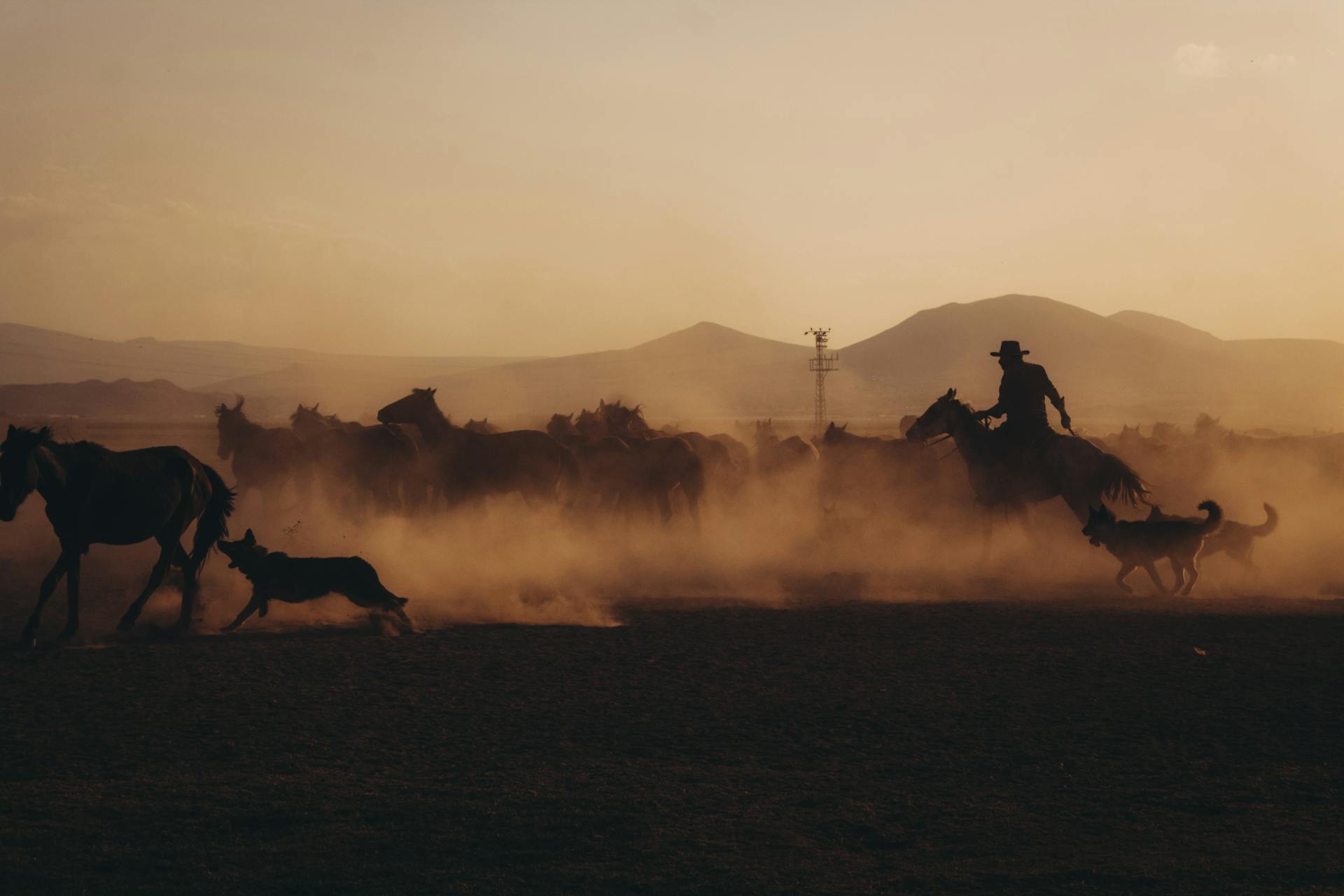
Chemical signals are a vital part of horse communication. They convey a wealth of information, from recognition to reproductive status.
Horses use their sense of smell to gather information about each other. When they meet, they'll often sniff each other's nose and mouth, followed by smelling the flanks and belly. This is a crucial part of getting to know one another.
The scent of each individual horse is unique and plays a significant role in recognition. If a horse is washed, it may not be recognized by the group. This highlights the importance of smell in equine social dynamics.
A foal will often wave its tail from side to side to waft its scent towards the mare, which is essential for the bonding process between them.
A mare will use her urine to signal her reproductive status to a stallion, while stallions will often defecate in the same places to show their strength and dominance.
Expand your knowledge: How Often Should Horses Be Dewormed?
Here's a breakdown of the different ways horses use chemical signals:
- Urine signals reproductive status
- Manure signals strength and dominance
- Scents from nose, mouth, flanks, and belly convey recognition and identity
This understanding of chemical signals can be applied in practical ways, such as recognizing when a horse is in heat or when they're feeling stressed or anxious.
Additional reading: What Do We Do When We Fall off the Horse?
Context Sensitive Signals
Context sensitive signals are a crucial aspect of horse behavior, and understanding them can greatly improve your interactions with horses.
A mare's receptiveness to a stallion can be indicated by the stallion's behavior towards her urine. If she's receptive, he won't show interest in the urine of other mares, but if she's not, he'll examine every puddle in detail.
Horses also use body language to convey context-sensitive signals. A relaxed horse has an elongated body and carries its head and neck low, while a tense horse is short in the body and has its head and neck up.
Here are some examples of context-sensitive signals in horse behavior:
These signals can change depending on the situation, and it's essential to pay attention to the context in which they're given. For instance, a soft bite can be an invitation to play or a warning, depending on the circumstances.
By paying attention to these context-sensitive signals, you can better understand your horse's behavior and improve your relationships with them.
Interpreting Human
Horses are incredibly skilled at interpreting human body language, often without any formal training. They can pick up on subtle cues like body orientation, head orientation, and even eye contact.
Adult horses are particularly good at reading human body language, noticing and reacting to differences in human posture and gaze. This suggests that horses become more attuned to human behavior as they gain experience interacting with humans.
Young horses, on the other hand, tend to rely more on body orientation, only starting to grasp more subtle cues as they mature. This highlights the importance of gentle and attentive interactions with horses, especially during their early development.
Horses are more likely to approach humans who appear to be paying attention to them, and they'll often try to establish eye contact if they feel ignored. This indicates that horses value attention and connection with humans.
Positive interactions with humans can have a lasting impact on horses, with research showing that they remember kind trainers even after several months of separation. This suggests that horses form long-term associations with humans based on their experiences.
Conclusion
As research into horse communication and perception continues to grow, we're learning more about the mental abilities of horses.
The domestic horse (Equus caballus) is capable of functionally relevant responses to human facial expressions of emotion, according to a study by Amy V. Smith et al. in Biology Letters.
Horses are more sophisticated than we often give them credit for, socially, emotionally, and cognitively. This knowledge is crucial for improving their welfare standards.
The Equine Facial Action Coding System (EquiFACS) developed by Jen Wathan et al. in PLOS One helps us understand how horses communicate through facial expressions.
Horses can segregate information about emotional arousal and valence in their whinnies, as discovered by Elodie F. Briefer in Scientific Reports.
Domestic horses have been shown to engage in heterospecific referential communication with humans, as demonstrated by Rachele Malavasi et al. in Animal Cognition.
In a study by K. Maros et al. in Animal Cognition, horses were found to comprehend human pointing gestures.
Positive interactions with humans lead to lasting positive memories in horses, as found by Carol Sankey et al. in Animal Behaviour.
By understanding horse communication and perception, we can improve their welfare standards and build stronger relationships with them.
Explore further: Dog Communication Signals
Frequently Asked Questions
How do you say hello in horse language?
Horses communicate through body language and vocalizations, but a common way to greet them is by offering a gentle touch or a treat, often accompanied by a calm and soothing voice. In equine communication, a soft whinny or a gentle nickering sound can also be a friendly greeting.
How do you tell if a horse is happy to see you?
A happy horse will display relaxed body posture, with its head at a comfortable height and ears in a neutral or forward position. Perked up ears facing forward are a clear sign that a horse is interested and happy to see you.
Featured Images: pexels.com