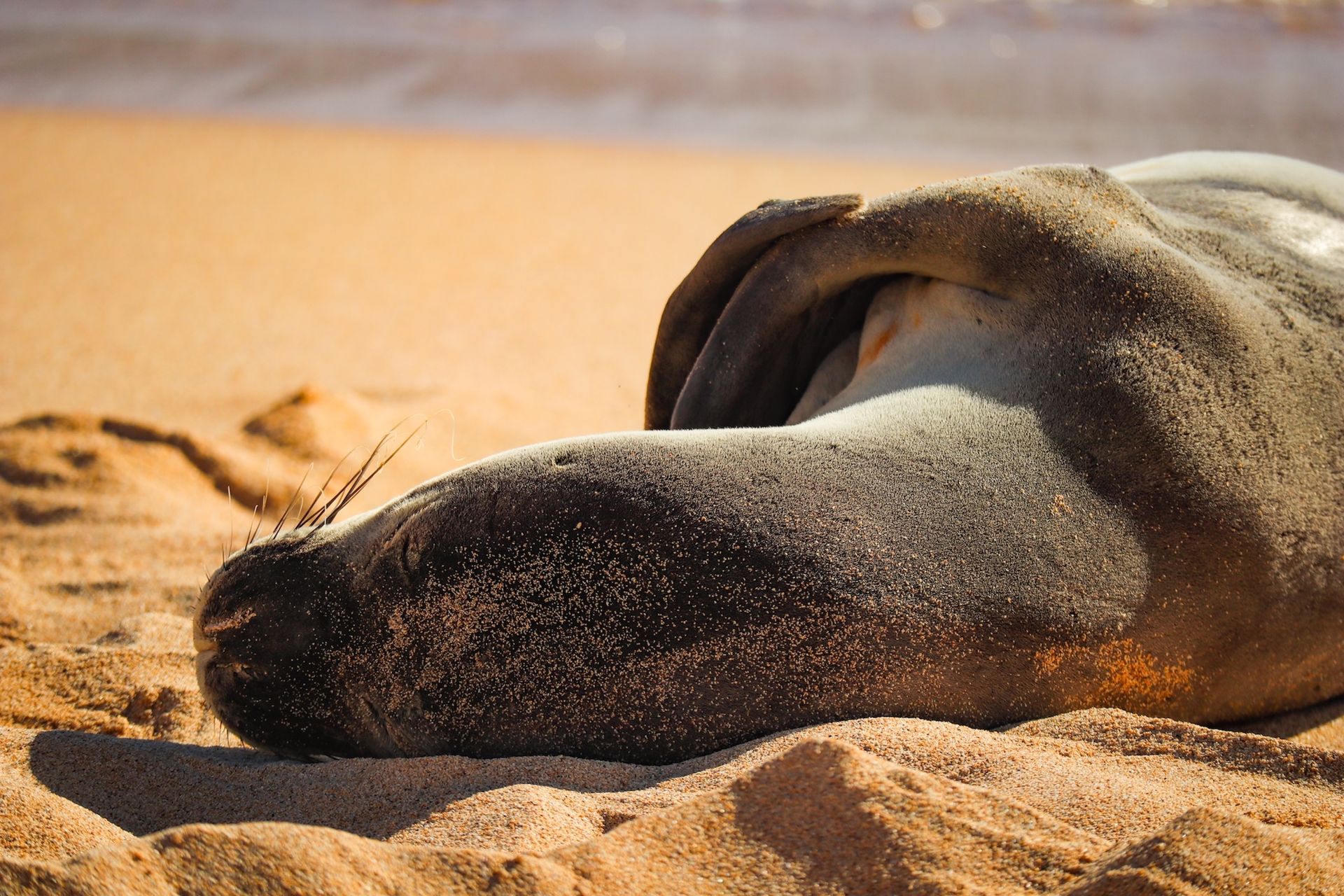
Hawaiian monk seals are one of the most endangered species in the world, with only around 1,100 individuals remaining in the wild.
Entanglement in fishing nets and lines is a major threat to their survival, with many seals getting caught and injured each year.
Human impact on their habitat is another significant challenge, with coastal development and erosion affecting their breeding and resting grounds.
These threats are compounded by the seals' vulnerability to diseases, such as distemper and leptospirosis, which can spread quickly through their small population.
Broaden your view: Why Are Hawaiian Monk Seals Endangered
Threats and Challenges
Hawaiian monk seals face a variety of threats, including entanglement, prey limitation, shark predation, and disease.
Low juvenile survival rates continue to threaten the species, with high mortality rates due to starvation, marine debris entanglement, and predation from sharks like tiger sharks.
Mobbing, a practice among males that involves attacking a female in mating attempts, is responsible for many deaths, especially to females, and leaves them vulnerable to sepsis.
The creation of Papahānaumokuākea Marine National Monument may help expand food supplies, but the seals still have to compete with other predators for food.
Loss of terrestrial habitat is a significant issue, with many low-lying atolls subject to beach loss from storm erosion and sea level rise, including the disappearance of Whale-Skate and Trig Islands.
Intentional feeding, disturbance of sleeping or resting seals, and boat or vehicle strikes are threats to the main Hawaiian Islands population, making them particularly vulnerable during pupping events.
The Hawaiian monk seal has the lowest level of genetic variability among the 18 phocid species, making them more susceptible to disease and reducing their ability to adapt to environmental pressures.
Human-introduced pathogens, including toxoplasmosis and leptospirosis, have infected monk seals, and marine fisheries can interact with them through direct and indirect relationships, including entanglement in fishing equipment and debris.
Additional reading: How Many Hawaiian Monk Seals Are Left
Conservation and Management
NOAA Fisheries has developed a Species in the Spotlight Priority Action Plan for Hawaiian monk seals, which outlines key actions to help recover the species over the next five years.
Explore further: Conservation-reliant Species
The plan includes improving survival of juvenile and adult females in Papahānaumokuākea Marine National Monument, managing and mitigating human interactions, and addressing diseases with population-level impacts.
To address human interactions, NOAA Fisheries has organized and supported workshops on priority research and management needs, and interventions such as vaccination and seal rehabilitation.
Volunteers with the Pacific Islands Marine Mammal Response Network assist with responding to strandings and haul-outs, monitoring monk seal pupping and molting events, and providing public education and outreach.
NOAA Fisheries partners with The Marine Mammal Center in Kailua-Kona, Hawai'i, to provide species-specific rehabilitation support since 2014.
The agency also implements targeted conservation strategies, including translocation of seals to other islands or atolls with improved foraging conditions, rescue and rehabilitation of malnourished animals, and removal of marine debris from beaches and marine habitat.
Here are some examples of conservation and management efforts:
- Translocation of newly weaned pups to areas with low shark predation risk
- Disentangling seals and removal of marine debris from beaches and marine habitat
- Treating injured seals when appropriate
- Hazing of identified aggressors
- Translocating pups from areas where aggressive males frequent
- Removing the aggressive males
NOAA Fisheries also monitors health, including conducting disease surveillance and maintaining disease outbreak preparedness, and provides appropriate medical treatment, including deworming.
A comprehensive review of the monk seal recovery program was conducted in 2014, which analyzed research and enhancement (management) actions proposed by NOAA Fisheries to promote recovery of endangered Hawaiian monk seals.
Research and Science
Our scientists work hard to enhance the recovery of Hawaiian monk seals by investigating threats to their survival and mitigating factors impeding species recovery.
They monitor population trends and evaluate threats to understand the current state of the species.
Designing threat-based interventions to enhance species recovery is a key part of their work.
These interventions are carefully tracked to evaluate their effectiveness in helping the monk seal population grow.
NOAA Fisheries uses innovative science to explore monk seal biology and interactions with humans and the environment.
Their research program leads efforts to apply the best available science to guide management and recovery plans for monk seals.
The goal of the Hawaiian Monk Seal Research Program is to achieve an optimal and sustainable monk seal population.
To achieve this goal, the program collaborates with outside experts on two key research and conservation initiatives.
These initiatives focus on addressing the recovery strategies outlined in the Hawaiian Monk Seal Recovery Plan.
Discover more: World Wildlife Foundation Endangered Species List
The program's work provides annual high-resolution information on monk seal subpopulations, helping assess the species status and population trends.
Survival enhancement activities are implemented and tracked to evaluate their effectiveness in helping the monk seal population grow.
NOAA field teams are deployed to remote islands to monitor subpopulations and perform recovery activities.
Scientists investigate the role of infectious diseases, parasites, and other health threats in the recovery of monk seals.
They develop effective tools and activities to mitigate these threats and help the monk seal population thrive.
To advance knowledge of Hawaiian monk seal health, population dynamics, and diet, scientists use molecular techniques.
Here are some of the ways scientists are working to help Hawaiian monk seals:
- Monitoring population trends and evaluating threats
- Designing threat-based interventions to enhance species recovery
- Tracking the success and effectiveness of population enhancement activities
- Investigating monk seal diseases and parasites
- Using molecular techniques to advance knowledge of Hawaiian monk seal health, population dynamics, and diet
Efforts
Conservation efforts are underway to protect the Hawaiian monk seal, with NOAA Fisheries and its partners working to address various threats to the species.
NOAA Fisheries has implemented targeted conservation and recovery efforts for each identified threat, including fisheries interactions, intentional harm by humans, and disease.
The Hawaiian monk seal is one of NOAA Fisheries' Species in the Spotlight, a concerted effort to save the most highly at-risk marine species.
Only about 1,600 Hawaiian monk seals are left in the world, and their population is about one-third of historical levels, making every seal's life crucial to population growth or decline.
To address the primary threats to Hawaiian monk seals, NOAA Fisheries has developed a Species in the Spotlight 2021–2025 Priority Action Plan.
The plan includes key actions such as improving survival of juvenile and adult females in Papahānaumokuākea Marine National Monument, managing and mitigating human interactions, and addressing diseases with population-level impacts.
Here are some specific actions taken in the first 5 years of the Species in the Spotlight initiative:
- Launched the first-ever effort to vaccinate a wild population for morbillivirus and vaccinated over 700 monk seals
- De-hooked, disentangled, and rehabilitated 154 seals to improve survival
- Increased community awareness, with more than 9,000 sightings of monk seals called into public hotlines in a single year
The Marine Mammal Center's Ke Kai Ola facility has played a critical role in Hawaiian monk seal recovery since its opening in 2014, providing a unique opportunity for rehabilitation and conservation.
Regulations and Planning
The Hawaiian monk seal has been listed as endangered under the Endangered Species Act (ESA) since 1976. This designation was first announced in 41 FR 51611.
The ESA listing has led to various notices and updates regarding the species' conservation status. One notable example is the Notice of Availability published in 72 FR 46966.
To support the recovery of the Hawaiian monk seal, a Recovery Plan was developed in 2007. Additionally, the Species in the Spotlight: Priority Actions 2016-2020, Hawaiian Monk Seal plan was put in place to further address the species' conservation needs.
Regulatory History
The Hawaiian monk seal has been listed as endangered under the ESA since 1976. This designation was made through the Original Endangered Species Act Listing (41 FR 51611).
The listing process has involved several key steps, including a Notice of Availability (72 FR 46966).
Planning and Implementation
Planning and implementation are crucial steps in conservation efforts. A Recovery Plan for Hawaiian Monk Seal was published in 2007, outlining actions to promote the species' recovery.
The plan's effectiveness is regularly evaluated, with a Species in the Spotlight: Priority Actions 2016-2020, Hawaiian Monk Seal report highlighting ongoing efforts.
In 2014, NOAA Fisheries conducted a comprehensive review of the monk seal recovery program, as required by the National Environmental Policy Act. This review, known as a programmatic environmental impact statement, analyzed proposed actions to promote the species' recovery.
These actions include research and enhancement (management) actions, aimed at promoting the recovery of endangered Hawaiian monk seals.
Habitat and Population
The Hawaiian monk seal is found throughout the entire Hawaiian archipelago, a distance of 1,500 miles from Kure Atoll (Hōlanikū) in the northwest to Hawaiʻi Island in the southeast. The majority of Hawaiian monk seals (about 1,200 individuals) live in Papahānaumokuākea, and a much smaller number (about 400) live in the main Hawaiian Islands.
Monk seals live in warm, subtropical waters and spend two-thirds of their time at sea. They use the waters surrounding atolls and islands, and areas farther offshore on reefs and submerged banks. They also use deepwater coral beds to look for food. On land, monk seals haul out to rest, molt, give birth, and nurse. They use a variety of shoreline types, including sand, coral rubble, and volcanic rock. They generally prefer sandy, protected beaches surrounded by shallow waters for pupping.
Here are the main breeding subpopulations in the Northwestern Hawaiian Islands:
- Kure Atoll
- Midway Islands
- Pearl and Hermes Reef
- Lisianski Island
- Laysan Island
- French Frigate Shoals
Habitat and Population
The Hawaiian monk seal is endemic to Hawai‘i, meaning they are native to the Hawaiian Islands and are not found anywhere else in the world.
Their ancient Hawaiian name is ‘llio holo I ka uaua, which translates to "dog that runs in rough water."
The majority of Hawaiian monk seals live in six main breeding subpopulations in the Northwestern Hawaiian Islands. These subpopulations are located at Kure Atoll, Midway Islands, Pearl and Hermes Reef, Lisianski Island, Laysan Island, and French Frigate Shoals.
Smaller breeding sub-populations can be found on Necker Island and Nihoa Island, as well as Gardner Pinnacles and Maro Reef. Most of this population is within the Papahānaumokuākea Marine National Monument, which was designated in 2006.
About 30 percent of today’s Hawaiian monk seal population is alive directly due to conservation efforts led by the National Oceanic and Atmospheric Administration (NOAA) and their partners.
The Hawaiian monk seal population declined for many years due to hunting, but it has started to show an increase in numbers as conservation efforts have increased.
Worth a look: Catalina Island Fox
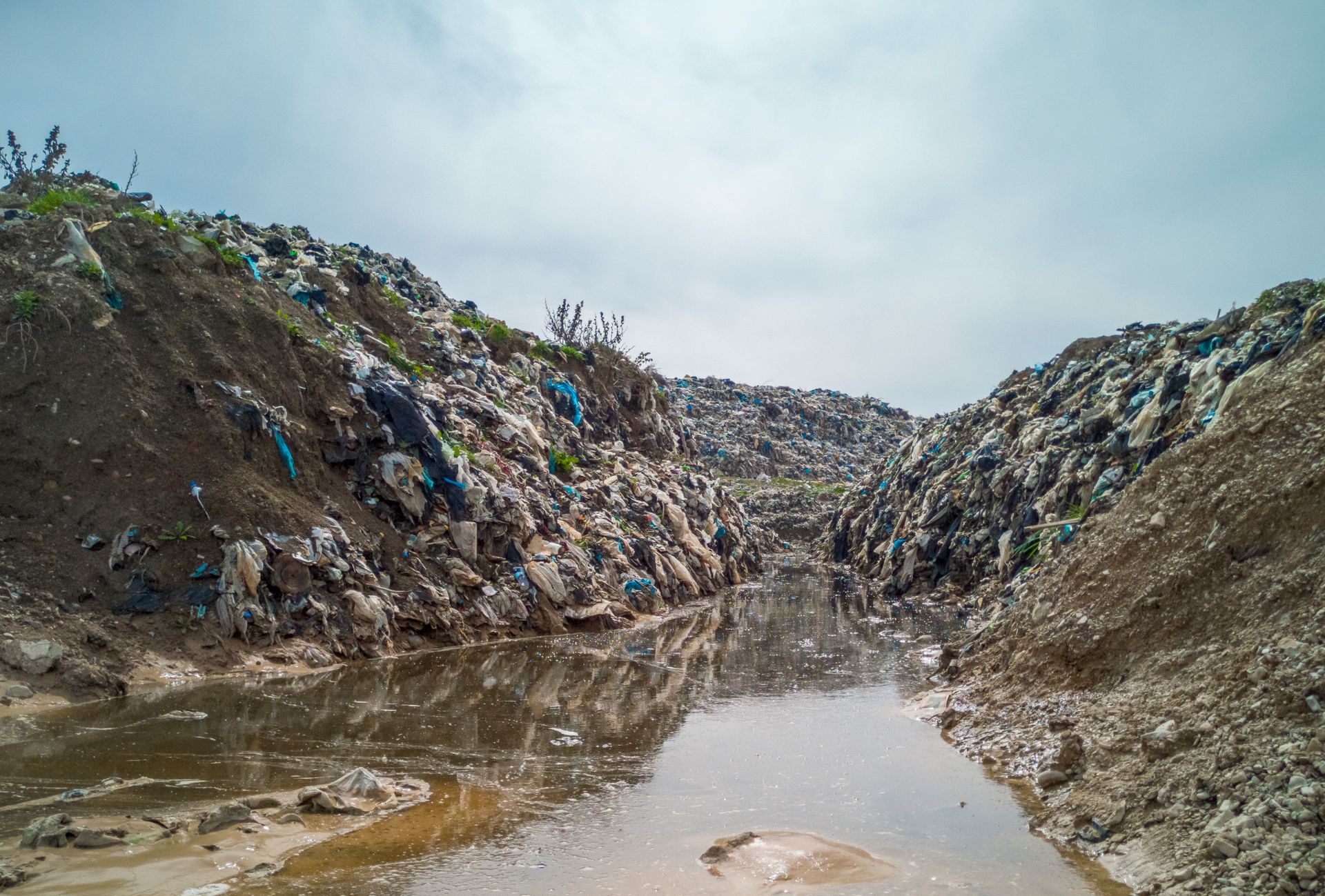
The main threats Hawaiian monk seals face in the Northwestern Hawaiian Islands are maternal separation, malnutrition, predation, habitat loss, and entanglement or ingestion of ocean trash.
Those that live in the Main Hawaiian Islands face additional threats like toxoplasmosis and negative human interactions.
Hawaiian monk seals spend two-thirds of their time at sea, foraging in deeper water outside of shallow lagoon reefs at sub-photic depths of 300 metres (160 fathoms) or more.
On land, monk seals haul out to rest, molt, give birth, and nurse, using a variety of shoreline types, including sand, coral rubble, and volcanic rock.
Consider reading: Falkland Islands Wolf
Feeding
Hawaiian monk seals are skilled predators that can dive to great depths to catch their prey. They can hold their breath for up to 20 minutes and dive more than 550 m.
These amazing creatures usually dive for an average of 6 minutes to depths of less than 60 m to forage at the seafloor. This allows them to catch a variety of prey, including reef dwelling bony fish, cephalopods, and crustaceans.
Their diverse diet is a result of foraging plasticity, which enables them to be opportunistic predators. They feed on a wide variety of available prey, making them well adapted to their environment.
In fact, juveniles and sub-adults tend to prey more on smaller octopus species, such as Octopus leteus and O. hawaiiensis, while adults feed mostly on larger octopus species like O. cyanea.
Education and Outreach
The Hawaiian monk seal is an endangered species that requires careful conservation efforts to protect it.
Conservation organizations such as the National Oceanic and Atmospheric Administration (NOAA) and the U.S. Fish and Wildlife Service work together to protect the Hawaiian monk seal's habitat and prevent human-seal conflicts.
NOAA has implemented a recovery plan for the Hawaiian monk seal, which includes measures such as habitat protection, research, and education.
The recovery plan focuses on addressing the main threats to the species, including entanglement in fishing nets, habitat loss, and disease.
Hawaiian monk seal pupping season is a critical time for conservation efforts, with many organizations working to monitor and protect newborn pups.
Newborn pups are vulnerable to predators and human disturbance, making it essential to have a team of trained volunteers and experts monitoring their progress.
Conservation efforts are also focused on educating the public about the importance of protecting the Hawaiian monk seal and its habitat.
By working together, we can help ensure the long-term survival of this incredible species.
Health and Care
Hawaiian monk seals have a dedicated healthcare system in place to help them recover from injuries and illnesses. The Marine Mammal Center of Sausalito, California, opened a new health care center for monk seals in 2014, named Ke Kai Ola, which means "healing sea".
The center provides long-term care for up to ten seals, including nursing undernourished seals back to health before their transport and release. Since its operation began in early July 2014, the majority of seals rehabilitated have been females.
NOAA's Inouye Research Center at Pearl Harbor on Oahu also has a monk seal holding and care facility that includes four above ground pools, a complete necropsy laboratory, and a state-of-the-art veterinary laboratory. This facility has been used to perform several monk seal dehookings and emergency surgeries.
Disease and Contaminants
Toxoplasmosis is a leading cause of death in Hawaiian monk seals, with at least 15 known deaths directly caused by this parasite.
Seals with toxoplasmosis are usually found dead, and not all carcasses are found, so it's likely that more seals have been affected than are reported.
More cases of toxoplasmosis have been detected in females than males, which means this disease has direct impacts on the species' reproductive potential and population growth.
NOAA Fisheries has been working to prevent other diseases, including West Nile virus, morbillivirus, and bird flu, which are known to be lethal in seals and can cause mass mortality to seal populations.
NOAA Fisheries has been vaccinating seals against morbillivirus since 2016.
Other infections detected in Hawaiian monk seals include Brucella, herpesvirus, and rarely, Leptospira, but they're generally not thought to have population-level impacts.
Report Marine Distress
If you encounter a marine animal in distress, report it immediately to the NOAA Marine Wildlife Hotline in Hawai‘i at (888) 256-9840.
Contact your local stranding network to ensure professional responders and scientists are notified and can take action.
You can also get information on active and past unusual mortality events, which helps scientists understand the health of marine mammal populations.
An unusual mortality event was declared for Hawaiian monk seals in 2001, defined as a stranding that's unexpected, involves a significant die-off, and demands immediate response.
This information is crucial for understanding the health of marine mammal populations and taking necessary steps to prevent further distress.
Health Care Facilities
The new Ke Kai Ola health care center for monk seals in Kailua-Kona, Hawaii, was funded entirely with private donations raised by The Marine Mammal Center.
Located on land owned by Natural Energy Laboratory Hawaii Authority, the $3.2 million facility is specifically designed to provide long-term care for up to ten seals.
The center includes hospital holding pools, pens for isolation, a medical building with a laboratory and food preparation area, and an open-air education pavilion for visitors.
Ke Kai Ola has been nursing undernourished seals, primarily yearlings and pups, from the Northwestern Hawaiian Islands (NWHI) back to health since early July 2014.
The majority of seals rehabilitated at Ke Kai Ola have been females, which could increase the reproductive potential of the wild population.
In addition to Ke Kai Ola, a monk seal holding and care facility has also been operational at NOAA's Inouye Research Center at Pearl Harbor on Oahu since February 2014.
This facility features four above ground pools, a complete necropsy laboratory, and a state-of-the-art veterinary laboratory for surgical and other veterinary procedures.
The NOAA facility has been used for several monk seal dehookings and emergency surgeries, as well as outpatient care for seals before their release back into the wild.
Expand your knowledge: Where Do Wild Horses Live in the United States
Geographic Distribution
Hawaiian monk seals can be found in the Hawaiian Islands, specifically in the Northwestern Hawaiian Islands, where they inhabit coral reefs and rocky coastlines.
They are most commonly spotted on the main Hawaiian Islands of Oahu, Maui, and Kauai.
Their population is fragmented, with different groups isolated on different islands.
Hawaiian monk seals are listed as endangered, with a total population of around 1,100 individuals.
Related reading: Falkland Islands Wildlife
Frequently Asked Questions
How rare is it to see a monk seal in Hawaii?
Monk seals are extremely rare in Hawaii, with only about 1,600 individuals remaining in the wild, making sightings a precious and infrequent occurrence.
What to do if you see a Hawaiian monk seal?
Maintain a safe distance of at least 50 feet from Hawaiian monk seals, and 150 feet from mothers with pups, to avoid disturbing them
Featured Images: pexels.com