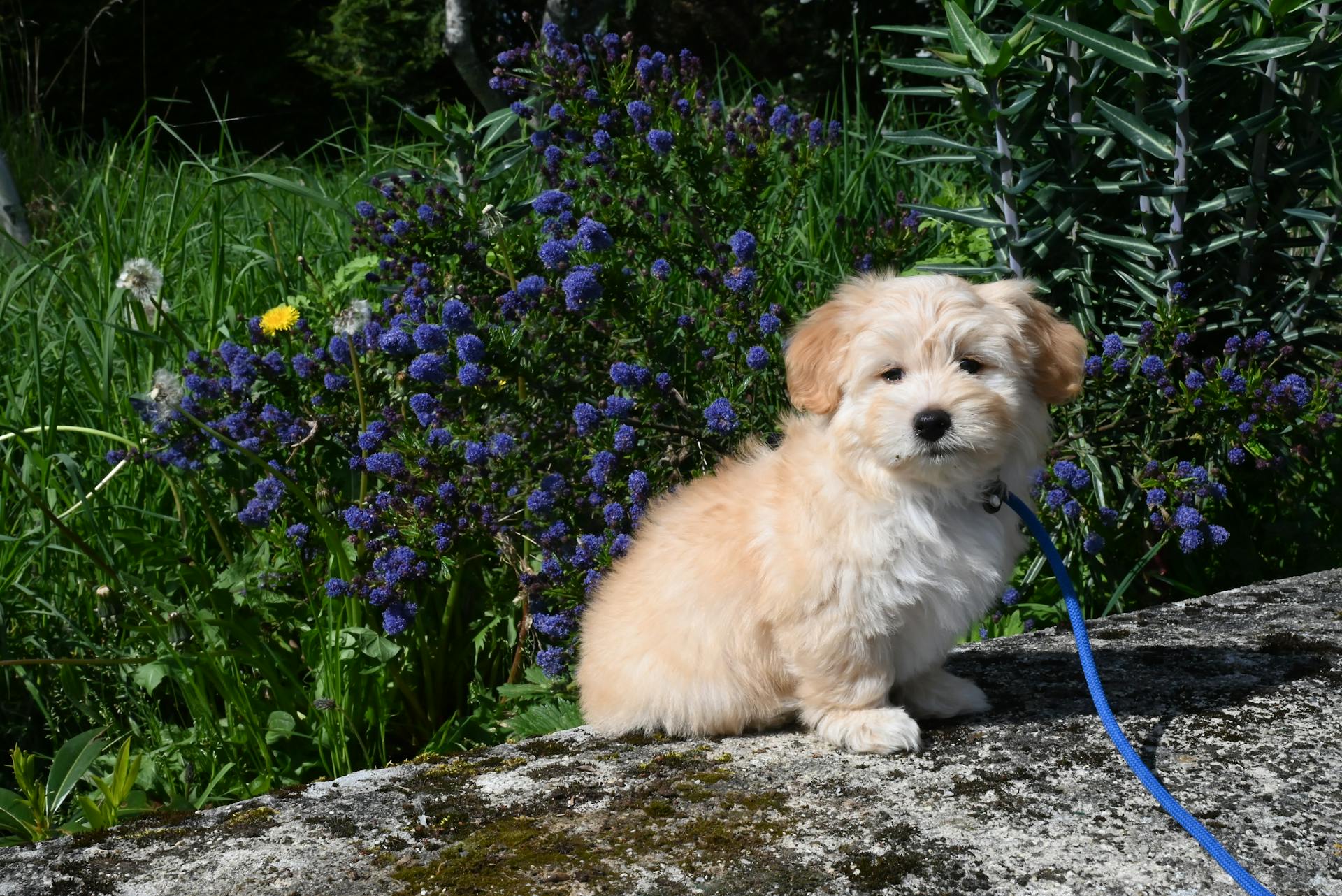
The Havanese is a small, fluffy dog breed that originated in Cuba and is known for its friendly and outgoing personality.
They typically weigh between 7-13 pounds and stand about 8-11 inches tall at the shoulder.
Their long, silky coat requires regular grooming to prevent matting and tangling.
Havanese dogs are highly intelligent and respond well to positive reinforcement training.
Physical Characteristics
The Havanese is a small dog breed with a unique physical characteristic. They typically weigh between 7 and 13 pounds.
Their height ranges from 8.5 to 11.5 inches, making them a toy-sized dog. The ideal height is around 9 to 10.5 inches.
The Havanese has a sturdy body that is slightly longer than tall, giving them a specific appearance. Their body is measured from point of shoulder to point of buttocks.
Their coat is long and soft, often described as silky or wavy. It comes in many colors, including white, black, gold, silver, and chocolate.
Here is a list of the different colors the Havanese breed comes in:
- White
- Black
- Black & Tan
- Black & Silver
- Cream
- Chocolate
- Gold
- Silver
- Fawn
- Blue
- Red
- Red Sable
- Red Brindle
- Gold Brindle
- Silver Brindle
- Black Brindle
- Fawn Brindle
- Blue Brindle
- Chocolate Brindle
- Black and Silver Brindle
- Black and Tan Brindle
- Gold Sable
- Fawn Sable
- Silver Sable
- Chocolate Sable
Their large, dark brown eyes are almond-shaped and surrounded by black pigment. Their ears are long and hang down on the sides of their head.
The Havanese has a unique topline that rises slightly from withers to the croup, giving them a straight but not level appearance.
Temperament and Personality
The Havanese is an extremely affectionate breed that loves to spend time with its family. They are known for their cheerful and lively nature.
These dogs are intelligent and eager to learn, making training a breeze. They thrive on positive reinforcement and early socialization.
Havanese dogs are quite active and prefer spending time with their owners, playing games, and learning new tricks. They are natural extroverts who love entertaining and being the center of attention.
They get along well with children and other pets, especially non-aggressive ones. In fact, they are a popular choice as therapy dogs and emotional support animals.
Despite their small size, Havanese dogs have a confident bark and can alert their family to anything they deem scary. However, without proper training, they may bark excessively.
Overall, the Havanese is an excellent family dog that is adaptable to any environment, as long as they're able to be with their owners.
If this caught your attention, see: Do Havanese Bark a Lot
Care and Grooming
The Havanese requires regular grooming to prevent matting and tangling of its long coat. Brushing a few times a week can help keep the fur in good condition.
Daily grooming also involves trimming nails, giving occasional baths, and checking ears to prevent infections. Cleaning the corners of the eyes every day can also prevent tear stains.
As a sensitive breed, Havanese dogs respond well to positive reinforcement training, but be mindful of overfeeding with treats, as they can easily become obese.
Discover more: Grooming Havanese
Coat and Color
The Havanese coat is quite unique, being a long and furnished double coat that's soft, lightweight, and silky to the touch.
This coat is slightly wavy, profuse, and undulating, with the outer coat being soft and light, not coarse or overly dense. The undercoat is sometimes completely absent.
The Havanese coat can be shown naturally brushed out or corded, a technique that turns the long coat into cords of hair, similar to dreadlocks in humans.
All colored Havanese dogs should have a black nose and black pigment around the eyes, with the exception of chocolate dogs, which may have dark brown pigment on their nose instead.
If this caught your attention, see: Black Havanese Poodle
Grooming
Daily brushing is a must for Havanese dogs to prevent matting and tangling. Their flowing coat needs to be brushed a few times a week, at the very least.
Trimming or corded hair is an option for busy owners to save time and effort. However, regular nail trimming, baths, ear cleaning, and eye wiping are still necessary.
Havanese dogs respond well to training, and it's a great opportunity to bond with your pet. Positive reinforcement with treats, head pats, and praise works well for this sensitive breed.
Be cautious not to overdo treats, as Havanese dogs can easily become obese. A 12-pound dog is equivalent to a whole bag of potato chips for a human.
Smaller breeds like the Havanese are more fragile and prone to injury. Be gentle when handling them, and supervise playtime, especially if they live with small children.
Daily combing and brushing are essential to prevent tangling and matting. Many owners opt for a short trim to reduce grooming time.
Occasional baths are necessary to keep the coat clean and healthy. Don't forget to check the ears regularly and remove excess wax and debris.
Cleaning the corners of the eyes every day can help prevent tear stains. It's a simple habit to get into and makes a big difference in your Havanese's appearance.
Training and Exercise
The Havanese is an intelligent breed that thrives on positive reinforcement and rewards during training. They love to learn new tricks and participate in various activities.
Early socialization is crucial to ensure your Havanese is good with different people and situations. This helps prevent them from becoming timid.
Daily walks are a great way to provide your Havanese with the exercise they need. They have moderate exercise needs, but are not high-energy dogs.
Havanese dogs are sensitive, so it's essential to monitor their energy levels and not overdo it with exercise. If you notice your pet is panting or struggling to keep up, it's time to head home.
Playtime in the backyard can be a great way to keep your Havanese entertained and active. This can be a suitable alternative to long daily walks.
Health and Nutrition
The Havanese breed is generally robust and healthy, but like all breeds, they can be prone to certain health issues. Regular visits to the vet and a balanced diet are crucial to maintaining their health.
To keep your Havanese dog healthy, it's essential to feed them the right amount of food. A general rule of thumb is to provide about one-half to one full cup of dry dog food, divided into two daily meals.
Explore further: Do Havanese Have Health Problems
Some Havanese dogs can be prone to getting overweight, so it's essential to avoid giving them human foods and leaving food out for free-feeding. Treats should be given in moderation.
As with any breed, the Havanese can be susceptible to hip dysplasia, patellar luxation, deafness, hypothyroidism, cataracts, and allergies. It's essential to keep an eye out for these potential issues and consult a vet if you notice any unusual symptoms.
Here are some common health issues that can affect Havanese dogs:
- Hip dysplasia: a condition that can cause pain and lameness
- Patellar luxation: loose kneecaps that can be painful
- Hypothyroidism: an underactive thyroid gland that can cause weight gain, lethargy, and skin changes
- Cataracts: abnormal cloudiness of the eye that can cause vision loss
- Allergies: skin allergies caused by pollen, grass, and fleas
Breed History and Characteristics
The Havanese breed has a rich history that spans over 400 years. It was developed in Cuba in the 1500s from ancestors that arrived from Tenerife.
The Havanese quickly became a popular family pet among the aristocrats in Havana, and its popularity soon spread to Europe in the 18th century. It was a favorite among the British, French, and Spanish nobility.
In 1959, only eleven Havanese dogs remained in the States after Castro's revolution, but their descendants are now found worldwide. Today, the Havanese is ranked 24th on the AKC's list of most popular breeds.
Famous owners of Havanese dogs include the renowned writers Ernest Hemingway and Charles Dickens.
Frequently Asked Questions
哈瓦那犬掉毛吗?
哈瓦那犬虽然是长毛犬,但它的毛发量很少,且毛质与人类类似,不易导致毛发过敏。
Featured Images: pexels.com