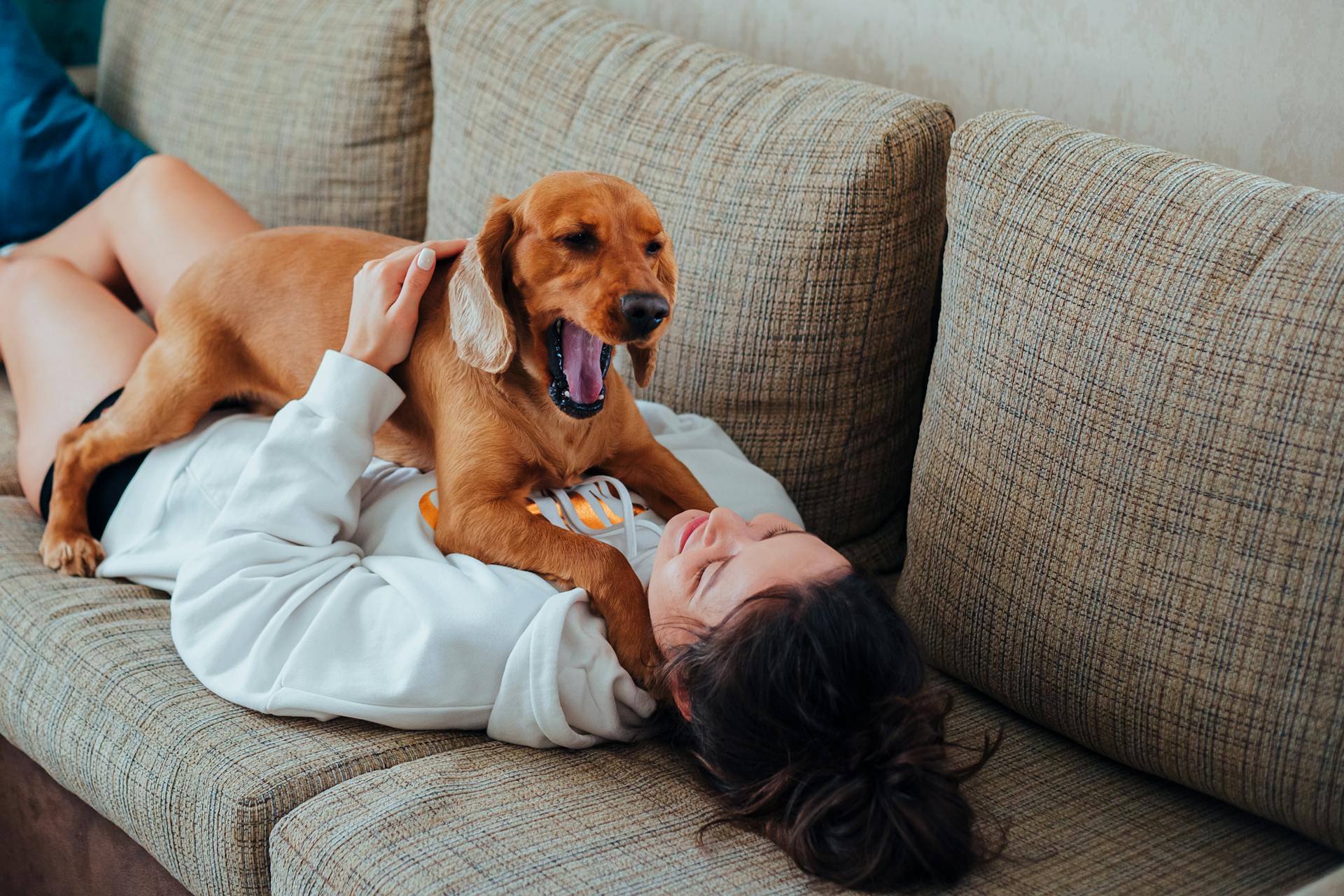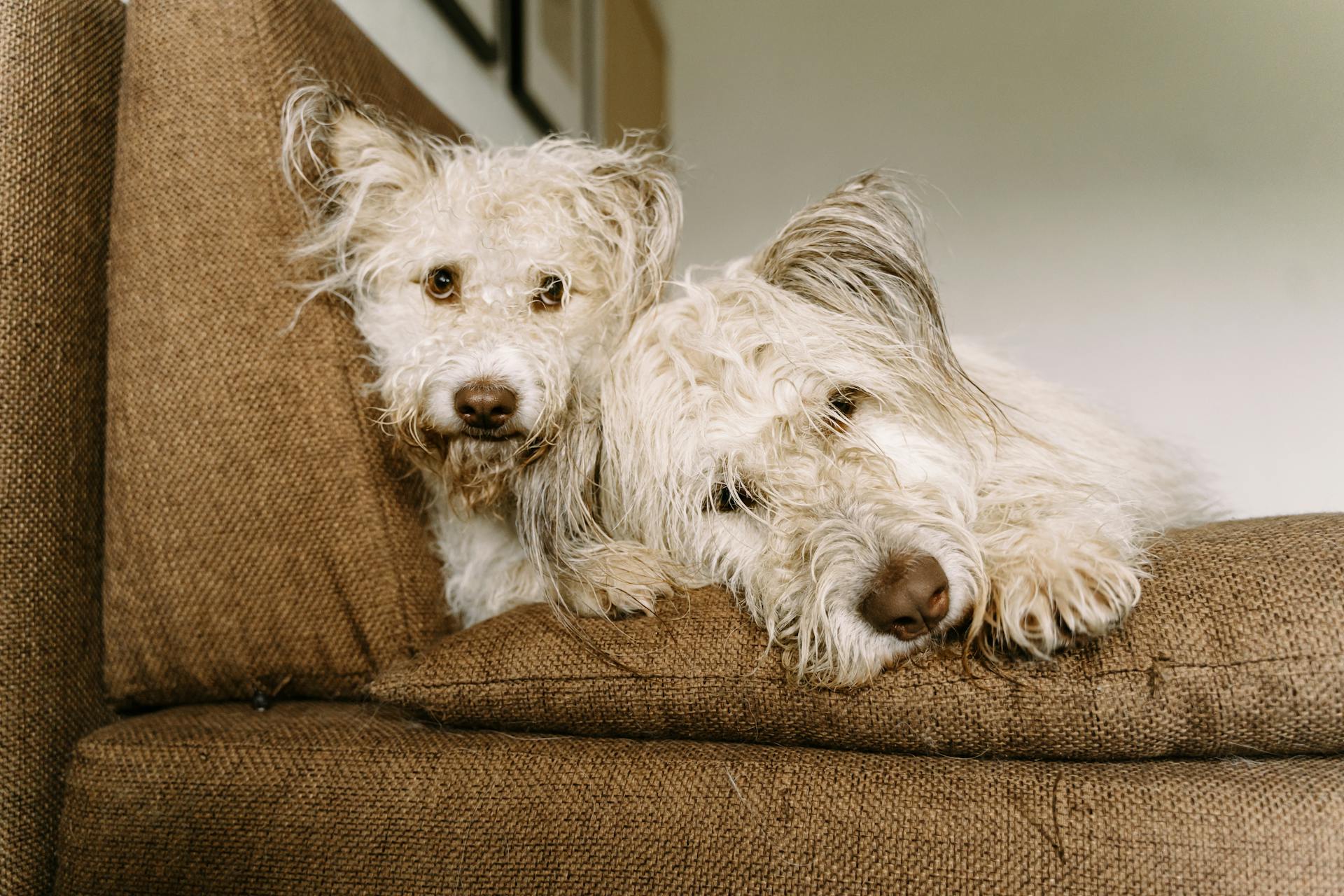
Havanese separation anxiety can be a challenging issue for many owners.
Havanese dogs are prone to separation anxiety due to their strong attachment to their family.
To alleviate this issue, it's essential to establish a routine that includes gradual separation and exercise.
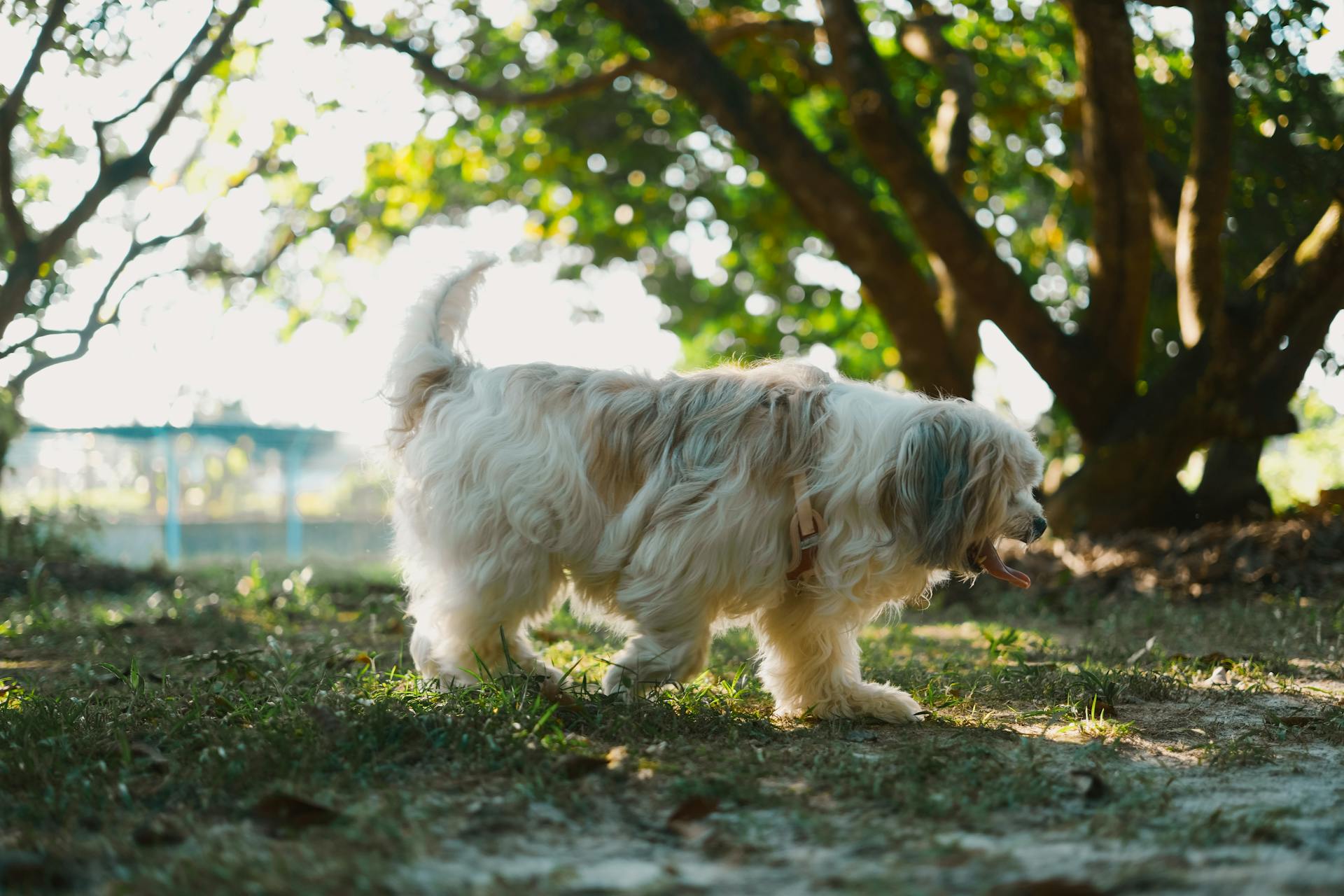
Exercise is crucial in reducing anxiety in Havanese dogs, and a daily walk can help.
Separation Anxiety in Havanese
Havanese are extremely sociable dogs that form very strong attachments to their families. They have a high need for attention and companionship, which can sometimes lead to separation anxiety.
This anxiety can manifest in various ways, such as whining, crying, howling, soiling, chewing, digging, and scratching. Some Havanese may even exhibit these symptoms if they can see their owner but are separated from them.
Crate training your Havanese puppy when they're young can help them accept being left in their crate for short periods. Start by placing them in their crate when they're tired and less likely to make a fuss.
To help your Havanese cope with separation, do lots of practice runs of varying duration. Keep your departures and arrivals low-key, and go about your business as usual. Overemotional departures and arrivals will only increase anxiety levels.
Some Havanese are more anxious if left in a very small area like a crate, especially if they haven't been crate trained. An X-Pen or enclosed room may be a better option. A special toy or chew treat can give your Havanese a positive outlook and provide a non-destructive outlet.
Here are some common signs of separation anxiety in Havanese puppies:
- Clinginess
- Hyperactivity
- Barking/yelping
- Destroying objects
- Urinating/defecating inappropriately
- Vomiting
- Diarrhea
- Extreme salivation
- Depression when they think/or are about to be left alone
It's essential to recognize that separation anxiety can occur in any breed and at any age. With proper training and management, your Havanese can learn to cope with being left alone.
Overcoming Separation Anxiety
Separation anxiety in Havanese dogs is a common issue that can be distressing for both the dog and their owner. It's essential to understand that Havanese dogs are extremely sociable and form strong attachments to their families, which can sometimes lead to separation anxiety.
One of the first steps in helping your Havanese cope with separation anxiety is to crate train them when they're young. This will help them accept being left in their crate for short periods.
Crate training should start when your Havanese is tired and less likely to make a fuss. Begin with short periods and gradually increase the duration. It's also crucial to keep your departures and arrivals low-key, as overemotional goodbyes and hellos can exacerbate anxiety levels.
Some Havanese dogs may benefit from being left in a confined safe area, such as an X-Pen or enclosed room, rather than a crate. This can help reduce their anxiety levels.
Providing a special toy or chew treat, like a stuffed Kong, can give your Havanese a positive outlook and provide a non-destructive outlet for their anxiety.
Having another companionable animal, such as another Havanese or pet, can also help reduce anxiety levels in your Havanese.
Here are some strategies to help your Havanese cope with separation anxiety:
- Desensitize your Havanese to the trigger of their fear, such as your departure or arrival.
- Use your own scent and sound to calm your Havanese, such as leaving a used t-shirt or recording your voice on a CD player.
- Redirect your Havanese's behavior by feeding them a small meal or providing a treat.
- Teach your Havanese to tolerate your leaving and coming back by giving them a treat or toy and then leaving the house for a few minutes and returning.
Remember, every Havanese is different, and it may take time and patience to find the right combination of strategies that work for your dog.
Natural Remedies
Experimenting with natural remedies can be a great way to help your Havanese manage separation anxiety.
Approximately 67% of dog owners polled found hemp oil to be 'extremely effective' or 'somewhat effective' in treating their dog's anxiety.
I successfully used hemp oil to help calm my dog and improve her response to training.
Always look for a certificate of analysis to ensure the hemp oil is pure and safe.
A product with 0% THC is a good option to consider.
Full spectrum hemp treats are also available for dogs on Amazon if you prefer not to give an oil tincture.
A fresh viewpoint: Dog Aggression after Neutering
General Information
The Havanese breed forms strong bonds with humans and prefers not to be left alone, often shadowing their pet parents closely.
They exude affection towards everyone, from strangers to children, other dogs, and even cats, but their family receives most of the adoration.
In fact, Havanese prefer to remain glued to their owner's side whenever possible, reflecting an innate desire for human connection.
This devotion can lead to anxiety when left alone, emphasizing a preference for being a house dog rather than being left in the backyard.
With proper training to manage excessive barking, Havanese thrive as apartment companions, making them a great choice for city dwellers.
Their Velcro-like personality is a result of being bred to provide companionship to affluent families in Cuba.
Featured Images: pexels.com