The Havanese Cuban Dog is a small, playful breed that's sure to capture your heart. They originated in Cuba in the 16th century.
Their ancestors were brought to the island by Spanish sailors and quickly became a favorite among the local population. They were bred as companions and performers.
One of the most distinctive features of the Havanese Cuban Dog is their silky, hypoallergenic coat. This makes them a great choice for people with allergies.
Their intelligence and trainability make them a joy to work with, and they're often used as therapy dogs.
For your interest: Cuban National Dog
Origin and History
The Havanese is the national dog of Cuba, with a rich history that dates back to the Spanish colonizers who brought their small companion dogs to the island.
Their ancestry consists of breeds like the Bichon Tenerife and Blanquito de la Habana, which evolved into what's known today as the friendly and intelligent Havanese.
The Havanese's journey from the cobblestone streets of Havana to international dog shows reflects their captivating history and enduring appeal as loyal and affectionate pets.
Their playful nature has helped them find a place in the hearts of the Cuban elite, and they're even considered Cuba's official dog.
Ship manifests from Tenerife bound for Cuba list dogs as passengers brought aboard, and these dogs were most probably the dog of Tenerife, believed to be the progenitor of the breed.
The Havanese is a member of the bichon family of dogs, and their origins are believed to have come from Tenerife, with some theorizing that the entire bichon family of dogs can be traced back to the Tenerife dog.
The Havanese breed was developed in Cuba and is the only known living dog breed that is native to the island, with a history that dates back at least to the 1500s.
Small companion dogs were favored by aristocrats and wealthy individuals around the world, and ship merchants routinely brought these lapdogs on their travels as a result.
The most prevailing belief is that a predecessor to the Havanese made its way to the New World either through or from Tenerife, an island off of North Africa believed to be the birthplace of the closely related Bichon Frise dog breed.
Suggestion: Havanese Breed Standard
Originally called the Blanquito de la Habana or Havana Silk Dog, the dog quickly became popular with the wealthy families of Havana, and over time, the breed was slowly refined into what we know today as the Havanese.
With dedicated breeding, and the acquisition of some new dogs internationally, the Havanese has made a huge comeback and is one of the fastest growing breeds of dogs in the AKC, ranking the Havanese as the 25th most popular pure-breed in the United States in 2013.
Discover more: Short Haired Havanese
Physical Characteristics
The Havanese Cuban dog is a toy breed known for its unique physical characteristics. They typically stand between 8.5 and 11.5 inches tall at the shoulders.
Their bodies are slightly longer than they are tall, giving them a stretched-out look. The topline, which rises from the shoulders to the hindquarters, is straight but not completely level.
The muzzle of the Havanese is full and tapers a bit at the nose. The length from the stop to the back of the head is equal to the length of the muzzle.
Their skull is pretty flat on top, with the back of the skull being more rounded. The ears are almond-shaped and hang down on the sides of the head without touching the face.
The tail is carried arched forward up over the back, with a long plume of hair that falls on the body.
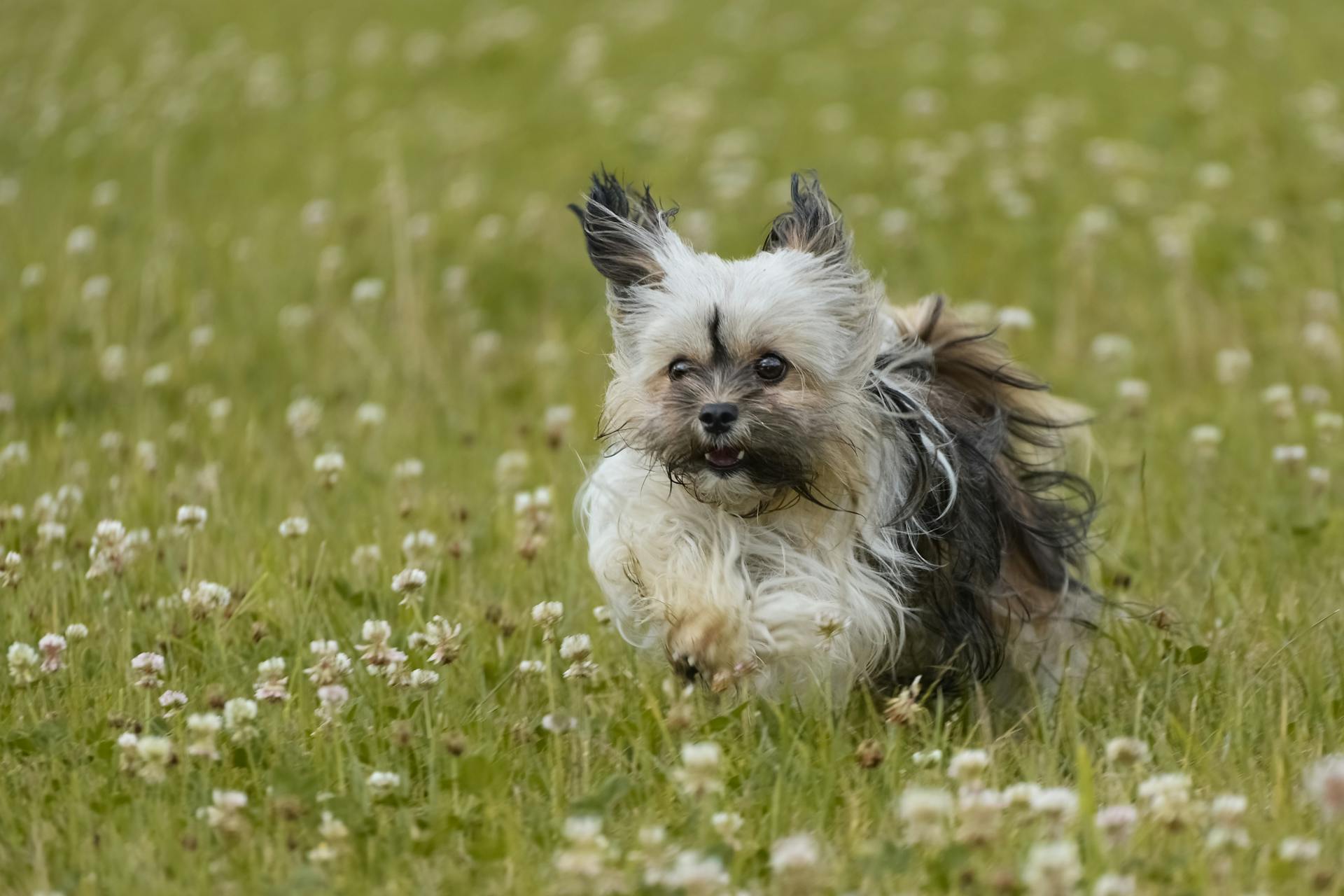
The Havanese coat is a long and furnished double coat, which is soft, lightweight, and silky. It's slightly wavy, profuse, and undulating, with a natural texture that's almost cool to the touch.
The coat comes in a range of colors, including black, gray, silver, cream, red, and white, or any combination of these. In fact, there are more than 20 different known colors and coat patterns.
Here are some key physical characteristics of the Havanese Cuban dog:
Similar Breeds and Features
If you're looking for a breed similar to the Havanese, you might want to consider the Bichon Frise. They share a similar physical appearance and playful temperament.
The Maltese is another breed that shares characteristics with the Havanese, often displaying a similar affectionate nature.
The Coton de Tulear is a small, fluffy breed that, like the Havanese, is known for its gentle and playful personality.
A unique perspective: Types of Bernese Mountain Dog
Temperament and Behavior
The Havanese temperament is often described as friendly, intelligent, and responsive, making them fantastic companions for families and individuals alike.
They're known to be good with children and other pets, displaying a playful and affectionate nature. This is especially true when they're properly socialized from an early age.
Havanese are outgoing and gentle, making them a great match for families with young children. They're also quite sturdy, despite being a smaller breed.
With proper socialization, Havanese can enjoy the companionship of other animals in the home. They're adaptable pets who will gladly snuggle up to their owners in times of peace and quiet.
However, Havanese might develop separation anxiety if left alone for long periods of time, so it's essential to teach them that some alone time is okay from puppyhood.
They're also prone to housebreaking issues, but with consistency and patience, they can learn to "hold it" in no time.
Broaden your view: Can Havanese Be Left Alone
Health and Grooming
Havanese dogs are prone to certain health concerns, including hip dysplasia, patellar luxation, and eye conditions like cataracts and progressive retinal atrophy. Regular vet check-ups and a balanced diet can help manage these issues.
To keep your Havanese healthy and happy, it's essential to be aware of these potential health concerns and take preventative measures. This includes checking for hip dysplasia, patellar luxation, eye conditions, heart disease, deafness, and other issues.
Their long and lightweight coat is designed to keep them cool and protected from sunburn, but it requires daily brushing to prevent tangles. A pin comb, slicker brush, or pin brush is ideal for this task.
Broaden your view: Best Brush for Havanese
Size Growth
The Havanese is a small breed, typically weighing between 7-13 pounds.
Their height can also vary, with adults standing 8.5-11.5 inches tall at the shoulder.
A dog's age can affect their size in adulthood, regardless of whether they're male or female.
If your Havanese is a mixed breed, you may find that their size estimate is a bit more complex to determine.
Their activity levels can also play a role in their adult size, so be sure to provide plenty of exercise and playtime.
Health Concerns
Havanese dogs are generally a healthy breed, but like all breeds, they can be prone to certain health concerns. Hip dysplasia, a genetic condition that affects the hip joint, can cause arthritis and pain.
Regular vet check-ups are crucial to catch any potential health issues early. A balanced diet, proper grooming, and attention to any unusual symptoms can also help manage these health concerns.
Patellar luxation, a condition where the kneecap dislocates or moves out of its normal position, can cause discomfort and lameness. Eye conditions, such as cataracts and progressive retinal atrophy, can also affect Havanese dogs.
Heart disease, specifically mitral valve disease, is a common condition in smaller breeds, including Havanese. It's essential to check puppies for hearing ability, as congenital deafness can occur.
Here are some common health concerns in Havanese dogs:
- Hip dysplasia
- Patellar luxation
- Eye conditions (cataracts, progressive retinal atrophy, cherry eye)
- Heart disease (mitral valve disease)
- Deafness
- Legg-Calve-Perthes Disease
- Allergies
- Hypothyroidism
By being aware of these potential health concerns, you can take steps to prevent or manage them, ensuring your Havanese lives a long and happy life.
Training and Obedience
Havanese dogs are known for their intelligence and are quick learners, mastering easy-to-learn dog tricks in a matter of hours.
They're up for any challenge, whether it's basic commands or engaging in obedience dog competitions. With patience and positive reinforcement, you can teach your Havanese to sit, stay, and come.
Leash training is also crucial for enjoyable walks, ensuring they walk beside you without pulling. Establishing a routine and praising them for outdoor potty breaks while gently correcting inside accidents creates a positive learning environment.
Havanese dogs thrive in various living environments, from spacious homes to cozy apartments. With some dog-friendly interior décor, they live like royalty.
Fun Facts and Pop Culture
The Havanese has long been a sought-after pet among famous figures.
They've even made appearances in various forms of media, showcasing their charming and affectionate nature.
The Havanese is a beloved breed, and it's no wonder they've captured the hearts of many, including famous owners.
If this caught your attention, see: Famous Havanese Dogs
Resurgence
Dorothy Goodale was a determined woman who took an interest in the Havanese breed in the 1970s. She found 11 remaining dogs and established a breeding program, laying the foundation for the breed's resurgence.
By 1979, Goodale had formed the Havanese Club of America and an official registry for the dogs. This marked a significant milestone in the breed's revival.
It took another decade of careful breeding for there to be enough Havanese dogs for the Havanese Club of America to petition kennel clubs for recognition. This patience paid off in the end.
In the 1990s, the Havanese gained popularity in both the United States and Europe. They eventually became one of the more popular dog breeds in the world, thanks in part to their charming and affectionate nature.
Fun Facts About the Cuban Dog
The Havanese is an amazing breed with a rich history and fun facts to share! They're the only dog breed considered native to Cuba, and in 2016, they were officially recognized as the country's national dog.
These little dogs are a nod to the capital city of Havana, and their name is a clever reference to their Cuban roots. They were developed from the now-extinct Blanquito de la Habana or "little white dog of Havana", also known as the "Havana silk dog."
The Havanese is a small pup, weighing between 7 and 13 pounds when fully grown. Their long hair can grow up to 10 inches long, but it usually stops growing at around 6 inches.
You might be surprised to know that Havanese dogs come in a huge variety of colors and coat patterns, not just the all-white ones you often see. In fact, their long lifespan is another impressive trait – they typically live between 13 and 16 years, but some have been known to live up to 19 years old!
Here are some key stats about the Havanese breed:
Charles Dickens even had a Havanese dog named "Tim", which might have inspired his famous character Tiny Tim.
Care and Activities
The Havanese Cuban dog is a wonderful companion that thrives on attention and interaction. They're naturally friendly and eager to please, making them a great fit for families and individuals alike.
Their intelligence and problem-solving skills make them a joy to train, and they excel in a variety of dog sports and activities. You can consider enrolling them in Rally Obedience, Trick Training, Conformation (dog shows), Small Dog Agility, or Tracking for a fun and engaging experience.
A daily brushing routine is essential to prevent tangles and keep their beautiful coat looking its best. You'll want to use a Pin comb, Slicker Brush, or Pin brush to gently work out any knots or mats.
To keep their coat in good condition, it's best to bathe them only when necessary, as over-washing can strip their delicate fur of its natural oils. Regular grooming sessions will help your Havanese puppy associate it with positive experiences and relaxation.
Here are some ideal doggy activities to keep your Havanese happy and engaged:
- Rally Obedience
- Trick Training
- Conformation (dog shows)
- Small Dog Agility
- Tracking
Their unique coat also helps them stay cool in hot environments, a trait developed from their origins in Cuba. This means they're perfect for families who live in warm climates or enjoy outdoor activities.
Frequently Asked Questions
What two breeds make a Havanese?
The Havanese breed is believed to have originated from the cross-breeding of the Blanquito with the poodle. This mix also involved other bichon types, resulting in the unique characteristics of the Havanese.
What is so special about Havanese dogs?
Havanese dogs are highly social, intelligent, and affectionate companions, bred to thrive in the spotlight. Their unique personality makes them a beloved breed for those seeking a loyal and entertaining pet.
What is the leading cause of death for Havanese?
For Havanese, heart failure is a leading cause of death, often resulting from a weakened heart valve. Regular check-ups and a healthy lifestyle can help prevent or manage this condition.
Featured Images: pexels.com