The Guatemalan Beaded Lizard is an incredible species that has been fascinating scientists and animal lovers alike. It's found in the tropical forests of Guatemala, where it inhabits areas with rocky outcrops and scrubby vegetation.
This lizard's unique appearance is one of its most striking features. Its skin is covered in small, bead-like scales that give it a distinctive look.
The Guatemalan Beaded Lizard is also an important part of its ecosystem, playing a key role in maintaining the balance of its environment.
Additional reading: Guatemalan Dogo
Heloderma charlesbogerti
The Guatemalan beaded lizard, also known as Heloderma charlesbogerti, is a unique species that belongs to the family Helodermatidae.
This family is part of a clade of reptiles that have toxin-secreting glands.
The Guatemalan beaded lizard is the smallest species within the Heloderma genus.
It was first discovered in 1984 by an agricultural laborer named D. Vasquez in Guatemala's Motagua Valley.
The average home range for individuals of this species was found to be 130 ha.
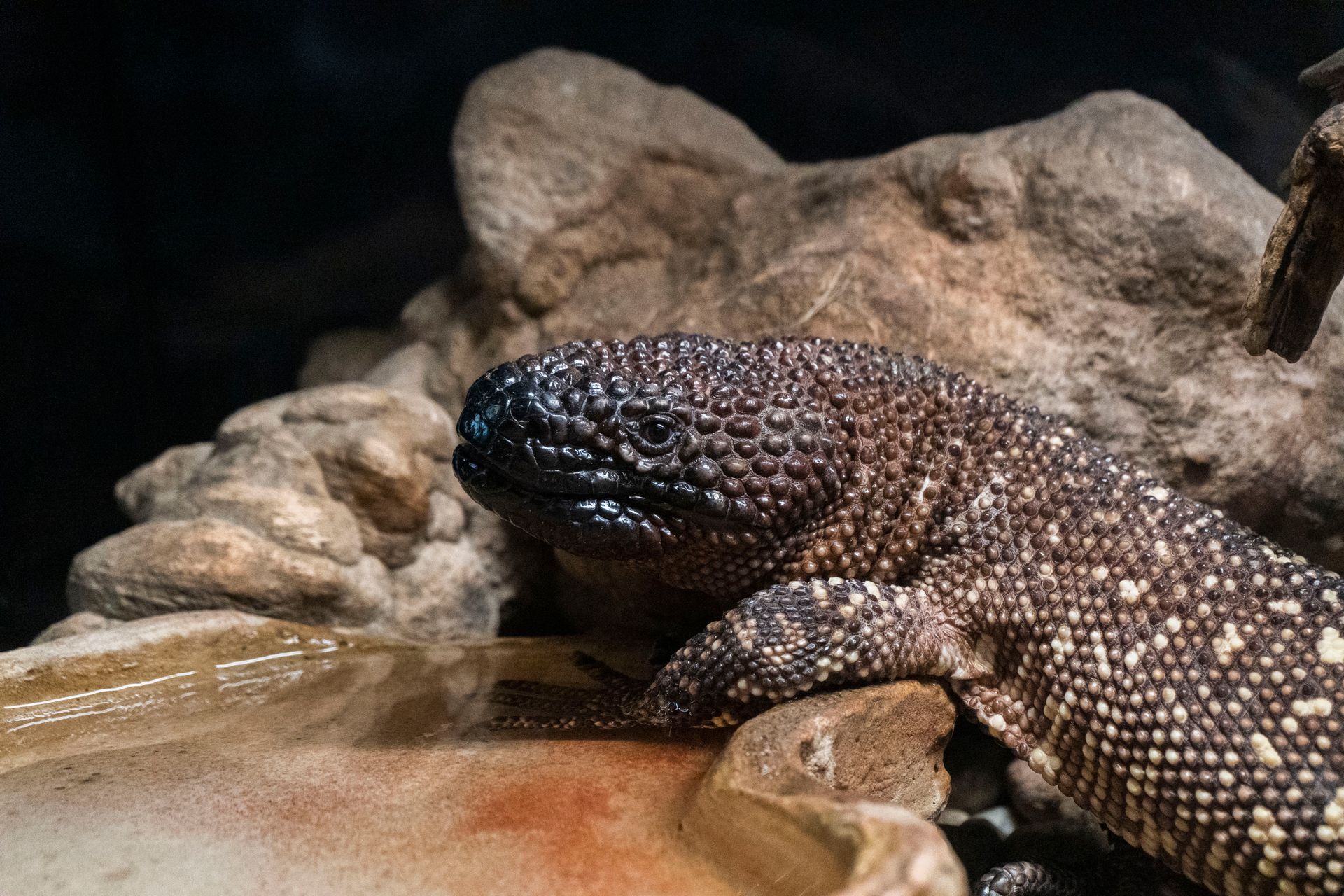
The Guatemalan beaded lizard is considered an endangered species, listed on the IUCN Red List.
It is also endemic to Guatemala, making it a part of the country's unique fauna.
Here are some related categories and fossil taxa for comparison:
- Helodermatidae: the family to which the Guatemalan beaded lizard belongs
- Varanidae: a related family of reptiles
- †Palaeovaranidae: an extinct family of reptiles
Conservation Efforts
The Guatemalan beaded lizard is an incredibly rare species, with only around 500-600 individuals left in the wild. They are found in the Motagua Valley in Guatemala, where they use motmot burrows to lay their eggs.
Conservation efforts are underway to protect this species, with the Parque Nacional Zoológico La Aurora and Zoo Atlanta collaborating to breed Guatemalan beaded lizards in captivity. They are working to develop a strategy to incubate the eggs at exactly 26.7°C for six months, as the eggs are super sensitive to water and need near 100% humidity.
The species is thought to suffer from fecundity issues due to a limited gene pool, which makes breeding them in captivity even more challenging. However, some success has already been achieved, with Zoo Atlanta incubating over 280 eggs since they began breeding the species.
To address the limited gene pool issue, the collaboration between La Aurora and Zoo Atlanta will introduce a new bloodline of Guatemalan beaded lizards to the collection, which will be donated by Zoo Atlanta. This will help to increase the genetic diversity of the species and improve breeding success.
The Guatemalan beaded lizard is not the only species that will benefit from conservation efforts. As an umbrella species, its conservation will also protect other species, such as the Motagua spiny-tailed iguana (Ctenosaura palearis) and the mammals that dig underground shelters used by the beaded lizard.
In fact, around 77% of the underground shelters used by the Guatemalan beaded lizard are dug by mammals, such as skunks and nine-banded armadillos. By protecting the habitat of the beaded lizard, we will also be helping to conserve these other species.
Importance of Conservation
Guatemala is an incredibly biodiverse country, with unique tropical dry forests, rich rainforests, and enormous mountain ranges that host a dizzying array of endemic species.
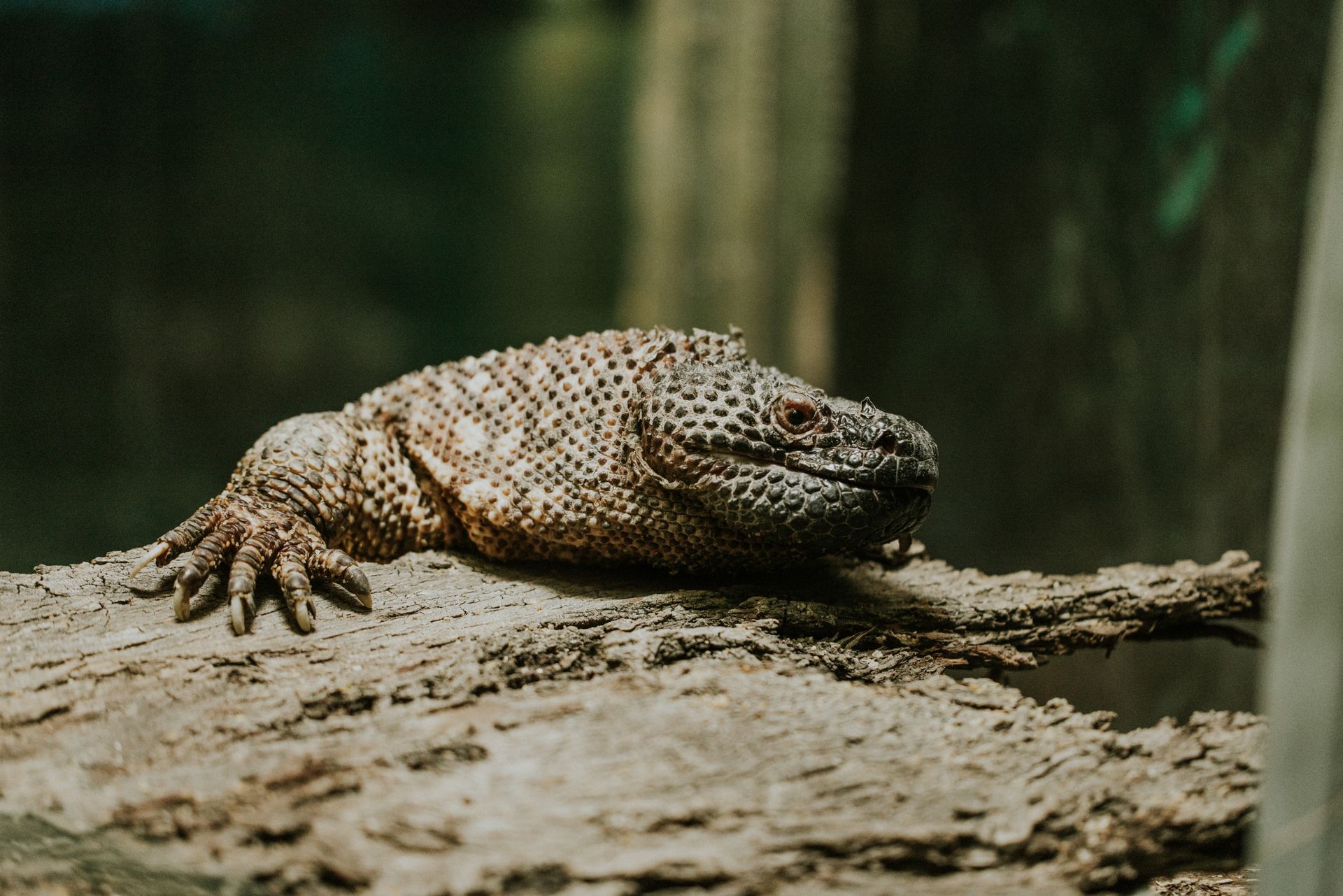
The Guatemalan beaded lizard (Heloderma charlesbogerti) is classified as Endangered by the IUCN, and found nowhere else in the world.
The species is thought to suffer from fecundity issues due to a limited gene pool, which makes captive breeding exceptionally difficult.
Captive breeding H. charlesbogerti is so challenging that only a handful of US institutions have ever successfully bred the species in captivity.
La Aurora, in collaboration with Zoo Atlanta, is working to captive breed specimens for reintroduction, which may be extremely beneficial to both captive and wild populations.
The incubation period for Guatemalan beaded lizards is six months, which is way longer than most reptiles, due to the conditions in the Motagua Valley where the beaded lizards come from.
In the wild, Guatemalan beaded lizards use motmot burrows to lay their eggs, which creates a very stable environment that's difficult to replicate in captivity.
The eggs are super sensitive to water and need near 100% humidity, but if a single drop of water touches an egg, it will die.
Curious to learn more? Check out: Water Beads Toxic
Despite the challenges, some success is already happening, with Zoo Atlanta having incubated over 280 eggs and now developing a strategy that can be implemented by other collections.
Every clutch is precious, and marks new hope for the species, as there are thought to be only 500-600 Guatemalan beaded lizards left in the wild.
About the Beaded Lizard
The Guatemalan beaded lizard is a unique species that belongs to the Helodermatidae family, known for their special glands that produce toxins or venom.
This lizard is the smallest of its kind and can be identified by its distinctive colors and patterns. It has five easily recognizable yellow rings on its tail.
The Guatemalan beaded lizard is found only in the Motagua Valley in Guatemala, the driest region in Central America, where it receives just 500mm of water per year.
It's most active during the rainy season, when it ventures out of its hiding places to hunt for food, but in the dry season, it enters a dormancy period, earning it the local name "Niño Dormido" or "Sleeping Child".
In the wild, these lizards use motmot burrows to lay their eggs, which are incubated for six months in a stable environment with optimal humidity and temperature conditions.
The Guatemalan beaded lizard is considered a challenging species to breed in captivity due to its specific requirements for incubation and humidity.
Lizard Information
The Guatemalan beaded lizard is part of the Helodermatidae family, a group of reptiles with special glands to make and release toxins.
This species is unique due to its distinct colors and smaller size, making it the smallest of the beaded lizards.
Scientists have studied these lizards in the dry forests of Zacapa, Guatemala, using radio trackers to learn about their movements and behavior.
Each lizard typically roams over an area of about 130 hectares, which is roughly 320 acres.
The Guatemalan beaded lizard was first discovered in 1984 by a farm worker named D. Vasquez in Guatemala's Motagua Valley.
Frequently Asked Questions
Is the Guatemalan beaded lizard venomous?
Yes, the Guatemalan beaded lizard is venomous, but it poses no threat to humans.
Featured Images: pexels.com