Getting your female dog spayed is a big decision, and it's natural to have questions and concerns. The procedure, also known as spaying or ovariohysterectomy, involves surgically removing the dog's ovaries and uterus to prevent unwanted breeding and reduce the risk of certain health issues.
Spaying can be done at any age, but it's typically recommended between 4 to 6 months of age, before the first heat cycle. This is because the procedure is less complicated and less expensive at this age.
The benefits of spaying your female dog are numerous, including reducing the risk of uterine infections and breast tumors.
Check this out: Do Dogs Drink Less Water in Winter
What Is Spaying?
Spaying is a surgical procedure that involves removing a female dog's ovaries and uterus, also known as an ovariohysterectomy. This procedure is usually done to sterilize a female dog.
An incision is made just below the belly button, and the ovaries and uterus are removed completely. The veterinarian's technique may vary, but the goal is to prevent unwanted breeding.
Allowing a dog to have a litter of puppies before spaying does not have a calming psychological effect on the dog, contrary to what some people may believe.
Curious to learn more? Check out: Dog Names Female Start with S
Benefits and Effectiveness
Spaying your female dog has numerous benefits, including eliminating unwanted pregnancies and reducing the risk of certain diseases. Spaying your dog also prevents heat cycles, which can be messy and tedious for owners.
Spaying your dog can reduce her risk of ovarian and mamary cancer, as well as eliminate uterine infections, which can lead to a pyometra – an infected uterus that can be fatal if not treated. Spays performed before six months of age almost completely eliminate the risk of mamary gland tumors.
The cost of spaying is far less than the cost of treatment needed for a uterine problem like pyometra or having and caring for a litter. In addition to health benefits, spaying can also decrease roaming behavior and increase life expectancy.
Here are some other benefits of spaying your dog:
- No longer contributing to pet overpopulation problem
- Alleviating the risk of unwanted or uncared-for pets by stopping the heat cycle and preventing pregnancy
- Preventing disease
- Decreasing roaming behavior
- Increasing life expectancy
Anatomy of the Reproductive System
The female reproductive system in dogs is a complex but fascinating topic. A female dog's reproductive system has an external opening, the vulva, which is connected to the vagina.
Broaden your view: Digestive System for a Dog

The vagina connects to the uterus via the cervix, and the ovaries are connected to the uterus via the uterine tubes, also known as fallopian tubes. During a dog spay surgery, only the ovaries, uterine tube, and uterus are removed.
A spay operation requires full anesthesia, and the veterinarian will make an incision in the dog's abdomen to locate the reproductive organs. The ovaries and uterus are found, ligated, and removed through this incision.
The incision is typically made in the middle of the abdominal skin, between the mammary glands, and extended past the subcutaneous layer. The abdomen is then closed in reverse order after the ovaries and uterus are removed.
Once complete, the dog will no longer be able to have puppies, and the procedure is not reversible. The veterinarian will use a breathing tube to help deliver oxygen to the dog's lungs during the surgery.
Discover more: Female Dog Spay Incision
Benefits of Spaying
Spaying your dog has numerous benefits that can improve their health, behavior, and overall well-being. Spaying eliminates unwanted pregnancies and reduces the risk of certain diseases, such as ovarian and mammary cancer. By spaying your dog, you can prevent heat cycles, which can be messy and tedious for owners, and reduce the risk of uterine infections.
Spaying also has positive behavioral benefits, including reducing roaming behavior and making your dog more loyal and less likely to stray. According to the ASPCA, millions of dogs enter shelters each year, and spaying or neutering your dog is a great way to help reduce the number of unplanned puppies born annually.
Some of the key benefits of spaying include:
- No longer contributing to pet overpopulation problem
- Alleviating the risk of unwanted or uncared-for pets by stopping the heat cycle and preventing pregnancy
- Preventing disease
- Decreasing roaming behavior
- Increasing life expectancy
By spaying your dog, you can also reduce the risk of uterine cancer, ovarian cancer, metritis, torsion of the uterus, cystic changes, and prolapse, which can be fatal if not treated. Additionally, spaying can help prevent the birth of unwanted puppies, which can be costly and time-consuming to care for.
Does Weight Gain Cause?
Spaying a dog may result in a metabolism slowdown where many dogs will experience weight gain.
Your dog's metabolism will slow down after spaying, which can lead to weight gain if not managed properly.
It's essential to regulate your dog's food intake and ensure she gets plenty of exercise to prevent obesity.
By doing so, you can help your dog maintain a healthy weight and prevent potential health issues that come with excess weight.
For more insights, see: Will a Female Dog Calm down after Being Spayed
Preparation and Post-Care
Before your female dog undergoes spay surgery, it's essential to prepare her and your home for a smooth recovery. Your veterinarian may ask you to withhold food and/or water the night before or morning of the surgery to prevent vomiting during the operation.
To prepare your home, keep a quiet and comfortable space for your dog to recover, such as a crate with clean, dry bedding, and limit exercise for the first 12 hours after surgery. Your veterinarian will provide detailed aftercare instructions, which may include giving your dog small amounts of food and water.
You'll also need to create a spay home recovery kit with essentials like a crate, Elizabethan collar or surgical suit, toys, and a leash. This will help prevent complications like infection and ensure your dog's comfort and safety during the recovery period.
Here's a list of things to include in your spay home recovery kit:
- Crate with clean, dry bedding
- Elizabethan collar (or surgical suit)
- Toys (chew toys that don't pose a risk of obstruction)
- Leash (for potty breaks and to prevent running and jumping)
Preparing
To prepare for your dog's surgery, it's essential to follow your veterinarian's pre-surgery instructions. This may include fasting, where you'll need to withhold food and/or water the night before or morning of the surgery.
Check this out: How Long Does It Take to Spay a Female Dog

Your vet will let you know whether your dog needs to go without food or water, and for how long. The goal is to prevent your dog from vomiting during the operation, which can be a complication.
Before the surgery, make sure your home is set up for a smooth recovery. This includes creating a quiet, comfortable space for your dog to rest and recover.
You'll want to limit your dog's exercise for a while after surgery, and provide small amounts of food and water for the first 12 hours after the procedure.
It's also a good idea to have some supplies on hand, such as a comfortable bed or blanket, and some tasty treats to help with recovery.
Your vet will give you detailed aftercare instructions, so be sure to ask them any questions you have and follow their advice carefully.
Expand your knowledge: My Dog Died after Pyometra Surgery
Post-Op Care
Creating a calm and quiet environment is key to a smooth recovery for your dog after spay surgery. Your dog will need to rest in a crate or a room where she can't run and jump for 10 to 14 days.
A spay home recovery kit is a great way to prepare for your dog's recovery. You'll need a crate with clean, dry bedding, an Elizabethan collar (e-collar) or surgical suit, toys, and a leash. The e-collar will prevent your dog from licking, chewing, or irritating the surgery site.
To prevent complications like reopening the surgery site, leash-walking is a must for potty breaks and time in her crate. Your veterinarian will likely provide you with an e-collar, but you can also purchase one from a pet supply company if needed.
Pain medication will be sent home with your dog, and in some cases, your veterinarian can also provide you with medication to help keep your dog calm during recovery. Notify your veterinarian if you notice any swelling, persistent oozing, or bleeding from the incision site, or if your dog seems unusually pained.
Here are some signs of infection to watch out for:
- Redness or changes in color
- Any type of discharge: clear, red (bloody), white (pus), or mixture
- Odor
- Swelling
- Heat
- Tenderness upon touch
- Excessive bruising: mild bruising may be noted at first but should improve daily
- Loose or missing stitches/staples
- Puckering or gaping of the incision
Dogs often rebound quickly after spay surgery, but giving pain relief helps the healing process and improves recovery. Your vet will send home additional pain medications like gabapentin or tramadol as well as an anti-inflammatory medication such as carprofen, deracoxib, or meloxicam. Give all medications as directed by your veterinarian.
Curious to learn more? Check out: Female Dog in Heat Behavior Pain
Cost and Alternatives
The cost of spaying your female dog can vary depending on several factors, including her size, location, and veterinarian. Veterinary practices may charge anywhere from $250 to $600 or more.
Some counties and organizations, like the Humane Society, offer free vouchers or discounted spay fees to make the procedure more accessible. This can be a huge help if you're on a budget.
If your dog is overweight or in heat at the time of spay, your vet may charge additional fees due to the increased risks and time spent performing the procedure.
Worth a look: Process of Spaying a Female Dog
Cost
The cost of spaying a dog can vary depending on several factors, including the size and age of your dog, your location, and the veterinarian you choose.
Some veterinary practices may charge as much as $600 or more for the procedure, although others may be more affordable, with prices starting at $250.
If your dog is overweight, you may need to factor in additional costs due to the increased risks and time involved in the procedure.
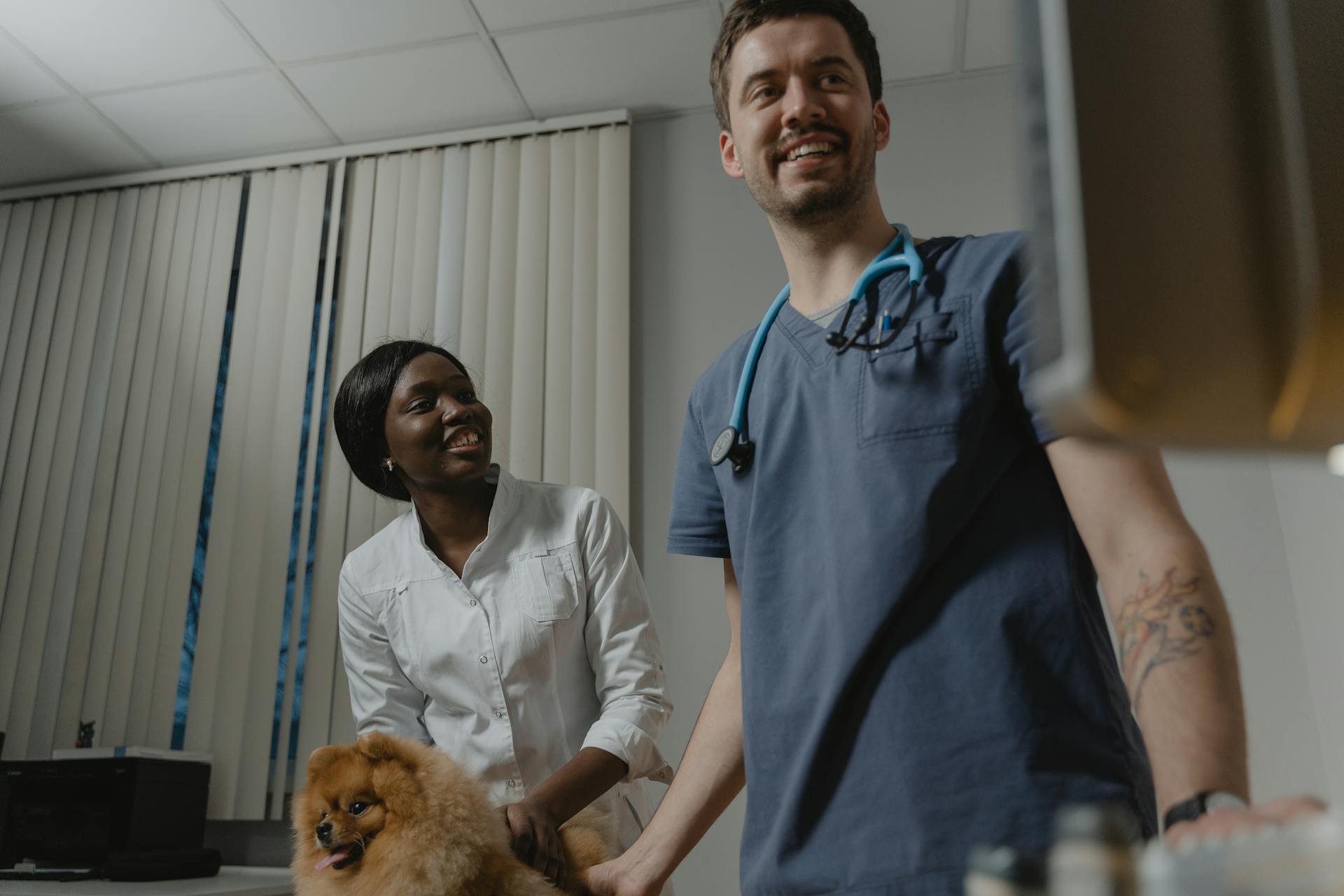
Animal clinics that offer low-cost spay clinics can be a great option for those in need, making the procedure more accessible.
In some counties and organizations, such as the Humane Society, free vouchers or discounted spay fees may be available.
If your dog is in heat at the time of spay, your vet may charge extra due to the increased risks and time spent performing the procedure.
Alternatives to Spaying
Spaying your dog is a common practice, but it's not the only option. The options available to prevent a dog's heat cycle are extremely limited.
There are some alternatives to consider, but it's essential to understand that they might not be as effective as spaying. The main goal of spaying or not spaying is to prevent unwanted litters and certain health issues.
One option is to keep your dog indoors during heat cycles, but this can be challenging, especially for active dogs. This method may not be feasible for many dog owners.
Explore further: How to Prevent Ivdd in Dachshunds
Another option is to use birth control methods, but these are not as reliable as spaying. The effectiveness of birth control methods can vary depending on the individual dog and the method used.
Some people choose not to spay their dog, but this decision should be made with careful consideration of the potential risks and consequences.
Intriguing read: Female Dog after Giving Birth
Potential Risks of Spaying
Spaying your female dog is a major decision, and it's essential to be aware of the potential risks involved. Healthy young dogs have the lowest likelihood of risks and health complications, which is why most veterinarians recommend the surgery at this age.
However, older dogs or dogs in heat are more likely to have complications. This is why it's crucial to keep your dog resting and quiet after surgery to prevent any damage or infection to the incision site and help them make a faster recovery.
Some common post-surgery complications include inflammation, hemorrhage, herniation, or infection at the incision site. You can help reduce the risk of infection by keeping an eye on your dog after surgery to prevent licking at the suture site, and using a plastic collar or surgical suit if necessary.
Readers also liked: Dog Upper Respiratory Infection vs Kennel Cough
Hemorrhaging is more common in obese dogs and dogs that are in heat at the time of surgery. Keeping your dog at a healthy weight will improve her chances of a complication-free surgery.
Some long-term risks of spaying a dog are rare but can occur if a large dog is spayed too young, before reaching maturity. These can include an increased risk of knee injuries, and more minor risks like urinary incontinence in middle to older-aged dogs.
Here are some of the potential risks of spaying a dog:
- Infection and wound dehiscence (breaking of the stitches and opening of the cut)
- Bowel obstruction
- Seroma (fluid-filled swelling at the incision site)
- Complications from foreign objects left inside the body (gossypiboma)
- Ovarian remnant syndrome and/or stump pyometra
- Urinary incontinence
- Pancreatitis
- Uterovaginal fistula and related incontinence
- Accidental tying off/closure of ureter (tube that carries urine)
- Anesthetic-related complications
- Death
When to Spay
Spaying your female dog is a crucial decision that can have a significant impact on her health and well-being. The ideal time to spay your dog depends on her breed, size, and overall health.
For small breed dogs, the typical recommendation is to spay at around 6 months of age. This is a great age to spay, as it reduces the risk of certain cancers and prevents unwanted breeding.
Large breed dogs, on the other hand, may benefit from waiting until they have had one heat cycle. This allows their sex hormones to be present for a period of maturation, which is important for development and growth.
If your dog is older, your veterinarian may recommend spaying immediately to help reduce the risk of disease, treat a disease like an infected uterus, or to terminate a pregnancy. In pregnant dogs, spaying can also be performed during a cesarean procedure.
Here's a quick guide to help you determine the best time to spay your dog:
Remember, every dog is different, and the best person to ask about the appropriate time to spay is your veterinarian. They have access to the most up-to-date veterinary research and are best positioned to address concerns and answer questions you may have about your specific dog.
A fresh viewpoint: Best Female Dog Names Unique
Featured Images: pexels.com