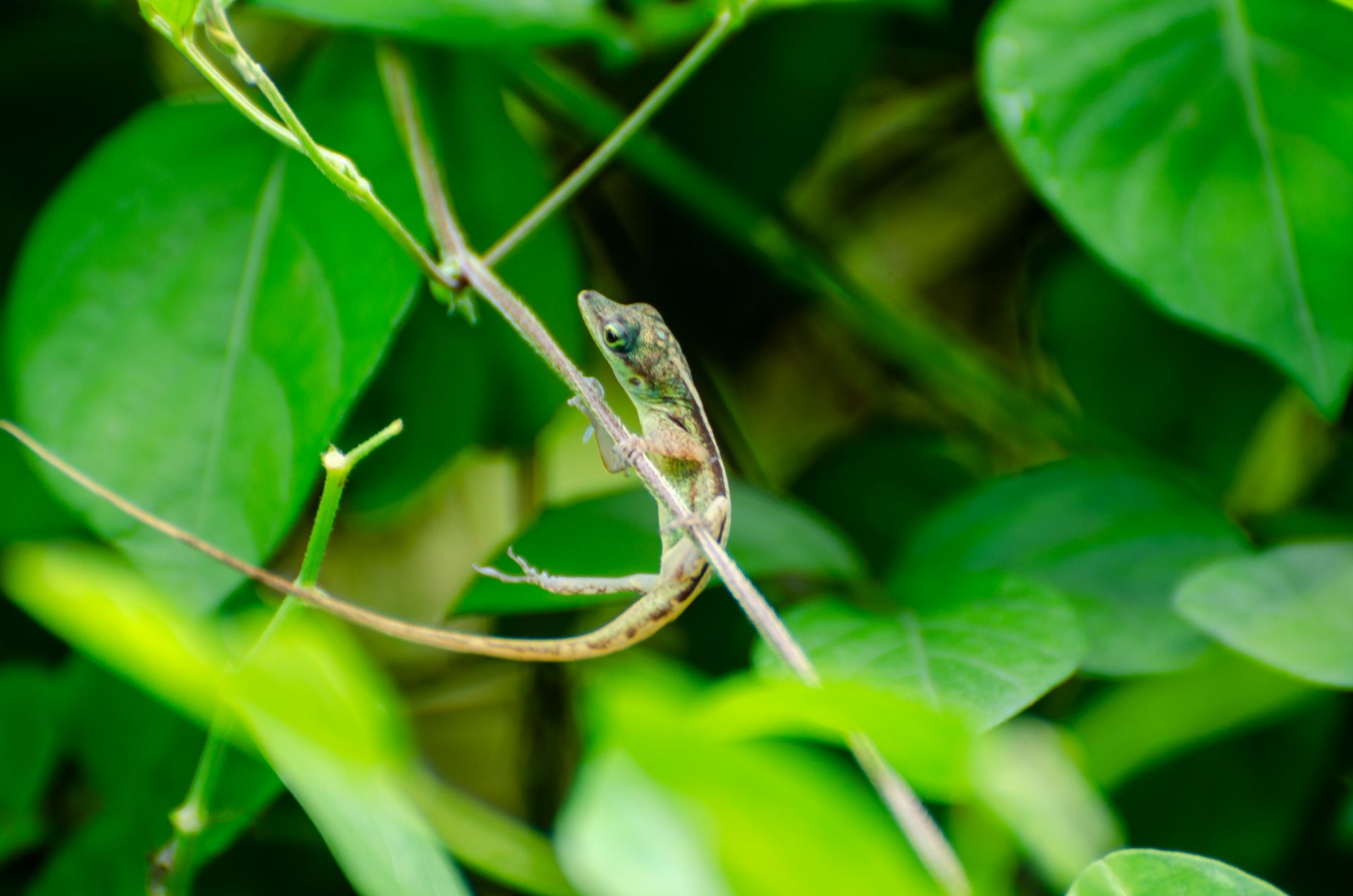
Gastropholis Prasina is a fascinating species, and with the right care and handling, you can create a thriving environment for them. They are relatively small, reaching a maximum length of about 30 centimeters.
To start, make sure their enclosure is well-ventilated to prevent respiratory issues. A temperature range of 24-28 degrees Celsius is ideal for their comfort.
Gastropholis Prasina are primarily nocturnal, so they'll be most active at night. Provide them with a hiding place or two to feel secure during this time.
A varied diet is essential for their health, including a mix of live insects and plant matter.
Care and Housing
To create a stimulating environment for your green keel-bellied lizard, you'll want to add some variety to their enclosure.
First and foremost, it's essential to provide a range of items for your pet to climb on, hide behind, and interact with. This can include branches, vines, and ledges.
A textured background can also add visual interest and provide a sense of security for your lizard. Live or artificial plants are another great option to consider.
Here are some specific items you can include in your gastropholis prasina's enclosure to encourage natural behaviors:
- Branches
- Vines
- Ledges
- Textured background
- Live or artificial plants
By incorporating these elements, you can create a more engaging and enjoyable space for your pet to thrive in.
Handling and Behavior
Handling and behavior of Gastropholis prasina is quite fascinating. This species is primarily active at night, and their nocturnal habits make them difficult to observe.
They are solitary animals and only come together during the mating season. In fact, males will engage in a form of territorial display to attract females.
Gastropholis prasina has a unique way of moving through the forest, using their long tails to balance as they jump from branch to branch. This agility allows them to navigate their arboreal environment with ease.
Do Green Keel-Bellied Lizards Need UVB?
Green keel-bellied lizards require UVB lighting for their survival. This helps provide a clear day/night cycle, vitamin D, and strengthens their immune system.
UVB lighting is essential for their overall health and well-being. It's also crucial for better digestion and other benefits.
The best UVB bulbs for green keel-bellied lizards are Arcadia T5 HO 6%, Zoo Med T5 HO Reptisun 5.0, Arcadia T5 HO 12%, and Zoo Med T5 HO Reptisun 10.0. These bulbs should be placed 6-8" or 12-14" above the basking branch.
Here's an interesting read: Western Green Mamba
Here's a list of recommended UVB bulbs:
- Arcadia T5 HO 6% — 6-8” above basking branch
- Zoo Med T5 HO Reptisun 5.0 — 6-8” above basking branch
- Arcadia T5 HO 12% — 12-14” above basking branch
- Zoo Med T5 HO Reptisun 10.0 — 12-14” above basking branch
It's also recommended to house the UVB bulb in an Arcadia or Vivarium Electronics fixture, roughly the same width as the enclosure. This ensures the bulb is properly secured and provides the best results.
To prevent your lizard from getting exposed to high levels of UV, prop the UVB lamp up on blocks so it's 1-2" above the mesh itself. This is especially important since green keel-bellied lizards tend to climb on the ceiling of their enclosure.
Remember to replace the UVB bulb every 12 months to ensure your lizard continues to receive the necessary benefits.
Handling and Temperament
The way a dog responds to handling and its temperament can be a reflection of its overall behavior. A well-socialized dog is more likely to be calm and relaxed in the presence of strangers.
Some breeds are naturally more tolerant of handling than others, such as Labradors, who are known for their gentle and even-tempered nature. They make great family pets.

A dog's temperament can be influenced by its genetic makeup, with some breeds being more prone to anxiety or fear-based behaviors. For example, the Australian Shepherd is a highly intelligent breed that can be sensitive to noise and stress.
A dog's past experiences can also shape its temperament, with positive interactions and reinforcement leading to a more confident and calm demeanor. Consistency and patience are key when working with a dog that has had a rough start in life.
Some dogs may exhibit fear-based behaviors, such as cowering or hiding, when faced with new or unfamiliar situations. This can be a sign that they need more time and space to feel comfortable.
A calm and assertive owner can help to calm a nervous dog, by speaking in a soothing voice and moving slowly and deliberately. This can help to reduce the dog's stress levels and make it feel more secure.
Some breeds are naturally more energetic and playful than others, requiring regular exercise and mental stimulation to prevent boredom and destructive behavior. The high-energy breed, the Border Collie, needs a lot of physical and mental activity to prevent it from getting restless and destructive.
General Information
Gastropholis prasina is a species of lizard found in sub-Saharan Africa.
It's a relatively small lizard, typically growing up to 30 centimeters in length.
They are often found in grasslands and savannas, where they can be seen basking in the sun or foraging for food.
Gastropholis prasina is a diurnal species, meaning they are active during the day.
Consider reading: Common Snapping Turtle Species
Featured Images: pexels.com