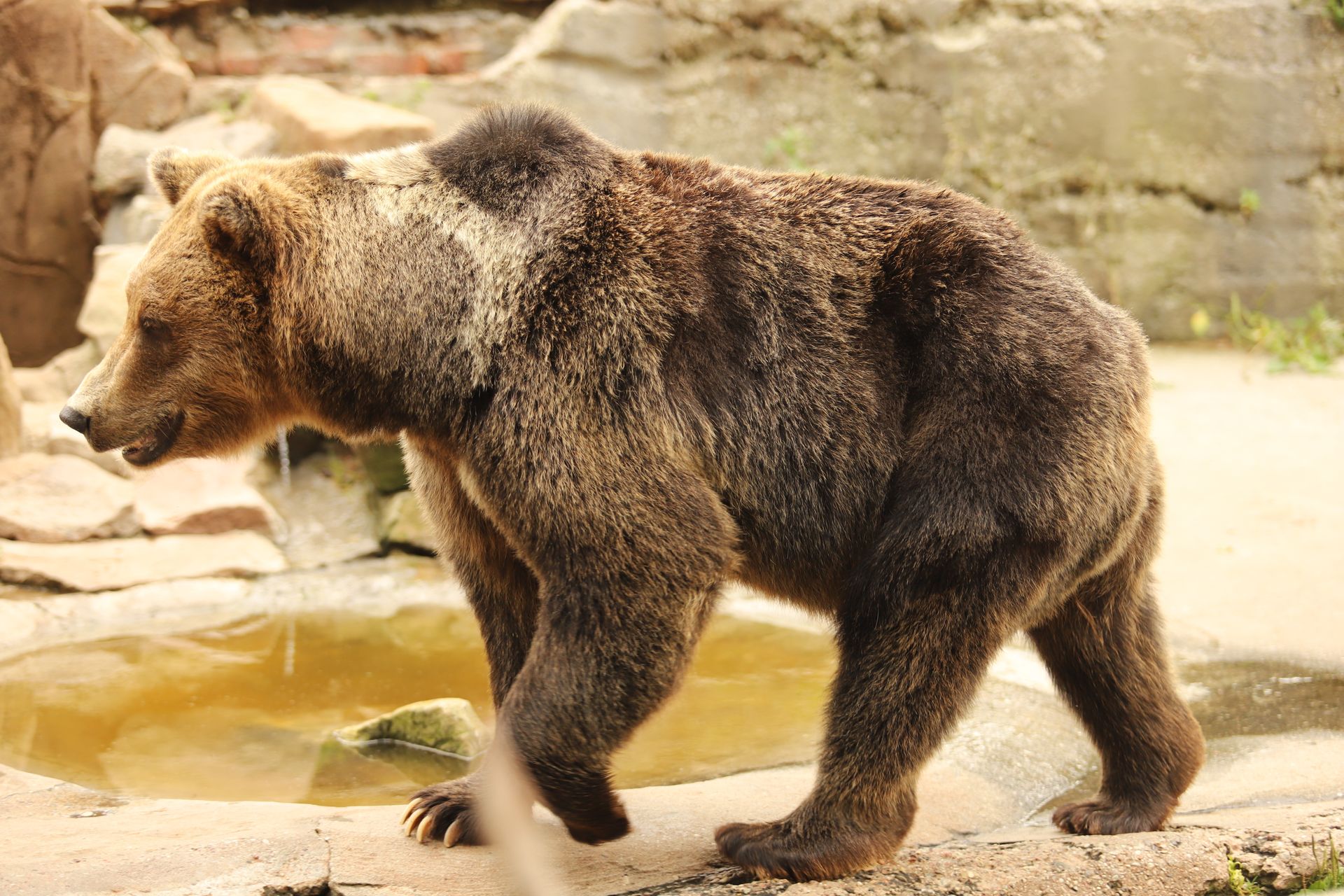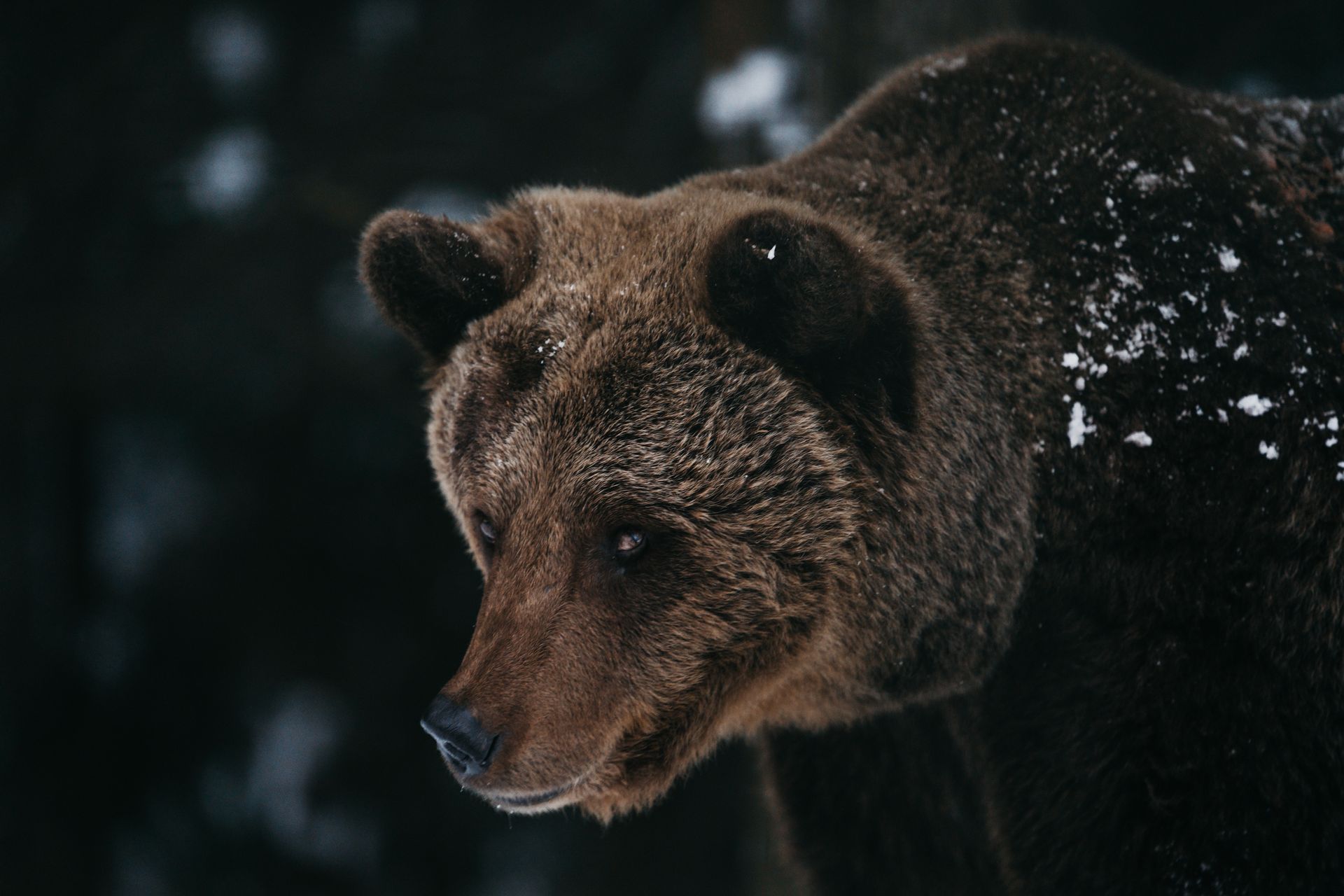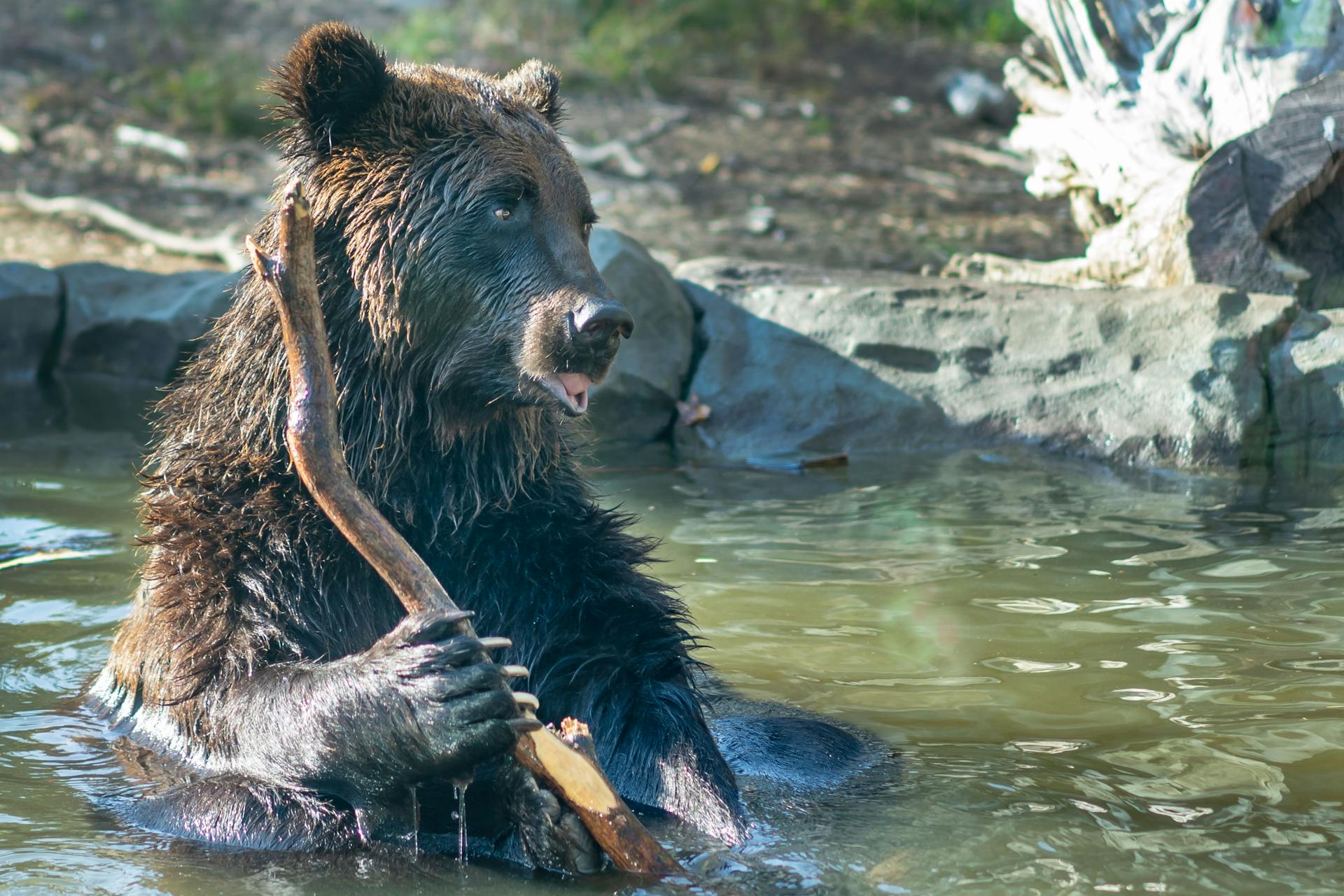
The Formosan Black Bear is an incredible species found only in Taiwan. They are the largest land mammal in Taiwan, with adults weighing between 150-200 pounds.
These bears are omnivores, which means they eat both plants and animals. They have a varied diet that includes fruits, nuts, insects, and small mammals.
Formosan Black Bears are generally solitary animals and have a large home range, which they mark with their scent to keep other bears away. They are also excellent climbers, often climbing trees to escape danger or to feed on fruit.
In Taiwan, Formosan Black Bears are considered an important part of the ecosystem, playing a key role in seed dispersal and forest regeneration.
Broaden your view: Taiwan Mountain Dogs
Physical Characteristics
The Formosan black bear has a distinctive physical appearance. Its head is sturdily built and measures 26–35 cm in length.
Its head circumference ranges from 40–60 cm. The bear's snout is quite long, resembling that of a dog.
Its ears are relatively short, measuring 8–12 cm in length. Its tail is inconspicuous and short, usually less than 10 cm long.
The bear's body is well covered with rough, glossy, black hair. This hair can grow over 10 cm long around the neck.
The tip of its chin is white, and it has a distinctive yellowish or white mark on its chest. This mark is shaped like a "V" character or a crescent moon.
The Formosan black bear weighs between 60 to 200 kg.
A unique perspective: Short Tailed Boa Constrictor Snake
Habitat and Behavior
The Formosan black bear is a remarkable creature, and understanding its habitat and behavior is essential to appreciating its unique characteristics. They live in the mountainous forests of eastern Taiwan, specifically at elevations between 1,000 to 3,000 meters.
Their habitat is quite different from other bears, as they don't hibernate during winter like Asiatic black bears in temperate areas. Instead, they move to lower elevations to find food. They are active for a significant portion of daylight hours, with more activity during summer and fall/winter than in the spring.
Worth a look: Giant Panda Habitat Destruction
Their activity levels are quite impressive, with 54-57% of daylight hours spent being active. This percentage is even higher during summer (60%) and fall/winter (60%), and lower during the spring (47%). They tend to be more active during the day in the spring and summer, but increasingly active at night in the fall/winter when acorns are abundant.
One interesting fact about Formosan black bears is that they make temporary nests, a behavior not seen in any other bear species. They are also skilled swimmers and climbers, and can easily outrun humans, reaching speeds of 30-40 kilometers per hour.
Despite their impressive abilities, Formosan black bears are generally solitary and tend to move extensively except during mating season or when caring for cubs. They are also known to avoid humans, which is why they are rarely seen in the wild.
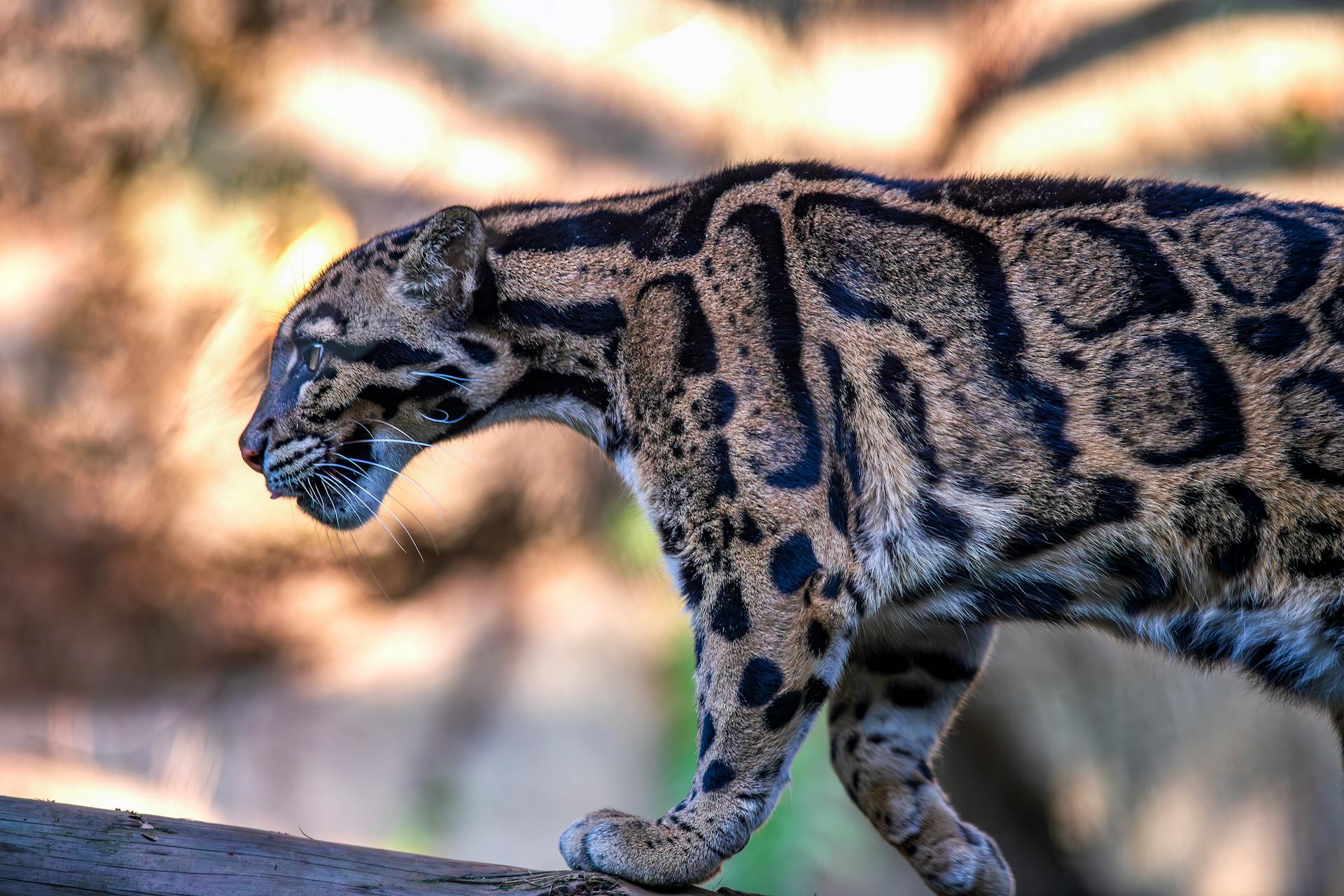
Additional reading: Formosan Clouded Leopard
Conservation Status
The Formosan black bear's conservation status is a pressing concern. The species has been listed as endangered since 1989, and it's protected by Taiwan's Cultural Heritage Preservation Law.
In fact, the entire species of Asiatic black bear is listed on Appendix I of CITES, which bans all international trade of any products from this species.
The Formosan black bear is also listed on the red list of the International Union for Conservation of Nature and Natural Resources (IUCN) as vulnerable.
This classification is due in part to the ongoing threat of illegal hunting, which continues to impact bear populations. For example, eight of fifteen bears captured in a 1998-2000 survey had missing toes or paws, caused by illegal traps.
Despite these challenges, there is still hope for the Formosan black bear. In 2009, a conservationist recorded footage showing a mother bear attempting to help her two cubs cross a rapid near Batongguan Trail in the eastern section of Tafen.
Readers also liked: International Tiger Day
Social
Formosan black bears are generally solitary animals, only interacting with each other to mate.
In fact, they're one of the few species that don't live in groups like some other bears do.
General Information
The Formosan black bear is a species of bear that is native to Taiwan. They are the largest land mammal in Taiwan and can weigh up to 200 kg.
Their distinctive black fur is a key identifier, and it's worth noting that they have a more rounded snout compared to other bear species.
Taiwan's Wildlife Crisis
The Formosan black bear is one of Taiwan's most iconic and endangered species.
Habitat loss and fragmentation are major threats to the Formosan black bear's survival, with only 25% of its original habitat remaining.
Human-bear conflicts are on the rise, with bears increasingly venturing into agricultural areas in search of food.
The Formosan black bear is found in the mountainous regions of Taiwan, where its habitat is being threatened by logging and urbanization.
Conservation efforts are underway to protect the Formosan black bear and its habitat, but more needs to be done to address the crisis.
For more insights, see: Giant Panda Habitat
Frequently Asked Questions
Are Formosan black bears aggressive?
Formosan black bears are generally not aggressive unless provoked, and they tend to avoid confrontations with humans. However, they may defend themselves if they feel threatened or if their young are in danger.
What does the Formosan black bear symbolize?
The Formosan black bear is a symbol of Taiwanese identity, representing the country's diverse culture and values of freedom. It's a cherished emblem of Taiwan's unique heritage.
Featured Images: pexels.com