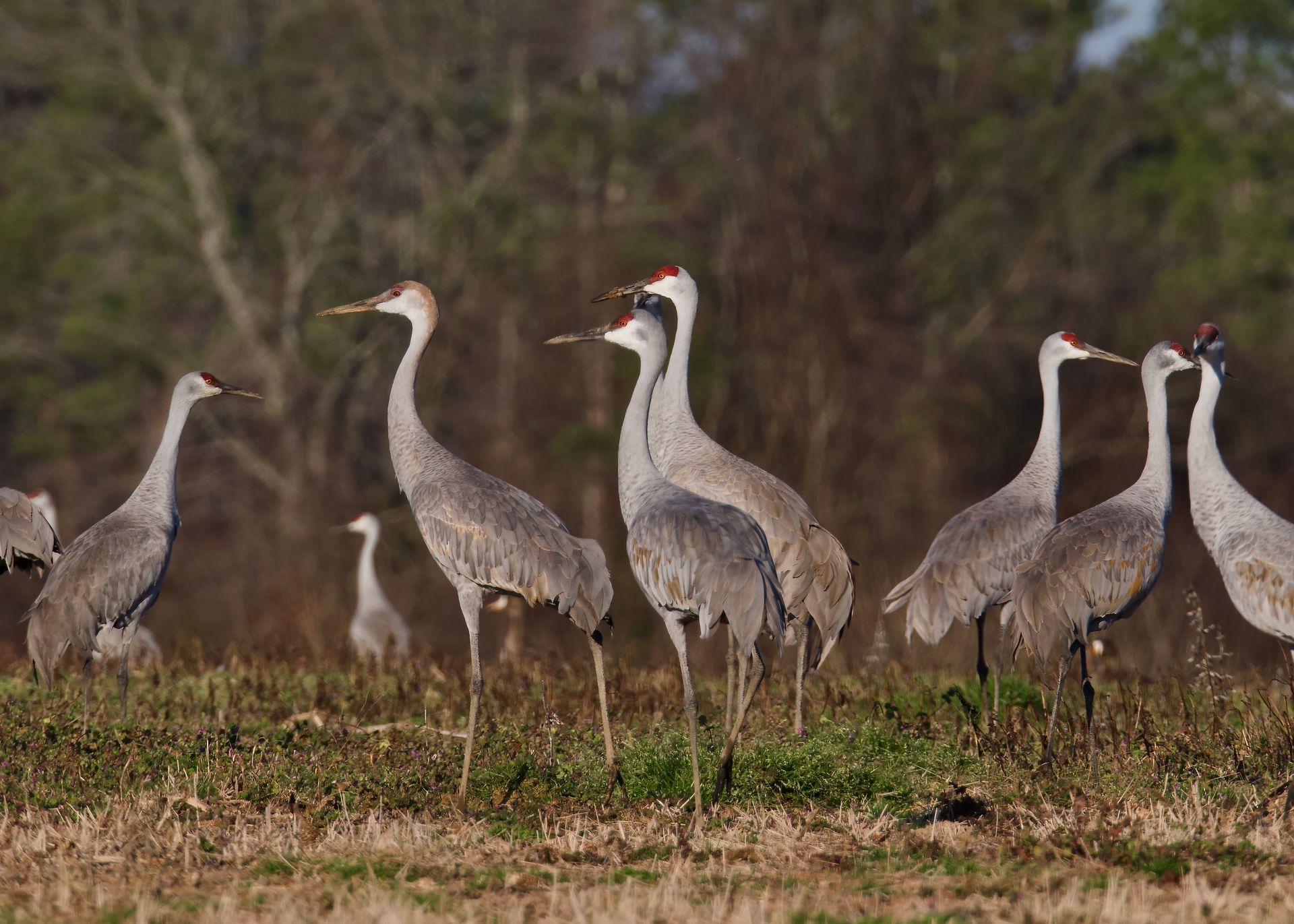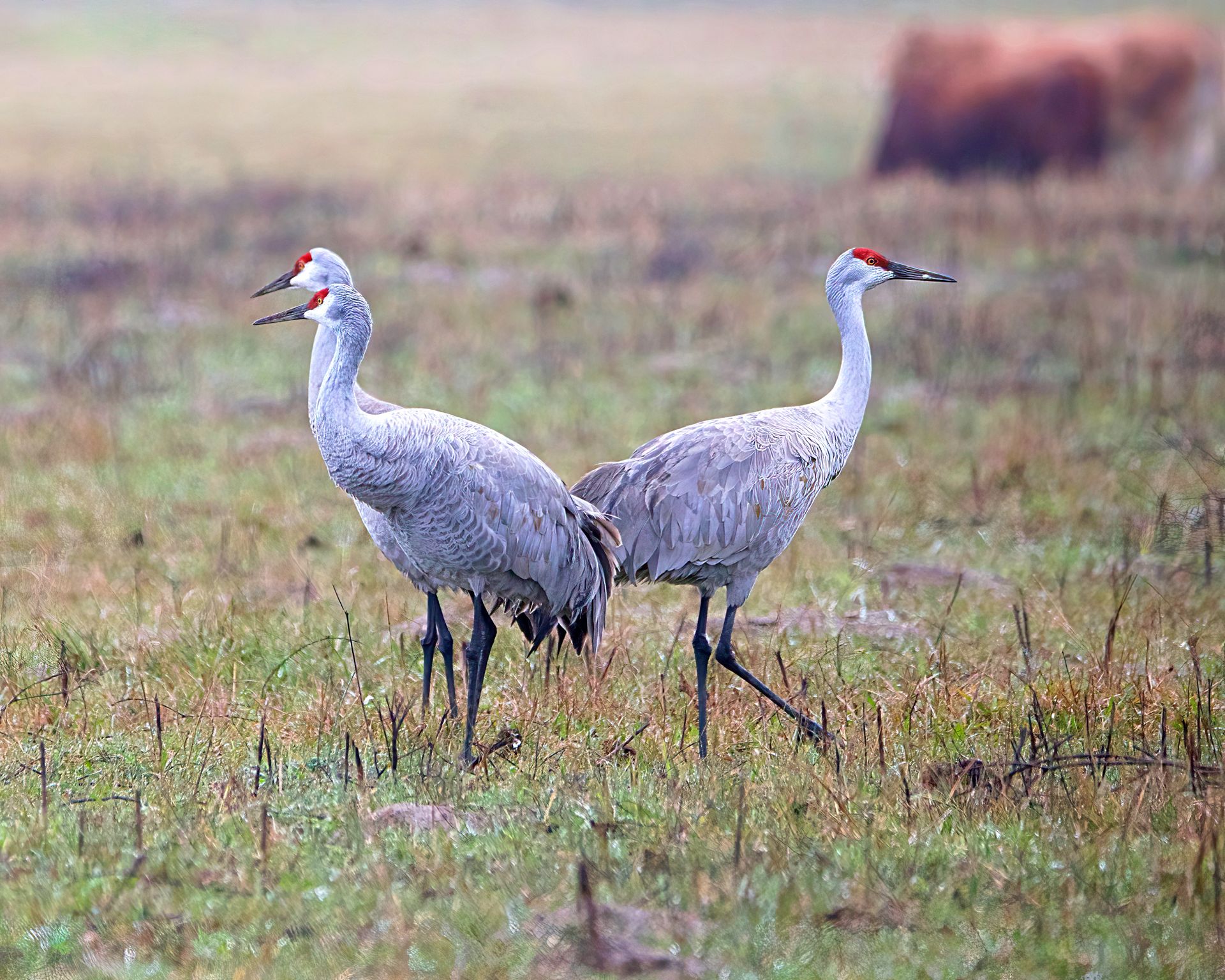
The Florida Sandhill Crane is a majestic bird that has adapted to living in harmony with its surroundings. They can be found in shallow waters, wetlands, and grasslands, where they feed on plants, insects, and small animals.
Florida Sandhill Cranes typically form long-term monogamous relationships, with some pairs staying together for up to 20 years. They are also known to be devoted parents, with both males and females taking turns incubating eggs and caring for their young.
Living in harmony with humans is a remarkable feat for these birds, considering they can grow up to 4 feet tall and weigh as much as 12 pounds. They are surprisingly quiet, with a soft, raspy call that's often described as a low-pitched hiss.
For more insights, see: Mississippi Sandhill Crane Wildlife Refuge
Habitat Overview
The Florida sandhill crane calls the Sunshine State home, but not just anywhere. They inhabit freshwater marshes, prairies, and pastures.
Florida's sandhill cranes can be found throughout peninsular Florida, stretching north to the Okefenokee Swamp in southern Georgia. However, they're less common at the northernmost and southernmost parts of this range.
For your interest: Greater Sandhill Crane
The Kissimmee and Desoto prairie regions are hotspots for sandhill crane populations, with the state's most abundant populations calling these areas home.
These cranes are year-round residents in Florida, but they're joined by 25,000 migratory greater sandhill cranes every winter, which is a significant increase to their usual population of 4,000 to 5,000.
Expand your knowledge: Florida Sandhill Crane Size
Conservation and Management
The Florida sandhill crane has a strong protection system in place to ensure its survival. The U.S. Migratory Bird Treaty Act provides protection for this species.
As a State-designated Threatened species, the Florida sandhill crane receives additional protection under Florida's Endangered and Threatened Species Rule. This designation highlights the importance of conservation efforts for the species.
Conservation efforts are crucial for the Florida sandhill crane, and the State-designated Threatened species classification helps inform these efforts.
Why Feed Cranes?
Feeding cranes might seem harmless, but it can have serious consequences for these magnificent birds. In fact, the Florida Fish and Wildlife Conservation Commission made it illegal to intentionally feed sandhill cranes in 2002.
If you're thinking of feeding cranes, consider this: they can lose their fear of humans and start approaching people closely, even grabbing food out of their hands. This is a problem because cranes can become habituated to humans.
Cranes that are attracted to people's yards for food are put at risk as they walk across roads, where many sandhill cranes are killed each year. In fact, attracting cranes to urban areas increases the threat of predation by dogs or cats.
Feeding cranes can also disrupt their natural diet, which is diverse and includes seeds, grains, insects, and small animals. By feeding them one food item, like corn, you're altering their eating habits.
Here are some reasons why feeding cranes is a bad idea:
- Cranes may lose their fear of humans and approach people closely.
- Cranes are more likely to crash into power lines in urban areas.
- Cranes are more likely to become entangled in human garbage.
- Cranes are at risk of property damage, such as scratching at windows or shiny automobiles.
- Cranes are more likely to be killed on roads.
- Cranes are at risk of predation by dogs or cats.
- Cranes may be exposed to heavy pesticide use in urban lawns, which can be deadly.
Coexisting with Cranes
To avoid attracting sandhill cranes to your neighborhood, never feed them and encourage your neighbors to do the same. Easy meals can make them less likely to inhabit urban areas.
Covering or moving automobiles can also help, as cranes are often drawn to shiny surfaces where they see their reflections. Windows or glass doors that they attack can be temporarily covered with material to prevent this.
If you do find cranes in your area, consider accepting some digging in your lawn or garden. They may damage these areas as they search for food like mole crickets and beetle grubs, but this can also provide natural biological control of these pests.
Here are some practical tips to keep in mind:
- Cover or move automobiles so cranes cannot see their reflections in shiny surfaces.
- Temporarily cover windows or screens with material or a string mounted on stakes to exclude cranes.
Four Actions for Coexisting
Coexisting with cranes requires some simple adjustments to our daily habits and surroundings. To avoid attracting cranes to our urban areas, it's essential to not feed them, as this makes them more likely to inhabit these areas.
Never feed cranes and encourage your neighbors to do the same. This simple act can go a long way in discouraging them from visiting our neighborhoods.

Cranes are also drawn to shiny surfaces, so it's crucial to cover or move automobiles to prevent them from seeing their reflections. This can be done by temporarily covering windows or glass doors with material.
To prevent damage to our homes, we can cover windows or screens with a string mounted on stakes about 2.5 feet off the ground. This will create an exclusion "fence" around the damaged areas.
While cranes can be a nuisance, they also provide a natural form of pest control by digging for food like mole crickets and beetle grubs.
Tips for Safe Viewing
Cranes are incredibly social birds, often living in large colonies with complex social hierarchies. They can grow up to 6 feet tall and live for up to 60 years in the wild.
Be aware of your surroundings when observing cranes in their natural habitat, as they can be sensitive to human presence. Keep a safe distance of at least 100 yards to avoid disturbing them.
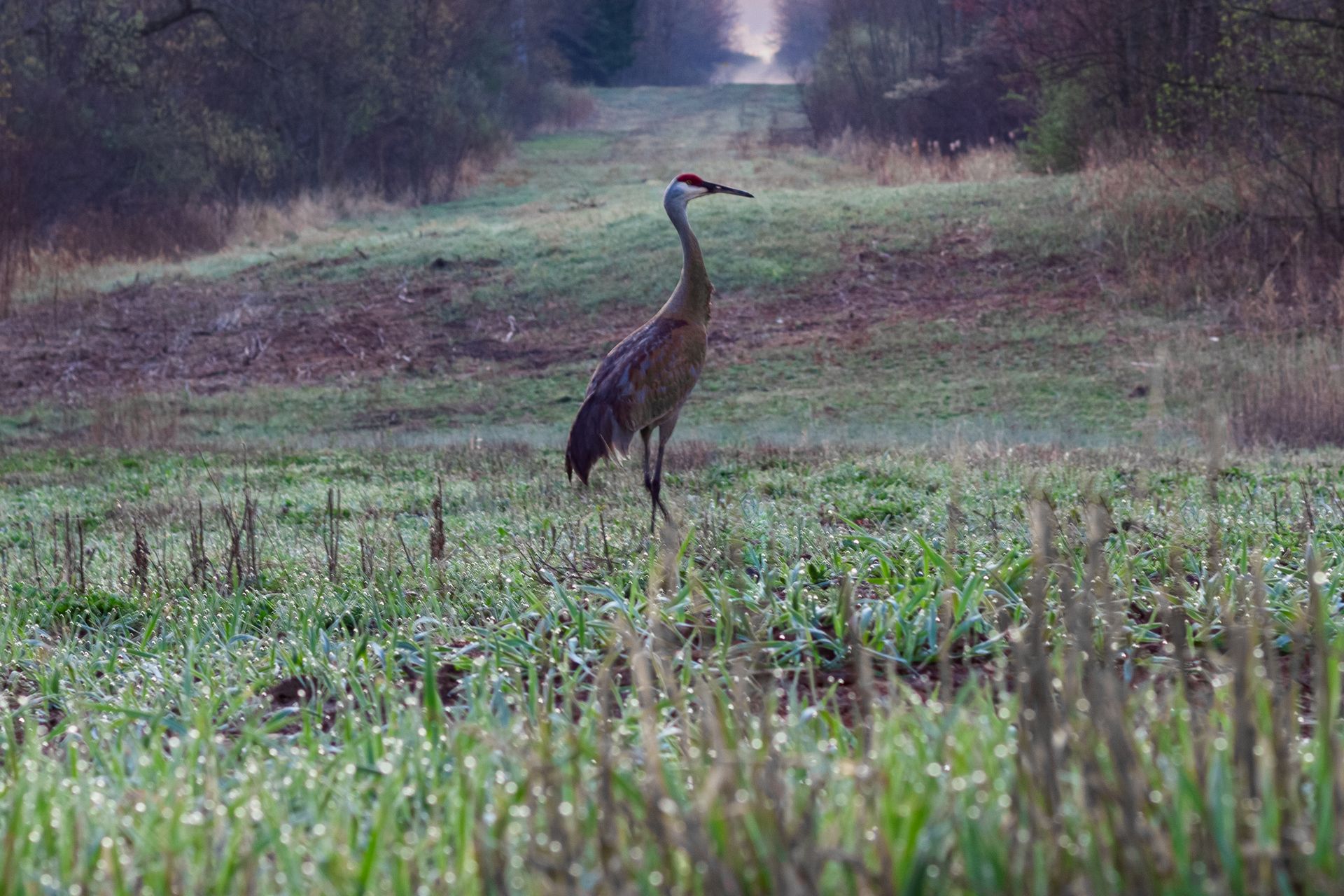
During breeding season, cranes are particularly protective of their young and may become aggressive if they feel threatened. If you encounter a nesting pair, it's best to keep a safe distance and avoid sudden movements.
Cranes can be noisy, producing a range of calls and sounds, but they are generally quiet during the day and vocal at dawn and dusk. If you're planning to observe cranes, try to time your visit for these periods for a more immersive experience.
In areas with high crane populations, it's essential to respect their space and not approach them, as they can carry diseases like avian cholera.
Wildlife and Invasive Species
Florida's natural habitats are home to a diverse range of wildlife, including the majestic Florida sandhill crane.
One of the biggest threats to the Florida sandhill crane's habitat is the invasion of non-native species, such as the Burmese python.
These invasive snakes prey on the cranes' young and eggs, causing a significant decline in their population.
The Burmese python is a highly adaptable species that can thrive in a variety of environments, making it a formidable opponent for native species like the sandhill crane.
The Florida sandhill crane's natural predators include hawks, owls, and coyotes, but the Burmese python is a new and significant threat to their survival.
Nesting Season
Nesting season for Florida Sandhill Cranes typically runs from January to August.
Their nests are about two feet in diameter and made with sticks, grass, and moss.
Both parents participate in building the nest, incubating their eggs, and raising their young.
Young Florida Sandhill Cranes are fed by their parents for their first few weeks and will follow the parents around until they become independent at around 9-10 months old.
Nesting season typically begins in January and may extend through August.
In Central and Southwest Florida, the average egg-laying date is usually between February 22 and March 3.
Incubation lasts for 29-31 days.
It's essential to note that if active nests are identified during development, a buffer around the nest is required to ensure the birds aren't disturbed by adjacent development activities.
Recommended read: Florida Wild Turkey Season
Florida Sandhill Crane
The Florida Sandhill Crane is a unique and fascinating bird species. They are a subspecies of the North American Sandhill Crane and spend their entire lives in Florida.
They can be found in freshwater marshes, prairies, and pastures, where they dine on a variety of foods including seeds, grain, berries, insects, earthworms, mice, small birds, snakes, lizards, frogs, and crayfish.
These birds are long-necked, long-legged, and gray, with a distinctive bald spot on top of their head that exposes bright red skin. Their wingspan can reach an impressive 6 1/2 feet.
They are known for their unique call, which sounds like a trumpet, and their dramatic courtship display, which includes dancing, jumping, and flapping their wings.
Florida Sandhill Cranes form monogamous pairs, and at two years old, they will begin a dramatic display of courtship that includes exquisite dancing with jumps, runs, and graceful flapping wings.
The mates will build a nest of sticks, grass, and moss where two eggs are laid, and the pair will incubate the eggs for 32 days.
By ten months old, the juveniles leave the nest and can live to be 20 years old.
For another approach, see: Make Florida Dancing Birds
Frequently Asked Questions
Can you touch sandhill cranes in Florida?
No, touching sandhill cranes in Florida is not allowed. Physical contact with these birds is a violation, and it's best to observe them from a safe distance.
Do Florida sandhill cranes mate for life?
Yes, Florida sandhill cranes are known to form long-term monogamous relationships, mating with their partner for many years. This lifelong bond is a unique characteristic of these magnificent birds.
Where can I see sandhill cranes in Florida?
You can spot sandhill cranes in Florida's open spaces, including pastures, prairies, and freshwater wetlands from the Everglades to the Okefenokee Swamp. Look for these majestic birds in the state's natural areas for a thrilling wildlife experience.
Featured Images: pexels.com