Identifying fledgling birds can be a thrilling experience, especially for beginners. Fledglings have a distinctive appearance, often with a mix of juvenile and adult feathers.
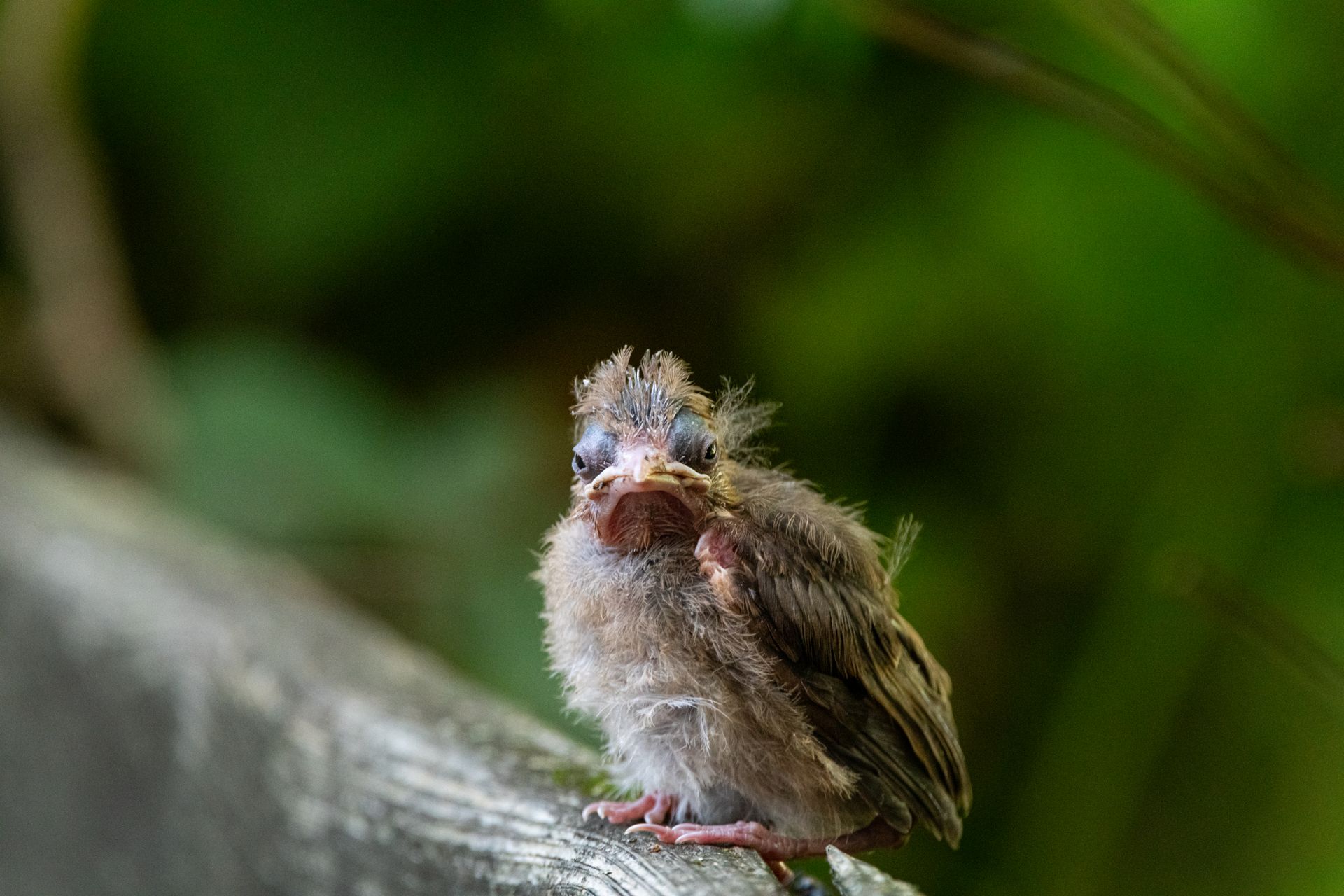
One key characteristic to look for is the presence of downy feathers, which are soft and fluffy. These feathers often cover the fledgling's body, giving it a soft, rounded appearance.
Fledglings typically have a small beak, which is often yellow or pink in color. This beak color can be an important identifier, especially for species that have distinctive beak colors.
Fledglings are usually found on or near the ground, where they can forage for food and practice their flying skills.
Bird Identification
Bird Identification is all about paying attention to the little things. A fledgling bird's plumage can be a dead giveaway, with many species sporting distinctive markings or colors that remain throughout their lives.
The shape and size of a bird's beak is another crucial factor. If the beak is large and stout, it's likely a bird that eats seeds and grains, while smaller, more pointed beaks are better suited for insects.
Look for patterns on the wings, legs, and tail to help narrow down the possibilities. The more you observe, the more you'll develop your skills and become proficient in bird identification.
Identifying Birds Can Be Challenging
Identifying birds can be challenging, especially when they're still learning to fly. Young robins often stay close to the ground while building flight muscles.
Their early attempts at flight can be quite comical, as they bounce rather than fly. They feed on terrestrial small insects or worms.
As they continue growing, they begin making short flights to other strong branches. Within two months, they molt into their adult feathers.
During this stage, a gradual change from a speckled pattern to a resurfacing of the red chest occurs. This transformation can make it harder to identify them as juveniles.
Swallow
As you're trying to identify a swallow, pay attention to the color of its face-patch, which is pale orange in juveniles.
In juveniles, the tail streamers are appreciably shorter than on adults.
The bill of juveniles may still be largely yellow.
You may see juveniles begging for food from adults.
Appearance
Juvenile goldfinches have plain and light brown heads that blend into their surroundings.
Their heads lack the striking red, white, and black head markings found in adults.
You can easily identify juvenile goldfinches by their bright yellow patches on each wing.
They are similar in size to adults, but their feathers may not have developed perfectly yet.
Juvenile goldfinches are quite conspicuous due to their yellow coloring, making them easier to spot.
They might appear bulkier than adults because they haven't reached the age where their feathers have fully developed.
Specific Birds
If you find a blackbird nestling, it's likely to beg for food because it hasn't developed wild instincts yet.
Blackbirds become independent after they're able to fly short distances and hop around.
If you see a recently hatched robin out of its nest, it needs urgent help.
Chaffinch
Chaffinch juveniles can be tricky to identify, but they're often a bit paler or greyer than adult females, who have a warm brown color.
If you're trying to tell a juvenile Chaffinch from an adult female, pay attention to their behavior and plumage.
Magpie
Magpies look quite similar to their parents, but one key difference is the short tail of juvenile Magpies. Their plumage tends to be duller and less glossy than the parents too. The white parts of their plumage are less well defined in juveniles. A 'young-looking' head is another identifying feature.
House Sparrow
The House Sparrow is a common sight in many backyards. They're known for being noisy and demanding, often "vibrating" their wings when begging for food.
Fledgling House Sparrows can be tricky to differentiate from adult females, especially if they still have a yellow gape visible at the corner of their mouth/bill.
Their behavior is a dead giveaway - they're always noisy and demanding, which is quite different from the calm demeanor of adult sparrows.
Bullfinch
The Bullfinch is a beautiful bird, but its young ones are quite different from the adults. Juvenile Bullfinches lack the distinctive black cap that the adults have, making them harder to identify.
One thing to note is that adult females are duller than the vibrant red males, but they still have a black cap, so that's a good way to tell them apart.
Juvenile Bullfinches can be found in gardens, often moving around while making a chirping sound, similar to Goldfinch fledglings. They tend to stick close to their family groups, so look for them in areas with plenty of flowers and slim branches.
It's worth noting that young Bullfinches can vary in appearance, depending on how recently they fledged, but they're generally quite lively and fun to spot.
Wren
The Wren is a small bird with not much difference between adult and juvenile birds. Young Wrens have shorter, stubbier tails.
Their appearance can be slightly more "fluffy" than adults, especially in very young birds.
In these young birds, the bill is more yellow and short compared to the orange/brown and longer bill of the parents.
Dunnock
The dunnock is a fascinating bird species. Fledglings look very similar to adults, but have a more streaking, particularly on the head.
Dunnocks are quite small, with adults reaching a length of about 20-23 centimeters. Their plumage is a mix of brown and grey hues, helping them blend in with their surroundings.
Their diet consists mainly of insects, seeds, and fruits, which they forage for on the ground or in low vegetation.
Wood Pigeon
Wood Pigeons are very calm birds, especially the young ones who mostly perch on trees or the ground.
They are less energetic than other fledglings, but just as interesting to watch.
Young Wood Pigeons are almost the same size as adults by the time they fledge, but lack the adult's distinguishing white neck patches and blue neck feathers.
Their feathers are mainly gray and unremarkable, which helps females reduce the attention of predators.
If you see a young Wood Pigeon on the ground unable to fly, it may have left the nest too early and should be returned if possible.
They nest only once a year, with chicks usually fledging from mid to late June.
Juveniles resemble adults but with duller colors and lack the vibrant blue and yellow.
Collared Dove
Collared Doves can breed in most months of the year, making them a year-round presence in many areas.
Their young, or fledglings, will often have a poorly-developed collar or may be lacking it completely, making it harder to identify them as Collared Doves at first glance.
In the right light, the eyes of fledglings are brown, whereas adult Collared Doves have red eyes.
The bill-shape of young Collared Doves is also different from that of adults, so it's worth taking a closer look if you're trying to identify one.
Song Thrush
The Song Thrush is a bird that can be tricky to identify, especially when it comes to juveniles. From a distance, they look very similar to adults.
One key difference is the yellow/brown speckling on the 'shoulder' of the juveniles, which the adults have grown out of. This is a distinctive feature that can help you tell them apart.
Young Song Thrush fledglings will have a more yellow/light-brown head, particularly behind the eye, whereas adults have a solid brown head.
Pied Wagtail
The Pied Wagtail is a bird that's quite easy to spot in its adult form, but if you're lucky enough to see a juvenile, you'll notice it's largely grey instead of black and white.
Their tails are a bit shorter than those of adults, and there might be a yellow-ish wash to the white area on the 'face'.
Robin
Young robins are not very vocal and are mostly only seen running around in the bush or sitting on low branches.
Juvenile robins look very different from adults, appearing entirely mottled brown, which aids in camouflage.
Their speckled brown coloring allows them to blend in on the ground and in the leaves, making it harder for predators to spot them.
If you find a young robin outside of its nest, it's likely a nestling that needs help.
It's normal for fledglings to have limited flying ability, so if you see one in your garden, just monitor from afar and keep it safe from cats!
Juvenile robins lack the bright red chest of fully grown robins, making them look like a different bird altogether.
4. Blackbird
Blackbirds are adorable explorers, but they're also a bit clumsy. They're fully mobile and vocal, often running about gardens or moving around in the bushes.
Their babies have brown streaked plumage, and may still show yellow gape flanges, which are a defining feature of fledglings.
The adults, male blackbirds, are shiny black, while the young ones are a bit fluffier than the mature ones.
If you see a fledgling blackbird in your garden, leave it alone! It's able to hop around and fly short distances, and will soon be independent.
These young birds don't have any wild instincts yet, so they'll beg anyone for food if they're found at this age and need help.
Crow
Crows are fascinating birds, and one of the most interesting things about them is their development.
Fledgling crows are almost identical to adult crows, except they have blue eyes.
As they learn to become independent, they'll still be being fed by their parents, which is a remarkable display of parental care.
Breeding and Moult
Fledglings typically start to emerge from their nests in early May, and it's a thrilling time to see them try their wings for short flights. These little ones will often stay around the gardens for their food.
Many birds, like the Bullfinch, replace their body feathers within several weeks of fledging, but retain their wing and tail feathers for just over a year. This moult strategy can vary depending on the species.
As they grow, juvenile birds like the Blue Tit will eventually moult and replace their feathers with adult ones, which is done within their first year.
Breeding Season
Breeding Season is a crucial time for birds, and it's fascinating to watch. Typically, nests start in April.
The birds prefer to build their nests with many wild plants, such as wildflowers. They're well-crafted from plants like mosses, grasses, and wool.
By May, you'll see the first fledglings trying their wings for short flights. These little ones stay around the gardens for their food, such as seeds of dandelion and thistle.
Expand your knowledge: Protect Plants
Moult Strategy
Juvenile birds moult and replace their feathers with adult ones within their first year, but the timing and extent of feather replacement depend on the species' moult strategy.
Some species, like the Blue Tit, replace their body feathers within several weeks of fledging, but retain their wing and tail feathers for just over a year.
The Long-tailed Tit, on the other hand, undergoes a complete moult and acquires adult plumage within a few weeks of leaving the nest.
Most common garden species, such as the Bullfinch, replace their body feathers within several weeks of fledging.
The moult strategy of a species can be influenced by when it breeds, when the youngster was born, and whether or not it is a migrant.
Discover more: Bird Identification by Photo
Frequently Asked Questions
How long can a fledgling survive without its mother?
Fledglings can survive on their own for up to two weeks while learning to fly, but they still require food and care during this critical development period
Featured Images: pexels.com