South Africa is home to an incredible array of wildlife, with over 800 species of birds, 1,500 species of plants, and 9,000 species of insects.
The country's unique geography, with its diverse climate zones and ecosystems, supports a wide range of animal life, from the majestic lions and elephants of the savannas to the tiny, iridescent butterflies of the forests.
Some of the most iconic animals in South Africa include the Big Five: lions, elephants, buffalo, leopards, and rhinoceroses. These majestic creatures can be found in many of the country's national parks and game reserves.
With its rich biodiversity, South Africa is a paradise for wildlife enthusiasts and nature lovers, offering endless opportunities for exploration and discovery.
Check this out: South Africa Wildlife
Habitats and Locations
South Africa's diverse landscapes support an incredible variety of wildlife, making it a paradise for animal lovers. The country's topography and geology are extremely varied, resulting in a wide range of habitats that are home to a vast array of species.
One of the most fascinating aspects of South Africa's habitats is the presence of the oldest desert in the world, the Namib desert, which is at least 55 million years old. This arid corner of the country is located in the extreme northwest and intergrades into the semi-arid Karoo biome.
The Karoo biome is characterized by small shrubs and succulents, which have dominated the landscape due to centuries of overgrazing. This biome is extensive, covering much of South Africa, including the Northern Cape, Western Cape, Eastern Cape, and the Free State.
To the north and east of the Karoo biome lies the Kalahari, a semi-arid woodland dominated by thorn trees of the genus Acacia. This region is home to a wide variety of wildlife, including the Big 5.
If you're looking for a specific type of habitat, here's a breakdown of the different biomes found in South Africa:
- Desert: Namib desert (extreme northwest)
- Semi-arid Karoo biome: Northern Cape, Western Cape, Eastern Cape, and Free State
- Semi-arid woodland (Kalahari): north and east of the Karoo biome
- Savanna and open woodlands (bushveld): Mpumalanga, Limpopo, and Kwa-Zulu Natal
- Grassland: Highveld, where trees are rare and occur only along watercourses
- Mediterranean shrubland (fynbos): west coast, dominated by plant families such as Proteaceae and Ericaceae
- Forest: concentrated around the Knysna area and scattered along the escarpment of the Drakensberg mountains
Kruger National Park is a must-visit destination for any animal lover, as it is home to Africa's most iconic animals, including the Big 5.
Big 5 Animals
The Big 5 Animals of South Africa are a major draw for wildlife enthusiasts and safari-goers alike. These five iconic species are the most sought-after safari sightings, and for good reason.
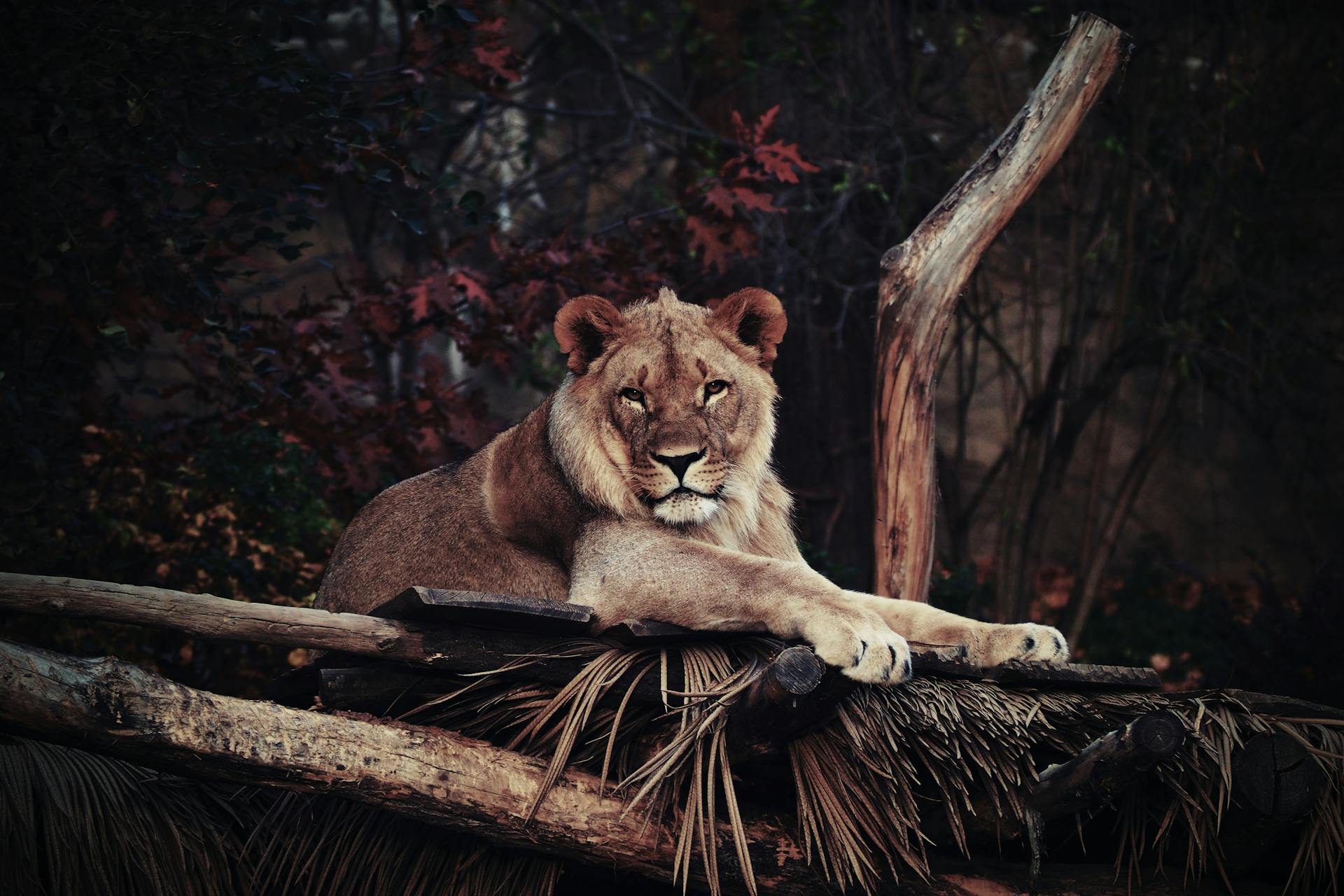
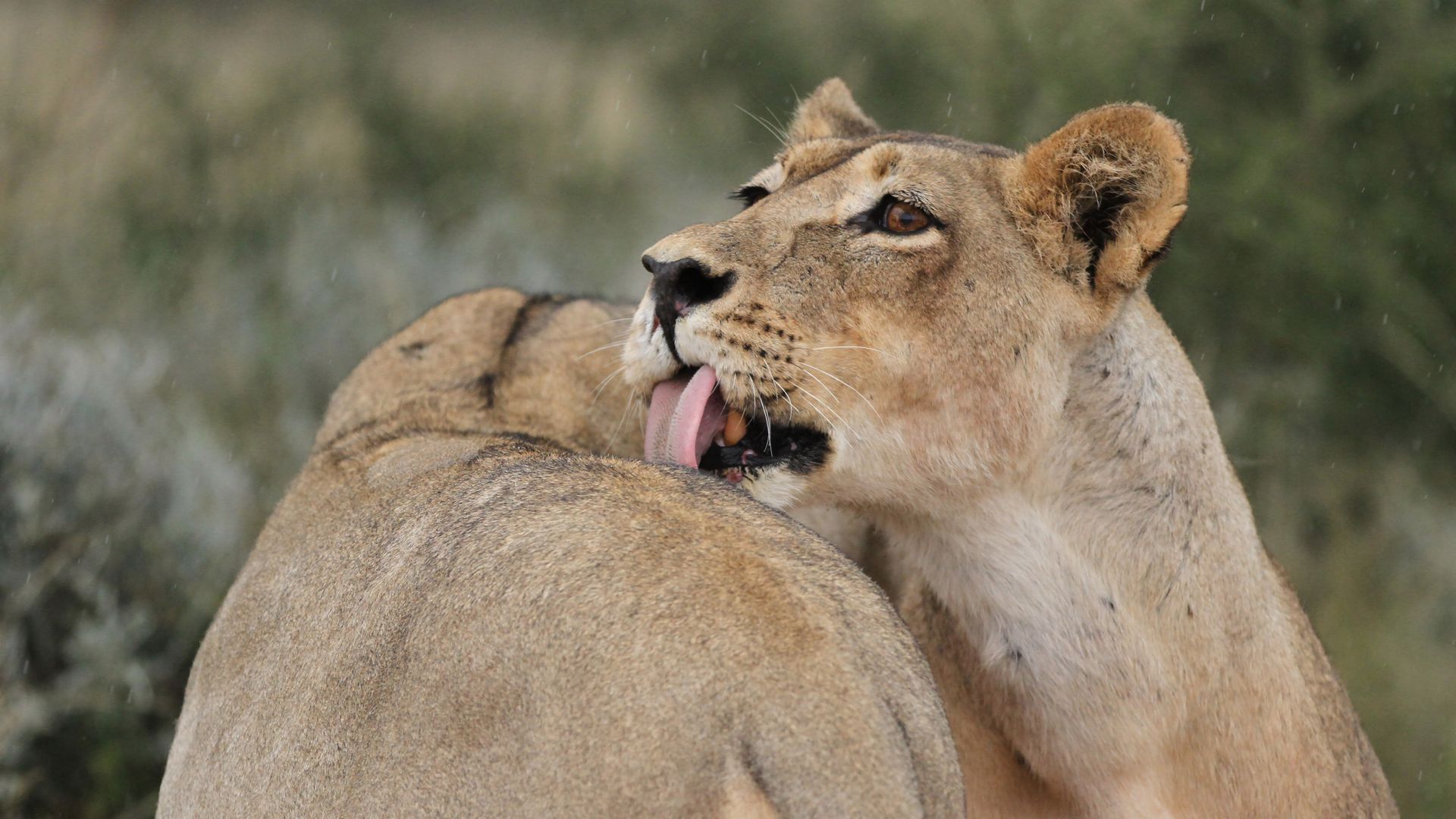
Lions are one of the Big 5, and they can be found in South Africa's savannas and grasslands. They're known for their powerful roars, which can be heard from miles away.
Leopards are another Big 5 animal, and they're known for their agility and stealth. They're expert hunters and can climb trees with ease.
Rhinos, specifically black and white rhinoceroses, are also part of the Big 5. They're herbivores and can weigh up to 3,000 kilograms.
Elephants, the largest land animals on Earth, are a Big 5 favorite. They live in large matriarchal herds and can be found in South Africa's savannas and forests.
Cape Buffalo, also known as the Black Death, are a formidable presence in South Africa's wild. They're known for their aggressive behavior and can weigh up to 1,000 kilograms.
These five animals are a testament to the incredible diversity of wildlife in South Africa, and a safari experience wouldn't be complete without spotting them in their natural habitats.
You might like: Wildlife in South Korea
Rodents, Insectivores, and Lagomorphs
South Africa is home to a diverse range of rodents, including the vlei rat and four-striped grass mouse. These tiny creatures can be found in various habitats across the country.
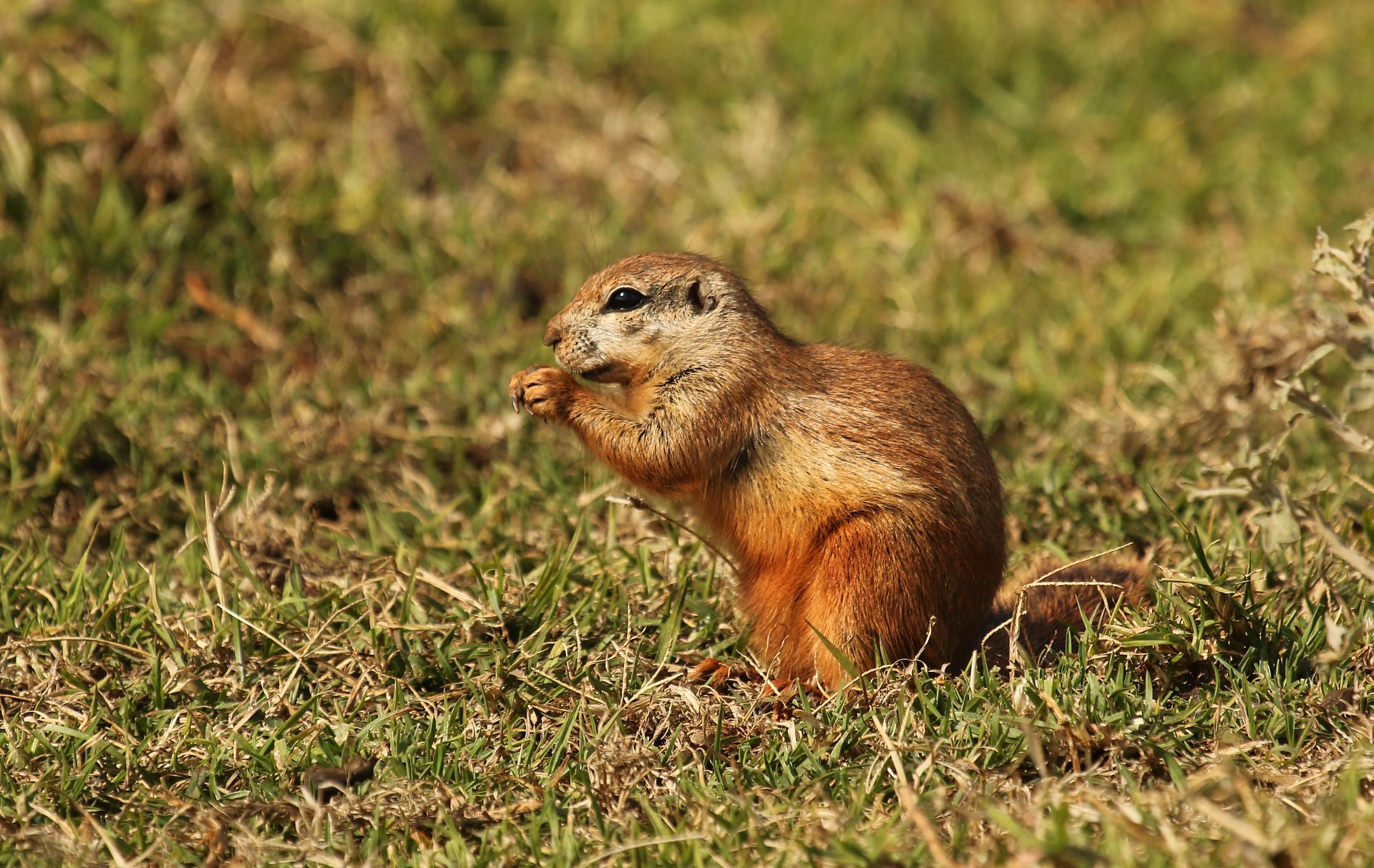
The Cape ground squirrel is a common sight in arid areas, often sharing its burrows with mongooses and meerkats. It's quite clever, using its bushy tail as an umbrella from the harsh sun.
Tree squirrels are also present in the country, with some species being introduced, such as the eastern grey squirrel. This particular species was introduced by Cecil John Rhodes from Europe.
Shrews are another type of insectivore found in South Africa, preying on invertebrates. They're quite small, but play a vital role in the ecosystem.
The Southern African hedgehog is a unique species found in the country, with a dark face bordered by white fur and longer legs. This adaptation helps it thrive in the warmer climate.
The South African springhare is a rodent that's common in savanna and semiarid habitats. It's quite fascinating, consuming tubers and bulbs as its primary source of food.
Scrub hares and Cape hares are widespread in all regions of South Africa, serving as a common prey item for many predators.
Afrotheria and Primates
The Afrotheria group is home to some unique creatures in South Africa, including the aardvark, which is a prodigious digger and sleeps in burrows during the day.
These animals have adapted to their environment in remarkable ways, with the African bush elephant being an ecosystem engineer that opens up dense thicket and woodland for more open-habitat species.
The aardvark's diet mainly consists of termites and ants, which it feeds on with its long, sticky tongue.
In contrast, the primates of South Africa are a diverse group, with the chacma baboon being the largest primate in the region, excluding humans.
This true generalist is found in virtually all habitats in South Africa and is a true opportunistic eater, taking eggs and nestlings from bird nests when the opportunity arises.
Afrotheria
The Afrotheria taxon has its roots in Africa, where you can find the aardvark, an odd-looking creature that's a prodigious digger and sleeps in burrows during the day.
The African bush elephant is the only proboscidean in South Africa, and it's an ecosystem engineer that opens up dense thicket and woodland for more open-habitat species.
Most members of the Afrotheria have remained in Africa, and the aardvark feeds mainly on termites and ants.
The African bush elephant is the largest native animal in South Africa, and it's a remarkable creature that plays a vital role in shaping its ecosystem.
The aardvark is a solitary animal and is primarily active at night, using its keen sense of smell to locate its termite and ant prey.
The dassies or hyraxes, which include the rock hyrax and the tree hyrax, are relatives of the elephants, although not the closest.
Expand your knowledge: Animal Welfare and Rights in South Korea
Primates
The chacma baboon is the largest non-human primate in South Africa, found in almost every habitat in the region. They are true generalists, which means they can adapt to any environment.
These baboons are primarily frugivores, but they're not picky eaters - they'll take eggs and nestlings from bird nests if the opportunity arises. It's not uncommon to see them scavenging for food in a variety of settings.
The vervet monkey and Samango monkey are also found in South Africa, and they share a similar diet with the baboons - mainly fruits, but also opportunistic eaters.
Birds and Avi
South Africa is a haven for birdwatchers, with an incredible 858 species of birds recorded in the country.
The guineafowl is a common sight in South Africa, with two main species: the helmeted guineafowl, which is widespread and common in urban and agricultural areas, and the crested guineafowl, which is restricted to bushveld.
One of the most iconic birds in South Africa is the ostrich, which is plentiful on open grassland and savannah areas. It's the largest bird in the country, and a true marvel to see in person.
The waterfowl in South Africa are incredibly diverse, with species like the Egyptian goose and the spur-winged goose being extremely common. You can spot them in wetlands and waterways across the country.
The raptors in South Africa are a thrill to see, with eagles like the African fish eagle and the martial eagle being found in different habitats. The Verreaux's eagle is a particular concern, as its population has been declining in some areas.
Intriguing read: Birds Fly South
The passerines in South Africa are incredibly varied, with over 5,000 identified species. This includes starlings like the red-winged starling, which is extremely common and widespread across the country.
The corvids in South Africa are also fascinating, with species like the pied crow and the white-necked raven being common in urban and rural areas. The Cape crow is mainly restricted to rural habitats, and the house crow can be found in Cape Town and Durban.
Reptiles and Amphibians
South Africa is home to an incredible array of reptiles and amphibians, with 447 species of reptile recorded in the country. Many of these species can be found in the country's diverse habitats, from fast-moving streams to arid deserts.
The Nile crocodile is one of the most iconic reptiles in South Africa, and can be found in the north and east of the country. It's a formidable predator that's considered one of the most dangerous animals in Africa.
Additional reading: Reptiles in South America
The country is also home to many species of snakes, including the African rock python, which is the largest snake in South Africa. This non-venomous snake kills its prey by constriction, and can even take down creatures as large as an antelope.
Some of the most venomous snakes in the world can be found in South Africa, including the black mamba and the Cape cobra. However, these snakes are generally timid and prefer to avoid humans.
Tortoises are also common in South Africa, with the leopard tortoise being the most widespread species. This tortoise can be found in semi-arid and grassland habitats, and is an important part of the country's ecosystem.
The country's amphibian population is also incredibly diverse, with 132 species recorded. Many of these species are found in the country's wetlands and rivers, where they play a crucial role in the ecosystem.
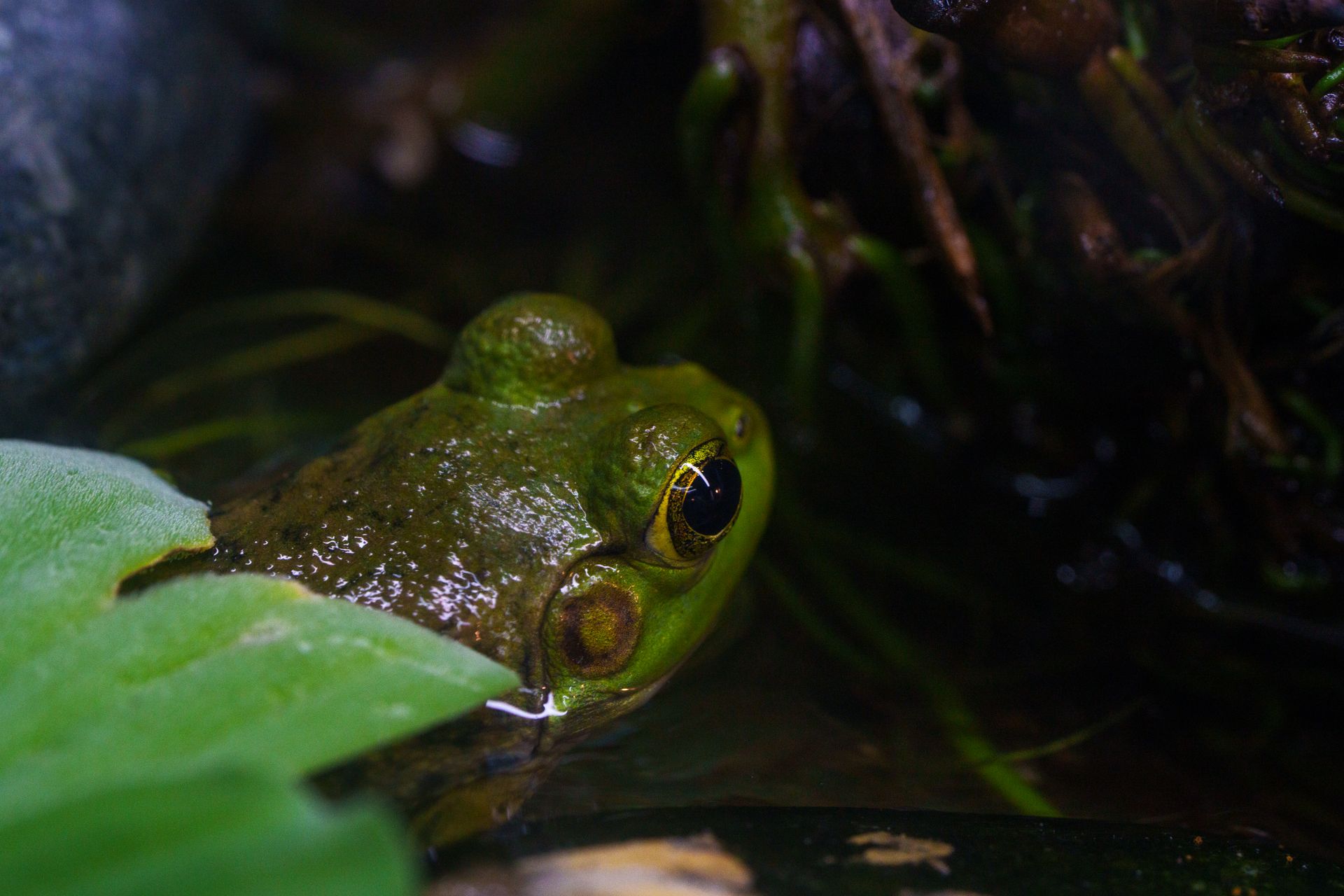
Some of the most interesting amphibians in South Africa include the western leopard toad and the arum frog. These frogs are both found in the country's wetlands and are an important part of the ecosystem.
Unfortunately, many of South Africa's amphibians are threatened or endangered, including the critically endangered Rose's ghost frog. This frog is found only on the slopes of Table Mountain, and is one of the most endangered species in the country.
South Africa's reptiles and amphibians are an incredible part of the country's fauna, and play a vital role in the ecosystem. By learning more about these amazing animals, we can work to protect and conserve them for future generations.
Expand your knowledge: Snakes in South America
Insects and Invertebrates
South Africa is home to a vast array of insects and invertebrates. Beetles are among the best-studied insect groups in the country, with a number of endemic species.
Insects like flies have been classified into over 90 families, showcasing the incredible diversity of these tiny creatures. Many of these flies are native to South Africa and can be found in various habitats.
The region is also home to a multitude of spider and scorpion species, with only four spiders and two scorpions being really venomous. This means that while some species can be hazardous, many others are harmless.
Therrestrial Invertebrates
South Africa is home to a staggering array of terrestrial invertebrates.
Beetles are among the best-studied insect groups in South Africa, with many endemic species.
There are over 90 families of flies native to South Africa, which have been classified.
Only four spiders and two scorpions in Southern Africa are really venomous.
The Oxyopidae family, also known as the lynx spiders, are found in Southern Africa.
The Bark Spider and Carparachne are two of the many spider species found in the region.
To cover all the insects in Southern Africa would take many years.
Beetles such as Zophosis moralesi and Zophosis amabilis are commonly found in the area.
The Scarabaeinae family of beetles is also present in Southern Africa.
The Ponerinae family of ants and termites is found in the region.
Butterflies like the Anthene lunulata lunulata and Aphnaeus marshalli are commonly spotted in Southern Africa.
There are 175 species of scorpions in South Africa, although most are harmless.
Scorpions with small pinchers and a short thick tail are generally venomous.
Explore further: Kennel Union of Southern Africa
15. Cape Cobra
The Cape Cobra is one of the most deadly snakes in the world.
They can be encountered throughout South Africa, particularly in areas like dunes, bushland, and near the sea, rivers, or national parks.
Cobras are often found in the same regions as crocodiles, which are mostly in the eastern and northern provinces.
Be careful when walking through these areas, as the presence of both snakes and crocodiles can be a serious threat.
Threats to Wildlife
Poaching has become a significant threat to wildlife in South Africa, with 1175 rhinos killed for their horn in 2015 alone.
The rate of rhino poaching has been increasing exponentially every year, with the number of rhinos poached being higher than the year before, except in 2015 when it was lower.
Sophisticated criminal syndicates are behind the poaching, making it a challenging issue to tackle.
Between 2008 and 2016, at least 6,058 lion bones and body parts were exported from South Africa, highlighting the scale of the problem.
Private game ranches breed lions for the canned hunting industry, adding to the demand for lion body parts.
Encyclopedia and Tours
The fauna of South Africa is incredibly diverse, with a wide range of animals and plants calling the continent home. From the iconic giraffe to the hippopotamus, each species has its own unique characteristics and habits.
The giraffe, for example, is a member of the Giraffidae family and can be found roaming the savannas and grasslands of South Africa. Giraffes are known for their distinctive spotted coats and long necks, which allow them to reach leaves on tall trees.
Additional reading: South African Giraffe
One way to experience the fauna of South Africa is to take a guided tour, such as the South Africa Safari Tour offered by YMT Vacations. On this tour, you'll have the opportunity to see rare and endangered species in their natural habitats, including the African penguin and the dassie.
Here are some of the amazing animals you can see on a South Africa safari tour:
- Giraffe
- Hippopotamus
- Antbear
- African penguin
- Dassie
Wildlife and Plants Encyclopedia
The Wildlife and Plants Encyclopedia is a treasure trove of information on the incredible diversity of African Fauna and Flora.
With its vast knowledge base covering mammals, birds, insects, spiders, scorpions, reptiles, trees, grasses, and lichens, you'll be amazed by the sheer variety of species found in Africa.
From the towering Giraffidae family, which includes the iconic giraffe, to the Hippopotamidae family of hippos, each entry provides fascinating insights into the lives of these incredible creatures.
The Orycteropodidae family is home to the antbear, a unique animal that's often overlooked but definitely worth learning about.
Here's a quick look at some of the fascinating families of animals you'll find in the Wildlife and Plants Encyclopedia:
Whether you're a seasoned naturalist or just starting to explore the wonders of Africa's wildlife, the Wildlife and Plants Encyclopedia is an essential resource to have by your side.
Tour
A South Africa Safari Tour is a dream come true for any animal lover. Spend a full day and a half on safari in Kruger National Park, where you can see rare African animals in their natural habitat.
Kruger National Park is a must-visit destination for any wildlife enthusiast. You can see the National animals of South Africa, including lions, elephants, and zebras.
Boulders Beach is home to hundreds of African penguins, and you can see them up close. This is a unique opportunity to observe these amazing creatures in their natural habitat.
Birds of Eden, the world’s largest free flight aviary, is a paradise for bird lovers. Discover hundreds of species of birds and be amazed by their beauty and diversity.
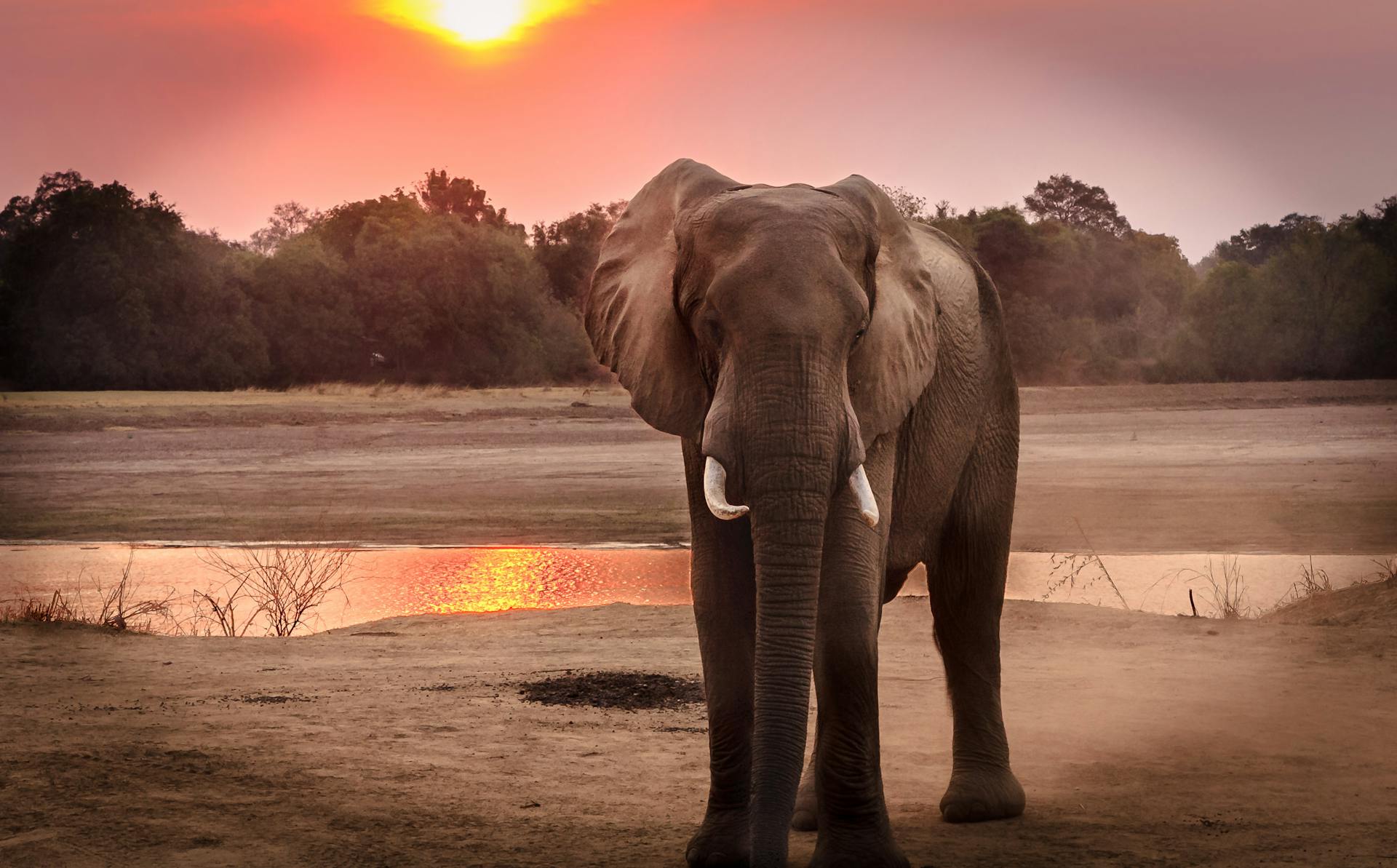
Table Mountain National Park is a great place to spot dassies, small mammals that are native to South Africa. Take a hike through the park and enjoy the stunning scenery.
If you’ve spent your whole life dreaming of Africa’s wildlife, a South Africa Safari Tour is the perfect way to make those dreams come true.
Specific Animals
The fauna of South Africa is incredibly diverse, with a wide range of animals that call the country home. From the savannas to the forests, there's an incredible variety of species to discover.
The Big 5 Safari Animals are a great place to start, with iconic animals like the lion, leopard, and elephant not included in the list. The antelope family is also well-represented, with over 30 species, including the Addax, Damara Dik-dik, and Springbuck.
Some of the smaller antelopes, like the Klipspringer and the Grey Rheebuck, are expert jumpers and can leap great distances to escape predators. The Impala, on the other hand, is known for its impressive jumping ability, reaching speeds of up to 60 miles per hour.
The zebra family is also present in South Africa, with three main species: the Hartmann's Mountain Zebra, the Cape Mountain Zebra, and the Burchell's Zebra.
The country is also home to a variety of primates, including the Black-and-White Colobus, the Redtail Monkey, and the Vervet Monkey.
Here are some of the smaller mammals found in South Africa:
- Porcupines: There are two species found in South Africa, the African Brush-tailed Porcupine and the Porcupine.
- Porcupines are known for their ability to curl up into a ball for defense.
- Hedgehogs are also found in South Africa, and are known for their spines.
- Rats are present in the country, including the Nile Rat and the Common Mole Rat.
- Bushbabies, or Lesser Bushbabies, are nocturnal primates that are found in the country's forests.
The country's fauna also includes a variety of carnivores, such as the Cheetah, the Serval, and the African Civet.
Frequently Asked Questions
What is the largest animal in South Africa?
The African elephant is the largest land animal in South Africa, with massive ears and a height of over 3m. Learn more about this incredible creature and its impressive size.
Featured Images: pexels.com