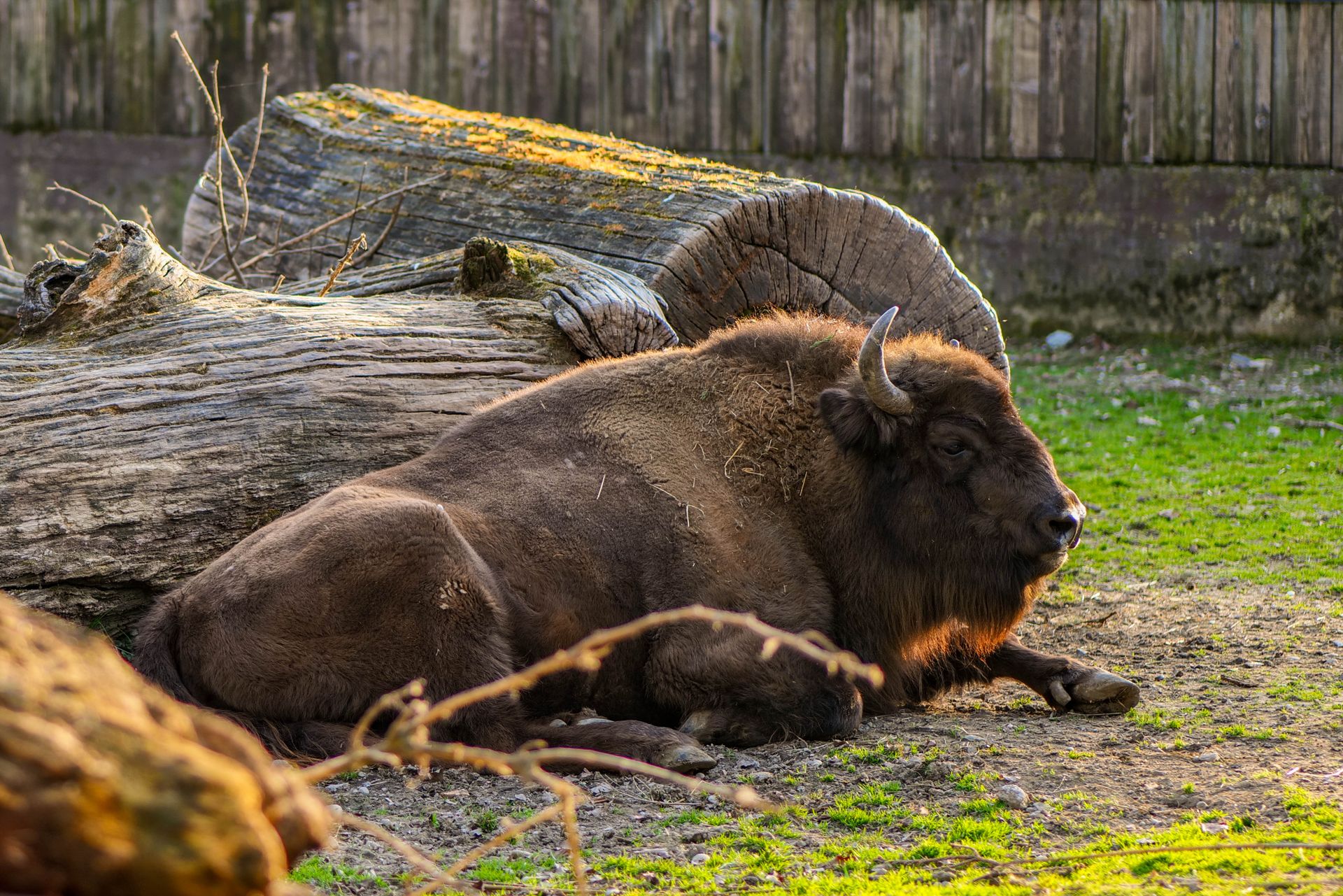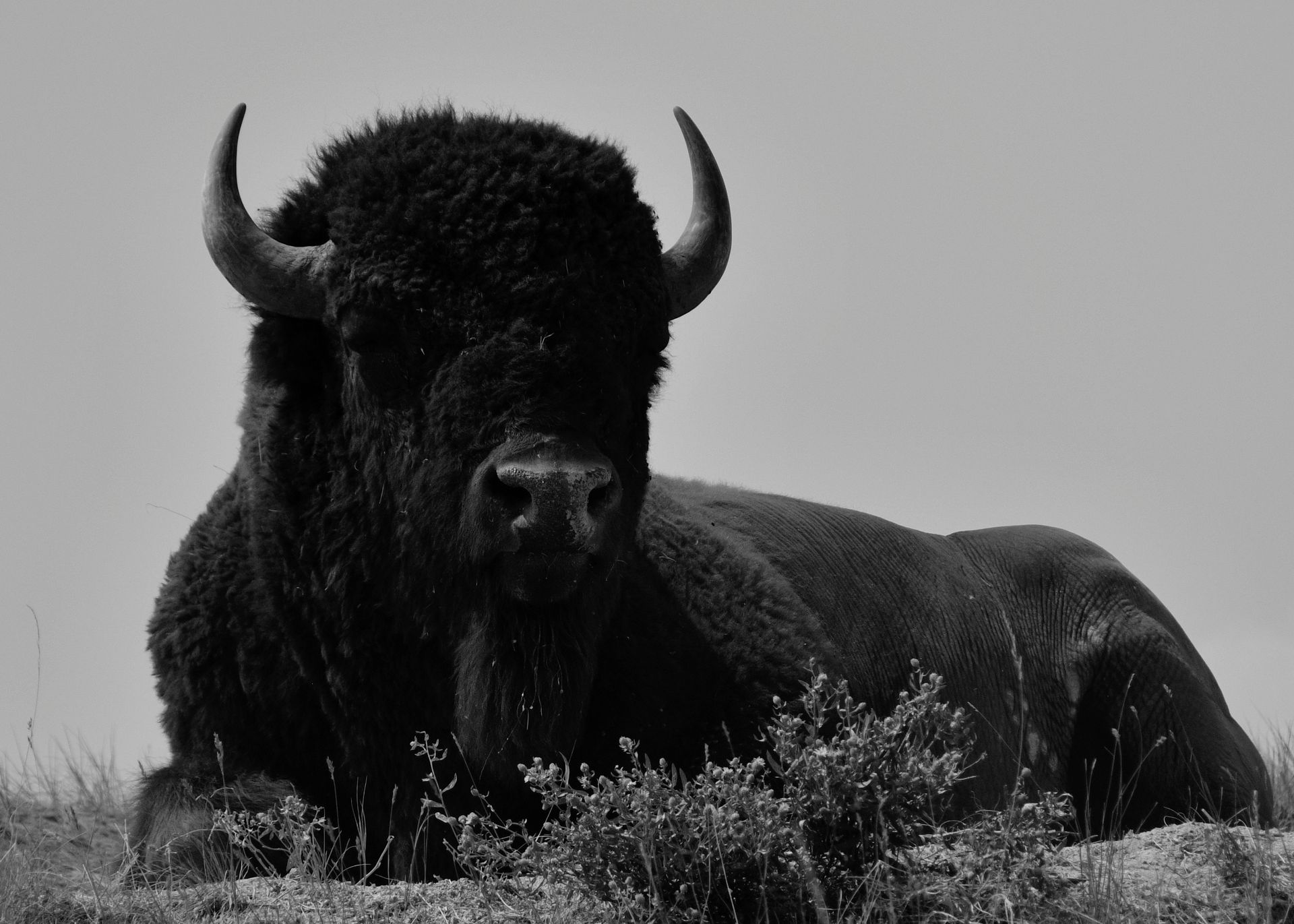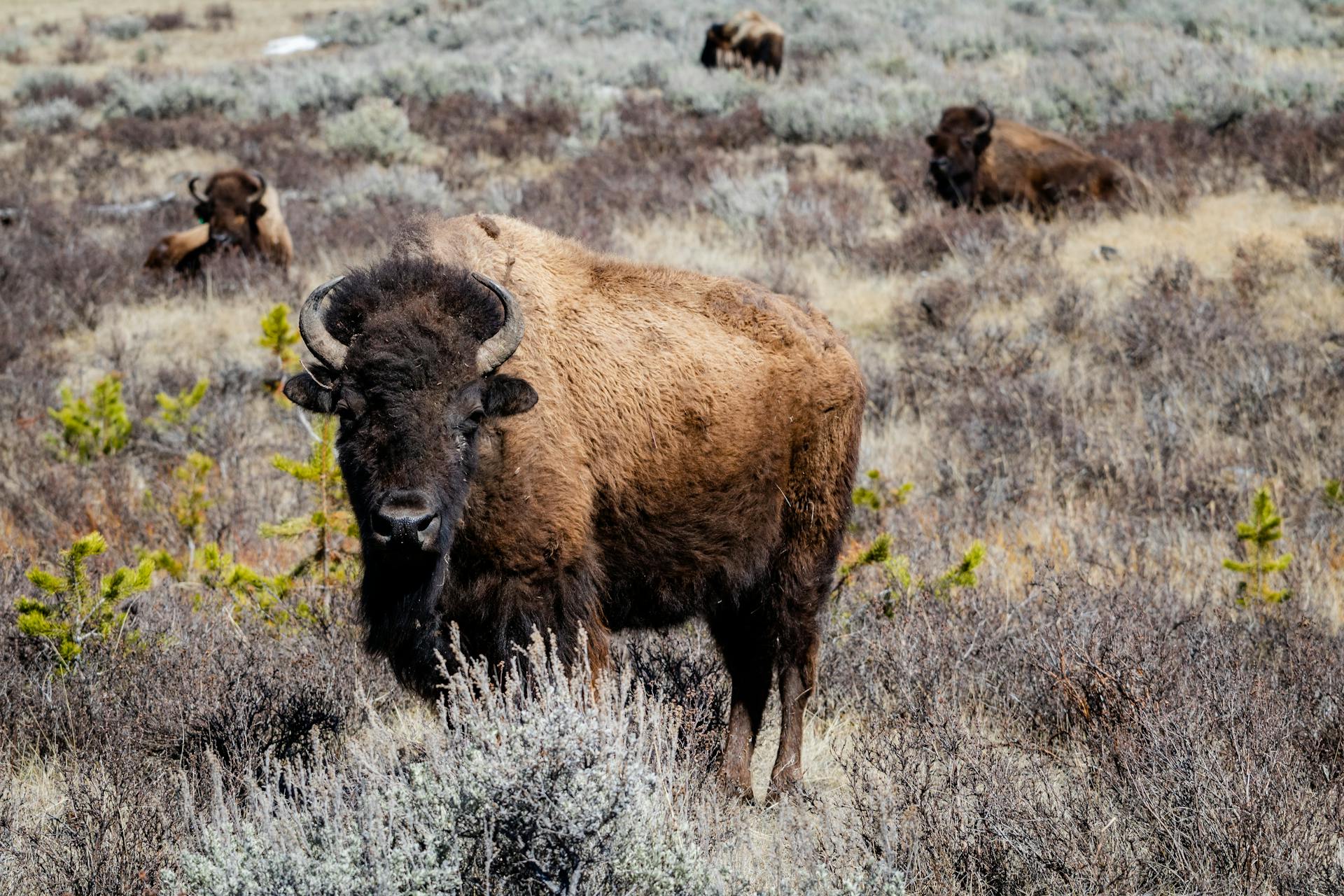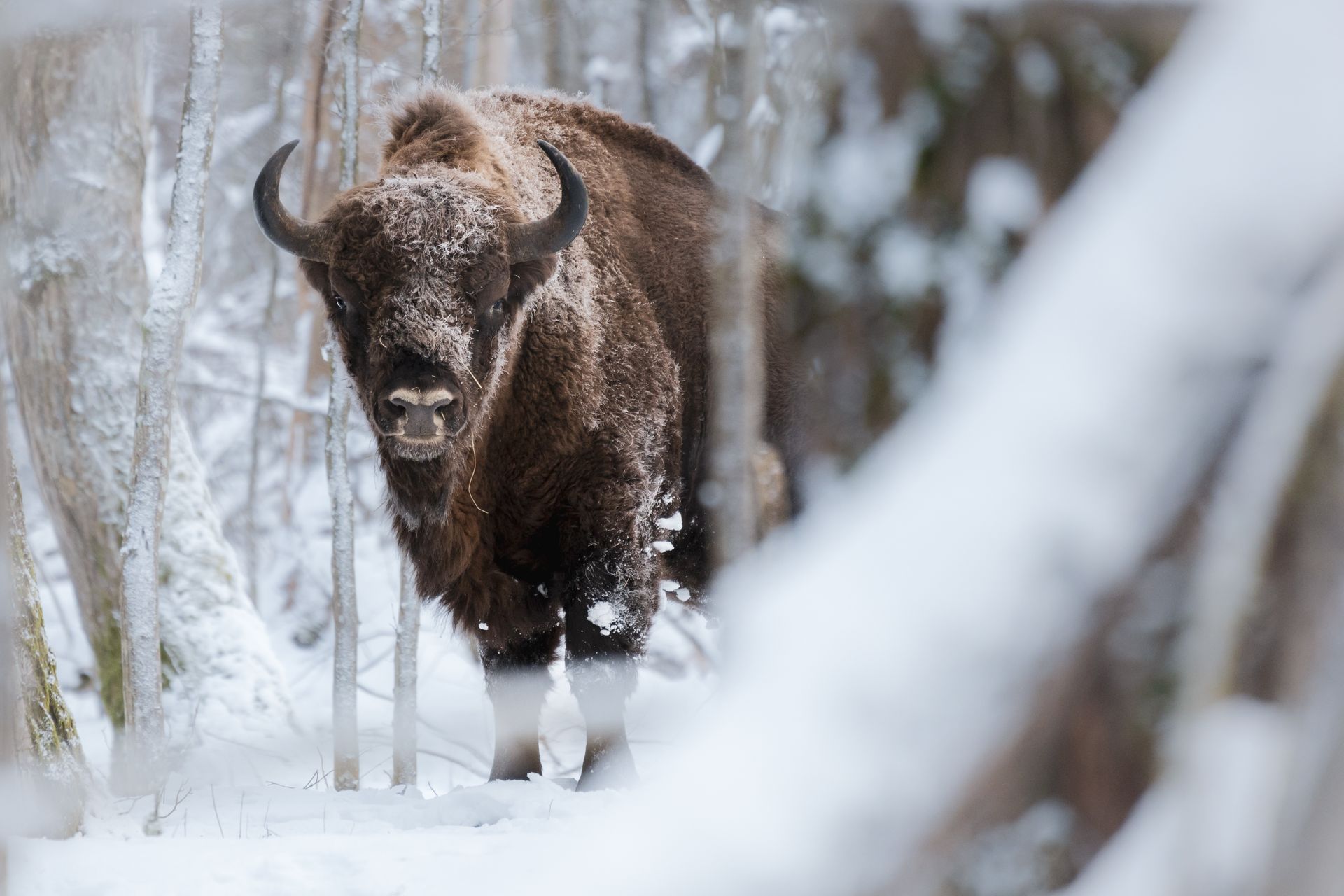
The European bison, also known as the wisent, is a majestic species that once roamed the European wilderness in large numbers. However, due to hunting and habitat loss, their population dwindled drastically.
Conservation efforts have been underway since the 1950s to save the European bison from extinction. Today, the species is listed as Endangered on the IUCN Red List, with only around 6,000 individuals remaining in the wild.
The European bison is found in several countries, including Poland, Belarus, and Romania, where conservation programs have been implemented to protect their habitats and prevent further decline.
For more insights, see: Conservation-reliant Species
Conservation Status
The European bison population has grown significantly from around 1,800 in 2003 to over 6,200 in 2019.
However, herds are largely isolated from one another and confined to non-optimal forest habitats, with only eight of them being large enough to be genetically viable in the long term.
Conservation efforts are ongoing, including translocations of bison to more optimal open habitats and reduction of human-bison conflicts.
Conservation Drives Recovery
The European bison is making a remarkable comeback thanks to conservation efforts. From just 1,800 individuals in 2003, the wild population has grown to over 6,200 in 2019.
Conservation management has been key to this success, with long-term efforts to reintroduce the species to the wild and reduce human-bison conflicts. The largest subpopulations are now found in Poland, Belarus, and Russia.
There are currently 47 free-ranging European bison herds, but they're largely isolated from one another and confined to non-optimal forest habitats. Only eight of these herds are large enough to be genetically viable in the long term.
To reduce conflict risk and dependence on supplementary feeding, it's essential to create protected areas with open meadows for the bison to graze. This will allow them to find food in winter and reduce their reliance on humans.
The European bison plays a crucial role as an ecosystem engineer, restoring grassland habitat. With approximately 7,300 free-ranging individuals today, conservation efforts are paying off.
However, rewilding has been done without a strong understanding of habitats and regions where bison once thrived. This has led to mixed success, with some populations struggling to adapt to their new environments.
By identifying areas where the European bison would be distributed today if hunting and land use change had not occurred, conservationists can pinpoint the most suitable regions for reintroduction. These include parts of Poland, Ukraine, and western Russia.
With habitat restoration, parts of the Balkans and Germany also have the potential to be good sites for bison reintroduction. This will help to ensure the long-term survival of the species.
Ukraine's Herds Suffer Under Invasion
Ukraine's bison herds have suffered significantly under Russia's invasion, with the Zalissia subpopulation losing all four adult male bison.
The war has brought new threats to these wild animals, who were regaining a foothold on the land.
In March 2022, a significant portion of the 148 square kilometre fenced area of the reserve was destroyed.
Bison are very vulnerable and helpless in terms of saving their lives under rocket fire due to their lumbering size and reactive behaviours.
Large mammals like bison are also under threat from land mines.
There are around 400 bison in total across the country, and the Zalissia subpopulation had 21 adults before the war broke out.
European Bison in the Wild
The European bison, also known as the wisent, was once widespread in Europe, roaming from the Massif Central region of France to the Volga, the Caucasus, and beyond.
Before being decimated by hunting, European bison populations were estimated to be in the tens of millions.
The European bison was hunted to near extinction, with the last wild animals being killed by soldiers and poachers in the early 20th century.
The last wild bison in Europe died in Poland in 1919, while the last wild bison in the Russian Caucasus died in 1927.
A small group of 54 bison, originating from only 12 founder animals, survived in zoos and were the key to the species' survival.
In 1954, the first bison were released back into the wild in the Białowieża forest in Poland, marking the beginning of conservation efforts.
Bison have since been reintroduced to several other countries, with rewilding efforts underway to bring the species back to its ancestral lands.
Breeding and Management
Careful selection of animals for reintroduction is crucial in terms of genetics.
To ensure genetic diversity, Rewilding Europe and partners are breeding European bison in various locations.
These animals are used in combination with bison from European zoos and wildlife parks for reintroductions.
The European Wildlife Bank provides herds of large herbivores for reintroduction into Europe's natural landscapes.
As of June 2020, 130 bison were in the bank.
Over 70 bison were roaming free in the Southern Carpathians and Rhodope Mountains rewilding areas.
Take a look at this: Endangered Animals in Brazil Rainforest
Rewilding and Reintroduction
The European bison has made a remarkable comeback from the brink of extinction, thanks in part to rewilding and reintroduction efforts. In 2014, Rewilding Europe published the Bison Rewilding Plan 2014–2024, outlining their vision for establishing viable populations of free-ranging bison herds across Europe.
Rewilding Europe has been reintroducing European bison into the Țarcu Mountains (Southern Carpathians, Romania) since 2014, with over 80 bison brought to the area so far. This reintroduction initiative has been supported by the European Commission through its LIFE Programme since 2016.
Free-ranging herds of European bison can now be found in many European countries, including Germany, Switzerland, Poland, Belarus, and Lithuania. The Białowieża Primeval Forest, straddling the Poland-Belarus border, continues to host the world's largest free-living population, with around 1000 wild bison.
The number of free-roaming European bison has increased from just over 2500 to around 7000 individuals in the last 10 years. This growth is a testament to the success of conservation efforts, which have seen the species move from Vulnerable to Near Threatened.
Dr Rafał Kowalczyk, co-author of the new assessment and member of the IUCN SSC Bison Specialist Group, highlights the importance of creating protected areas that include open meadows for bison to graze, reducing conflict risk and dependence on supplementary feeding.
European Bison in Europe
The European bison is a magnificent animal that once roamed much of the European continent. It's amazing to think that these incredible creatures were once found from the Massif Central region of France in the west to the Volga, the Caucasus, and beyond in the east.
Today, free-ranging herds can be found in many European countries, including Germany, Switzerland, Poland, Belarus, and Lithuania. The Białowieża Primeval Forest, an ancient woodland straddling the Poland-Belarus border, hosts the world's largest free-living population, with around 1000 wild bison.
Conservation efforts have been instrumental in bringing back the European bison from the brink of extinction. The number of free-roaming European bison has increased from just over 2500 to around 7000 individuals in the last 10 years.
Five European Bison in Vaud Forest – Switzerland
Five European bison in semi-freedom in a Vaud forest – Switzerland is a unique conservation effort.
A male and four female bison from Poland will occupy a 50 hectare enclosure in a forest near Suchy.
The objective of this project is to perpetuate the species by relocating small groups to reproduce.
This conservation drive is a part of a larger effort to recover the European bison population.
In 2003, there were only around 1,800 European bison in the wild, but thanks to conservation management, the population has grown to over 6,200 in 2019.
The largest subpopulations of European bison are now found in Poland, Belarus, and Russia.
Currently, there are 47 free-ranging European bison herds in the wild.
However, these herds are largely isolated from one another and confined to non-optimal forest habitats.
Only eight of these herds are large enough to be genetically viable in the long term.
To reduce human-bison conflicts, it's essential to create protected areas with open meadows for the bison to graze.
A unique perspective: India Tiger Population
A Symbol for Europe
The European bison, also known as the wisent, is a symbol for Europe, and for good reason. It once inhabited much of the European continent.
The European bison's range stretched from the Massif Central region of France in the west to the Volga, the Caucasus, and beyond in the east.
Rewilding efforts are underway to bring the European bison back to its ancestral lands. Establishing new wild bison populations in several rewilding areas is a key part of this process.
Our Activities
We're actively working to help the European bison thrive in the wild.
Our largest re-introduction project is in the Southern Carpathians in Romania, where we're releasing over 100 bison into the wild.
We're investing in business development around the bison's return, directly linking conservation with local economic benefits.
We're working closely with leading bison experts and their organizations from across Europe.
We're inviting other willing partners, such as land owners, land managers, scientists, and forestry officials, to join us in this conservation effort.
We're preparing new areas for the bison to expand into, helping the species reach natural densities in key ecosystems.
Decline and Challenges
The European bison's decline was a gradual process that spanned thousands of years.
Rapid climate warming around 14,700 years ago led to a collapse of the bison's range.
Hunting by humans, especially after the arrival of firearms in the 1500s, dramatically hastened the species' decline.
Land use change, particularly the removal of forests, had a significant impact on the bison's habitat and population.
The team ran 55,000 simulations to test the importance of different variables, including climate, hunting, and land use change.
If human removal of forests was turned down to zero, there was no change in bison abundance and range, suggesting that land use change was a factor in the species' demise.
The European bison's story is being repeated in the present, with land use change, poaching, and climate change posing similar threats to the species today.
Check this out: Anti Hunting Organizations
Statistics and Updates
There are currently 6,083 European bison in the world.
To keep track of these magnificent creatures, GPS collars have been fitted to animals in different herds, mostly leading cows, allowing bison rangers to monitor their daily and seasonal movements.
The European bison's numbers can be broken down into three categories: 1,674 animals in captivity, 400 in semi-free living conditions, and 4,009 roaming freely.
The Wisent, another name for the European bison, has a unique characteristic - it has an extra lumbar vertebra.
European bison grow at a rate about twice as slow as a plains buffalo due to their extremely slow metabolism.
Frequently Asked Questions
What's the difference between American bison and European bison?
American bison are larger and shaggy, while European bison are leaner and have curved horns, adapted for locking horns in combat. Despite their physical differences, both species share a tragic history of decline due to human impact.
Are there any 100% buffalo left?
There are approximately 12,000 to 15,000 pure bison remaining in the world. The exact number is uncertain, but conservation efforts aim to protect these remaining 100% buffalo.
Featured Images: pexels.com