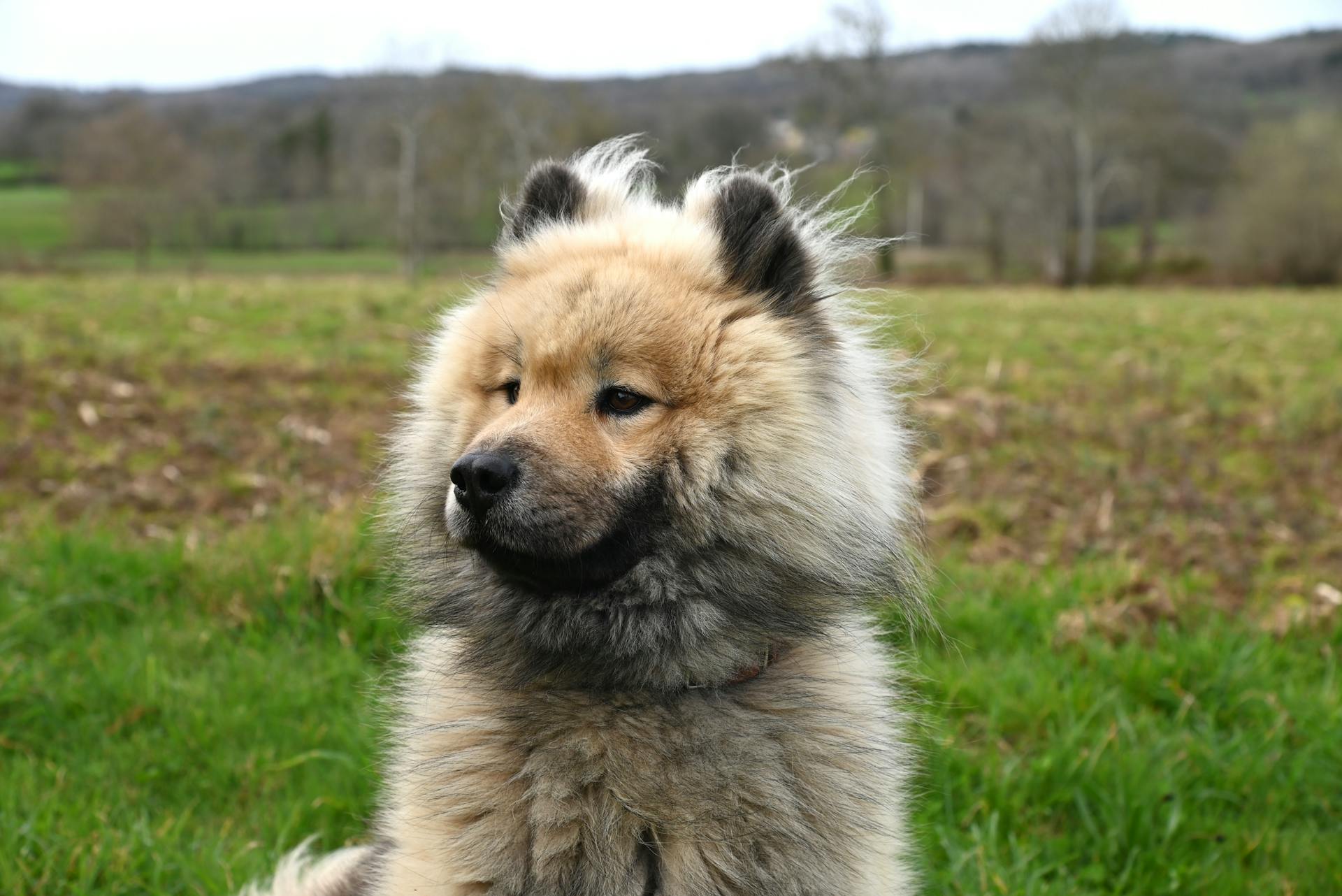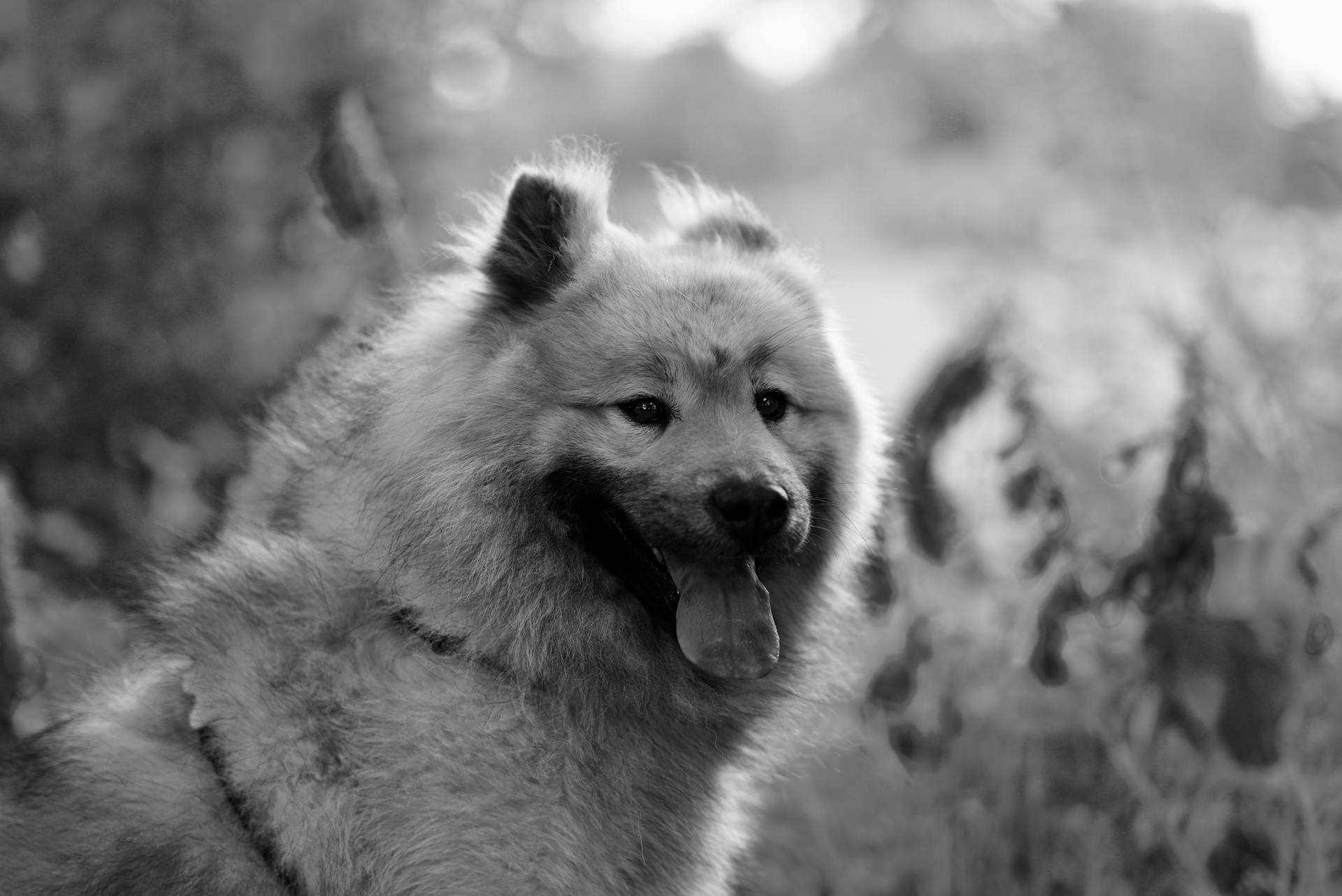
Congratulations on bringing home your new Eurasier puppy! This breed is known for being calm and gentle, making them a great fit for families with children.
Eurasiers are a cross between a Samoyed and a Chow Chow, which explains their thick, fluffy coats that require regular grooming.
As you settle into your new routine, remember that Eurasier puppies need plenty of socialization to become confident and well-adjusted adult dogs.
Plan to spend at least 30 minutes a day playing with and interacting with your puppy to help them develop good social skills.
Discover more: New Legendary Dogs Pokemon
Characteristics
Eurasier puppies are fantastic family pets that thrive on being close to their humans. They love to be part of the family and enjoy being involved in everything that's going on around them.
Their affection level is medium, which means they'll snuggle up with you but also appreciate some space. They're not needy dogs, so you don't have to worry about constant attention.
Eurasiers are known to be kid-friendly and pet-friendly, making them a great addition to families with children and other pets. They're generally good with other animals and are not aggressive.
In terms of exercise needs, Eurasiers require medium exercise, which means daily walks and playtime are a must. However, they're not high-energy dogs, so they don't need to run marathons or anything like that.
Here's a breakdown of some of their key characteristics:
Eurasiers are also very intelligent dogs, which makes them easy to train. They're known to be "happy-go-lucky" dogs that thrive on being involved in everything around them, making them entertaining to be around.
History and Origin
The Eurasier breed has a fascinating history that spans several decades. Julius Wipfel, a German breeder, is credited with developing the breed in the 1960s by crossing a wolfspitz and a chow chow, creating the wolf-chow.
Wipfel wanted to create a dog that was attractive, medium in size, calm, even-tempered, affectionate, and extremely adaptable to family life. He started by crossing the wolfspitz and chow chow, calling it the wolf-chow.
The introduction of the Samoyed in the 1970s proved to be just what the breed needed to become the perfect family dog. The Samoyed's friendly personality helped to balance out the wolf-like traits of the wolfspitz.
The breed name was changed from wolf-chow to Eurasier to indicate the breed's origin from European and Asian breeds. The Eurasier is a relatively new breed, having only been developed in Germany during the 1950s by the Wipfel family.
The Eurasier is recognized by the United Kennel Club in the Northern Breed Group and is part of the American Kennel Club's Foundation Stock Service. The breed has gained popularity in Europe, but is still considered a rarity in the United States.
Julius Wipfel's vision for the perfect family dog was finally achieved with the creation of the Eurasier. The breed's unique combination of appearance and personality has made it a beloved companion for many families.
For more insights, see: Shaved Samoyed Dog
Care
Caring for an Eurasier puppy requires some planning and attention to detail, but with the right approach, you'll be well on your way to raising a happy and healthy companion.
First things first, Eurasier puppies are naturally boisterous and full of energy, so it's essential to puppy-proof your home and garden before bringing your new furry friend home. This means putting away any tools or implements that could harm them, electric wires and cables out of reach, and removing toxic plants from flowerbeds and the home.
Eurasier puppies need to sleep a lot to grow and develop properly, so setting up a quiet area for them to retreat to when they want to nap is a must. It's also a good idea to keep playtime nice and calm inside the house and have a more active playtime outside in the garden to help them learn to be less boisterous when indoors.
To keep your Eurasier puppy's coat in top condition, you'll need to brush it daily to prevent mats and tangles from forming. You should also aim to brush their teeth every day to prevent gum disease and other related health issues.
Here's a summary of the essential grooming tasks for your Eurasier puppy:
- Brush the coat daily to prevent mats and tangles
- Brush teeth daily to prevent gum disease
- Check and clean ears weekly to prevent infections
- Clip nails regularly to prevent nail-related complications
By following these simple tips, you'll be well on your way to raising a happy and healthy Eurasier puppy that will bring joy and beauty to your family for years to come.
Health and Wellness
A Eurasier puppy is a wonderful addition to any family, but it's essential to be aware of the potential health issues that can affect them. The average life expectancy of a Eurasier is between 11 and 13 years when properly cared for and fed an appropriate good quality diet to suit their ages.
Hip dysplasia, elbow dysplasia, and patellar luxation are common health issues in Eurasiers, which can be costly to diagnose and treat. A Eurasier's hip score should be Excellent, Good, or Fair from the Orthopedic Foundation for Animals or a PennHIP score, and their eyes should be certified healthy by the Canine Eye Registry Foundation.
Regular veterinary check-ups are crucial to spot any visible problems early on. Your veterinarian will work with you to set up a preventive regimen that will help you avoid many health issues.
Eurasiers are prone to hereditary health issues, so it's vital to choose a reputable breeder who offers a health guarantee and provides written documentation that the parents were cleared of health problems that affect the breed.
Curious to learn more? Check out: Will Shiba Inu Hit $1
Here are some common health issues in Eurasiers, along with their risk profiles and estimated costs to diagnose and treat:
Pet insurance for Eurasiers costs more than for mixed breed dogs, so it's essential to consider investing in a comprehensive policy to cover hereditary conditions.
Adoption and Ownership
Welcoming a Eurasier into your family is a rewarding journey, but it's essential to ensure that the acquisition of your new companion is done ethically.
Deciding to adopt a Eurasier from a rescue organization or a reputable breeder can have a significant impact on the welfare of individual dogs and the broader canine community.
If you're considering adopting an adult Eurasier, you can find rehoming opportunities through the United States Eurasier Club's rescue program on their website.
However, if you're set on getting a Eurasier puppy, be prepared to wait – there are currently less than 10 breeders in the U.S., and you'll likely be put on a waiting list.
The cost of a puppy from a breeder can range from $1,000 to $2,500, but adopting an adult Eurasier may be a more affordable option.
Eurasiers are sensitive dogs that require attention and care, so it's essential to consider their needs before bringing one home.
Some important things to keep in mind when adopting or buying a Eurasier include:
- Cannot be left alone for long periods
- Sensitive to upset in the family
- Some are picky eaters
Training and Behavior
Training an Eurasier puppy requires patience, consistency, and positive reinforcement. They thrive on one-on-one attention and love to please their owners, making them easy to train.
The first commands to teach your Eurasier puppy are essential for establishing a strong bond and setting the foundation for future training. These commands include "come", "sit", "stay", "heel", "quiet", "leave it", "down", and "bed."
Eurasiers are intelligent dogs that respond well to clicker training and positive reinforcement techniques. They flourish under training methods that involve rewards and praises, making obedience training a rewarding experience for both the dog and the trainer.
See what others are reading: Medical Alert Dog Training
To prevent boredom and keep your Eurasier engaged, keep training sessions short and fun. This breed has a low activity level and requires only one or two brief walks daily to satisfy their exercise needs.
Regular grooming is essential for maintaining your Eurasier's beautiful coat. Brush them once or twice a week to remove dead hair, and more often during shedding seasons to keep loose hair under control.
Here's a list of essential grooming tasks to perform regularly:
- Brushing: 1-2 times a week, more often during shedding seasons
- Nail trimming: Regularly to prevent overgrowth
- Ear cleaning: Regularly to prevent infections
- Dental hygiene: Regularly to prevent tartar buildup and promote healthy teeth and gums
Early socialization is crucial for bringing out the best in your Eurasier. Expose them to various environments, people, and other animals to help them become confident and calm in new situations.
Exercise and Feeding
Eurasier puppies are boisterous and full of life, so it's essential to have a calm and controlled environment for them to grow and develop.
Puppies need a lot of sleep, so setting up a quiet area where they can retreat to nap is crucial. This area should be easily accessible and not too out of the way.
Puppies need regular "playtime" to learn to be less boisterous, and it's best to have a more active "playtime" outside in the garden.
Here's a schedule to keep in mind for worming your Eurasier puppy:
- Puppies should be wormed at 6 months old
- They need to be wormed again when they are 8 months old
- Puppies should be wormed when they are 10 months old
- They need to be wormed when they are 12 months old
Exercise of the
Exercise of the Eurasier is crucial for their happiness and well-being. They need at least one hour's exercise every day, with a shorter walk in the morning and a longer, more interesting one in the afternoon.
A Eurasier's energetic nature means they love to roam around a securely fenced back garden as often as possible. However, if they find a weakness in the fence, they'll escape and get into trouble.
Eurasiers are not built for high-impact activities, so it's essential to avoid over-exercising them, especially when they're still growing. Their joints and bones are still developing, and too much pressure could lead to problems later in life.
To prevent unwanted behavioral issues, Eurasiers need mental stimulation and exercise to keep them happy and balanced. A Eurasier's exercise routine should include a mix of physical activity and playtime to keep them engaged.
Discover more: Shiba Inu Exercise Needs
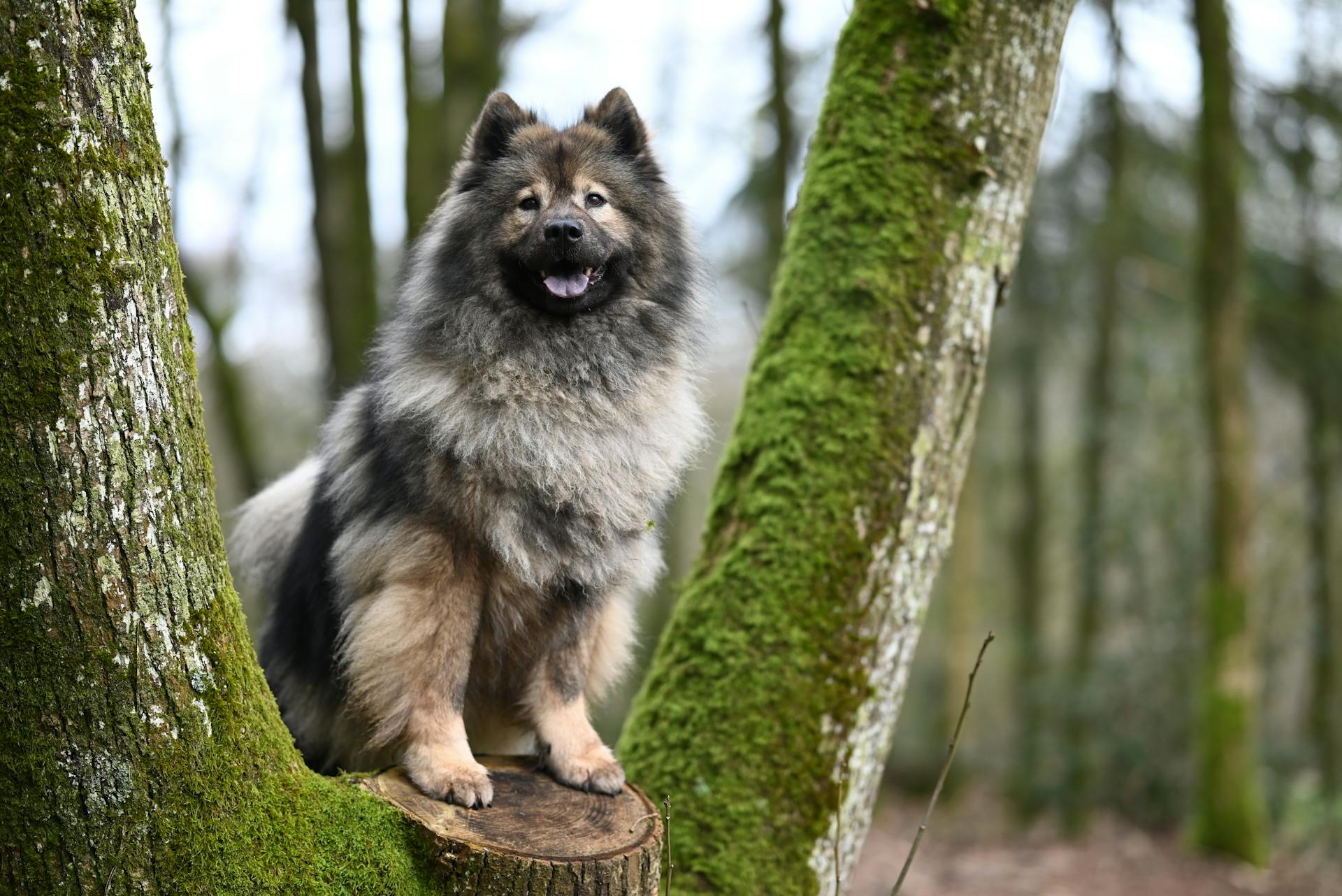
Here's a rough guide to exercise for Eurasiers:
Remember, every Eurasier is different, so it's essential to tailor their exercise routine to their individual needs and energy levels.
Puppy Feeding Guide
Feeding your Eurasier puppy a highly nutritious diet is crucial for their growth and development. It's best to stick to the same routine and feed the same puppy food to avoid any tummy upsets.
A good quality puppy food should be fed in small, frequent meals, typically 3 or 4 times a day. This helps to prevent overeating and ensures your puppy is getting the nutrients they need.
The amount of food your puppy needs will depend on their age and build. Here's a rough guide to the daily food intake for an Eurasier puppy:
Remember to adjust the amount of food based on your puppy's individual needs and build. It's also essential to introduce new foods gradually to prevent digestive upsets.
Caring for a Puppy
Caring for a Eurasier puppy requires some extra attention to detail, but with the right preparations, you'll be well on your way to raising a happy and healthy pup.
It's essential to puppy-proof your home and garden before bringing your Eurasier puppy home, which means putting away any tools and other implements that a boisterous puppy might injure themselves on.
Electric wires and cables must be put out of their reach because puppies love chewing on things. Toxic plants should be removed from flowerbeds and the home too.
Puppies need to sleep a lot to grow and develop as they should, so setting up a quiet area that's not too out of the way means they can retreat to it when they want to nap.
It's a good idea to keep "playtime" nice and calm inside the house and to have a more active "playtime" outside in the garden, which means puppies quickly learn to be less boisterous when they are inside.
Expand your knowledge: Dog Home from Home Boarding
Here's a schedule to follow for worming your Eurasier puppy:
- Puppies should be wormed at 6 months old
- They need to be wormed again when they are 8 months old
- Puppies should be wormed when they are 10 months old
- They need to be wormed when they are 12 months old
A responsible breeder would have well socialised their puppies, which always leads to more outgoing, confident, and friendly dogs right from the word go.
Temperament and Adaptability
Eurasiers thrive on human contact and become totally devoted to their families, making them great family pets. They're incredibly loyal to the people they love.
They have a natural affinity with children and love to be involved in everything that goes on in a household. This makes them a great choice for families with kids.
Eurasiers are sensitive dogs by nature and don't respond well to harsh correction or heavy-handed training methods. Instead, they respond well to positive reinforcement.
Early socialisation is crucial for Eurasiers, and the sooner they're introduced to new situations, noises, people, animals, and other pets, the better. This helps them adjust and accept everything they encounter later in life without feeling stressed.
If this caught your attention, see: Priceless Pets Adoptable Dogs
They tend to be naturally wary of strangers, but they'll never show aggressive behaviour towards anyone. Instead, they'll keep their distance and let their owners know they're not happy about something.
If left to their own devices, Eurasiers can develop separation anxiety, leading to behavioural issues like depression, withdrawal, or destructive behaviour. This is why it's essential to provide them with enough exercise and mental stimulation on a daily basis.
Eurasiers are adaptable dogs, but they do require a secure backyard where they can roam and let off steam. They're not well-suited for apartment living.
Size and Coat
The Eurasier is a majestic breed, and one of its most striking features is its size and coat. Males typically stand between 23 to 27 inches tall at the shoulder, while females range from 20 to 24 inches.
Their weight also varies, with males trending from 55 to 75 pounds and females a slightly lighter 45 to 60 pounds. This makes the Eurasier a great companion for families with varying living situations.
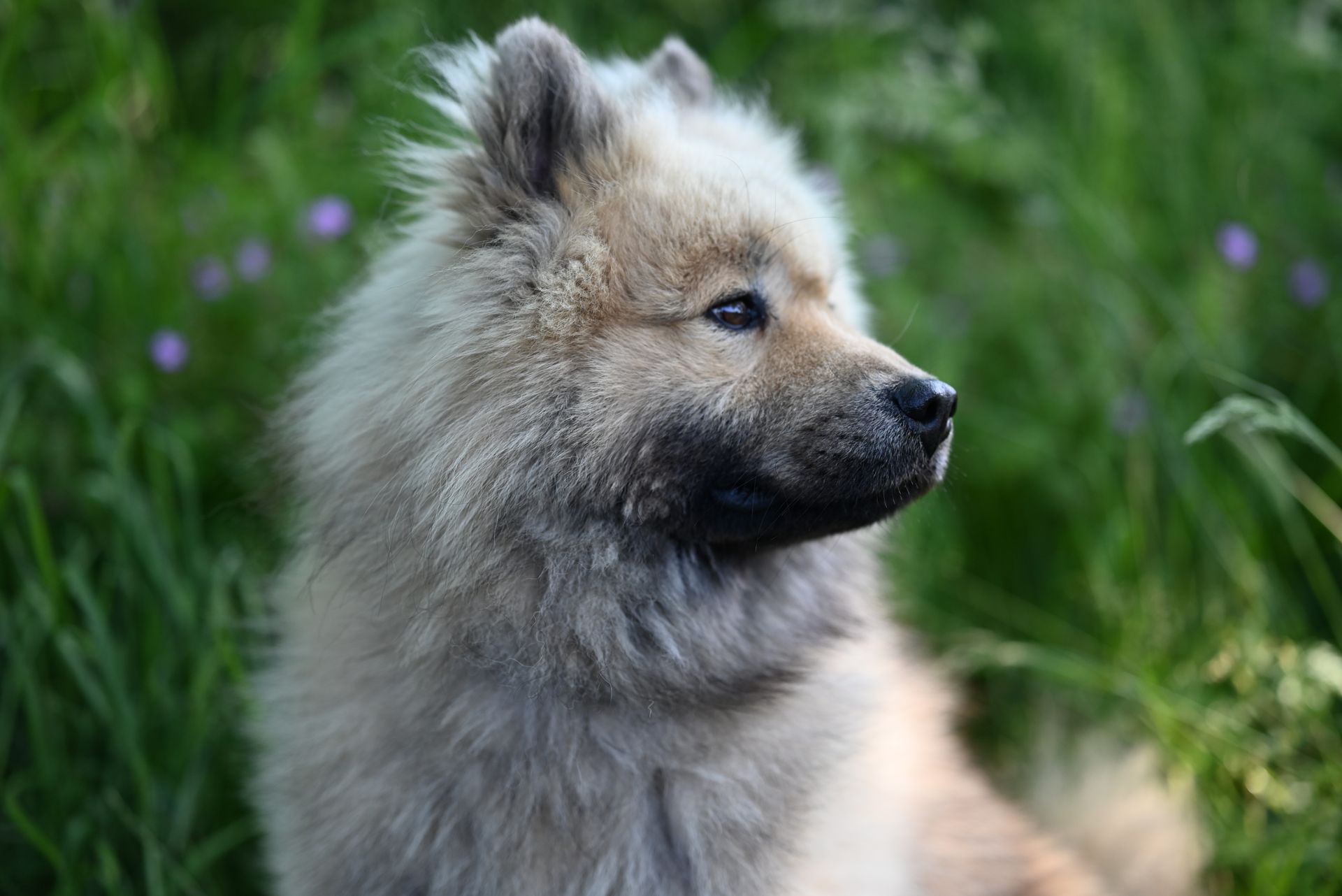
The Eurasier's coat is a double coat, consisting of a straight, medium-long outer layer and a dense undercoat. This not only makes them look stunning but also provides a natural barrier against different weather conditions.
Size and Coat Variations
The Eurasier is a breed that stands out for its size and coat variations. Males typically stand taller, ranging from 23 to 27 inches at the shoulder.
Their weight also sees variance, with males trending from 55 to 75 pounds and females a slightly lighter 45 to 60 pounds.
The Eurasier's coat is a double layer, consisting of a straight, moderately long outer layer complemented by a dense undercoat. This magnificent layering not only enchants onlookers but also serves as a natural barrier against diverse weather conditions.
The Eurasier's coat requires regular grooming to maintain its luscious appearance and minimize any disturbances for allergy sufferers.
Here's a quick rundown of the Eurasier's physical attributes:
Conclusion: The Family Pet
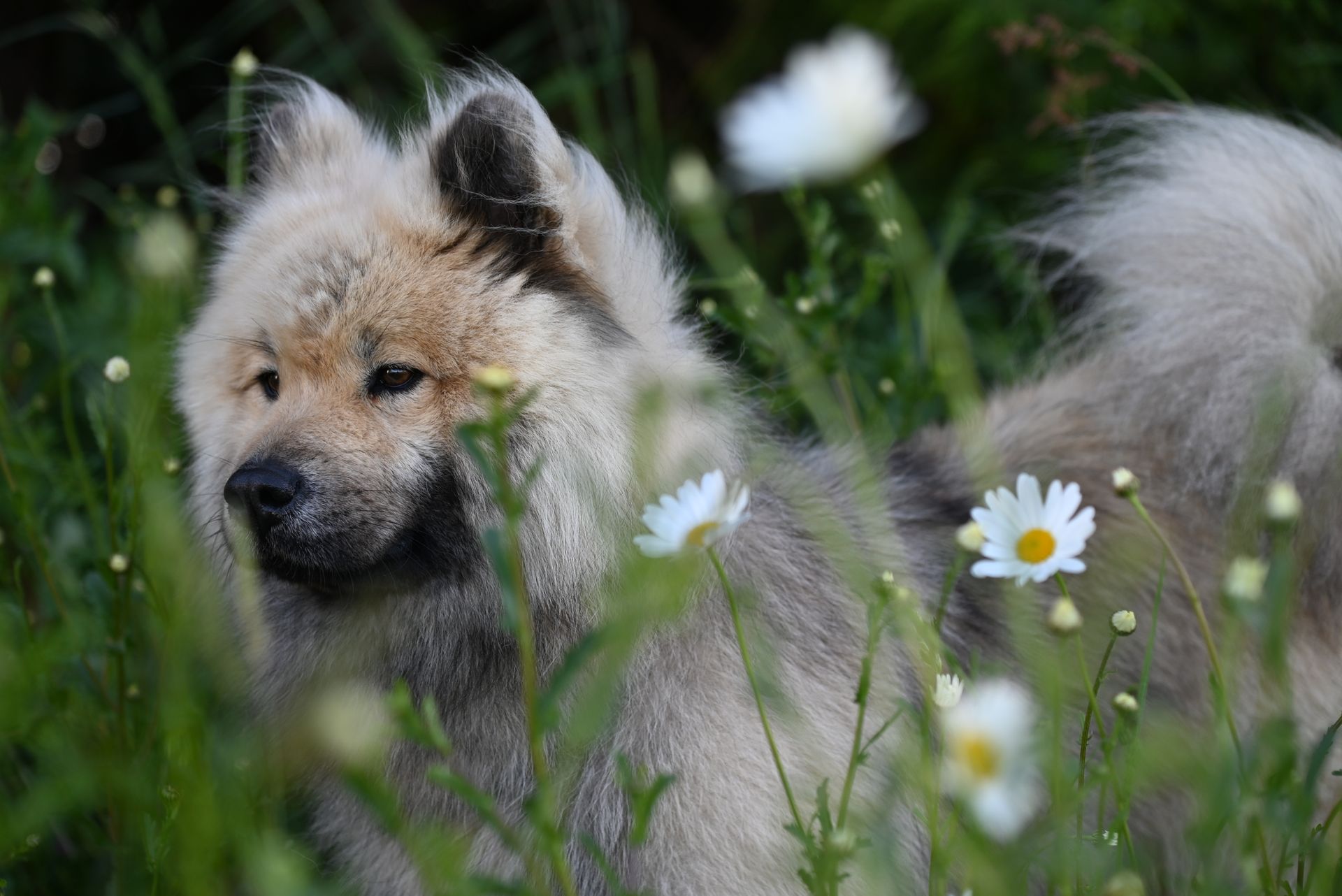
The Eurasier's tranquil disposition makes them a perfect fit for families with children, as they are patient and gentle, but also vigilant watchdogs alerting their owners through barks only when necessary.
Their preference for proximity to their human family members is key to their harmonious relationship, and they thrive in environments where interactions with humans are plentiful.
In a family setting, the Eurasier's capacity for unwavering affection and gentle approach to life makes them an ideal choice for those seeking a devoted canine friend.
Their composed reserve around strangers is a testament to their intelligence and loyalty, which only strengthens their commitment to their family.
As a family pet, the Eurasier's serene presence weaves into the fabric of family life with ease, offering joyful companionship, interactive play, and shared moments of relaxation.
With proper care through training, socialization, and health management, the Eurasier promises years of loyal companionship and endearing memories.
Take a look at this: Shiba Inu Life Stages
Frequently Asked Questions
Are Eurasier dogs aggressive?
No, Eurasier dogs are generally non-aggressive and good-natured. However, proper socialization is key to overcoming their reserved nature around strangers.
Are Eurasier dogs rare?
Yes, Eurasier dogs are relatively rare, particularly in the United States. Their limited availability makes them a unique and sought-after breed.
What are the negatives of a Eurasier?
Eurasiers can be prone to certain health issues, including hip and elbow dysplasia, as well as eye problems. Regular veterinary check-ups and genetic testing can help identify potential risks.
Featured Images: pexels.com