The Equus Ferus Caballus is a domesticated subspecies of the horse, with a rich history that dates back over 4,000 years. They are descended from the wild tarpan, which was native to Eastern Europe and Asia.
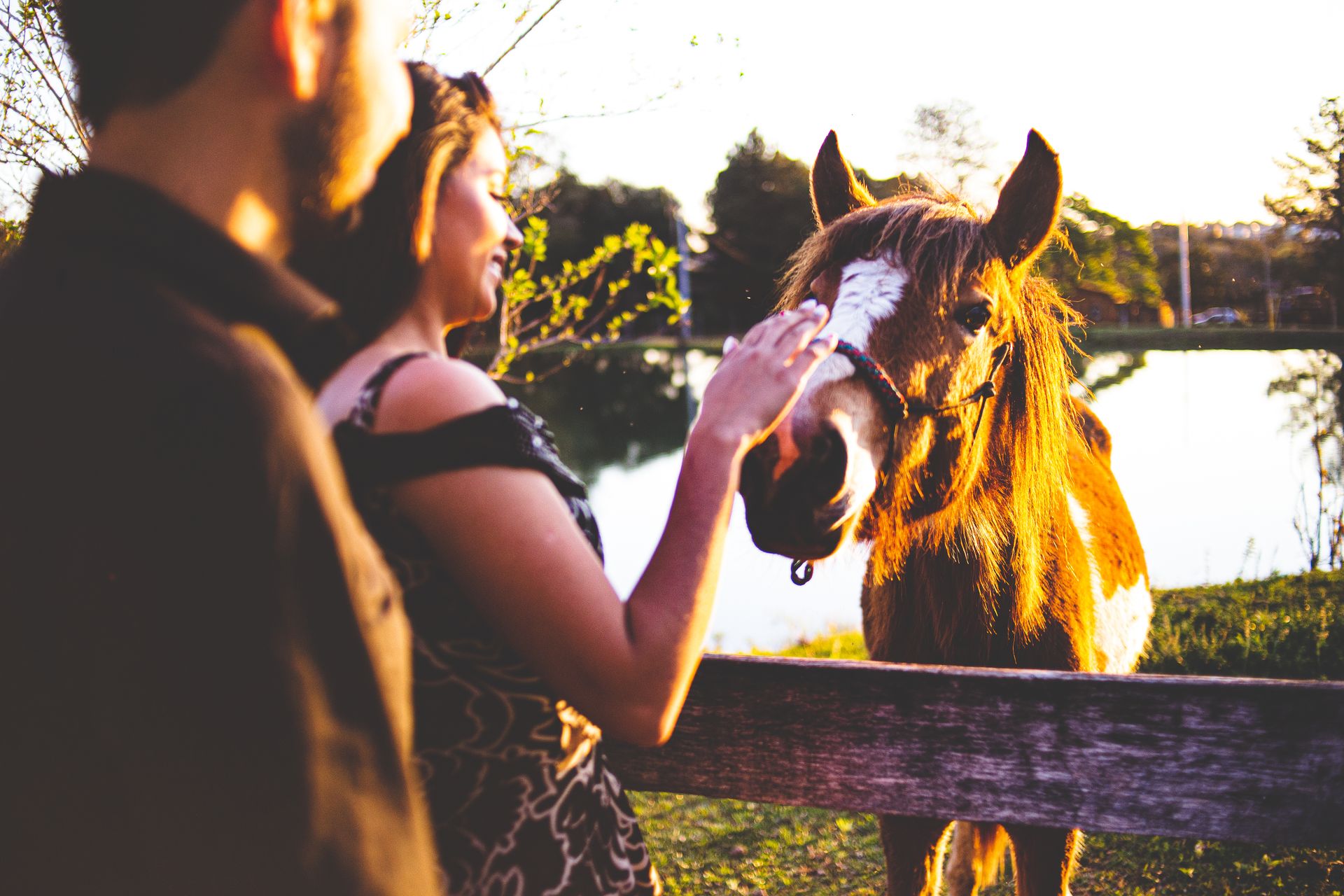
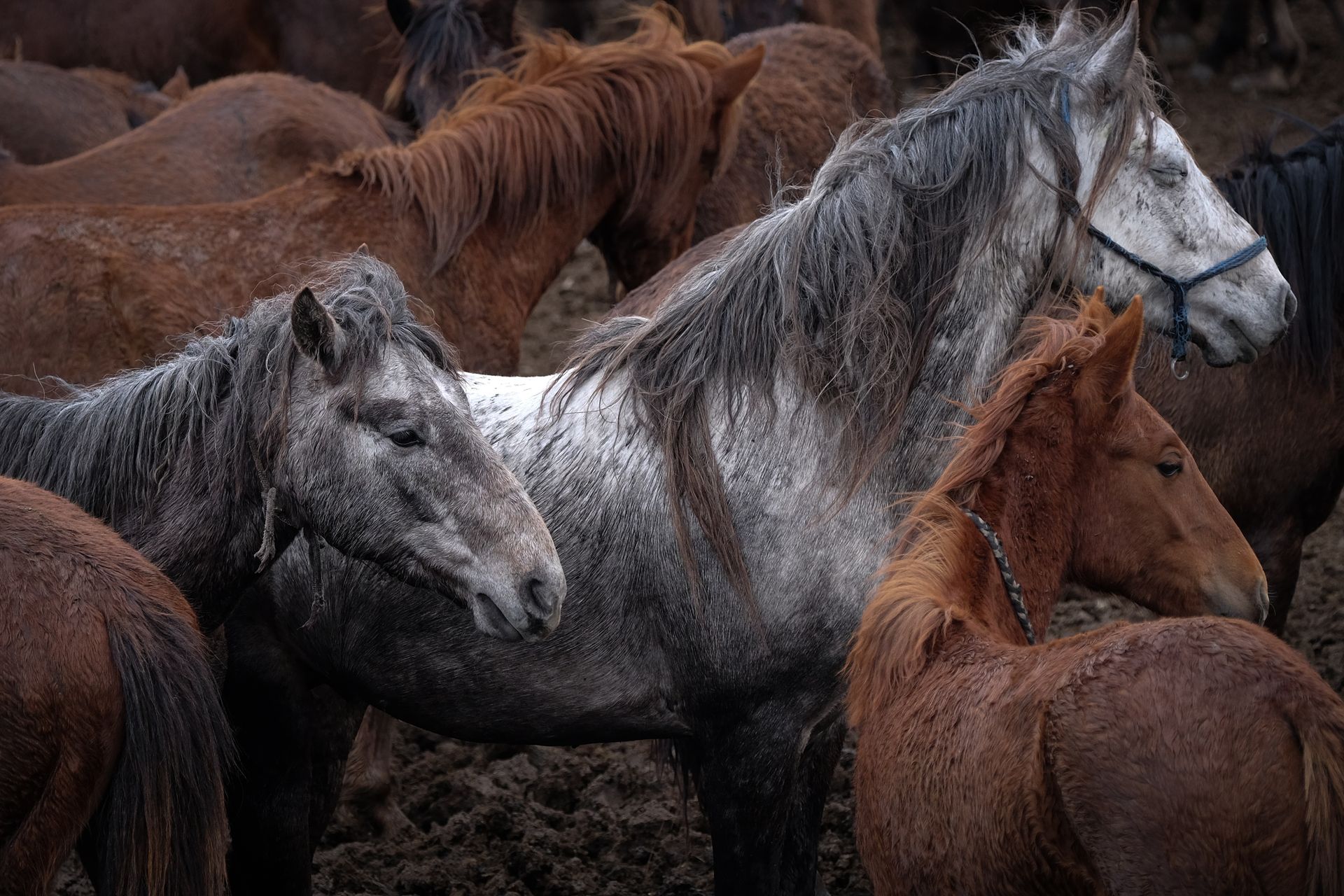
Equus Ferus Caballus are known for their distinctive physical characteristics, including their large size, strong legs, and flowing manes and tails. They come in a variety of coat colors and patterns, ranging from solid colors to complex patterns like pinto and appaloosa.
Domesticated horses were first introduced to the Americas by Spanish conquistadors in the 16th century, where they quickly became an integral part of the indigenous cultures. Their adaptability and strength made them an essential tool for transportation, agriculture, and other tasks.
Explore further: Equus Genus
Classification
Equus ferus caballus belongs to the kingdom Animalia, which is a vast group of multicellular, eukaryotic organisms.
The species is classified under the phylum Chordata, a group characterized by the presence of a notochord, a dorsal nerve cord, and pharyngeal slits.
Within the phylum Chordata, Equus ferus caballus is further classified as a vertebrate, a group of animals with a backbone.
Here's a breakdown of the classification hierarchy:
- Kingdom: Animalia
- Phylum: Chordata
- Subphylum: Vertebrata
- Class: Mammalia
- Order: Perissodactyla
- Family: Equidae
- Genus: Equus
- Species: E. ferus
- Subspecies: E. ferus caballus
Taxonavigation
Taxonavigation is a way to categorize living things based on their relationships and characteristics. It's a hierarchical system that helps us understand how different species are connected.
The taxonavigation of Equus ferus caballus, the domestic horse, starts with Eukaryota, a superregnum that includes all organisms with complex cells. From there, it branches out to Unikonta, Opisthokonta, and Holozoa, which are all cladus classifications.
Here's a simplified breakdown of the taxonavigation of Equus ferus caballus:
* Eukaryota (superregnum)
+ Unikonta
- Opisthokonta
- Holozoa
- Animalia (kingdom)
- Eumetazoa (subregnum)
- ParaHoxozoa
- Bilateria
- Nephrozoa
- Deuterostomia (superphylum)
- Chordata (phylum)
- Vertebrata (subphylum)
- Gnathostomata (infraphylum)
- Osteichthyes (megaclassis)
- Sarcopterygii
- Rhipidistia
- Tetrapodomorpha
- Eotetrapodiformes
- Elpistostegalia
- Tetrapoda (superclassis)
- Reptiliomorpha
- Amniota
- Synapsida
- Eupelycosauria
- Metopophora
- Haptodontiformes
- Sphenacomorpha
- Sphenacodontia
- Pantherapsida
- Sphenacodontoidea
- Therapsida
- Theriodontia
- Eutheriodontia
- Cynodontia
- Epicynodontia
- Eucynodontia
- Probainognathia
- Prozostrodontia
- Mammaliamorpha
- Mammaliaformes
- Mammalia (classis)
- Theriimorpha
- Theriiformes
- Trechnotheria
- Cladotheria
- Prototribosphenida
- Zatheria
- Tribosphenida
- Theria (subclassis)
- Eutheria
- Placentalia (infraclassis)
- Boreoeutheria (magnordo)
- Laurasiatheria (superordo)
- Scrotifera (cladus)
- Ferungulata (grandordo)
- Pan-Euungulata (cladus)
- Euungulata (mirordo)
- Panperissodactyla (cladus)
- Perissodactylamorpha (cladus)
- Perissodactyla (ordo)
- Hippomorpha (subordo)
- Equoidea (superfamilia)
- Equidae (familia)
- Equinae (subfamilia)
- Equini (tribus)
- Equus (genus)
- Equus ferus (species)
- Equus ferus caballus (subspecies)
Vernacular Names
Vernacular names are the local or regional names given to a species. The horse, for example, has a vast array of vernacular names across different languages and cultures. In Afrikaans, the horse is called "Perd", while in Akan it's known as "Pɔnkɔ".
In some languages, the horse is referred to by a single word, such as in English where it's simply "Horse". In other languages, like Arabic and Hebrew, the horse is referred to as "حصان" and "סוס הבית" respectively.
The diversity of vernacular names is a reflection of the horse's widespread presence across the globe. It's not surprising that different cultures have developed unique names for the horse, given its importance in human history and society.
Images
There are thousands of stunning images of equus ferus caballus available online.
Many of these images showcase horses in their natural habitats, such as the Big Horn Mountains in Wyoming or the forests of the Sauerland.
Some images capture the beauty of horses in winter, like the ones taken in the UK where horses play-fight in the falling snow.
Horses can also be found in stables, like the one with bars, or wearing special equipment like a "Grazing Muzzle" to help regulate their feed intake.
Equus ferus caballus can be seen in various colors and patterns, such as the bay and seal brown colored horses with facial stars and blaze markings walking in a meadow.
Some images even capture the tranquil essence of wild horses, like the ones found in the Steens Mountain Wildlife Reserve in Oregon.
In addition to these natural habitats, horses can also be found in more urban settings, like the crowded wildlife reserve area in the Netherlands.
Overall, the sheer diversity of equus ferus caballus images is a testament to the beauty and majesty of these incredible animals.
Frequently Asked Questions
What does equus caballus mean in Latin?
Equus caballus is the Latin term for horse, literally translating to 'solid-hoofed one'
Featured Images: pexels.com