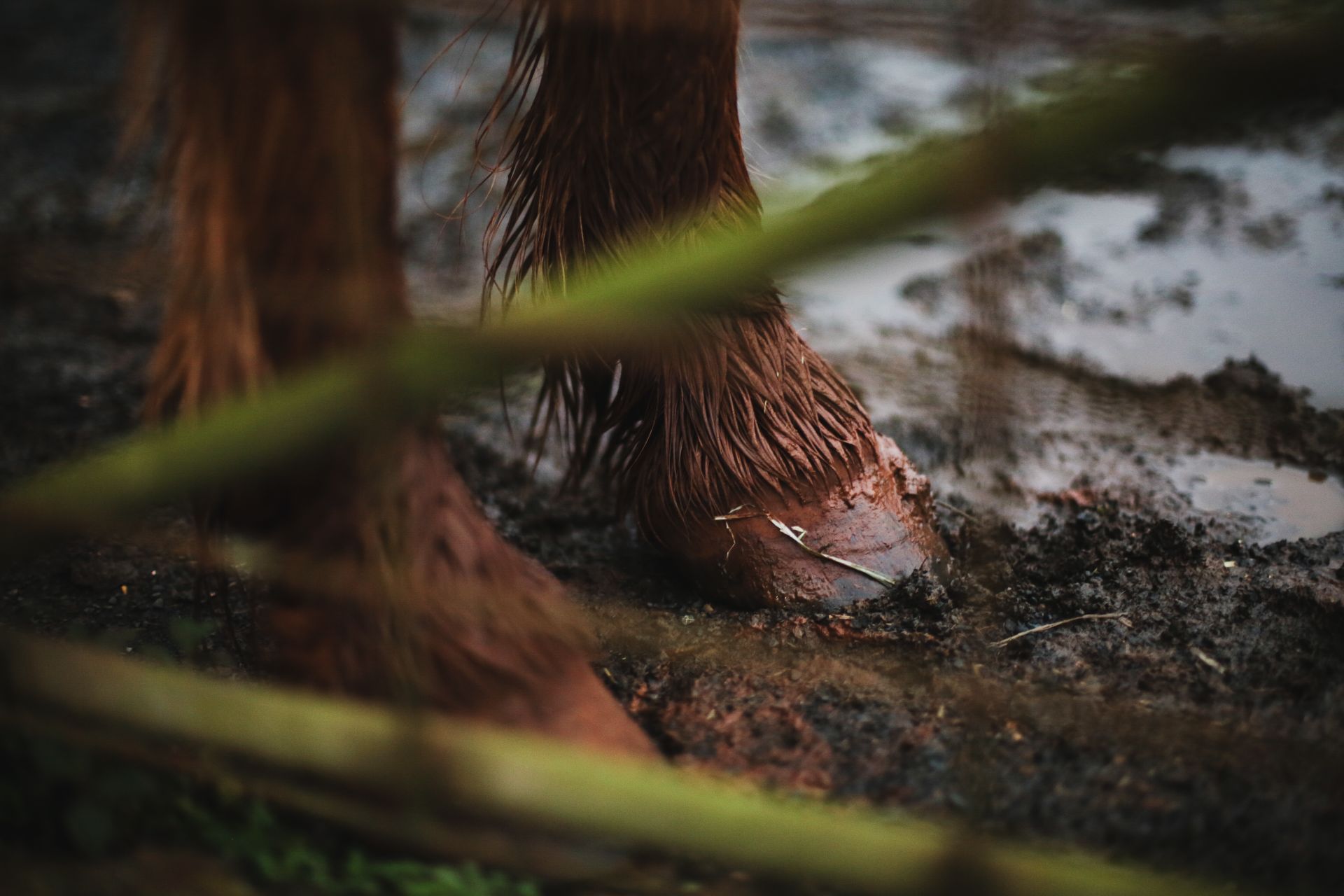
Hoof problems are a common issue in horses, and prevention is key to keeping your horse's hooves healthy. Regular trimming every 4-6 weeks can help prevent cracks and splits.
A well-balanced diet is essential for maintaining healthy hooves. Horses require a diet rich in fiber, vitamins, and minerals, particularly biotin and zinc.
Adequate hoof care also involves proper hoof picking, which should be done daily to remove loose dirt and debris. This helps prevent hoof abscesses and infections.
Proper hoof care is crucial for your horse's overall health and well-being. By following these simple tips, you can help prevent common hoof problems and keep your horse's hooves in top condition.
Recommended read: How to Wrap a Horse's Hoof with a Diaper?
Anatomy and Structure
The equine hoof is a complex structure that's essential for a horse's overall health and well-being. It's made up of a hard outer wall that protects the inner tissues, including the laminar layers of the foot.
The white line, which is the visible part of the laminar layers, is located between the hoof wall and the sole of the foot. It's a crucial area to monitor, as any issues here can lead to problems.
The insensitive laminar layers of the hoof connect to the inside face of the hoof wall, while the sensitive laminar layers are the innermost layers filled with blood vessels and connect to the coffin bone.
On a similar theme: Horse Hoof Care Products
White Line Definition
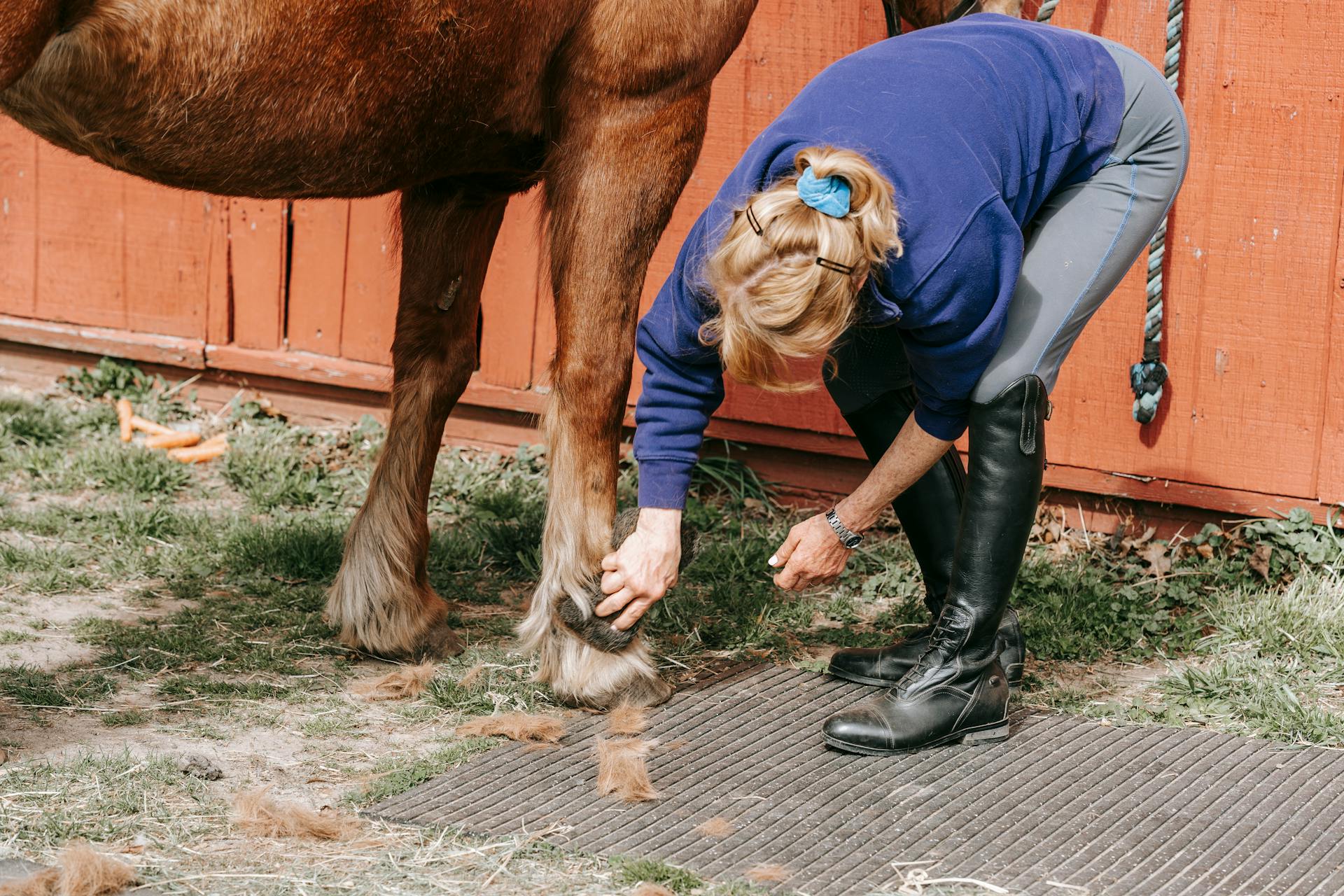
White Line Disease is an infection of the white line, the junction of the hoof wall and sole, causing a progressive separation of the layers of the hoof wall. This separation can lead to structural unsoundness and lameness.
The white line is the visible part of the laminar layers within the equine foot, located between the hoof wall and the sole of the foot. It represents the connection between the insensitive laminar layers of the hoof and the inside face of the hoof wall.
White Line Disease results from bacterial and fungal invasion into the hoof, which can occur when the hoof wall is excessively wet or dry, or when there are hoof capsule distortions such as long toes, under-run heels, a club foot, or sheared heels.
Here's an interesting read: Horse Hoof Health
Quarter Cracks
Quarter cracks are a type of vertical split that occurs in the side of a horse's hoof, specifically between the widest part of the hoof and the heel. This can happen due to various factors.
A quarter crack may or may not cause lameness, depending on its severity.
Causes of quarter cracks include dry weather, frequent changes from wet to dry, drawn-out trimming intervals, and long toes. Poor hoof quality can also contribute to the development of quarter cracks.
To prevent quarter cracks, apply hoof moisturizers to the hoof wall and sole, provide good nutrition and commercially available hoof supplements, and regularly trim your horse's hooves.
Sidebone
Sidebone is the hardening (calcification) of the cartilage of the coffin bone. It's most common in the forefeet of heavy horses working on hard surfaces.
Sidebone is frequent in hunters and jumpers, but rare in racing Thoroughbreds.
Repeated jarring injuries to the quarters of the feet are probably the most basic cause of sidebone. Improper shoeing that stops normal movement of the quarters may also lead to sidebone.
Common Hoof Problems
Horses can develop a range of common hoof problems, from minor issues to life-threatening conditions. These problems can be caused by a variety of factors, including poor hoof care, environmental conditions, and genetics.
Some common hoof problems include abscesses, which can be diagnosed by visually inspecting the affected hoof and using hoof testers to determine the site of pain. Abscesses can be treated with poultices and drawing ointments to promote drainage, and may require the involvement of a veterinarian and farrier.
Horses are also prone to white line disease, a condition where bacteria and fungi invade the hoof wall, destroying the tissue. This can cause a range of symptoms, including tender hooves, lameness, and a hollow-sounding hoof. Treatment for white line disease typically involves removing the infected hoof tissue and treating the hoof with an antiseptic.
Here are some common hoof problems that horses may experience:
- Abscesses
- White Line Disease
- Thrush
- Laminitis (Founder)
- Navicular Syndrome (Palmar Hoof Syndrome)
- Bruised hooves
- Contracted heels
These conditions can have a significant impact on a horse's quality of life, and prompt veterinary care is often necessary to prevent long-term damage and ensure proper treatment.
White Line Treatment
White Line Disease is a common problem that can cause significant pain and discomfort for horses. It's caused by bacterial and fungal invasion into the hoof wall, which can lead to infection and tissue damage.
The key factors that promote the development of white line disease include living in conditions that are excessively wet or dry and having hoof capsule distortions such as long toes, under-run heels, a club foot, or sheared heels. These conditions can create an environment that's conducive to the growth of bacteria and fungi.
Symptoms of white line disease include tender hooves, lameness, a powdery or chalky looking inner surface of the hoof, a hollow-sounding hoof, and separation of the hoof wall. Horses with severe damage to their hoof wall may suffer laminitis and coffin bone sinking or rotation.
Treatment for white line disease typically requires hoof-wall resection by a skilled farrier. This involves cutting away each of the three layers of the hoof wall to remove the infected parts of the hoof. Once resected, the hoof will require support with a bar or other form of therapeutic shoe.
The recovery process can take several months to a year, and it's essential to keep the hoof clean and dry to prevent the infection from recurring. Regular debridement of the affected area by a farrier is also crucial to promote healing and prevent further complications.
Here are some general steps to take if your horse is diagnosed with white line disease:
- Seek veterinary advice to determine the extent of damage caused by white line disease.
- Work closely with your vet and farrier to develop a treatment plan.
- Keep the hoof clean and dry to prevent the infection from recurring.
- Regularly debride the affected area to promote healing and prevent further complications.
Injuries: Fractures, Puncture Wounds
Fractures and puncture wounds are common injuries in horses. Fractures can occur due to falls, kicks by other horses, or collisions with fences or other objects. A veterinarian can diagnose a fracture by looking for swelling, heat, and pain around the injury, and may also gauge the horse's ability to move.
A fracture can be confirmed with a digital radiograph. Puncture wounds, on the other hand, are usually caused by stepping on a sharp object, such as a nail or piece of glass. They are more noticeable and are usually seen outright.
If you think your horse has a fracture or notice a puncture wound, it's essential to contact a veterinarian immediately. Puncture wounds have a high chance of becoming infected, so quick treatment is critical.
Fracture or puncture wound treatment may involve surgery, medication, or rest. To prevent these injuries, maintain a clean and safe stable environment and pasture.
See what others are reading: Horse Grazing Muzzle Problems
Some common signs of a puncture wound include:
- Lameness, especially when the foot bears weight
- Pain and sensitivity in the affected area
- Increased pain when the shoe is pulled or the area is touched
- Warmth or swelling in the affected area
- A pocket of infection and pus (called a subsolar abscess)
In cases of suspected puncture wounds that are not resolving, X-rays or more advanced imaging techniques may be required. Prompt treatment with disinfectants and poultices is also essential to prevent the formation of abscesses.
Founder
Founder is a serious condition that affects a horse's hooves, causing the coffin bone to rotate or sink downward within the hoof. This can be a life-threatening emergency.
The sensitive laminae, which are attached to the coffin bone, fail to attach properly to the insensitive laminae, leading to catastrophic displacement of the coffin bone. The heavy weight of the horse and the pull of the flexor tendons can contribute to this displacement.
Acute laminitis is a medical emergency that requires immediate attention from a veterinarian. Managing a horse with laminitis is complex and requires a close working relationship with both your vet and farrier.
The most common causes of laminitis include ingesting too much grain, grazing lush pastures, and excessive exercise or repetitive trauma. Other causes include generalized infections, ingestion of black walnut heartwood shavings, and treatment with corticosteroids and certain other medications.
The risk of laminitis is higher in ponies and in horses that are overweight and unfit. The number of cases of acute laminitis tends to increase whenever there is a flush of new grass.
Here are some common signs of laminitis:
- Swelling of the sensitive laminae
- Coffin bone rotation or sinking downward within the hoof
- Severe lameness or pain
- Difficulty walking or standing
Contracted Heels
Contracted Heels can be a real pain for horses, especially light horses. They're more prone to this condition due to improper shoeing that draws in the quarters.
This can prevent hoof expansion and adequate frog pressure, making the horse more susceptible to dry hooves and other issues. Dry hooves, excess scraping of the wall, and trimming of the bars all contribute to the problem.
A contracted heel can cause the frog to become narrow and shrunken, and the bars may curve or become almost parallel to each other. The quarters and heels are noticeably contracted and drawn in.
The hoof horn can become dry and hard, and heat may be noticed around the heels and quarters. If the horse is worked at speed, it may become lame, and its stride length will be shortened.
Corrective trimming and shoeing performed by your farrier in collaboration with your veterinarian is the recommended treatment. In advanced cases, recovery can take 6 to 12 months.
Scratches
Scratches can be a real nuisance for horses. They can be caused by a variety of things, including rocks, branches, and even other horses.
A scratch can be as simple as a small scrape or as severe as a deep gash.
According to our article, scratches are often accompanied by swelling and pain.
Quick Facts
Regular trimming or shoeing is essential to prevent hoof problems, as it can help reduce the risk of laminitis. In fact, one of the most common causes of laminitis is poor hoof trimming or shoeing.
To reduce hoof problems, schedule regular trimming or shoeing. This will help maintain good hoof balance, which is crucial for preventing issues like white line disease and hoof cracks.
Providing appropriate shoeing for different weather and footing conditions is also important. For example, in wet conditions, a farrier may recommend shoes with a more aggressive tread to prevent slipping.
Maintaining proper horse nutrition is also vital in preventing hoof problems. A diet that is too rich in grain can lead to laminitis, so it's essential to balance your horse's diet with plenty of fiber and fresh water.
Here are some quick facts to keep in mind:
- Schedule regular trimming or shoeing.
- Maintain good hoof balance.
- Provide appropriate shoeing for different weather and footing conditions.
- Provide appropriate treatment when disease occurs.
- Maintain proper horse nutrition.
Diagnosis & Treatment
Diagnosing equine hoof problems requires a thorough examination of the hooves and a keen eye for abnormalities. A veterinarian or farrier can use hoof testers to determine where pain is present in the hoof.
Visual inspection of the affected hoof is a critical step in diagnosing hoof problems. In some cases, radiographs of the hoof may be necessary to locate the site of the abscess within the foot.
A veterinarian and/or farrier may need to be involved in the treatment of abscesses where proper drainage is not present. Proper drainage from the site of the abscess is essential for treatment.
Poultices and drawing ointments like ichthammol are commonly used to promote drainage from a hoof abscess. Once drainage occurs, affected horses typically experience significant pain relief.
During the healing process, an antiseptic treatment like betadine or two percent iodine should be applied to the drainage tract of a hoof abscess. Medicated putty may also be used within the drainage tract to prevent microorganisms from re-entering the hoof.
Horses being treated for an abscess should be housed in a clean, dry area, such as a well-bedded stall or small paddock. Bandages should be removed and changed daily.
A horse's conformation, such as a long heel, can make it more prone to contracting infections like hoof abscesses.
Maintain a Regular Schedule
To keep your horse's hooves healthy, it's essential to stick to a regular trimming and shoeing schedule of 4 to 6 weeks.
Regular trimming can help prevent the growth of long hoof walls and hoof imbalances, which promote stress and strain on the hoof capsule, soft tissues, and ligaments.
You should prioritize regular farrier work to guard against the development of hoof problems, as shorter intervals between farrier sessions are better than longer ones.
By scheduling regular farrier sessions, you'll be more likely to catch hoof issues early, reducing the risk of more severe problems down the line.
Don't forget to keep your horse's hooves clean and dry, and to provide them with a balanced diet rich in sulphur, biotin, and other essential nutrients for hoof health.
Hoof Care and Trimming
Taking care of your horse's hooves is crucial to prevent problems and ensure their comfort. Research shows that poor quality hooves can benefit from commercially available hoof care products.
There are several signs of poor hoof care, including long toes and collapsed heels, short toes and long heels, and imbalanced hooves. A trained farrier should trim the hooves carefully to correct any imbalances that may cause discomfort.
It's generally recommended that your horse's hooves be trimmed every six to eight weeks, but this can vary depending on the horse's individual growth rate. Trimming too often can expose the sensitive inner hoof tissue and nerves, while letting the hooves grow too long can be bad for the horse.
Remove
Removing dead tissue and debris from a horse's hooves is crucial for their health. This process is often necessary when treating thrush, a hoof infection caused by bacteria and fungus in the frog.
Farriers typically cleanse the area and carefully remove necrotic debris to expose healthy tissue. This helps the horse's hooves heal and prevents further infection.
Overgrown hooves, on the other hand, require trimming to prevent pain and discomfort. Horses with overgrown hooves may be forced to walk awkwardly, stretching and damaging their tendons.
In extreme cases, untrimmed and overgrown hooves can lead to severe hoof cracks, abscesses, and lameness. This can be a painful and debilitating experience for the horse.
Trimming and Balancing
Trimming and balancing your horse's hooves is a crucial part of their overall care and health. A trained farrier should trim the hooves carefully to correct any imbalances that may cause discomfort. This is often the first step in treating hoof pain.
The ideal foot has a straight hoof-pastern angle, easy break over, adequate heel support, and medial-lateral balance. Horses with balanced hooves move better and have less stress and strain on bones, tendons, and ligaments.
You can identify if your horse's hooves are imbalanced by looking for signs such as long toes and collapsed heels, short toes and long heels, or overall imbalance. Poor shoeing or trimming can lead to these issues.
A farrier takes into account the horse's conformation, hoof shape, and hoof size when trimming, shaping the hoof uniquely to meet the horse's needs. This ensures that the trimming and balancing process is tailored to the individual horse.
Here are some key characteristics of a balanced hoof:
- A straight hoof-pastern angle
- Easy break over
- Adequate heel support
- Medial-lateral balance
It's generally recommended that your horse's hooves be trimmed every six to eight weeks, but this can vary depending on the individual horse's growth rate.
Causes and Risk Factors
To reduce the risk of hoof problems, it's essential to establish a good working relationship with your farrier and veterinarian. This will help ensure your horse stays healthy and sound.
Regular trimming or shoeing is crucial to prevent hoof problems. Schedule appointments with your farrier accordingly, taking into account the weather and footing conditions your horse will be exposed to.
Maintaining good hoof balance is also vital. This can be achieved by providing appropriate shoeing for different weather and footing conditions.
What Causes
Navicular syndrome is a common cause of hoof pain in horses. It typically affects the forelimbs and can cause lameness, changes in gait, and a general reduction in performance.
Horses with navicular syndrome often exhibit a range of symptoms, including increased tripping, toe-first landing, contracted heels, or a shortened stride.
Genetic factors, age, and conformation can all contribute to the development of navicular syndrome. Horses with a weight-to-height ratio of 3.45 or higher, or those born with a divided navicular bone, are more likely to develop the condition.
Injury, poor blood supply to the rear of the foot, and small feet for their height and weight can also increase a horse's risk of developing navicular syndrome.
Here are some common risk factors for navicular syndrome:
- Genetic factors that contribute to poor nutrient channels in the navicular bone
- Age over ten years
- Weight-to-height ratio of 3.45 or higher
- Divided navicular bone at birth
- Poor blood supply to the rear of the foot
- Small feet for their height and weight
- Long toe and underrun heel hoof conformation
Laminitis, or founder, is another common cause of hoof pain in horses. This condition occurs when the laminae, the soft tissue that connects the coffin bone to the hoof wall, become inflamed.
Horses with laminitis may be reluctant to move and may exhibit sensitivity in the frog. If left untreated, laminitis can lead to permanent damage to the hooves.
Nutrition: Feed High-Quality Supplements
Feed high-quality supplements to your horse to ensure they get the nutrients they need to grow and maintain healthy hooves.
A balanced diet that provides adequate amounts of key vitamins and minerals is essential for hoof integrity. Some of the most important nutrients include biotin, copper, selenium, and zinc.
For a 500kg horse at maintenance, optimal amounts of each of these nutrients are as follows:
It's recommended to feed a mineral and vitamin supplement that provides organic trace minerals, which are better absorbed and utilized by the body compared to inorganic trace minerals.
Signs Your Animal Is Unwell
Horses can't tell us where or how much pain they're in, so we need to be vigilant and watch for signs of hoof pain. Hoof pain is sometimes difficult to diagnose.
A horse may suddenly and severely become lame if it has a hoof abscess. This is an unmistakable sign that something is wrong.
Shifting weight is an unmistakable signal that the horse is hurting somewhere, usually in the hoof or leg region.
Lameness is an immediate red flag that a horse needs veterinary attention. A horse with hoof pain may favour one hoof over the other and put more weight on the hoof that is not painful, changing its gait and stance.
Frequently Asked Questions
What does a laminitic hoof look like?
A laminitic hoof is characterized by a dished dorsal hoof wall and "founder rings" with a flat or convex sole, indicating P3 displacement or penetration. This distinctive appearance is a key sign of chronic laminitis in horses.
What is the best treatment for sore hooves in horses?
Salt water soaks (30 minutes a day for 2 weeks) followed by poulticing and wrapping can help alleviate sore hooves in horses
Featured Images: pexels.com