Setting up a proper habitat for your electric blue crayfish is crucial for their survival and well-being.
The ideal water temperature for electric blue crayfish is between 72°F and 82°F.
To maintain a healthy environment, you'll need to keep the water pH between 6.5 and 7.5.
Aquariums with a minimum capacity of 20 gallons are recommended for housing electric blue crayfish.
Regular water changes, about 25% every week, will help keep the water quality high.
A good filter system is essential to maintain clear and clean water.
Appearance
The Electric Blue Crayfish is a truly remarkable creature that stands out in any aquarium, especially if there is more than one! Its bright blue coloring is a sight to behold, and its exoskeleton provides great protection.
Adult Electric Blue Crayfish can reach up to 4-6 inches in length at maturity. This size can vary, but it's impressive nonetheless.
Its distinctive horns, antennae, as well as swimmers, are some of the features that make this crayfish so unique. The horns protrude from its head and keep the fish safe from harm.
The Electric Blue Crayfish has four pairs of small legs, which are quite handy for crawling around. Alongside, they are blessed with a large pair of claws, or chelipeds as they are called.
Its tail, located on its back, curves inward and is quite bulky. The tail's insides are covered by swimmerets that assist the fish in swimming.
The Electric Blue Crayfish has a lot in common with lobsters, but they are smaller in size and have different characteristics.
Crayfish Care Guide
To have a healthy and comfortable habitat for your electric blue crayfish, you'll need to provide the right tank size. A spacious tank is essential for these crustaceans to thrive.
Proper substrate material is also crucial for your crayfish's well-being. You should choose a substrate that won't harm your crayfish if ingested.
Decorations can make a big difference in your crayfish's comfort level. Add some plants or decorations that will provide hiding places and visual interest.
To ensure optimal water parameters, you'll need to get a good understanding of what's required. This includes factors like water temperature, pH, and hardness.
A comprehensive guide on how to care for electric blue crayfish is a must-have for any enthusiast. This guide will walk you through the process of creating a suitable environment for your crustacean friends.
Housing and Environment
Electric blue crayfish have a unique color that stands out best against blue substrates, surprisingly.
To create a visually appealing environment, you can use colored gravel or sand. If you opt for sand, your crays will have the chance to burrow into the bottom.
The biggest décor requirement for crays is hiding places. Choose driftwood, artificial caves, PVC tubes, or overturned pots to give your blue crayfish somewhere to molt in peace.
Water Environment
To create a healthy environment for your electric blue crayfish, you'll want to focus on water parameters that mimic their natural habitat. The ideal temperature range is between 68-75°F, with a pH level of 7.0.
A neutral pH level is essential, as this will help prevent ammonia poisoning. To ensure water quality, execute an appropriate nitrogen cycle and make consistent water changes. This will keep parameters in check and prevent the buildup of toxic compounds.
The natural habitat of electric blue crayfish ranges from tropical to sub-tropical, with temperatures between 65-75°F. Soft, neutral waters with a pH range of 6.5-7.5 and a hardness between 3-10 dH are ideal.
You should keep an eye on total dissolved solids (TDS) in your tank, as excessive minerals can harm your crayfish. If your tap water contains too many minerals, consider using a dechlorinator or distilled water to bring the TDS down to 150-200.
Electric blue crayfish hate unclean water, so it's crucial to maintain a water environment with minimal ammonia, nitrites, and nitrates. Aim to keep these levels as close to 0 ppm as possible.
A good filtration system and adequate oxygenation are also essential for a healthy tank. Use a sturdy filter that can withstand the crayfish's claws, and consider adding an air pump or air stone to maintain oxygen levels.
Landscape
When it comes to creating a suitable landscape for your electric blue crayfish, you'll want to focus on providing a spacious and visually appealing environment.
A minimum tank size of 30 gallons is recommended to allow for exploration, development of territory, and management of water quality. This will help prevent problems and ensure the health and happiness of your crayfish.
A suitable lid for the tank is crucial, as crayfish are skilled climbers and will explore their surroundings. You'll want to choose a quality lid that will prevent escape attempts.
To maintain water quality and prevent suffocation, a good filtration system and adequate oxygenation are essential. This can be achieved with a filtration system, air bubbler, or by leaving access to areas above the waterline.
Here are some decoration ideas for your electric blue crayfish tank:
- Driftwood
- Floating plants
- Plastic plants
- Plastic decorations
- Artificial hiding caves
- PVC pipes
- Pots
- Pebbles
- Rocks
- Floating moss
A blue substrate is a great choice, as it will complement the cobalt color of your crayfish. You can also use colored gravel or sand, which will give your crayfish the opportunity to burrow into the bottom.
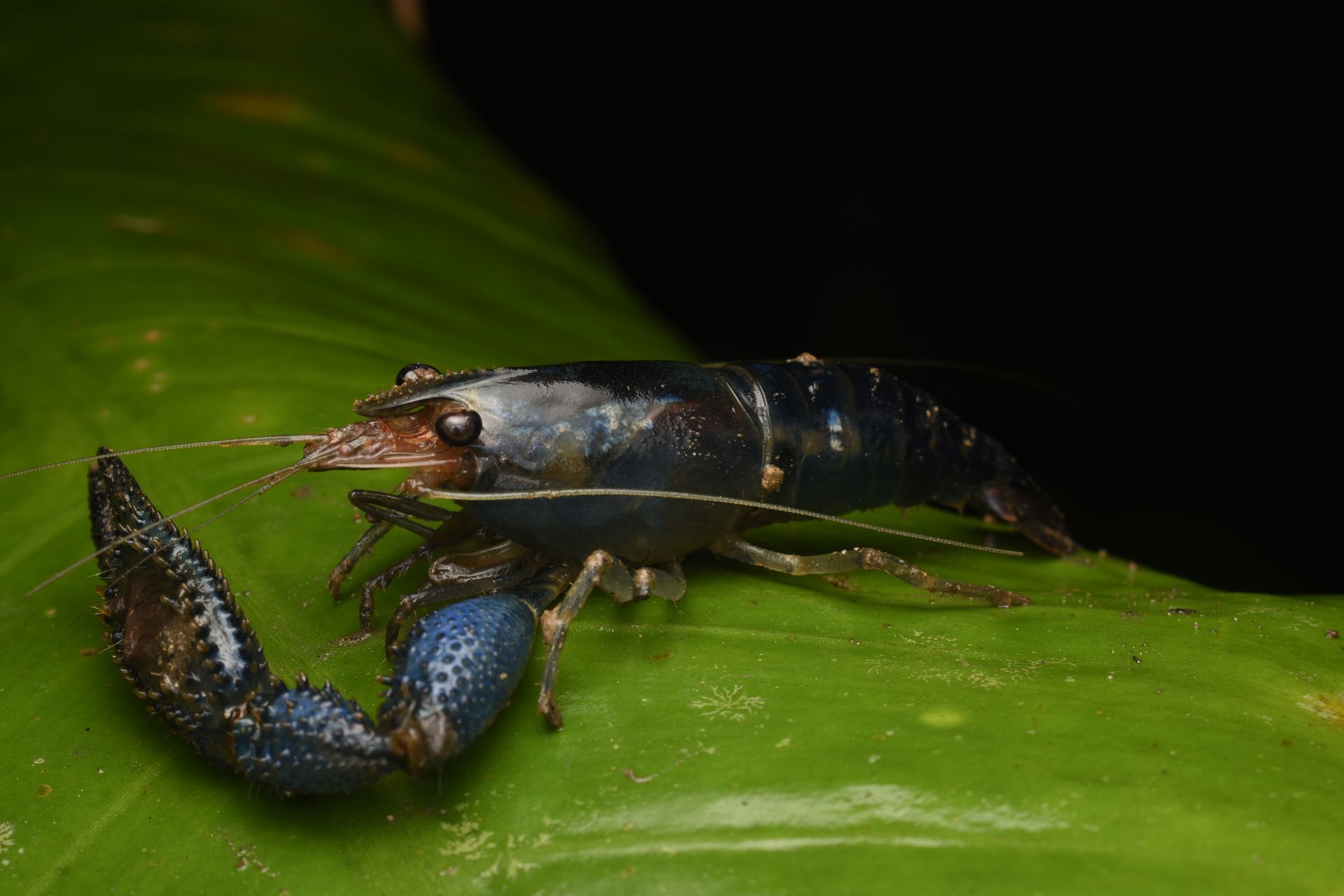
Hiding places are a must, as crayfish are vulnerable during molting. Choose driftwood, artificial caves, PVC tubes, or overturned pots to provide a secure space for your crayfish to molt in peace.
To maintain a healthy nitrogen cycle, consider adding live plants to your tank. However, be aware that electric blue crayfish can be hard on plant life, so choose floating plants or crayfish-safe options like Anacharis, Hornwort, Java fern, or Marimo moss.
Substrate
When choosing a substrate for your crayfish, sand or fine-gravel is ideal because it can be easily excavated without harming them.
Crayfish are natural burrowers, so they need a substrate that allows them to dig and move around comfortably.
Sharp and rough gravel should be avoided as it can injure your crayfish.
Lighting
When it comes to lighting, you'll want to consider using safelights to create a unique and appealing environment for your electric blue crayfish.
Safelights are a great option, especially if you have an electric blue crayfish, as they can create a bewitching look with the bright LED lights reflecting on the fish's cobalt blue color.
You can use multicolored, waterproof, and safe aquarium lights in the fish tank.
Make sure not to flood the tank with lights, as this can be detrimental to the crayfish.
Diet & Feeding
Electric blue crayfish are omnivores, which means they'll eat just about anything they can find. They're opportunistic feeders, so it's essential to provide a balanced diet to keep them happy and healthy.
To feed your electric blue crayfish, offer a variety of foods including algae wafers, dry flakes, sinking pellets, and fresh or blanched veggies. You can also supplement with calcium to help harden their exoskeletons.
In the wild, electric blue crayfish would naturally forage for food, so it's crucial to replicate this behavior in their tank. Feed them small portions every day to prevent overfeeding and maintain good water quality.
Here are some specific foods you can feed your electric blue crayfish:
- Algae wafers
- Dry flakes
- Fresh/blanched veggies
- Sinking pellets
- Calcium supplements
- Cuttlebone
- Shrimps
Remember to clean out their tank regularly to prevent waste buildup and maintain a healthy environment.
Behavior and Temperament
They're not exactly the friendliest creatures, and their peaceful temperaments are a myth. Electric Blue Crayfish are known to be bottom-feed scavengers.
They're very territorial by nature and will fight with other creatures in the tank. This makes them unsuitable for community tanks with slow-moving or small fish.
Electric Blue Crayfish are nocturnal creatures that prefer dark environments, where they'll hide and burrow in caves or hiding places. They're constantly on the move, never still for a moment.
Behavior and Temperament
Electric Blue Crayfish are not the friendliest creatures, and their temperaments are far from peaceful.
They are very territorial by nature, which means they can become aggressive and fight with other tankmates.
These crayfish are always on the move, constantly swimming and searching for food at the bottom of the tank.
Their active lifestyle is a result of their bottom-feed scavenger nature, where they look for anything they can get their claws on.
As nocturnal creatures, they prefer dark environments, where they will hide and burrow in caves or hiding places.
Due to their territorial nature, they're not suitable for community tanks with slow-moving or small fish, as they can become aggressive and cause problems.
Bad Mates
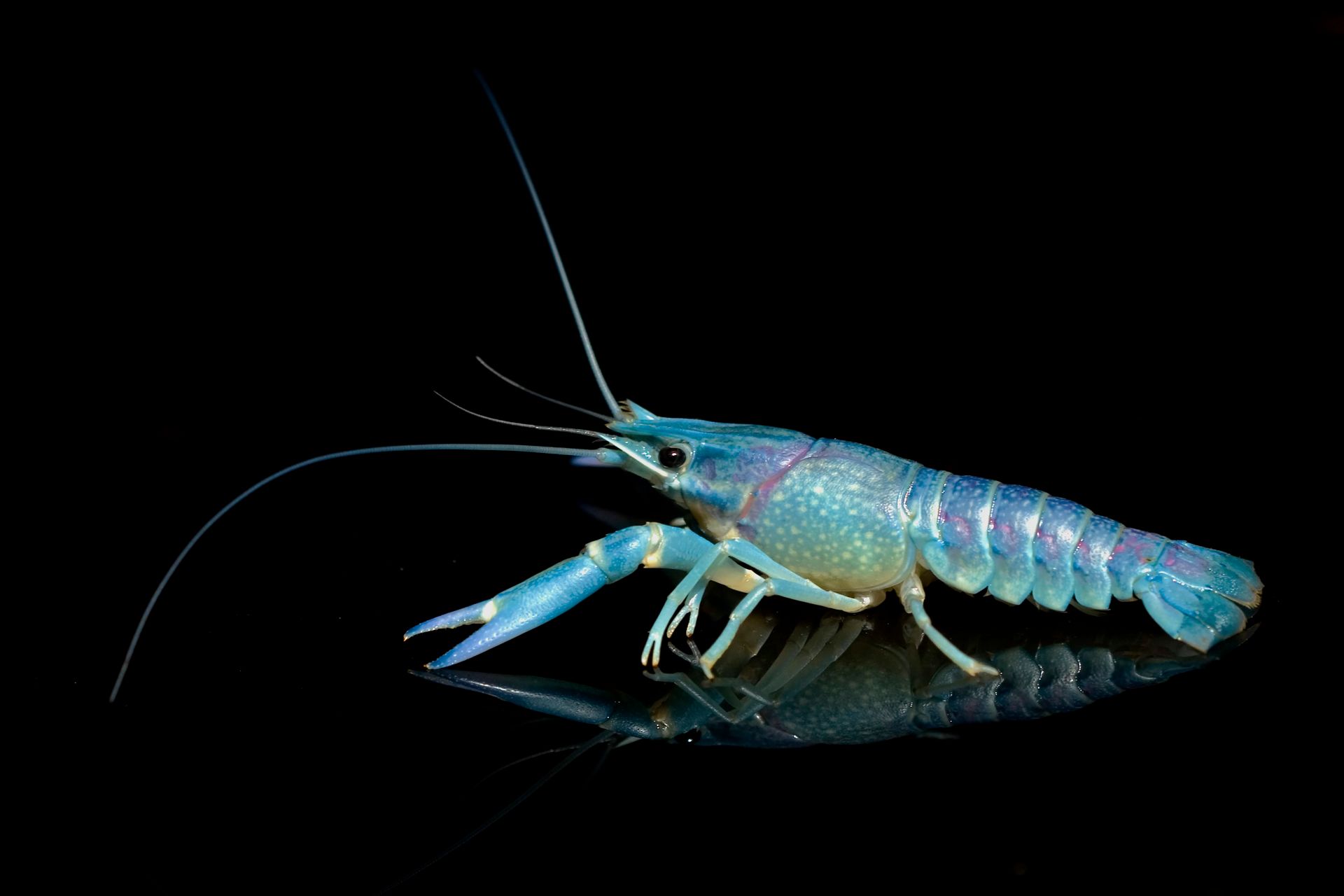
Electric Blue Crayfish can be quite territorial and aggressive, so it's essential to choose tank mates wisely. They are likely to fight with all other creatures in the tank.
Avoid keeping them with slower or bottom-dwelling fish, as they can become a target for the crayfish's aggression. Shrimp and slow-moving small fish may also struggle to coexist with Electric Blue Crayfish.
In particular, cichlids will harass and even eat the crayfish, while fancy goldfish will get eaten or killed. These are just a few examples of incompatible tank mates.
Here are some tank mates to avoid:
- Freshwater shrimp
- Betta fish
- Snails
- Large, aggressive fish like cichlids (especially the bigger South American cichlids)
By choosing the right tank mates, you can create a harmonious environment for your aquatic pets.
Breeding and Mating
Breeding Electric Blue Crayfish can be a rewarding experience, but it requires attention to detail and a suitable environment.
To start breeding, you need to correctly identify and sex your crayfish. Males have specialized claws called gonopods, which are used for mating purposes.
Males initiate mating by mounting the female and holding her with their pincers. After the ritual, it's wise to separate them as they can get aggressive with each other.
To distinguish between male and female electric blue crayfish, look for physical attributes such as claspers, which are found in males between their swimmerets and walking legs.
Females have no claspers and a round sperm receptacle between their last two legs, and a straighter, narrower tail than males.
Suggestion: Blue Heeler Female Dog
Breeding
Breeding Electric Blue Crayfish can be a rewarding experience, but it requires attention to detail. Males have specialized claws called gonopods for mating purposes.
To start, you need to correctly identify and sex your crayfish. Males can be identified by their gonopods, used for mating.
The female Electric Blue Crayfish incubates eggs for 20-30 days. This is a critical period, and the tank conditions must be suitable for successful reproduction.
In captivity, Electric Blue Crayfish breed extensively, and females can lay hundreds of eggs. This can fill your tank with baby crayfish.
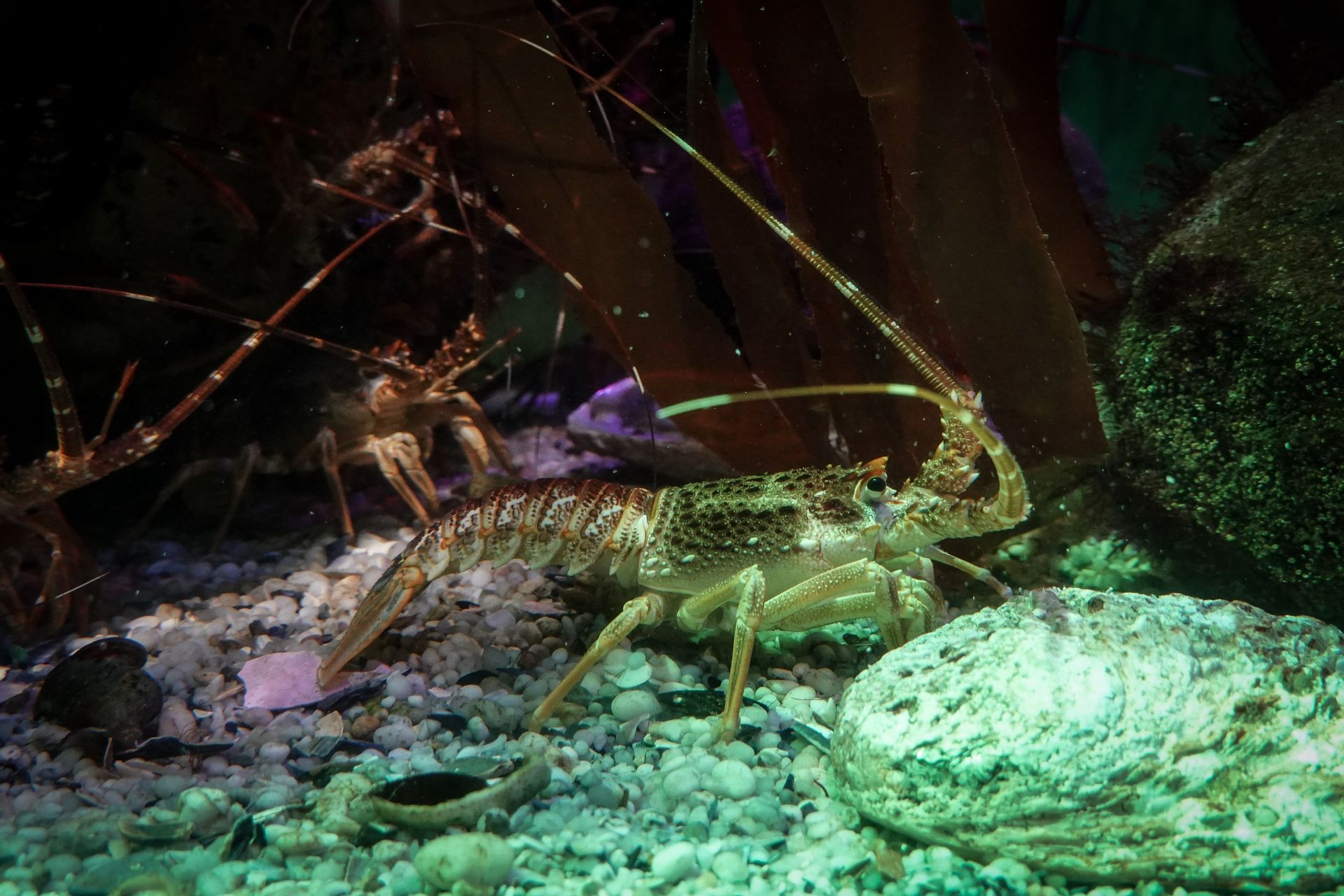
The male crayfish will mount the female and deposit a sack of sperm on her. If correctly fertilized, the female starts the 'berrying' process.
The number of eggs laid may range from 0 to hundreds, and once you spot the berrying female, separate her immediately to prevent the father from eating the eggs.
Suitable Mates
Electric Blue Crayfish can live in an aquarium with fast-moving fish such as Rosy barbs, Danios, Red tail sharks, Goldfish, Koi, and Livebearers. These fish are less likely to get preyed upon by the crayfish's territorial nature.
You'll want to ensure you have enough space for hiding places when housing multiple creatures together. This is crucial for maintaining a harmonious environment.
The following fish species are considered suitable tankmates for Electric Blue Crayfish: African Butterfly Fish, Fast Danios, Guppies, Hatchetfish, Rainbow Darters, Rainbow sharks, Red Tail sharks, Tiger barbs, Pearl Gourami, Rosy red minnows, Clown pleco, and Rasboras.
It's essential to introduce multiple crayfish at the same time to avoid territorial wars. This is especially true if you're housing multiple crayfish in the same tank.
Incompatible Mates
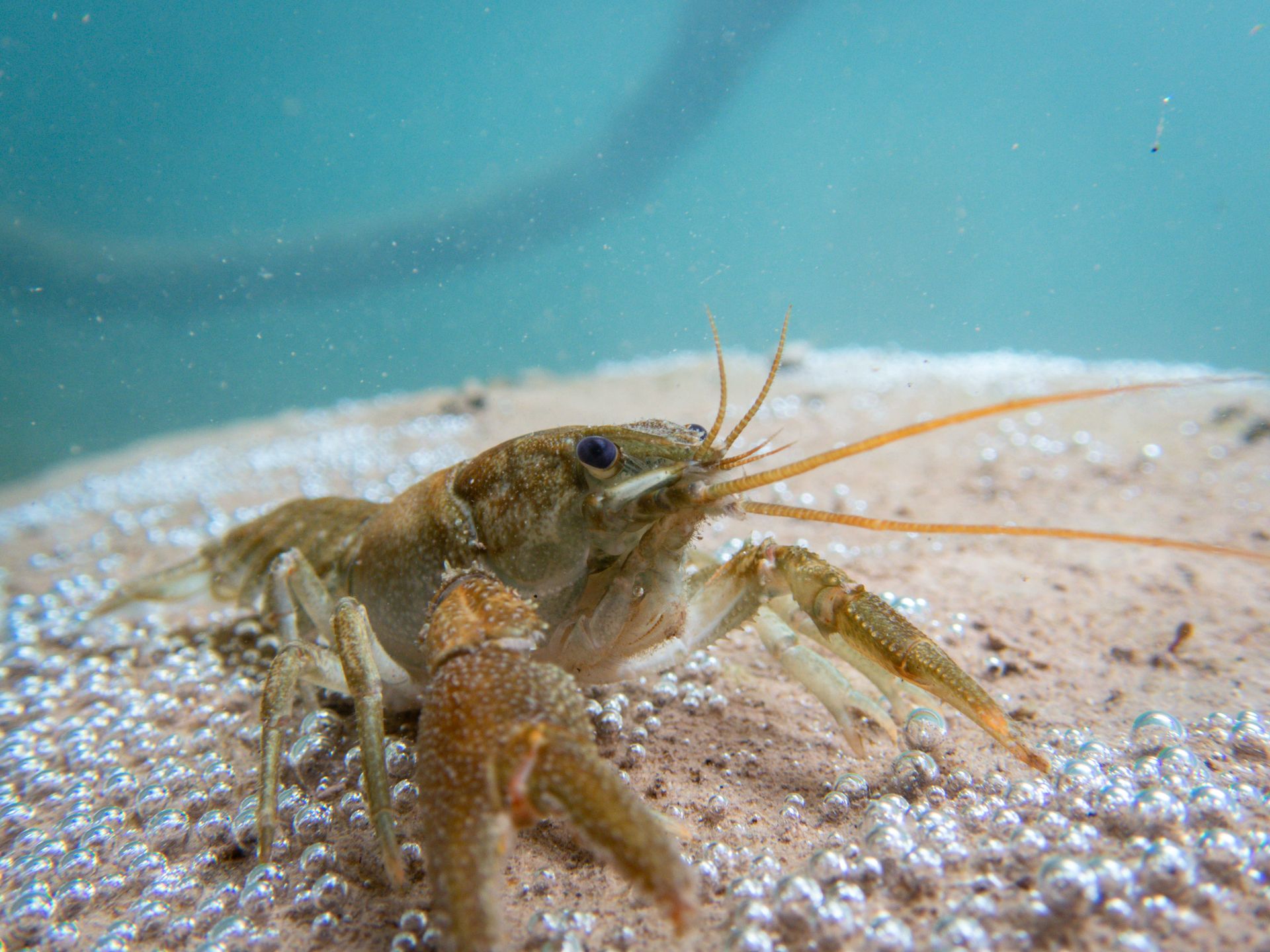
When choosing tank mates for your Electric Blue Crayfish, it's essential to avoid those that might become a meal or a target for aggression.
Cichlids are a definite no-go, as they'll harass and even eat your crayfish, especially if they're large or small. Fancy goldfish are another no-brainer – they'll get eaten or killed.
If you want to keep multiple crayfish, introduce them at the same time to avoid a territorial war. Invertebrates like snails are also off-limits, as your crayfish will see them as a tasty snack.
To keep your tankmates safe, opt for fish that prefer swimming on the top of the tank, where they'll be out of reach of your crayfish's claws.
Here are some tank mates to avoid:
- Freshwater shrimp
- Betta fish
- Snails
- Large, aggressive fish like cichlids (especially the bigger South American cichlids)
Sexual Dimorphism
To distinguish between male and female electric blue crayfish, you need to look at their basic physical attributes.
Males have a set of claspers between their swimmerets and walking legs, which are at rest in a 'V' position when not in use.
Females have no claspers and a gap between her walking legs and swimmerets.
Males have a straighter, narrower tail than females.
The most common way to sex electric blue crayfish is to flip them over and check between their legs.
Lifespan
Electric blue crayfish typically live for 5-6 years, which might seem short, but is actually a decent lifespan in the aquatic kingdom.
To reach this average lifespan, it's essential to provide proper care, including a nutritious diet and regular water changes.
These crayfish are prone to ammonia poisoning, which can significantly reduce their lifespan if not addressed.
If you want to keep your electric blue crayfish healthy, you'll need to stay on top of water quality by regularly testing and changing the water.
In good care, with a well-kept tank and consistent water parameters, they may live longer than the average 5-6 years.
For more insights, see: Life Span of a Blue Heeler
Finding and Purchasing
If you're looking for electric blue crayfish for sale, consider searching online for local shops that specialize in rare or exotic species. They're more likely to carry blue crayfish or can place special orders for you.
Aquarium shops and specialty retailers are great places to find electric blue crayfish. These stores often provide valuable care advice too.
You can also try searching online for "electric blue crayfish for sale near me" to find local vendors.
Frequently Asked Questions
Are electric blue crayfish good pets?
Yes, electric blue crayfish can make good pets for experienced aquarists, as they are hardy and active freshwater inhabitants. However, they require a suitable environment and care.
How big do electric blue crayfish grow?
Electric blue crayfish typically grow to 4-5 inches in body length, not including their claws. They are usually purchased at a smaller size of 2-3 inches.
Featured Images: pexels.com