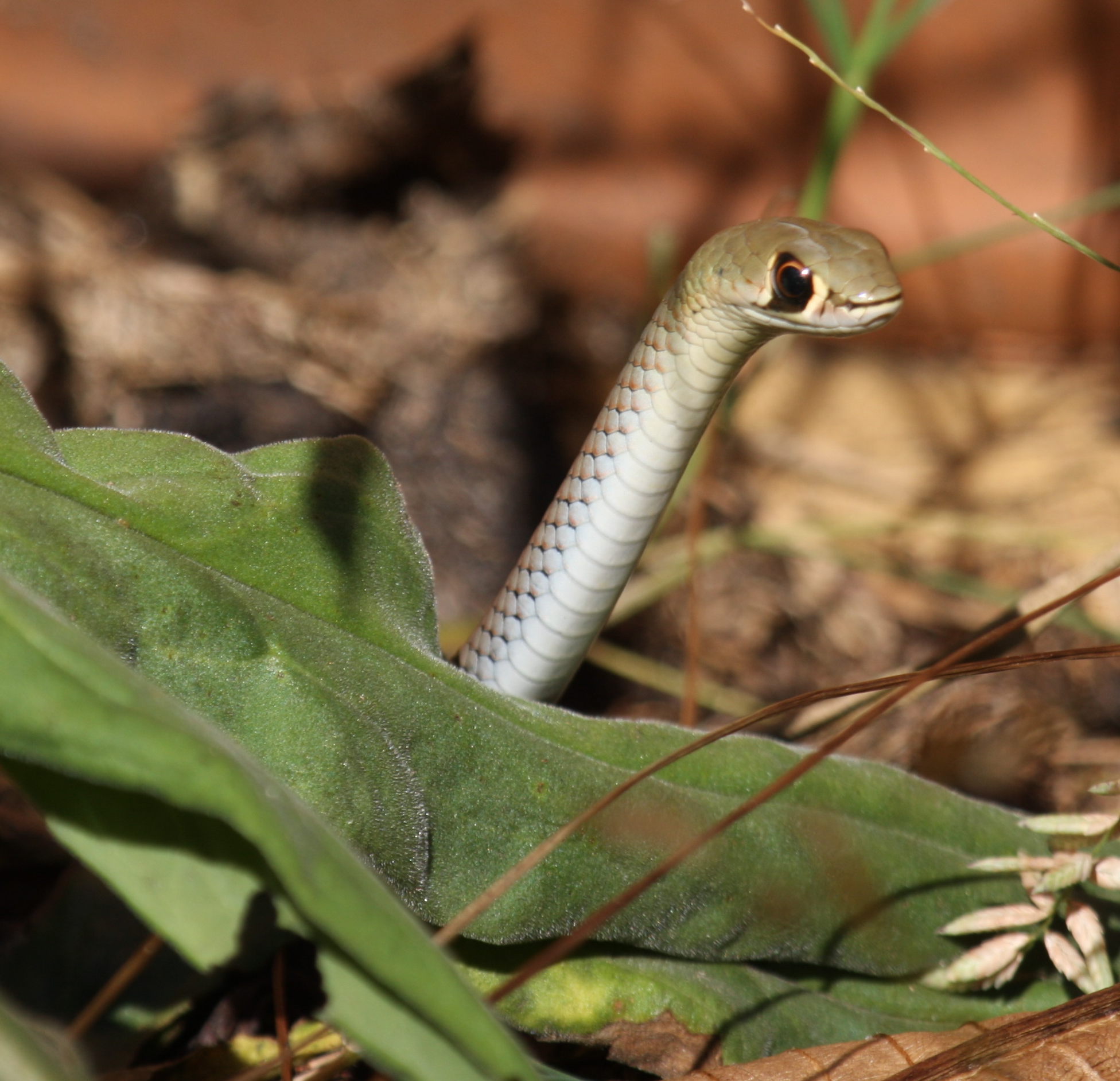
The Elapidae family of snakes is often misunderstood, but one thing is for sure: they're the most venomous snakes in the world.
The Elapidae family includes some of the most venomous snakes, such as the inland taipan, eastern brown snake, and tiger snake.
Their venom is highly toxic and can kill a human being within 45 minutes if left untreated.
These snakes are found in various parts of the world, including Australia, Southeast Asia, and the Pacific Islands.
Curious to learn more? Check out: List of Non Venomous Snakes
Description and Classification
The Elapidae family is a diverse group of snakes that can be found in various environments, from land to sea. They are characterized by their long, slender bodies with smooth scales, and their heads are often covered with large shields.
One of the most distinctive features of elapids is their venom delivery system, which includes a pair of proteroglyphous fangs used to inject venom from glands located towards the rear of the upper jaws.
Curious to learn more? Check out: Western Diamondback Rattlesnake Venom
Elapids can be broadly classified into two main groups: terrestrial and marine species. Terrestrial elapids, such as cobras and taipans, are found on land and are generally oviparous, laying eggs. In contrast, marine elapids, such as sea snakes, have evolved to live in the ocean and are viviparous, giving birth to live young.
Some notable examples of elapid species include the king cobra, which is the longest venomous snake in the world, and the sea kraits, which are the least adapted to an aquatic life and spend much of their time on land.
Here is a brief summary of the different subfamilies of Elapidae:
Explanatory Notes
The classification of elapids has undergone significant changes in recent years. The subfamily Elapinae, which was once considered to include terrestrial species, is now considered paraphyletic in relation to Hydrophiinae.
The Australasian terrestrial species were previously thought to be part of Elapinae, but a 1997 study found that they actually nested within Hydrophiinae. This means that they should be reclassified as part of Hydrophiinae.
A 1997 study by Slowinski, Knight, and Rooney found that the Australasian terrestrial species were more closely related to Hydrophiinae than to Elapinae. This was confirmed by subsequent genomic analyses.
The subfamily Elapinae is no longer considered a valid group, as it is paraphyletic in relation to Hydrophiinae. This means that the species within Elapinae are more closely related to Hydrophiinae than to other species within Elapinae.
The study by Slowinski, Knight, and Rooney also found that coral snakes, cobras, and mambas formed successive outgroups to Hydrophiinae. This suggests that these species are more closely related to Hydrophiinae than to other species within Elapinae.
Here are some of the subfamilies that were previously considered part of Elapinae, but are now recognized as valid groups:
- Calliophiinae
- Micrurinae
- Najinae
- Bungarinae
Description
Terrestrial elapids have long, slender bodies with smooth scales, a head covered with large shields, and eyes with rounded pupils.
Their behavior is usually quite active and fast, with most females being oviparous, meaning they lay eggs.
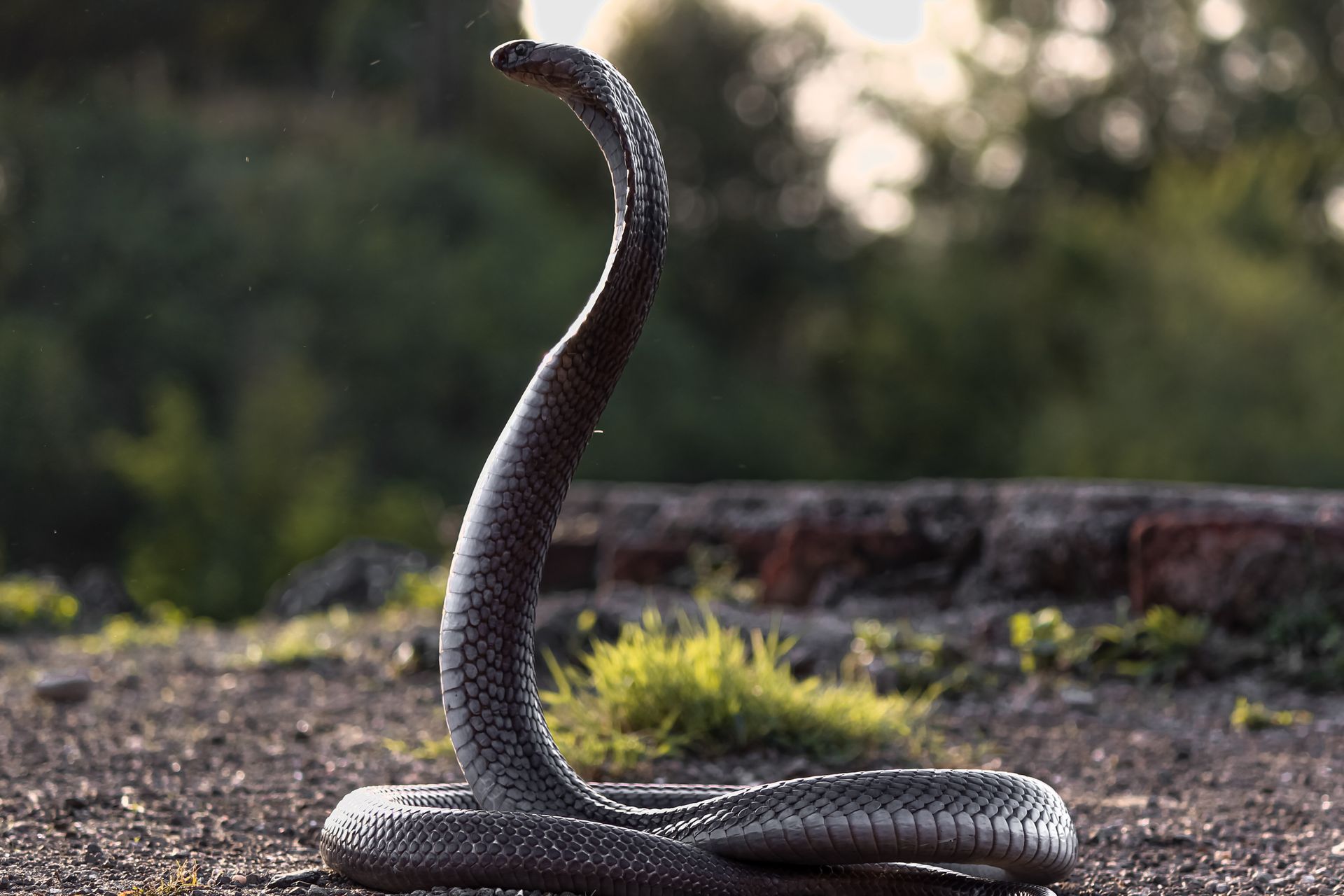
Some exceptions to this generalization occur, such as death adders, which have shorter, stout bodies and are ovoviviparous, giving birth to live young.
Sea snakes have adapted to a marine way of life, with paddle-like tails for swimming and the ability to excrete salt.
Their bodies are laterally compressed, and they give birth to live young, a trait known as viviparity.
The reduction in ventral scaling in sea snakes has greatly diminished their terrestrial mobility but aids in swimming.
The king cobra is the world's longest venomous snake, reaching a maximum length of 5.85 meters and an average mass of 6 kilograms.
All elapids have a pair of proteroglyphous fangs used to inject venom from glands located towards the rear of the upper jaws.
Some elapids are strongly arboreal, such as the African Pseudohaje and Dendroaspis, while others are specialized burrowers, like the Ogmodon and Parapistocalamus.
Sea snakes have evolved various adaptations for their marine lifestyle, including paddle-like tails and the ability to respire through their skin.
The yellow-bellied sea snake can satisfy about 20% of its oxygen requirements through skin respiration, allowing for prolonged dives.
Sea kraits, on the other hand, are the least adapted to an aquatic life and spend much of their time on land, where they lay their eggs.
Taxonomy
Taxonomy can be a bit of a mess, but let's break it down. The Elapidae family, which includes venomous snakes, has undergone some changes in classification over the years. In the past, many subfamilies were recognized, but none are currently universally accepted.
One of the main issues with Elapidae taxonomy is that some subfamilies are paraphyletic, meaning they don't share a common ancestor. For example, the Elapinae subfamily is considered paraphyletic in relation to the Hydrophiinae subfamily. This has led some researchers to suggest that the subfamilies Calliophiinae, Micrurinae, Najinae, and Bungarinae be reinstated.
The type genus for the Elapidae family was originally Elaps, but it was moved to another family. In contrast to what usually happens in botany, the Elapidae family was not renamed. Instead, Elaps was renamed Homoroselaps and moved back to the Elapidae.
There are two main groups within Elapidae: the African, Asian, and New World Elapinae, and the Australasian and marine Hydrophiinae. The Australian terrestrial elapids are technically 'hydrophiines', although they are not sea snakes. They are actually more closely related to the marine Hydrophiinae than to the Elapinae.
Here are some of the subfamilies that have been suggested for Elapidae, although none are currently universally accepted:
- Elapinae
- Hydrophiinae (sea snakes)
- Micrurinae (coral snakes)
- Acanthophiinae (Australian elapids)
- Laticaudinae (sea kraits)
Some researchers have used morphological characters to group Elapidae. For example, they have divided the family into two groups based on the behavior of the palatine bone. The "palatine draggers" include Australasian terrestrial elapids and hydrophiine sea snakes, while the "palatine erectors" include terrestrial African, Asian, and American elapids, as well as the marine Laticauda.
Venomous Snakes
The Elapidae family, also known as the venomous snakes, is one of the two main families of venomous serpents.
These snakes are characterized by their permanently erect short fangs, which are designed to inject venom into their prey or potential threats efficiently.
Elapid venoms primarily consist of neurotoxins, which target the nervous system and can induce paralysis if not promptly treated with antivenom.
Some of the most notorious members of the Elapidae family include the black mamba, which is considered one of the deadliest snakes on the planet.
Broaden your view: Venomous Snakes North America
The black mamba's venom is renowned for its potency, and its striking pattern of vibrant red, yellow, and black bands makes it a recognizable and intimidating sight.
Most members of the Elapidae family are venomous to varying extents, and some are considered among the world's most venomous snakes based upon their murineLD50 values, such as the taipans.
Antivenom is promptly required to be administered if bitten by any elapids, and specific antivenoms are the only cure to treat elapidae bites.
The venom of spitting cobras is more cytotoxic rather than neurotoxic, and it damages local cells, especially those in eyes, which are deliberately targeted by the snakes.
A different take: List of Most Venomous Snakes
Behavior and Characteristics
Most elapids are terrestrial, while some are strongly arboreal, such as the African Pseudohaje and Dendroaspis, and the Australian Hoplocephalus.
Some species have very specialized diets, like feeding almost exclusively on other serpents, especially the king cobra and kraits.
Elapids may display a series of warning signs if provoked, such as lifting their inferior body parts, expanding hoods, and hissing, like cobras and mambas do.
In general, sea snakes are able to respire through their skin, which allows them to satisfy about 20% of their oxygen requirements in this manner, enabling prolonged dives.
The sea kraits, on the other hand, are less adapted to aquatic life, with thicker bodies and ventral scaling, and are capable of some land movement.
Behavior
Most elapids are terrestrial, but some species, like the African Pseudohaje and Dendroaspis, are strongly arboreal.
Many elapid species are specialized burrowers, such as the Ogmodon, Parapistocalamus, Simoselaps, Toxicocalamus, and Vermicella, which live in either humid or arid environments.
Some elapids have very generalised diets, but many species have narrow prey preferences and correlated morphological specializations, like feeding almost exclusively on other serpents.
Elapids may display a series of warning signs if provoked, such as lifting their inferior body parts, expanding hoods, and hissing.
The yellow-bellied sea snake, Hydrophis platurus, can satisfy about 20% of its oxygen requirements by respiration through its skin, allowing for prolonged dives.
The sea kraits (Laticauda spp.) are the sea snakes least adapted to aquatic life, with bodies that are less compressed laterally and thicker bodies and ventral scaling, allowing them to move on land.
Venom
Venom is a complex and multifaceted topic when it comes to snakes in the Elapidae family. Their venom is primarily neurotoxic, designed to immobilize prey and defend against threats.
Cobras, mambas, and other elapids have venom that can cause heart dysfunctions and cellular damage. This is due to the presence of cardiotoxins and cytotoxins in their venom.
The venom of spitting cobras is more cytotoxic than neurotoxic, causing local cell damage and intense pain on contact with the eye. It can even lead to blindness.
Elapid venom is highly potent, with some species being considered among the world's most venomous snakes based on their murine LD50 values. This is particularly true for taipans.
Antivenom is the only cure for elapidae bites, and specific antivenoms are available for cobras, mambas, and other important elapids.
Geographic and Habitat Information
Elapidae are found worldwide in tropical and subtropical regions, except in Europe. They are a diverse group of snakes that can thrive in various environments.
Most Elapidae species prefer humid tropical environments, but some can be found in arid environments. This adaptability is a testament to their resilience.
Elapidae are found on land in Africa, Asia, Oceania, the Middle East, North America, and South America. They are also found in the Indian Ocean and the southwest Pacific Ocean.
Sea snakes occupy coastal waters and shallows, and are common in coral reefs. They are a unique group of Elapidae that have adapted to life in the ocean.
Check this out: Deadliest Snakes in North America
Specific Species and Groups
Elapidae, the family of venomous snakes, is home to some of the most infamous species.
Dendroaspis, commonly known as Mambas, is a group of four species found in Central and Eastern Australia.
These snakes are known for their potent venom, which makes them a force to be reckoned with.
Eastern Coral Snake
The Eastern Coral Snake is a rare and endangered species found only in the southeastern corner of North Carolina. They reach a maximum length of 35 inches.
Their dorsal scales are smooth and feature a striking pattern of red, yellow, and black. The snout is always black, followed by alternating bands of yellow, red, and black that encircle the entire body.
Eastern Coral Snakes are crepuscular, meaning they're active at dusk and dawn, and fossorial, meaning they spend most of their time underground. They're also egg-laying and feed on small snakes and lizards.
These highly venomous snakes possess venom that can cause paralysis and respiratory failure. They're typically not aggressive and only bite if restrained.
A useful tip to remember the difference between Eastern Coral Snakes and similar-looking species is the common saying, "Red touches black, you're OK Jack; red touches yellow, you're a dead fellow."
Death Adders (8 Sp)
Death Adders (8 Sp) are one of the most venomous snakes in the world.
They are found in the deserts and grasslands of Australia and New Guinea, where they inhabit rocky outcrops and sandy dunes.
Death Adders are nocturnal, meaning they are active at night and rest during the day.
Their venom is a powerful neurotoxin that can kill a human being within 45 minutes if left untreated.
Death Adders are also known for their distinctive pattern of brown or tan scales with a darker stripe running down their back.
They are solitary animals and only come together to mate.
Death Adders are relatively small, growing up to 2.5 feet in length, and are often mistaken for other snakes due to their similar appearance.
Dendroaspis – Mambas
The Dendroaspis family, commonly known as mambas, is comprised of four species found in Central and Eastern Australia. They're considered some of the most venomous snakes on the planet.
Their venom is primarily made up of neurotoxins, which can cause rapid paralysis and incapacitation if not treated promptly with antivenom. This neurotoxic effect is a hallmark of elapid envenomation.
Black mambas, in particular, are renowned for their speed, agility, and potent venom, earning them the reputation as Africa's "kiss of death".
Naja – True Cobras
True cobras, also known as Naja, are famous for their impressive hood display, a bluff that works to deter predators.
They have distinctive banding patterns that resemble the stripes of a tiger, making them easily recognizable.
Despite their relatively small size, these snakes possess potent venom that can have devastating effects.
Infamous for their potent venom and lightning-fast striking speed, it's no wonder they're a force to be reckoned with.
The King cobra is the only member of this genus, and its name reflects its regal status among the snake world.
Did You Know?
Some elapid snake species have a unique ability to project their venom with precision toward the eyes of a predator through "spitting". This is a remarkable defense mechanism that helps them protect themselves from potential threats.
Elapids have a distinct dental feature - their front fangs are fixed at the front of the mouth, unlike vipers which have hinged fangs that fold back when not in use. This fixed fang structure allows elapids to deliver venom with precision.
Elapid venom contains compounds with potential medical applications, including the development of antivenoms and pharmaceutical drugs for various human health conditions.
Frequently Asked Questions
What is the toxin of the Elapidae?
The main toxins of the Elapidae family are neurotoxins, specifically PLA2 and three-finger toxins (3FTx), which help immobilize prey and defend against predators. These toxins can also cause additional effects, including heart problems and cellular damage.
What are the symptoms of Elapidae?
Symptoms of Elapidae bites include local pain, headache, nausea, numbness, and respiratory issues, which can progress to altered mental status and respiratory failure if left untreated. Seek medical attention immediately if bitten by an Elapidae species.
Why are elapids so venomous?
Elapids are highly venomous due to the neurotoxic properties of their venom, which helps them immobilize prey and defend against predators. This unique venom composition is a key adaptation that has contributed to their success as a species.
What makes a snake an elapid?
Elapids are venomous snakes with short, fixed fangs in the front of their mouth, belonging to the Elapidae family. This unique feature distinguishes them from other snake species.
Featured Images: pexels.com